Thursday, 20 December 2012


Friday, 14 December 2012
Increased death rate in lawyers of ethnic minority and men (of any ethnic origin) subject to disciplinary proceedings in UK by Dr Helen Bright
There is some evidence that mortality rates of lawyers of ethnic minority origin are increased following disciplinary proceedings. The difference is about 300% compared to non-ethnic minority groups in UK. The figures have been released from UK 2011 Census showing that 9% of the UK population are from ethnic minority. The figures from Solicitors Regulation Authority show that out of 14 lawyers who died following disciplinary sanctions against them four were from ethnic minority which is about 30% of the total sample judging by their surnames.
Click on the photograph to see Freedom of Information request
If it is assumed that about half of the solicitors are female then the finding that the majority of deaths 10 out of 14 are male indicates that male sex is associated with an increased mortality risk following disciplinary proceedings.
It has been known for a long time that men in general population have higher risk of suicide (several fold higher) compared to women in general population. The exact figures for lawyers may not be known.
There are known risk factors for suicides:
* single marital status (including divorced/widowed)
* unemployment
* social deprivation
* history of physical or sexual abuse
* alcohol problems
* social isolation
This indicates the need for protection of vulnerable lawyers in a number of areas which is achievable. While history cannot be changed how it is perceived by the individual can be changed as in cases of lawyers with history of traumatic experiences in childhood such as history of physical and sexual abuse. Lawyers like other people can kill themselves through use of alcohol and other substances. Those who suffered abuse in childhood are at the higher risk of alcohol and substance misuse. Despite many achievements in adulthood people can still have feelings of shame as if they were to blame for what happened to them when they were small. Disciplinary sanctions can tip the balance for vulnerable lawyers and leave fragile self esteem completely shattered.
Unemployment following disciplinary sanctions could be helped by voluntary schemes and also by legal firms offering rehabilitation such as some form of employment in, for example, some administrative capacity.
It is recognized that people who have been victimized may find it difficult to represent themselves i.e. defend themselves and particularly so when there is perception of bias in the tribunal hearings which can be subtle such as manner, tone of voice, body language and so on.
Disciplinary proceedings should be filmed. Legal profession can afford it. I am aware that it is more difficult to appeal disciplinary findings without film evidence because UK High Courts rubber stamp professional disciplinary tribunal decisions claiming they cannot judge determinations of fact because they lack the advantage that tribunal members had such as seeing the manner of the defendant, hearing the tone of voice and being able to observe the body language. What about the manners of the tribunal members?
Psychological damage can be reduced by social/psychological assistance being offered to individuals and their families. Charitable fund could provide some help in that direction.
The suicide rates in prison population in New Zealand is eleven times higher than in their general population. The reasons stated
have been concerns about access to healthcare, long waiting lists for patients who need to go into psychiatric facilities, poorly-trained staff, a lack of mental health screening, and the use of at-risk units for suicidal inmates.
In UK like in other parts of the world there is a shortage of psychiatrists coupled with poor medical regulation where competent psychiatrists are subjected to the mobbing by for example, religious groups or/and subjected to institutional retaliation. It is very easy to remove the most competent psychiatrist from medical register.
Discrimination against men in psychological/psychiatric services and in general population means that men subjected to disciplinary proceedings may experience social isolation, lack of empathy and additional humiliations.
Other factors may be relevant too such as side effects of any medical treatment they received (for example, cardiac arrhythmia from psychotropic medication) or misuse of such medication.
Click on the photograph to see Freedom of Information request
If it is assumed that about half of the solicitors are female then the finding that the majority of deaths 10 out of 14 are male indicates that male sex is associated with an increased mortality risk following disciplinary proceedings.
It has been known for a long time that men in general population have higher risk of suicide (several fold higher) compared to women in general population. The exact figures for lawyers may not be known.
There are known risk factors for suicides:
* single marital status (including divorced/widowed)
* unemployment
* social deprivation
* history of physical or sexual abuse
* alcohol problems
* social isolation
This indicates the need for protection of vulnerable lawyers in a number of areas which is achievable. While history cannot be changed how it is perceived by the individual can be changed as in cases of lawyers with history of traumatic experiences in childhood such as history of physical and sexual abuse. Lawyers like other people can kill themselves through use of alcohol and other substances. Those who suffered abuse in childhood are at the higher risk of alcohol and substance misuse. Despite many achievements in adulthood people can still have feelings of shame as if they were to blame for what happened to them when they were small. Disciplinary sanctions can tip the balance for vulnerable lawyers and leave fragile self esteem completely shattered.
Unemployment following disciplinary sanctions could be helped by voluntary schemes and also by legal firms offering rehabilitation such as some form of employment in, for example, some administrative capacity.
It is recognized that people who have been victimized may find it difficult to represent themselves i.e. defend themselves and particularly so when there is perception of bias in the tribunal hearings which can be subtle such as manner, tone of voice, body language and so on.
Disciplinary proceedings should be filmed. Legal profession can afford it. I am aware that it is more difficult to appeal disciplinary findings without film evidence because UK High Courts rubber stamp professional disciplinary tribunal decisions claiming they cannot judge determinations of fact because they lack the advantage that tribunal members had such as seeing the manner of the defendant, hearing the tone of voice and being able to observe the body language. What about the manners of the tribunal members?
Psychological damage can be reduced by social/psychological assistance being offered to individuals and their families. Charitable fund could provide some help in that direction.
The suicide rates in prison population in New Zealand is eleven times higher than in their general population. The reasons stated
have been concerns about access to healthcare, long waiting lists for patients who need to go into psychiatric facilities, poorly-trained staff, a lack of mental health screening, and the use of at-risk units for suicidal inmates.
In UK like in other parts of the world there is a shortage of psychiatrists coupled with poor medical regulation where competent psychiatrists are subjected to the mobbing by for example, religious groups or/and subjected to institutional retaliation. It is very easy to remove the most competent psychiatrist from medical register.
Discrimination against men in psychological/psychiatric services and in general population means that men subjected to disciplinary proceedings may experience social isolation, lack of empathy and additional humiliations.
Other factors may be relevant too such as side effects of any medical treatment they received (for example, cardiac arrhythmia from psychotropic medication) or misuse of such medication.
Friday, 7 December 2012
Mrs Jacintha Saldanha, a nurse who was tricked in the case of Kate Middleton found dead
 8th December 2012
Edward VII Sister Agnes Hospital's nurse on receptionist duty who was tricked by a telephone hoax from an Australian radio station's two DJs pretending to be Queen Elizabeth II and Prince Charles to transfer a call to another nurse (who in turn was also duped to reveal some unsensational details about Kate Middleton, Duchess of Cambridge progress) has been found dead. It is suspected that she committed suicide. Her photograph has been now released and you can see her above.
You can read about the consequences of public humiliation by clicking HERE in American Journal of Psychiatry and Law
Mrs Jacintha Saldanha, a nurse was found unconscious this morning at nearby residence close to King Edward VII Sister Agnes Hospital in London, where she worked. Police were called and an ambulance arrived, but the woman was declared dead at the scene.
It is not clear to public at present what pressures she was under and what institutions if any were involved. Doctors4Justice contacted Nursing and Midwifery Council at 17:23 on 7-12-2012 but there was no answer other than the answering machine recording that played an outgoing message that the ofiices were closed and that the opening hours are 8-18:00. We wonder why they closed early.
It is possible that Nursing and Midwifery Council immediately commenced disciplinary proceedings as it is known that regulators respond to reports in media even without a direct complaint from anyone. The General Medical Council which regulates doctors started several hundred investigations of doctors based on media reports without any complaint sent to them. Staff from GMC sit on Nursing and Midwifery Council.
At least 92 doctors have died during fitness to practice investigations by the General Medical Council and at least fourteen lawyers (with sanctions on their practice in the case of Solicitors Regulation Authority) in the last five years. Public humiliations can be deadly.
Public statement by hospital executives was that Ms Jacintha Saldanha was given hospital's support.
Unfortunately, from my own experience I can tell that once I was offered support but it turned out that I was on secret supervision and it was followed by a referral to a regulator of my ex-profession. I was found guilty of serious professional misconduct and eventually erased from medical register. No patients were ever harmed and there was no danger to public but my colleagues sent false allegations to prevent any damage being done to them. So sometimes public humiliations are initiated out of fear.
Maybe the mocking of the royal family was done for political reasons and in keeping with republican sentiments by Australians. Who knows? Is there a message to British public too?
Wednesday, 5 December 2012
Elderly and cold
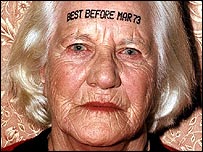 |
Recently, The Royal College of Surgeons and AGE UK have written a report on age discrimination in surgery which, of course has been unlawful. It is no good pretending that it was not.
As some people lack mental capacity it would be interesting if the Court of Protection manages to play a protective role. As far as we know UK managed not to sign up to Fundamental Human Rights which includes the right to protective health measures.
So it appears that in UK dishonesty is the best policy - just keep on warm and lying about your age if you want to live longer and can get away with it.
Several decades ago I met a French Jewish woman who took her yellow star and her documents and flushed them down the toilet. She survived but others died in concentration camps. Here is something from Jewish Virtual Library:
In November 1938, following
the Kristallnacht pogrom, Nazi leader Reinhard
Heydrich recommended that the Jews be forced to
wear identification badges.
Following Heydrich's recommendation, the German government first introduced mandatory badges
in Poland in November 1939. Jews who failed to wear them risked death - On July
26, 1941,
the Judenrat (Jewish
Community Council) of Bialystok announced
that "the authorities have warned that severe
punishment — up to, and including death by shooting — is
in store for Jews who do not wear the yellow badge
on back and front."
The German government's policy of forcing Jews to wear badges, and then confining all who wore them to ghettos,
was a tactic aimed at isolating the Jews from the rest of the
population. It enabled the German government to identify, concentrate,
deprive, starve, and ultimately murder the Jews of Europe. In 1942, Helmut
Knochen, the German government's chief of the Security Service and the Security Police for occupied France and Belgium, stated that the yellow badge was "another step on the road to the Final
Solution."
This policy was a part of what the Germans
euphemistically called the "Special Treatment" of the Jews. Under this
"Special Treatment," the Jews also endured:
1) A consistent propaganda campaign labeling them as the embodiment of evil and the misfortune of German society.
2) The revoking of all their rights of citizenship.
3) The confiscation of their property and businesses.
4) Their removal from jobs, schools, professions, and all social and professional intercourse with the rest of society.
Saturday, 1 December 2012
Abuse and Neglect in USA Residential Treatment Centres by Dr Janet Parker
MEDICAL WHISTLEBLOWER
Abuse and Neglect in U.S.A. Residential Treatment Centers
A Systemic Problem
Dr. Janet L. Parker DVM
8/14/2011
This is a preliminary report on the abuse and neglect of persons in residential treatment for “substance abuse” in the U.S.A. There have been violations of human rights, lack of investigation, prosecution and punishment of the offenders. This prevailing permissive environment has given de jure or de facto amnesty to those who violate human rights. Starting in the 1970’s there were residential treatment facilities for teens that were found to be abusive. The SEED, Straight Inc. and its derivatives, Roloff Homes, WWASPS and, more recently, Teen Challenge were adjudicated “guilty” of human rights abuses. This report explores the ways these perpetrators of abuse have used the political system to protect themselves and exploit loopholes in the law to expand their network of abusive residential treatment facilities for youth.
Article 1 of the Universal Declaration of Human Rights (1948) states:
"All human beings are born free and equal in dignity and rights..."
Abuse and Neglect in U.S.A. Residential Treatment Centers
2
―I wish to acknowledge the courage, perseverance and resilience of those who were closest to this national tragedy and thank Angela Smith, Wesley Fager, Richard ―Ray‖ Bradbury, Kelly Mathews,
Marcus Chatfield, Todd Eckelberger, Alex Layne,
Christine Flannery, William Earnshaw, Sr.
and all the others who shared with me their stories and I also wish to express my appreciation to Judith I. Grant, MSN, RN, CS, who graciously proofread and edited portions of this report.‖
Dr. Janet Parker DVM
―We believe that the United States of America must be an example of moral leadership and integrity for the world community. We cannot, as a nation, be that example if we fail to protect our own children or those for whom we accept responsibility. Incidents in many of these teen residential treatment facilities have gravely compromised America‘s moral authority. We ask that the United States of America, its legislative bodies, its courts, and its executive branch, not only articulate the moral and ethical values that made the U.S.A. a world leader in human rights, but act decisively and proactively to protect human rights standards. We ask that our nation‘s leaders create and enforce more effective legal policies for protection of the vulnerable. We must, as a nation, take proper action so as to 1) prevent the use of cruel and degrading treatment and torture, 2) embrace and advance standards of international human rights law, and 3) honor the dignity of all human persons. We also request public acknowledgement of the terrible wrongs done to these innocent victims of abuse. We ask that a viable legal pathway be established for reparation and redress. We respectfully request U.S. President Barack Obama to provide leadership for our nation that honors the ethical and moral values embodied in our Bill of Rights, the U.S. Constitution and its Amendments. These principles respect and honor the human rights of all.‖
Dr. Janet Parker DVM
Medical Whistleblower Advocacy Network
Abuse and Neglect in U.S.A. Residential Treatment Centers
3
Table of Contents
Introduction: .................................................................................. 8
US Congressional investigations don‘t stop abusive rehab centers ............ 8
Human Rights Defenders and Mandated Reporters of abuse have no protection and no plausible legal recourse. .......................................... 13
Long term effects on survivors/victims of abuse .......................... 16
Voices of the Survivors/Victims .......................................................... 18
World Wide Association of Specialty Programs & Schools ............ 31
WWASPS - allegations of abuse closed many overseas facilities ............. 33
WWASPS - numerous allegations of abuse closed many USA facilities ..... 34
WWASPS programs are still in operation ............................................. 35
Why should we be concerned? ........................................................... 35
Human rights abuses were reported............................................. 37
United Nations - Cruel, Degrading Treatment & Torture ........................ 37
The New Freedom Commission on Mental Health and TMAP ................... 38
Teen Screen .................................................................................... 40
Straight Inc. Human rights abuses ..................................................... 42
History of substance abuse treatment .......................................... 47
Synanon therapeutic model ............................................................... 47
Matrix House ................................................................................... 48
Ruth Fox, founder of the American Society for Addiction Medicine .......... 48
Human subjects abuse ...................................................................... 50
A.A. philosophy of addiction treatment ............................................... 51
The Salvation Army .......................................................................... 53
Substance abuse treatment professionals .................................... 55
Collaborative officials at all levels of government ................................. 55
Fellows of ASAM - FASAM certification ................................................ 56
Abuse and Neglect in U.S.A. Residential Treatment Centers
4
Creating a new ―Board‖ Specialty ....................................................... 58
Establishment of state Physicians Health Program (PHP) ....................... 59
The Federation of State Physicians Health Programs ............................. 60
Lack of adherence to accepted standards regarding DSM-IV-TR diagnostic criteria ............................................................................................ 67
Mind-Control and 12 Steps philosophy ................................................ 69
George Talbott‘s abuse of Dr. Leon Masters ......................................... 70
Department of Justice and judicial accountability ........................ 73
Straight Inc. & Melvin Sembler ..................................................... 75
The abusive rehab program called Straight Inc. ................................... 75
Mind-Control experiments funded by federal taxes ............................... 76
Wesley Fager - TheStraights.com ...................................................... 77
Richard Bradbury - ―Straight‖ Survivor and Activist .............................. 77
Straight Inc. avoids payment of damages to survivors/victims ............... 78
Drug Free America Foundation ........................................................... 79
Straight Inc. evasion of investigation and prosecution .......................... 79
Reverend Doctor Miller Newton - KIDS of Bergen County (NJ) ............... 80
Bergen KIDS Program now AARC in Canada ........................................ 85
Sembler hides Straight Inc. assets from U.S.A. Courts .......................... 87
Did Straight Inc. actually shut down? ................................................. 87
What is a cult? .............................................................................. 89
International Cultic Studies Association (ICSA) .................................... 92
Political protection of Faith-based residential treatment abuse ... 93
Sembler as Finance Chairman of the Republican National Committee...... 93
The Clary Report .............................................................................. 94
Corporations are not human persons............................................ 96
Citizens United vs. FEC ..................................................................... 96
Lester Roloff - Roloff Homes ...................................................... 100
Lester Roloff - start of a career in teen rehabilitation ......................... 100
Complaints of child abuse surface .................................................... 101
Abuse and Neglect in U.S.A. Residential Treatment Centers
5
The ―Christian Alamo‖ ..................................................................... 102
Evading prosecution through shuffled ownership ................................ 104
Questioning the constitutionality of state licensure ............................. 104
Political power from the pulpit ......................................................... 104
Death of Lester Roloff - Rebirth of Roloff Homes in Missouri ................ 106
Alternative accreditation of Faith-based facilities ................................ 108
Effects of loss of regulatory control .................................................. 109
Abuse at Roloff Homes continues ..................................................... 110
Weakened control of Faith-based social services ................................ 111
Political motives affect public policy .................................................. 111
Don Stewart Ministries and charity fraud ................................... 113
Southwest Indian Foundation and Don Stewart Association ................. 113
History of the Don Stewart Association ............................................. 114
Teen Challenge ........................................................................... 115
Teen Challenge - high level political protection .................................. 115
Teen Challenge follows the Straight Inc. example .............................. 116
Medical vs. Faith-based model for rehabilitation ................................. 117
Are Teen Challenge programs effective? ........................................... 117
Teen Challenge converts clients to Christianity .................................. 119
The federal agency USDA and CPS seek to close Teen Challenge .......... 121
Establishment of alternative accreditation to evade inspections ............ 123
Further protections through official State Liaison positions .................. 123
Establishment of funding to Faith-based programs ............................. 125
Mounting evidence of criminal activities ..................................... 127
Affinity fraud ................................................................................. 127
Ex-convicts as fundamental Evangelical pastors ................................. 127
Assemblies of God & sex-offending pastors ....................................... 130
Labor fraud schemes - lack of Workmen's Compensation Insurance ..... 132
Tom Petters Ponzi scheme linked to Teen Challenge ........................... 134
Abuse and Neglect in U.S.A. Residential Treatment Centers
6
Frank Vennes Jr., financial fraud and Teen Challenge ......................... 135
Prison Ministries Network - InnerChange Freedom Initiative .... 138
Political ally Chuck Colson financially supported by Charitable Choice ... 138
InnerChange Freedom Initiative (IFI) ............................................... 140
Faith-based prison programs ........................................................... 144
Opening the doors to hire prisoners .................................................. 146
Teen Challenge - sex-offenders as staff ............................................ 148
Wayne Gray, Sanford Teen Challenge and labor abuse & fraud ............ 148
Teen Challenge and Prison Fellowship use food assistance TANF funds .. 149
What is Charitable Choice? ......................................................... 150
Privatization of welfare - due process & constitutional concerns ........... 152
Teen Challenge lobbies for Charitable Choice ..................................... 156
Charitable Choice policy in Texas ..................................................... 156
Relevant U.S.A. federal law on Charitable Choice ............................... 158
Further protections through official State Liaison positions .................. 162
Blurring the line between public and private funding ........................... 163
The religious nature of Teen Challenge ...................................... 164
Statements of John Castellani, Executive Director of Teen Challenge .... 164
Submitting to a ―Higher Power‖ ....................................................... 165
A Human Rights-centered approach ................................................. 165
Teen Challenge & Assemblies of God Statement of Faith ..................... 166
The top ten largest religious bodies in the United States ..................... 169
Are Faith-based substance abuse programs effective? .............. 170
Civil rights groups raise alarms .................................................. 172
Coercive control of teens in Teen Challenge facilities .......................... 172
Use of the court system to force young adults into Teen Challenge ....... 175
Freedom of Religion & social welfare programs .................................. 178
Freedom of Religion and Belief is a fundamental human right .............. 178
The First Amendment of the United States Constitution ...................... 179
Abuse and Neglect in U.S.A. Residential Treatment Centers
7
Religious attitudes can lead to discrimination ..................................... 180
The Texas Freedom Network - constitutional issues ........................... 182
American Jewish Congress - constitutional challenges ......................... 183
Freedom from Religion Foundation - the Establishment Clause ............ 183
Americans United for Separation of Church and State v Prison Fellowship Ministries ...................................................................................... 185
Federal funding of religiously-based behavioral modification programs . 186
Dominionism ................................................................................. 188
Lack of protection for Human Rights Defenders ......................... 190
Government oversight and the role of mandated reporters .................. 190
The Office of Special Counsel - protection of whistleblowers ................ 192
Scott Bloch, Deputy Director of Faith-based and Community Initiatives 194
Scott Bloch, Chief Counsel for the Office of Special Counsel ................. 194
Scott Bloch - Prohibited personnel practices ...................................... 196
Personal financial involvement with Catholic-affiliated charities ............ 199
Affinity fraud - Don Stewart Association Network ............................... 199
Scott Bloch turns a blind eye to Teen Challenge abuses ...................... 201
Scott Bloch accused of criminal contempt of the U.S.A. Congress ......... 202
Judge Royce C. Lamberth allowed Bloch to withdraw his guilty plea ...... 204
United Nations - rights of victims .............................................. 207
Rape as a crime under International Law .......................................... 210
The United States’ (U.S.A.) obligations to victims ...................... 213
We must stop client abuse in residential treatment ................... 214
International and human rights infrastructure .................................... 216
United States Law .......................................................................... 218
United States of America obligations under International Law .............. 218
Universal instruments ..................................................................... 219
Regional instruments ...................................................................... 220
International standards ................................................................... 220
Abuse and Neglect in U.S.A. Residential Treatment Centers
8
―The Special Rapporteur wishes to recall that, from a human rights perspective, drug dependence should be treated like any other health care condition. Consequently, he would like to reiterate that denial of medical treatment and/or absence of access to medical care in custodial situations may constitute cruel, inhuman or degrading treatment or punishment and is therefore prohibited under international human rights law. Equally, subjecting persons to treatment or testing without their consent may constitute a violation of the right to physical integrity. He would also like to stress that, in this regard, States have a positive obligation to ensure the same access to prevention and treatment in places of detention as outside.‖ — Manfred Nowak
Special Rapporteur on torture and other cruel, inhuman or degrading treatment or punishment
(Geneva, January 14, 2009)
Introduction:
US Congressional investigations don’t stop abusive rehab centers
A recent report by the US Congress revealed that there are significant problems in the ―teen rehabilitation‖ industry, including a general lack of oversight and accountability. In 2009 there were Capitol Hill briefings related to abuse of teens in facilities run by WWASPS and other programs. 1 The US House, led by Congressman George Miller, conducted investigations by the Government Accountability Office (GAO) during the 110th Congress (2008). These uncovered thousands of cases alleging child abuse and neglect since the early 1990‘s at teen residential programs. Further, the investigation revealed that currently these programs are governed only by a weak patchwork of state and federal standards. A separate GAO report, 2 conducted at the committee‘s request, found major gaps in the licensing and oversight of residential programs, including some programs not covered by any state licensing standards. GAO concluded that, without adequate oversight, ―the well-being and civil rights of youth in some facilities will remain at risk.‖ State-reported data to the National Child Abuse and Neglect Data System in 2005 found that 34 states in the United States of America (USA) reported 1503 incidents of youth maltreatment by residential facility staff. Of the states surveyed by GAO, 28 reported at least one youth fatality in a residential facility in 2006. GAO concluded that both of these statistics understate the incidents of maltreatment and death. They emphasized that many facilities are outside the scope of this limited study and many still remain unregulated and uninspected. 3 4 5 6 7
Abuse and Neglect in U.S.A. Residential Treatment Centers
9
In 1971, the US Senate Judiciary Committee convened a sub-committee on constitutional rights under Senator Sam Ervin to investigate government's role in behavior modification. Senator Ervin's 650-page report was published in November 1974 under the title ―Individual Rights and the Federal Role in Behavior Modification.‖ 8 The US Congress previously examined problems in The SEED 9 10 11 and then in later residential treatment programs. These later substance abuse treatment programs were modeled on the Synanon program, 12 13 14 15 16 17 the SEED and Straight Inc. Each time, the offending substance abuse treatment program was shut down. However, new programs rapidly emerged with new legal identities to start the same kind of operation. There are now even more programs reported to be abusive, despite numerous local, state and federal investigations. Those who have been victimized in one of these facilities are frustrated and dismayed to realize that not even several US Congressional investigations can prevent the recurrence of the same kind of abuse. Although Straight Inc. programs were closed, the governing principles remain a model for drug rehabilitation. It is a national disgrace that the abuse of children in residential centers has not stopped. Rather, governmental sanction hides its true nature from law enforcement and regulators. 18 Abusive teen rehabilitation centers are now more numerous and the industry remains unregulated by state or federal law. The list includes:
Synanon
The SEED
Straight Inc. derivatives WWASPS Rebekah /Roloff Homes Straight Inc. program at Morgan Yacht
KIDS
Sea Org Refuge
CEDU Brown Schools and derivatives Aspen Education Group Elan School Ridge Creek School/Hidden Lake
Wilderness Programs
Weight Loss Programs
Mission Mountain School Public Sector Gulags SAFE Vision Quest
Daytop Village
Lighthouse of Northwest Florida
Growing Together/L.I.F.E. Kids Helping Kids Straight Inc. Hyde Schools
There are no adequate means to monitor these facilities for human rights abuses. They have used political influence and power to prevent effective regulation and inspection of their facilities. They deny Child Protective Services (CPS) access to investigate child abuse complaints.19
Abuse and Neglect in U.S.A. Residential Treatment Centers
10
To understand the background, it is useful to trace development of public policy related to these residential treatment programs in order to recognize how they managed to evade public scrutiny and government control.
On October 10-11, 2007, the U.S. House Committee on Education and Labor heard testimony about cases of child neglect and abuse. Among cases investigated were the Catherine Freer Wilderness Therapy Programs, a private residential treatment facility in the Pacific Northwest.20 21
This problem is not limited to the United States of America. These abusive methods have been exported to many countries in the world. The Bergen KIDS program has been transplanted to Alberta, Canada as The Alberta Adolescent Recovery Centre (AARC).22 The Alberta Adolescent Recovery Centre 23 is a drug abuse rehabilitation clinic for teenagers and adolescents in Calgary, Alberta, Canada. AARC has been the subject of controversy in Canada over allegations of physical, emotional, and sexual abuse made by former patients. This has led to widespread protests against AARC, and calls for a government inquiry by Alberta's provincial New Democratic Party.24
US citizens had been transported over international boundaries and taken to facilities in Mexico such as Abundant Life. 25 The children were found to be abused there. Mexican immigration officials of the Instituto National de Migracion (INM) raided the facilities and deported the children back to the U.S.A. Mexican authorities cited immigration violations for the clients, and also immigration violations related to the staff of these facilities. There was lack of proper municipal licensure of these facilities. They had not obtained the requisite approval of health and education authorities in Mexico. In addition, the teen ―clients‖ of these facilities described habitual mistreatment during their illegal detention. They were denied access to communication with persons outside the facilities. In 2004, the Mexican government rounded up 590 US teenagers, who had been placed in institutions throughout Mexico, without proper immigration paperwork. These children were considered ―troubled teens‖ by their American parents. They were sent to these locked facilities in a foreign country for treatment of problems with behavior and parental authority.
The Assemblies of God church operates Teen Challenge as an outreach program within its own centers in numerous countries. Teen Challenge operates two organizations with international scope: Teen Challenge USA International and Teen Challenge Global. Teen Challenge Global operates in 87 countries with over 1,100 centers. Its headquarters are in Columbus, GA.26
Abuse and Neglect in U.S.A. Residential Treatment Centers
11
Teen Challenge USA International is headquartered in Springfield, Missouri. It has grown to include 231 locations in the United States,27 including residential programs and evangelical outreach centers.
Teen Challenge, run by the Assemblies of God church, operates its own credit union located in Missouri. 28 The Assemblies of God Credit Union has 13,883 members as of 2011 and reports assets of $93.3 million. 29 It opened in 1951, has 32 full time and 9 part-time employees. This is a state-chartered ―natural person‖ credit union, state charter number 62897, with attendant benefits. The Assemblies of God Credit Union (AGCU) field of membership is open to the following persons:
The General Council of the Assemblies of God, and any church or other entity affiliated with the General Council of the Assemblies of God or with a District Council of the Assemblies of God; and any employee or officer of any said entities
Faculty, staff and students of Assemblies of God institutions of higher learning
Certified, licensed or ordained ministers of the Assemblies of God
Retired employees of the General Council of the Assemblies of God
Attendees of Assemblies of God churches in Greene County, Missouri, and the adjacent counties of Christian, Dade, Dallas, Lawrence, Polk and Webster
Assemblies of God World and U.S. Missions workers with twelve (12) months or more assignment
Relatives of current members in the above categories including spouses, children, siblings, parents, grandparents, grandchildren and legal guardians (includes step-in-law and legally adoptive relationships)
Organizations of members may be included subject to Board approval
Teen Challenge Global runs programs in the following countries:
American Samoa, Angola (3 facilities), Argentina (2), Aruba, Australia (9), Bahamas, Bangladesh, Barbados, Belarus (2), Belgium, Bolivia, Brazil (14), Cambodia, Canada (24), China (3), Costa Rica, Croatia, Czech Republic (3), Denmark, Dominican Republic (2), Ecuador, El Salvador, Ethiopia, Finland, France (2), Germany (20), Guatemala, Guinea-Bissau, West Africa, Guinea-Bissau, Haiti, Honduras, Hungary, Iceland (6), India (7), Ireland (2), Italy, Jamaica, Japan, Kazakhstan (16), Kenya, Korea, Kyrgyzstan, Central Asia, Latvia, Lithuania (5), Macedonia, Mexico (5), Moldova, Nepal, Netherlands (2), New Zealand, Norway (2), Pakistan (3), Paraguay, Poland (4), Portugal (8), Romania, Russia (14), Serbia (3), Singapore (4), Slovakia (3), South Africa (11), Spain, Swaziland (8), Sweden, Switzerland (3), Trinidad-Tobago,
Abuse and Neglect in U.S.A. Residential Treatment Centers
12
West Indies, Uganda, Ukraine (7), UK, Wales (8), UK, England (8), UK, Scotland (4), Uruguay (2), Venezuela. Although Teen Challenge is directly connected with Assemblies of God church through both management and financial connections, they attempt to hide this association when recruiting clients for their centers.
Jerry Nance is President and C.E.O. of Teen Challenge Global, which is divided into seven regions with a director or representative for each region.
This is the self reported information regarding Teen Challenges outreach centers overseas: 30
Latin America and Caribbean - Duane Henders; 1,250 beds in 102 centers in 17 countries. Europe - Tom Bremer; 892 beds in 58 centers in 28 countries. Africa - Doug Wever, 1,034 beds in 14 centers in 9 countries. Asia Pacific - James Lowans; 357 beds in 51 centers in 9 countries. Northern Asia - 30 beds in three centers. Eurasia - Kevin Tyler; 11,600 beds in 370 centers in 14 countries. North America - Jack Smart, 7,536 beds in 223 centers in 2 countries.
Hon. George Miller, Chair of the Committee on Education and Labor in the U.S. House of Representatives initiated the legislation, Stop Child Abuse in Residential Programs for Teens Act of 2009 H.R. 911 (formerly H.R. 6358, H.R. 5876). U.S. Representative Miller had received a shocking report from the Government Accountability Office (GAO) regarding abusive and neglectful treatment of children in residential programs.31 The report also contained information about fraudulent practices of these institutions. Subsequent investigations and GAO reports indicate that there is a widespread problem of abuse in the residential treatment industry which has flourished due to a lack of government regulation, inspection and accountability. 32 33 34 35
There was very disturbing testimony provided to the US Congress about the pervasiveness of the abuse and the failure to curb it by Health and Human Services or the Department of Justice. 36 Video tapes of those testimonies can be seen here. 37 After much discussion and deliberation The House of Representatives approved legislation to Stop Child Abuse in Teen Residential Programs. The bill was intended to ensure that parents have information they need to keep their children safe.38 39 40 41 42
Abuse and Neglect in U.S.A. Residential Treatment Centers
13
The U.S. Senate has not moved to act on the bill or to draft suitable legislation to stop further abusive practices in the teen residential treatment industry.
Human Rights Defenders and Mandated Reporters of abuse have no protection and no plausible legal recourse.
Abuse of children and teens within residential treatment facilities, located in both the US and in other countries that are run by non-profit organizations legally based in the U.S.A., has occurred for more than four decades. In spite of numerous reports from human rights defenders and mandated reporters, there have been no significant changes to stop the practice. There are no protections for witnesses/victims/survivors or for their human rights defenders. Mandated reporters of such human rights violations are more likely to lose their employment or be demoted, suffer personal and professional retaliation.
There is an entrenched unwillingness within the US government to expose the root cause of the political tolerance for the deregulation, lack of inspection, lack of financial transparency and accountability, lack of law enforcement action to investigate these crimes, lack of appropriate prosecution of perpetrators, and lack of any punishment for the offenses. The moral, ethical, and legal obligations to uphold human rights by US legislators, US Department of Justice officials, and even judges have not been fulfilled. When they have permitted this course of conduct to continue for four decades, they are culpable for the egregious human rights violations that have occurred.
Victims/Survivors are left with no access to redress or reparations. This systemic failure to protect children and young adults is a ―crime against humanity‖ about which the US government has been fully informed, yet refused to prevent. Criminal acts that have occurred in these treatment facilities include:
Murder (homicide) 43 44 45 46 47
Enslavement 48
Deportation or forcible transfer 49
Imprisonment or severe deprivation of physical liberty in violation of fundamental rules of international law 50
Torture 51
Rape, forced pregnancy, forced abortions 52 53
Persecution against persons not of Christian faith, especially those of Jewish faith
Abuse and Neglect in U.S.A. Residential Treatment Centers
14
Persecution of persons who are gay, lesbian, bisexual or transgendered 54
Enforced disappearance of persons 55 56 57
Other inhumane acts that intentionally cause great suffering, or serious injury to body, to mental or physical health 58 59 60 61 62
Psychological, emotional, and sexual trauma leading to suicide.63 64 65
These acts are crimes of serious concern to the international community as a whole.
The number of suicides secondary to psychological and emotional trauma as well as sexual abuse of young teens trapped in these rehabilitation centers came to the attention of public health officials who monitor suicide rates. 66 The original Straight Inc. centers were located in the Tampa Bay area of Florida, within Hillsborough, Paco and Pinellas counties. According to 1987 statistics from the National Center for Health Statistics, the Tampa Bay area had the highest suicide rate in the country. This rise in the suicide rate was not related to the large number of retirees there. The juvenile suicide rate in Pinellas County rose 130% between 1980 and 1986. A 1992 study found that 1 out of 4 girls in neighboring Pasco County attempted suicide in 1991 (national average was 10%). In neighboring Hillsborough County the juvenile suicide rate tripled, from 3 in 1980 to 9 by 1987. Nineteen (19) youths committed suicide in Pinellas and Hillsborough counties in 1989 (up to nine of these were gay).
Straight Inc. operated its founding center, Straight-St Pete, in St Petersburg, Florida in Pinellas County from 1976 to 1993. In 1986, a related program called Outreach was opened in Cape Coral, Florida. In 1987, a community task force was organized to study why 19 youths aged 14 - 17 years had attempted suicide.
In 1988 the national Center for Disease Control (CDC) launched a study on juvenile suicides in Cobb County, Georgia because its suicide rate of 14.7 per 100,000 persons was three higher than the state average, and twice as high as the national average. Straight-Atlanta, operated in Marietta (Cobb County), GA was implicated.
Dr. Richard Schwartz, medical research director for Straight-Springfield, noted in an article for its newsletter, EPIDEMIC, vol. 6, that suicide was fifth-ranked as cause of death for American teenagers in 1964, third-ranked in 1978 and had risen to second-highest in 1983. Straight Inc. launched operations in late 1976 and had centers in Cincinnati, Springfield, Virginia, St Petersburg and Sarasota by 1983.
Abuse and Neglect in U.S.A. Residential Treatment Centers
15
Licensed medical professionals, psychologists, therapists, child protective services personnel, and other mandated reporters were obligated to report this sudden rise in suicide which was linked to a particular type of residential substance abuse treatment program.
Licensed medical professionals are morally and ethically obligated by their Hippocratic Oath to protect their patients‘ safety. Under US law and international standards of proper professional conduct, they are also Mandated Reporters of torture and abuse. Licensed medical professionals are Defenders of Human Rights, the watchdogs for vulnerable patients in need of care. The reality in Straight Inc. facilities and in many other residential treatment centers is that ―the fox is in charge of the hen house.‖
Abuse and Neglect in U.S.A. Residential Treatment Centers
16
Long term effects on survivors/victims of abuse
Torture is the calculated physical and psychological assault on the individual, a practice used to instill fear, punish or degrade, to dehumanize, or to obliterate the self. It is often said that anyone who has been tortured remains tortured, long after the physical wounds have healed. Torture is the deliberate infliction of severe pain by one human being against another. It leaves particular kinds of mental and psychological scars. This trauma is different from other traumas because torture is a violation committed in secret and in spite of official denial.
Many believe that torture only occurs in the most repressive regimes.
In reality, torture is widespread in all parts of the world. Although it is often perpetrated by police or security forces, it can also be carried out by armed forces, detention authorities such as immigration officials, hospital staff, or prison wardens. Torture can be physical or psychological. New methods of torture are, unfortunately, invented every year. Many are most familiar with physical torture such severe beatings, extraction of nails or teeth, burns, electric shocks, suspension, suffocation, excessive light, heat, cold or noise, sexual aggression (rape and other sexual violence), forced nudity, isolation and sensory deprivation, mock executions or simulated drowning.
However, psychological torture can be as traumatic and inflicts egregious harm. The psychological wounds of both physical and psychological torture last a lifetime. The coercive methods of Straight Inc. and other abusive residential treatment centers were designed to obliterate the sense of self so as to instill fear and force obedience to authority in young teens.
Abusive methods of Straight Inc. included sleep deprivation, beatings, sexual humiliation, sexual assault, prolonged sitting or standing in forced positions, isolation and detention for prolonged and indefinite periods of time, forcing one teen to abuse another, and prolonged denial of rest, sleep, food, water, adequate hygiene. These same forms of abuse are utilized in many other residential treatment centers. Many victims continue to suffer in silence. Torture victims commonly report feelings of fear, guilt, shame, anger, disillusionment, insecurity and humiliation. For victims of torture, finding the courage to come forward and speak about what happened to them is very difficult. This is true for the many thousands of US children who were physically and psychologically abused and sometimes sexually abused in the program called Straight Inc. What happened behind the closed doors of Straight Inc., Roloff Homes,
Abuse and Neglect in U.S.A. Residential Treatment Centers
17
WWASPS, Teen Challenge and other programs is deeply personal and highly traumatizing. Speaking about it can evoke for survivors a range of emotions because the memories are triggers for retraumatization. Survivors are reluctant to speak publicly and may not have fully revealed their experiences to families and/or friends. In some instances, they may not have come to terms with it themselves. Survivors of torture find it very challenging to heal and try to move forward with their lives. Many victims from Straight Inc. and other abusive teen centers express frustration that, despite the fact that their torture occurred and was verified, it has not been publicly acknowledged. Survivors come away with different expectations of what constitutes justice. Some speak of the importance of criminal prosecutions, while others speak about civil compensation, rehabilitation or prevention of recurrence. All of them realize that there is a need to restore the sense of dignity and control that was taken from them when they were tortured.
Abuse and Neglect in U.S.A. Residential Treatment Centers
18
Voices of the Survivors/Victims
The Survivors/Victims of institutionalized abuse have responded with courage and resiliency and have launched a variety of legal challenges to these practices and also actions of activism and advocacy as well as a web of survivor support networks. The Web sites Fornits.com, TheStraights.com, Heal-online.org, and others have collected many of the survivors‘ stories.67 H.E.A.L. and International Survivors Action Committee (ISAC) both previously provided reports about this abuse.
Forced Abduction, Anti-Gay (WWASPS - Cross Creek) Xandir, 68 A survivor‘s story of the time she spent at a teen facility in Utah. 65,000 people have read Xandir's story, and it's been reposted all over the internet.
―On May 10th of 2007 at around 2:30 in the morning two strangers barged into my bedroom. I started screaming and crying, as in my mind I was sure that these two strangers had broken into my house and were going to abduct me, rape me, kill me, or in some way harm me. They immediately told me that if I did not shut up that they would handcuff me. I was not being in any way violent or threatening. I was reacting in fear for my life by being vocal and hoping that someone would come to help. I had no idea what was going on. I stopped screaming, still in fear for my life. They started going through my closet digging out clothes as I was only in a night gown. They still had not explained what was going on. I asked, frightened, what they wanted from me, trying to see if I could in some way appease them and get them to leave. They then explained that they were going to take me to a school. It took me a second to understand what they meant by this, as this was an extremely bizarre way to introduce a child to a new school. It then occurred to me that this was what my mother had arranged for my brother several years ago when she had him shipped away to Cross Creek. The two strangers were from Teen Escort Service, a for-profit company that transports teenagers, usually by force, to WWASP (World Wide Association of Specialty Programs) facilities.‖
Abuse and Neglect in U.S.A. Residential Treatment Centers
19
Degrading, Humiliating Treatment (AARC) Rachel O‘Neill, Alberta Adolescent Recovery Center, Canada. CBC News, February 13, 2009 ―Alberta drug rehab centre abused us, former teen patients allege.‖ 69
Forced Abortion, Degrading Humiliating Treatment (Straight Inc. Sarasota Florida) Samantha Monroe, Sarasota Florida, Straight Inc. From the Fox News Story by Radley Balko Thursday, May 23, 2002 ―Drug War Casualties‖
―Samantha Monroe was 12 years old in 1981 when her parents enrolled her in the Sarasota, Fla., branch of Straight Inc., an aggressive drug rehab center for teens. Barely a teen, Samantha also had no history of drug abuse. But she spent the next two years of her life surviving Straight Inc.. She was beaten, starved and denied toilet privileges for days on end. She describes her "humble pants," a punishment that forced her to wear the same pants for six weeks at a time. Because she was allowed just one shower a week, the pants often filled with feces, urine and menstrual blood. Often she was confined to her closet for days. She gnawed through her jaw during those "timeout" sessions, hoping she'd bleed to death. She says that after she was raped by a male counselor, "the wonderful state of Florida paid for and forced me to have an abortion.‖
―Former patient Rachel O‘Neill alleged she was sexually assaulted by two people in a supply closet at the centre, though because it was dark, she doesn‘t know who her attackers were. In another incident, O‘Neill alleged an oldcomer wiped her rectum and then put her fingers in O‘Neill‘s mouth. O‘Neill alleged she fled the centre (AARC in Canada) in late December 2002 in her bare feet.‖
Abuse and Neglect in U.S.A. Residential Treatment Centers
20
Teens Forced to Abuse Other Teens James, a former student at Straight-Atlanta turned staff member. (This was excerpted from the writings of Wesley Fager, a dedicated activist against the Straight Inc. abuses). 70
Forced labor, Slavery (Straight Inc. Florida) Brian Dodd, in his lawsuit against Drug Free America Foundation, Inc., also known as Straight, Incorporated and Straight Foundation, Incorporated, Saint Petersburg, Florida. Case: Case No.: 8:10-CV-1092-T23 TGW Middle District of Florida, Tampa Division.
―The slaves in Straight lived in substandard warehouses that were filthy, causing skin and intestinal diseases, falling far below lawful health conditions for children, and the slaves were trafficked and transported nightly to strangers‘ homes. In these homes, children were locked inside rooms many times with nothing but a floor to sleep on. The windows of these rooms were nailed shut. Slaves of Straight were made to transport others and themselves by means of assault and battery and use of third party vehicles and vans….. had been deprived of all human rights from the moment of first being incarcerated at Straight as a child to their release. The most common causes of death and suicide from Straight were psychological disorders caused by torture and crimes against humanity and degradation at Straight. Many reports to the Department of Children and Families show that most of the children reported bruises from beatings done to them… Reports of malnutrition, psychotic breaks, chicken pox, and other diseases were commonly made to local police offices and the Department of Children and Families…. Defendants knowingly, intentionally and systematically benefited from the use of enslaved laborers.‖
"Staff members directed me to physically batter and verbally assault other clients. They gave me this direction when I was a client and when I was a Staff Trainee. I carried them out. So did hundreds if not tens of thousands of other kids. . . As hard as it has been to live with the reality of being clinically abused for nearly two years, it cannot compare with the complete nightmare of living with the fact that I abused other people repeatedly in the name of a thought control cult. It cannot compare with the nightmare of knowing that some of the people I abused have ended up in jail, or dead, and that I contributed to the destruction of their lives."
Abuse and Neglect in U.S.A. Residential Treatment Centers
21
Lack of Safety Precautions for Clients, Convicted Felons as Staff (Sanford Florida Teen Challenge) Joseph V. Agrifolio Statement given to HEAL71 Executed on January 14, 2009, client of Sanford, Florida Teen Challenge
―Teen Challenge professes to be a Christian Program that helps with life controlling issues such as drugs and alcohol addiction. The program is allegedly a not for profit agency affiliated with the Assemblies of God Churches. In actuality, this program is a work camp that forces clients to work 8 - 10 hour days in ways that are not helpful to them and not always legal. Residents are frequently outsourced for jobs with local companies to earn money for the organization. They are often reduced, in exchange for 1 - 2 hours of Bible study, 1 hour of unprofessional counseling per week and room and board, to beggars taking up collections on street corners for profit, or setting up carwashes in department store parking lots for profit. Clients without driver‘s licenses drive vans full of other workers to and from these money-making ventures. In Sanford in 2004, two workers were killed on the interstate in an auto accident. The van had two faulty tires, no brake lights and an unlicensed driver. Teen Challenge was sued by the families of the victims and the case was settled out of court. I myself, a convicted drug abuser, was assigned a job as Medical Coordinator in Sanford, dispensing medications to other residents. Not only was that illegal, it was dangerous to both me and the other clients. Any competent and respectable rehabilitation organization should have more appropriate policies and procedures in place and practice. Also in Sanford, convicted felons working at outsourced jobs were directed to get clients‘ credit card numbers over the phone. When it came to light, the customers became very angry that convicted felons had access to their credit card numbers and got the courts involved. In reality, people trying to get their lives together should not be spending their time performing illegal activities for Teen Challenge or its clients. Teen Challenge workers were as much victims as the customers. The director of the program was re-assigned out of state when the Sanford Teen Challenge came under legal and financial scrutiny. Despite legal, moral, ethical and financial issues, Teen Challenge quickly ushered in a new Director where it continued business-as-usual. At best, Teen Challenge is a human-trafficking operation that takes advantage of people‘s problems, holds clients captive and uses them as commodities for its own gain. It forces them to work long hours only for the monetary benefit of the program and its administrators. At its worst, it is a brainwashing cult. It complicates problems and turns out robots that have problems making educated informed decisions for themselves. Despite the statistics it spouts out, Teen Challenge has no success rate. Prison or county jails are better alternatives than places like Teen Challenge.‖
Abuse and Neglect in U.S.A. Residential Treatment Centers
22
Forced Labor, Mistreatment, and Forced Religious Conversion (Teen Challenge New England) Rebecca Holden, Warwick, RI, Teen Challenge New England, Providence Rhode Island 72
―I was in Teen Challenge on Elmwood Ave. (Providence, RI). Being there was the worst experience I have ever been through; I am a Catholic and they made me convert - saying I would have to be kicked out if I didn‘t - and I had no place to go but the street. I was there for 5 months living like a slave scrubbing garbage cans and weeding with tweezers, defrosting fridges with butter knives - things I had never done before in my life, being forced to pray every night and every day 3 times a day. But the worst part was standing on a street corner asking strangers for money…and let me tell you even when I was at my lowest homeless I never asked people for money. The first time I ever did it, it was 98 degrees out and they didn‘t give me any sun screen; I was out there for 11 hours. I woke up the next morning with sun poisoning and my face swelled to the point I couldn‘t see; they wouldn‘t bring me to the doctor because the rule was you had to be in T.C for 2 months before you get any medical treatment…tell me, is there any sense in that? I finally couldn‘t take it anymore; I was tired of being a slave and I requested to leave. They locked me in the chapel then proceeded to contact all the managers to try and talk me out of leaving. They finally gave up trying and took everything for me and they made me wait outside in the freezing November cold with no jacket just a tee shirt…now let me ask you, is that something Jesus would do? My experience there was terrible, and I would not recommend that place for the life of me. To this day, I am still clean and sober; after I left I went to outpatient treatment and I think that did a better job then TC ever did for me.‖
Abuse and Neglect in U.S.A. Residential Treatment Centers
23
Abduction across an international border, Psychological abuse (CEDU ASCENT) HEAL survivor testimonial #5, 73 Alex, Declaration under penalty of perjury, Pursuant to 28 USCA 1746 (June 30 to August 20, 1999)
―I guess the most common way for kids to end up at Ascent was by "escorts". Escorts were people that surprised you in your sleep with handcuffs and told you that you were going to the middle of nowhere. But, since "escorting" is illegal in Canada, and I am Canadian, I ended up getting escorted from Miami, on my way back from Jamaica. From my friends' perspectives, I went on vacation and never returned.
I guess it should have immediately occurred to my parents from the escorting that this place was not normal, but I guess they were in such a panic about what to do that it is hard to think rationally. I would urge other parents to try to think rationally.
The only contact that I had, as other people will tell you, is through writing letters. Of course, the letters were read by the staff and they were not sent if they disapproved of anything written in the letter. The only letter that they don't "edit" is the first one, but unfortunately, in my first letter, I spent more time trying to convince my parents that I was ok and trying hard to get better, and less time telling them about how messed up the place was. Honestly, I read the website and they make it seem like camp. They boast this "climbing tower" that the kids "conquer" and in doing so build trust and confidence in themselves. What a load of crap. I climbed that tower one time in two months. The rest of the time I spent getting emotionally beaten.
Some of the things we did included "log hauls" which involved collecting trees from the woods, cutting the logs into perfectly sized pieces of firewood, and stacking the wood perfectly. If there was even one log out of line, then the entire pile would be knocked over, and we would do it again, which would take hours.‖
Abuse and Neglect in U.S.A. Residential Treatment Centers
24
Imprisonment, severe deprivation of physical liberty, Psychological trauma (Kids Helping Kids) Pathway Family Center, Ohio. ―Kids Helping Kids and Post-Traumatic Stress Disorder - Is There a Connection?‖ The Cincinnati Beacon, March 2006, Christine Flannery. 74
―Suppressing real emotions was practically a necessity in Straight, Inc. If a child dared express fear, homesickness, that he/she felt confused about being in Straight, Inc., or simply voiced any unhappiness with the program, the client would be harshly confronted by a group of angry teenagers. In therapy, I learned that suppression was my technique to survive Straight, Inc.‘s extremely cruel and unbearable environment. ….. Since I had never used drugs prior to Straight, Inc., it was extremely difficult to even understand why I was essentially being punished for something I never did. …. I remember thinking things like, This can‘t be real, this can‘t be happening to me. I prayed over and over again that Straight was just a bad nightmare and that I would wake up and Straight would be gone. On a certain level, I simply could not accept Straight as my reality. After a few short weeks of unanswered prayers, the rest of my time in Straight transformed into, for lack of a better expression, something of an out-of-body experience. In psychological terms, this phenomenon is known as dissociation. At the same time that I was struggling understand the reasons for being in an essentially private jail, Straight, Inc.‘s so-called positive peer pressure traumatized me tremendously. I was utterly terrified by Straight‘s brutal peer confrontation therapy. The untrained teenage staff and teenage clients repeatedly confronted me for lying whenever I insisted that I never used drugs. Confrontation in Straight, Inc. was downright inhumane: teenagers repeatedly inflicted brutal verbal attacks, accusations, insults, name calling, yelling and screaming upon anyone deemed not being honest. As a result, every moment I was in the Straight warehouse, I constantly felt extreme fear that I would be confronted. That extreme fear of confrontation never left me: ever since leaving Straight, Inc., I have experienced numerous problems with anxiety and panic attacks in everyday life when this fear arises. As I relived Straight, I also relived the nightmare of witnessing other children being violently abused for the smallest infractions. For example, many untrained teenage clients would viciously restrain a misbehaver who simply refused to motivate. Before Straight Inc., I had never been exposed to violence and abuse. No words can convey how terrified I was, 24 hours a day, every day.‖
Abuse and Neglect in U.S.A. Residential Treatment Centers
25
Forced Religious Conversion, Forced Labor (South Dakota Teen Challenge) Eric M. ―Godless Saint‖ posted this account on Teen Challenge Exposed. 75
―I went through the South Dakota program in the late 1990's and have since been a staunch atheist for all of the current millennium….. Every word spoken out of my mouth the whole time I was there was taken completely out of context and used against me. Every word any of them ever read out of the Bible was taken out of context and used as a weapon. This was just the beginning. While I was in the program, I thought then that I saw the logic of learning about the Bible as best I can to help me. This in itself became a crime. All of the 99% and 100% scores I was receiving on the tests (all of them) were a "mockery" of the program, as I "must" have been doing it to prove myself smarter than the staff. Same with the memorization of large amounts of scripture, and everything else that everyone else was getting punished for not doing enough of!!!!! And yes, the work. 20 hours a week of labor at a door factory for 16 months, which no one saw a penny of. Forced classroom work, which I was punished for doing well… Dave Caire…was by far the most verbally abusive man I had ever met or heard of,….. A person would walk out of his office shaking like a leaf after committing such crimes as talking anything bad about any of the staff, saying anything that could be twisted around into a bad thing (pretty much anything a person could say), or even going to the bathroom without permission, or needing to go in church, or after a 2 hour van ride. All of the "students" were also forced spies on all the other students, by threat of punishment for not telling on others for saying any little thing that could be twisted around to sound evil. Needless to say, I was hundreds of times worse off after this program than before, suffering years of depression, homelessness, and of course, drug and alcohol use. I am now off the streets, back in school learning, and mostly drug and alcohol free. And an atheist.‖
Abuse and Neglect in U.S.A. Residential Treatment Centers
26
Imprisonment, Communication with outside world curtailed (CEDU Foundation) Survivor Testimonial given to HEAL. 76
― I was Placed at CEDU Foundation In or about march 1973, when I arrived I had no idea, what so ever that the Dept. of Social Service was "dropping me off" I was told I was just going to go for the day to see if I would like to stay there. Within 1 hour, I found myself standing in a room with Mr. & Mrs. Wasserman, and Michael Allgood. I was told that Michael would be my "family head" and if I had any questions or problems he would be in charge of it all. I then, was taken into a room, and was told to sit in a chair while they cut my hair. They cut my hair to where it was just a few inches short. They took my clothes and only left me with a few pair of pants and tops and sent the rest back with my social worker. The reason I told for this was to "break your Image". I was then taken into a room and a Nurse? examined me , and then I was told to shower. I had never been in any place like this before, so I was already afraid. I was told I couldn't write or see any family members for at least 3-6 months depending on if I followed the rules…..The worst things I can remember is the verbal abuse, the sex acts, and if you even mentioned it was something that you didn't want to be involved in you were told you would get sent to Juvenile Hall, some faced prison sentences, or they would threaten you with somewhere much worse. The Wassermans would eat in the living quarters at the time overlooked San Bernardino, I remember how they would order steak dinners and we would have to serve them, while we ate food which was donated, from the places we were out begging for money from….I know of one kid who lived in Las Vegas that actually took his life when we went home, because they said he couldn't deal with life anymore after CEDU. ‖
Abuse and Neglect in U.S.A. Residential Treatment Centers
27
Straight Inc. Survivors Request for Public Apology
To: Nancy Reagan, President George Bush, Sr., Former Straight, Inc. Executives, Other Responsible Parties
Survivors of Straight Inc. gathered for a memorial service on November 11, 2006, which was held simultaneously in St. Petersburg, Florida and Springfield, Virginia. We assembled together to collectively remember those former clients of Straight. Inc. who have passed away. Some took their own lives shortly after enduring severe mistreatment and abuse while in Straight, Inc. Others committed suicide for unknown reasons or passed away due to various causes. Feeling connected to one another by our common traumatic experience in Straight, Inc., Survivors also joined together to acknowledge our personal loss and the pain and suffering stemming from that horrifying ordeal. Many of us lost our integrity, our innocence, our sense of self worth, our youth, our ability to trust others, our family relationships, etc. In addition, many of us still suffer from diagnosed psychological disorders such as posttraumatic stress disorder, severe depression, social phobias, panic disorders, etc. caused by our imprisonment in Straight, Inc. Many Survivors still endure vivid Straight, Inc. nightmares, can still hear the screams of children as they were abused, and cannot forget the abuse we personally endured or witnessed as vulnerable children. We, the undersigned, Survivor‘s of Straight, Inc., respectfully request public acknowledgement from you that Straight, Inc. unjustly committed various crimes, abused children, and utilized extremely unethical practices against innocent young clients, which included, but were not limited to the following:
1) Brainwashing (aka coercive thought reform); 2) Physical abuse; 3) Usage of illegal and or unethical restraints - children routinely restrained children at the direction of staff for minor infractions (i.e. not motivating, not paying attention, etc.); 4) Unethical forms of extreme humiliation, including but not limited to; beltlooping, no privacy/watched while urinating, defecating, or bathing, motivating; 5) Food deprivation (ie. peanut butter diets, inadequate portions of food); 6) Sleep deprivation - caused by unwarranted, prolonged daily group hours (12), other time spent in the building (up to at least 3 additional pre and/or post group hours), lengthy commuting time, and in many cases, due to intentionally withholding sleep as punishment for not ―cooperating‖ to coerce compliance; 7) Verbal abuse - unduly harsh confrontational tactics that included swearing, screaming, yelling, spitting, belittling, humiliating, etc., a child in front of a large group of child clients; 8) Sexual abuse; 9) Psychological abuse; 10) Coerced confessions; 11) Unjustifiable and lengthy isolation in intake and/or time out rooms; 12) Denial of necessary medical care; 13) Kidnapping; 14) False Imprisonment; 15) Accepting clients with little/no drug history (the so-called ―dry druggie‖ theory); 16) Employing uneducated, unprofessional teenage staff.
Abuse and Neglect in U.S.A. Residential Treatment Centers
28
Straight Inc. Survivors Request for Public Apology (continued)
In addition to acknowledgment that the above-mentioned abuses, crimes, and unethical practices occurred, we respectfully request your formal apology for the following; allowing the abuse, unethical practices and crimes to continue for years, lending your name to, sponsoring, recommending, and/or endorsing Straight Inc., for sending children to Straight Inc., or for failing to properly and/or adequately oversee and monitor Straight, Inc. We, the Survivors of Straight, Inc. are the walking wounded, but we walk with our heads held high as a community, determined to overcome the injustice we were forced to endure as children while held in Straight, Inc. We are all fighters who feel empowered by the strength we draw from each other. Many Straight, Inc. Survivors are also determined to be healthy, prosperous and productive adults and are resolved to heal and move on. The community of Straight, Inc. survivors has taken many steps toward healing. Each of us has taken a different approach: some have sought therapy, many regularly communicate and lean on each other for support, and some participate in activities geared toward educating the public about harmful ―treatment‖ methods, etc. On November 11, 2006, we took another step by holding a memorial service to remember all who were lost. Yet closure is elusive. Receiving acknowledgement and the apology we are owed from those who once had the power to help us, but for whatever reason failed to protect us, would be a significant step toward resolving the flagrant injustice of Straight, Inc. and would facilitate our healing process. Sincerely,
Straight, Inc. Survivors `
*************************************************************
Request for apology written by Kris Flannery.
**the request for apology does NOT apply to former group/peer staff, it applies to former executive level staff 1
Abuse and Neglect in U.S.A. Residential Treatment Centers
29
Since the Straight Inc. survivors‘ petition was written in late 2006, one apology from a former Straight, Inc. Executive staff member has been received. Survivors/Victims wholeheartedly thank Richard Mullinax and have found it very healing to have acknowledgement of the abuse they suffered by one who was involved. We grant much appreciation to Richard Mullinax for having the courage to come forward and publicly apologize.
"For 19 years, I gave very little thought to my actions as a staff member of Straight. Then, in the Spring and Summer of 2008, I began to interact with Straight Survivors and listened to their experiences. As the weeks and months progressed, I became increasingly aware of the damage I caused to Straight Survivors as a staff member. After much reflection on the events of the 1980‘s I have become very much aware that many Straight Survivors lost their integrity, innocence, sense of self worth, youth, ability to trust others, family relationships and more as a result of my actions as a staff member, and I deeply regret that I am responsible for this as a Staff Member.
I realize now that many Survivors still suffer from diagnosed psychological disorders such as post traumatic stress disorder, severe depression, social phobias, panic disorders, etc. caused by imprisonment in Straight, Inc, and that many Survivors still endure vivid Straight, Inc. nightmares, can still hear the screams of children as they were abused, and cannot forget the abuse they personally endured or witnessed as vulnerable children. I am deeply ashamed of my role in this, including not putting a stop to it."
Abuse and Neglect in U.S.A. Residential Treatment Centers
30
Abduction, Detention, and Changing Corporate Identities to Evade Investigation (Straight Inc. Plymouth MI, Pathway Family Center) Heather was inside a Straight Inc. facility when it suddenly changed it legal identity in order to avoid legal responsibility for abuse. The treatment policies and protocols remained the same.
"My name is Heather Zschoche... My parents shipped me from Seattle, WA to Straight Incorporated Plymouth, MI sometime late 1991... I can't remember my exact intake date. I do know my "graduation" was falsified in 1993 and at that time Straight Inc had simply changed corporation names to Pathway Family Center. I remember the move from the old building to the new one... and that was the only change between what I guess what had been renamed Pathway Family Center. As a client, and prisoner of Straight Incorporated, it wasn't until about 8 months ago or so when I started asking my parents about Straight, was when I found out that they had changed names... I was in the program with the gal who's mom took over management. Teri Neesley. Pathway Family Center IS Straight Incorporated. All they did was change the name.... the same abuse, the same "treatment policies", everything was the same. We sang the same "Straight is It" songs up until the day I went on an airplane back home. We still motivated out asses off just to get humiliated and verbally abused, sometimes restrained.‖
~ Heather Zschoche
Abuse and Neglect in U.S.A. Residential Treatment Centers
31
World Wide Association of Specialty Programs & Schools
The World Wide Association of Specialty Programs and Schools (WWASPS or WWASP) is an organization based in Utah, in the United States. WWASPS was founded by Robert Lichfield and was incorporated in 1998. WWASPS claims to have treated 10,000 children. WWASPS states that it is an umbrella organization of independent institutions for education and treatment of troubled teenagers, all operating in accordance with WWASP guidelines.77 Many outside observers believe, however, that the WWASPS-affiliated institutions are actually owned by WWASPS, its principal officials or their close relatives (through limited partnerships, many of which have used the same street address).78 79 WWASPS has faced widespread allegations of physical and psychological abuse of the teenagers sent into its programs,80 resulting in a lawsuit filed against the organization in 2006.81
Many of the facilities under the WWASPS umbrella report that they are accredited by the Northwest Association of Accredited Schools.82 This association confers credits that do not always transfer to schools that a student would seek to attend for post-secondary education.
WWASPS facilities refused to be regulated and refused to require staff to report child-abuse cases. In 1996, officials in Cancun, Mexico were informed about allegations of child abuse at a WWASPS facility called Sunrise Beach. The authorities received reports of teens held in ―punishment rooms‖ for up to four days at a time. They staged an early morning raid on the WWASPS facility and, after investigation, ordered the facility closed. The managers, Glenda and Steve Roach, were ordered to report to immigration authorities. Instead, the couple fled with 41 teen girls to a nearby airport, to board a plane to Los Angeles. The group was detained by Mexican police, who worked with authorities to return the juveniles home and charge the couple with immigration violations. The Roaches spent about two months in jail before bail was posted and they could return to the USA. 83
The WWASPS Sunrise Beach facility in Mexico was associated with SkyWest founder, J. Ralph Atkin. An Atkin-owned treatment facility in the Czech Republic, Morava Academy, had to be closed six months after it opened because of abuse allegations.84 U.S. State Department investigators were called in to investigate other WWASPS facilities overseas that were accused of child abuse, including Paradise Cove in Samoa. According to federal documents, investigators reported that alleged abuses in Samoa included "solitary confinement of youths, withholding of rations, etc." They also noted that "many of the locally-hired counselors and employees at Paradise Cove
Abuse and Neglect in U.S.A. Residential Treatment Centers
32
are not certified or qualified to do the jobs they are doing." In 1998, Paradise Cove in Samoa was closed.
Tranquility Bay85 in Jamaica was one of the earliest facilities within WWASPS' overseas operations. It was finally closed in 2009 after investigations confirmed abuse. In Mexico 86 and the Czech Republic, WWASPS facilities were closed under pressure from those respective nations‘ government.
In Costa Rica the WWASPS program closed after a staged revolt by students. Yet, WWASPS programs continue to operate overseas, including the Pillars of Hope in Costa Rica (opened at the site of the closed school, Academy at Dundee Ranch). There is also another facility in Mexico, called Sunset Bay Academy.
In the USA new programs are constantly opened to replace closed facilities. There are many WWASPS-related programs in operation, in Utah,87 88 89 90 Nevada,91 Montana, New York, California, Iowa,92 Louisiana,93 Mississippi,94 and South Carolina, according to public records.
The economic influence of these well-funded facilities in third world countries must not be underestimated. The WWASPS facility at Tranquility Bay was located in St. Elizabeth, a poor parish on Jamaica‘s southern coast.95 The facility employed more than 150 Jamaicans with an annual payroll estimated at $1 million, and it earned gross annual revenues approaching $10 million. Gullible parents paid $33,000 a year to place their defiant children in the facility. Children reported that their parents do not realize what happens behind those closed doors and that governmental officials did not adequately respond to allegations of abuse.96 97 Many ―clients‖ described suffering emotional and psychological trauma under constant fear while inside the facility walls. The 300 children enrolled at Tranquility Bay were 12-19 years old. Escapees described an imprisonment situation where they spent 13 hours a day, for weeks or months, lying prone in an isolation room, with their arms repeatedly twisted to the breaking point. Clinical psychologist Roderick Hall reported that the Tranquility Bay students he spoke to ―have post-traumatic stress disorder and there's no question about it.‖ He added, ―I have one kid who e-mails me who is in college and still has nightmares.‖ Tranquility Bay staff members were accused of assault and of selling drugs by parents and governmental officials. The facility finally closed in 2009.
Brightway Adolescent Hospital98 99 100 in Utah funneled teens into WWASPS‘ facilities run by Ralph Atkins.101 The Utah Department of Health, under Licensing Director Debra Wynkoop-Green, discovered Brightway staff diagnosed patients to have behavioral problems that required treatment at another of the corporation's facilities. The investigation revealed that 94%
Abuse and Neglect in U.S.A. Residential Treatment Centers
33
of teens admitted to Brightway were transferred to WWASPS facilities either in Jamaica or Samoa. One patient had been sent to Samoa without parental knowledge. The Samoan facility cost up to $3,000 a month and these charges were not always approved by insurance companies.
To deceive parents using false promises was a common WWASPS promotional ploy. At Carolina Springs Academy the students were offered an opportunity to become involved in a wildlife and agricultural management program. In this WWASPS-related program, students worked with various wildlife and farm animals. It was alleged that students would be exposed in a positive way to various aspects and responsibilities of farming and animal husbandry. The South Carolina Department of Social Services reported that Carolina Springs Academy‘s license was revoked in April 2009 for non-compliance with licensing regulations. Officials from the Greenwood Humane Society investigated the site and discovered the animals had been left behind to die of starvation. More than 70 animals were already dead and dozens of starving animals were also found, many of them near death.102
WWASPS - allegations of abuse closed many overseas facilities
There were facilities that were forced to close secondary to the volume of complaints about their abusive practices:
Academy at Dundee Ranch, Costa Rica (raided by authorities on May 22, 2003 after an investigation into child abuse)103 104
Casa by the Sea, Ensenada, Mexico (investigated and closed by Mexican authorities after allegations of abuse; raided on Sept. 10, 2004) 105
High Impact, Tecate, Mexico (investigated and shut down by the Mexican government after allegations of abuse) 106
Mentor School, Costa Rica (closed March 18, 2011. Facility was housed in the former Hotel Carara near Tárcoles and directed by Robert W. Lichfield; about 20 USA teens enrolled at time of closure by Costa Rican child welfare authorities, due to complaints of abuse reported by parents and reports that program not licensed by Costa Rican authorities. Officials who visited the facility said that ―physical, psychological and verbal mistreatment‖ were ―apparent.‖ 107
Morava Academy, Brno, Czech Republic (opened 1998; closed later that year when Czech police arrested its managers, Glenda and Steven Roach, former police officers from Utah who were then charged with child torture. 108 109
Abuse and Neglect in U.S.A. Residential Treatment Centers
34
Paradise Cove, Samoa (shutdown by Samoan authorities because an investigation determined credible allegations of abuse) 110
Sunrise Beach, Cancún, Mexico (raided and closed by Mexican authorities in 1996 over abuse) 111
Tranquility Bay, Jamaica (subject of several documentaries detailing severe abuse; closed in Jan. 2009) 112 113
WWASPS - numerous allegations of abuse closed many USA facilities
There were facilities that were forced to close secondary to the volume of complaints about their abusive practices:
Academy at Ivy Ridge114 in Ogdensburg, New York (closed in early 2009; property has been sold) 115 116
Bell Academy in California117 (shut down in 2003 after issues with state Social Services)118 119 120 121
Bethel Girls Academy in Mississippi (shut down in Feb. 2005 after state officials investigate reports of abuse) 122 123
Brightway Hospital in St. George, Utah (closed in 1998 by authorities for providing inadequate care, and for abuse)
Carolina Springs Academy (license revoked, name illegally changed to Magnolia Hills Christian Academy, website changed) in South Carolina. Campus abandoned as of September 2010 124 125
Darrington Academy in Georgia. Closed in March 2009; 90 students were enrolled at time of closure. School director Richard Darrington was arrested in May 2009 and charged with battery of two students at the school.126 127
Royal Gorge Academy in Canon City, Colorado, closed in October 2008. Youth sent to Red River Academy.128 129 130
Sky View Christian Academy, for boys, in Hawthorne, Nevada. Enrolled about 120 students and employed about 63 staff and teachers, with a total annual payroll of $1.57 million. Closed abruptly in 2007 after a hazing incident.131
Spring Creek Lodge Academy, Sanders County, Montana; operated from the late 1970s until January 9, 2009.132
Abuse and Neglect in U.S.A. Residential Treatment Centers
35
WWASPS programs are still in operation
Currently, WWASPS operates the following programs: Cross Creek Programs in Utah; Gulf Coast Academy in Lucedale, Mississippi (formerly Bethel Girls' Academy, Bethel Boys' Academy, and Eagle Point Christian Academy);
Old West Academy (formerly Majestic Ranch Academy) in Utah; Midwest Academy in Keokuk, Iowa; Horizon Academy in Amargosa Valley, Nevada; Red River Academy in Lecompte, Louisiana; Woodland Hills Maternity Home in Utah; Pillars of Hope (previously the site of closed school Academy at Dundee Ranch) in Costa Rica; and Mentor School, located in the former Hotel Carara near Tárcoles in Costa Rica.
Why should we be concerned?
Research has uncovered, and families have reported, that these teen residential treatment centers have continued to have problems of abuse.
There are laws within the US that specifically exempt Faith-based facilities from governmental regulation and oversight while funding them with tax payer dollars.
There are no laws to protect children and young persons in facilities outside the U.S.A., and the number of abusive residential facilities worldwide is growing at an alarming rate.
Children and young persons have been abused physically, emotionally, psychologically and sexually. There is little recourse to have accused abusers investigated, prosecuted or punished.
Many facilities are not licensed and there is no oversight.
Children often lose their most basic human rights.
Many do not have privacy to use the restroom or shower.
Contact with the outside world is curtailed, censored and monitored - often only phone calls with parents allowed. But even contact with family is only permitted 3-6 months after the child was admitted, and only if certain conditions are met.
Abuse and Neglect in U.S.A. Residential Treatment Centers
36
Many young people have spent months in isolation.
Forced conversion to a religious ideology and belief system often occurs.
There have been instances of torture and mistreatment that would meet the international standard set by the United Nations Convention on Torture.
The abuse inflicts lifelong psychological scars on the victims. Proper mental health care and therapy is difficult or impossible to obtain given the governmental authority which facilitates and protects these private residential treatment centers.
There has been neglect of young persons‘ medical care, sometimes leading to death.
When abuse has led to death, such deaths are not always investigated as homicides and sometimes are not investigated at all. This results in a lack of access for these crime victims to the criminal justice system.
Victims/Survivors and their families are denied recourse through the court system by forcing them to sign legal documents prior to admission that remove their basic right to due process in the civil court system.
Peer pressure within a closed religious network forces family and friends to hide abuse.
Abuse and Neglect in U.S.A. Residential Treatment Centers
37
Human rights abuses were reported
United Nations - Cruel, Degrading Treatment & Torture
On January 7, 2003 the International Survivors Action Committee (ISAC) 133 filed a formal complaint with the United Nations against Melvin Sembler, director of the Straight, Inc. Board of Directors, charging ―crimes against humanity.‖ From 1976-1985 the company, operated as Straight, Inc., had acquired a reputation for abusing kids within its drug rehabilitation program. In 1985 its name was changed to Straight Foundation, Inc. so as to protect its assets and its principals from civil suits. ―My best guess is that at least half of the kids were abused,‖ estimated Dr. Arnold Trebach, a professor emeritus at American University. He created the Drug Policy Foundation to find alternatives to harsh laws and wrote about Straight, Inc. in his book, ―The Great Drug War‖. 134
In 1995, Straight Foundation, Inc. was renamed the Drug Free America Foundation. 135 The Drug Free America Foundation (DFAF) is identified as a national and international drug policy think tank and provider of services for drug-free work places. See Piercing the Corporate Veil. 136
International Survivors Action Committee (ISAC) was an industry watchdog organization dedicated to expose abuse, civil rights violations, and fraud perpetrated through privately-owned facilities serving juveniles. The reply from the Secretary of the Human Rights Committee, Markus Schmidt, to ISAC‘s formal complaint was a form letter dated February 6, 2003. 137 The complaint posed a legal problem because the United States had never agreed to let its citizens be investigated or arrested by international law enforcement (provision under Article 22). This limited the United Nation‘s Human Rights Committee‘s competence to receive and consider petitions, and to investigate related matters. The U.S.A. asserted to the international community that it would be inappropriate to permit American citizens to be so interrogated.
Thus, the original case of the thousands of victims of child abuse, torture, and sexual abuse in Straight Inc. facilities did not get the United Nations‘ investigation the survivors/victims had hoped for. This was despite overwhelming evidence of abusive treatment of possibly over 50,000 children and adolescents. Straight Inc. also, under its various identities, committed insurance and Medicaid fraud. 138 139 140 141 142 143
Abuse and Neglect in U.S.A. Residential Treatment Centers
38
Even though the Straight Inc. victims later won victories in US courts and were awarded damages by the courts, the money from Straight Inc. seemed to vanish into thin air. Thousands of Straight Inc. victims have not received any restorative justice for their victimization.
Under international Law and Treaty obligations signed by the U.S.A., the three branches of government (i.e., Executive, Legislative, and Judicial) are required to uphold the provisions of the United Nations Declaration of Human Rights Documents (i.e., documents signed and ratified). The US also has federal statutes that address torture, cruel and degrading treatment. See US Criminal Code: Title 18 Chapter 113 C Torture 144
Federal investigations were mandatory when torture and child abuse are alleged, especially when children are held in facilities across state lines from their original home. Through a complex scheme for money laundering, the Straight Inc. board officers and staff were able to move assets out of the country, out of reach and sight of federal law enforcement investigators. This essentially denied the victims of human rights violations the reparations that had been ordered by U.S.A. courts. More than 200 victims were Canadian citizens, also denied access to satisfaction of monetary damages in their cases. FBI investigations failed to identify where Straight Inc.‘s assets went. Political power and influence helped shut down FBI investigations into the shell companies and off-shore accounts of these non-profit organizations. Former US Ambassador to Italy, Melvin Sembler, was a real estate broker by trade as well as the director of the Straight Inc. Board. These positions afforded Sembler the means and opportunity to hide the tremendous profits obtained from this abusive teen rehabilitation network. 145
When the lucrative Straight Inc. centers were finally closed due lawsuits related to human rights abuses, the substance abuse counselors employed to work with the centers lost their source of income. Sembler was involved with many committees nationally that influenced federal drug policy. He also served on the President‘s New Freedom Commission on Mental Health as well as his position with the Drug Free America Foundation. Former ASAM president, George Douglas Talbott, MD enjoyed personal and political connections to Melvin Sembler.
The New Freedom Commission on Mental Health and TMAP
The controversial New Freedom Commission on Mental Health was established by the 43rd U.S.A. president, George W. Bush, in April, 2002.146 The Commission was established to conduct a comprehensive study of the
Abuse and Neglect in U.S.A. Residential Treatment Centers
39
U.S.A. mental health service delivery system and make recommendations based on its findings.147 According to the Center for Public Integrity the pharmaceutical and health products industry has spent more than $800 million in federal lobbying and campaign donations at both federal and state levels in the past seven years. Its lobbying operation, on which it reports spending more than $675 million, is the biggest in the nation. Only the insurance industry has spent more money to sway public policy.
In 2003, the pharmaceutical industry spent nearly $116 million to lobby the government. That year the Congress passed, and President George W. Bush signed, the Medicare Modernization Act of 2003, which created a taxpayer-funded prescription drug benefit for senior citizens.
The New Freedom Commission on Mental Health recommended increased use of pharmaceutical interventions despite the Food and Drug Administration (FDA) response, with regulatory steps, to reports of increased rates of suicide, especially during the first months of drug use. Allan Jones was the former investigator in the Commonwealth of Pennsylvania Office of Inspector General (OIG), Bureau of Special Investigations. As a human rights defender and medical whistleblower, Alan Jones,148 investigated for the Office of Inspector General of FDA. He delivered a scathing report on the fraudulent behavior of the pharmaceutical industry and its political control over both legislation and regulatory functions. Civil liberties groups also became vocal opponents of the Texas Medication Algorithm Project (TMAP). The TMAP was described as a thinly veiled proxy for the pharmaceutical industry, which pursued profits by recommending more psychotropic medication interventions.149 150 151 TMAP had been created in 1995 while President Bush was governor of Texas. It formed as an alliance of individuals from the University of Texas, the pharmaceutical industry, the mental health and the corrections systems of Texas.
Through TMAP, critics contend, the drug industry has methodically influenced decision-making of elected and appointed public officials. The
More than a third of pharmaceutical companies' resources go into promotion and marketing. Reports estimate that the industry spent between $30 billion to $60 billion on marketing in 2004. The trade group PhRMA estimates its members spent $39 billion on R&D that year.
Abuse and Neglect in U.S.A. Residential Treatment Centers
40
strategy increased access to citizens in prisons and state psychiatric hospitals.
Some opponents of TMAP believe its objectives are to foster chemical-mediated behavior control of American citizens. The Commission used TMAP as a blueprint and began to recommend screening of American adults for untreated mental illnesses and children for emotional disturbances. 152 This targeted more vulnerable populations who could be coerced to use the newer psychotropic medications. Some of these drugs were still in clinical trials or were to be prescribed as extra-label use (i.e., not specifically authorized but tolerated). As a U.S.A. regulatory agency, however, the FDA initiated regulatory actions to address reports of increased suicide rates. One of these actions was to require a ―black box‖ warning label for the new anti-depressants that warned of increased risk for violent tendencies, including suicide, caused by these medications. 153 154 155 156 157
Teen Screen
Teen Screen was developed by Dr. David Shaffer, known for his connections to the pharmaceutical industry158 and Columbia University. Many watchdog groups opposed the use of mental health screening programs and viewed them as marketing opportunities for drug manufacturers.159 160 161 It was proven that these mental health screenings were conducted on minors without parental consent. In 2005, Teen Screen became the subject of a lawsuit in Indiana filed by parents who objected to the ―passive consent‖ procedure.162 163 The Rutherford Institute, a non-profit civil liberties organization, criticized the use of "passive consent," by which parents who do not want their children screened needed to sign a form and send it in to the school. If the school does not receive a form, it is assumed that the parents do not object. In June 2006, after the lawsuit, Teen Screen changed their consent procedures to require active parental consent, but offered incentives such as movie tickets and gift vouchers to students to encourage participation. In situations where neither parent is accessible (i.e., in teen shelters or the juvenile justice system), passive consent (parental consent assumed if not explicitly denied) would suffice. Teen Screen led to massive drug use with children in the foster care and juvenile justice system where there was scant oversight or protections for human rights.
The Fourth Amendment to our Constitution guarantees our citizens the right to protection from unreasonable searches and seizures, a right that extends to all citizens regardless of their age. There were several important Supreme Court Decisions regarding whether children could be tested for drugs by schools: 1) Vernonia School District v. Wayne Acton 164 2) Board of
Abuse and Neglect in U.S.A. Residential Treatment Centers
41
Educ. of Independent School District No. 92 of Pottawatomie County, Oklahoma Petitioner v EARLS.165
In 1995 by a 6-3 decision in Vernonia School District v. Wayne Acton the U. S. Supreme Court decided that because public school athletics are susceptible to injuries, their right to Fourth Amendment protection could be waived in order to protect them from the added dangers of illegal drug use. The court gave schools the right to require suspicionless drug testing. Before making it to the Supreme Court the issue made it to the Federal Appeals Court. At the appeals court Veronia had submitted as their expert witness Dr. Robert L. DuPont, Jr. Dr. DuPont is the founding director of the National Institute on Drug Abuse (NIDA) and the second White House Drug Czar. It was Dr. DuPont's NIDA that administered a $ 1 million grant to The Seed - Straight's predecessor program. Later Dr. DuPont became a paid Straight consultant and was an expert witness for Straight in several civil trials. DuPont became chairman of the scientific advisory board for Psychemedics - the world's premier hair testing drug program. The Drug Free America Foundation (DFAF) is a leader in establishing national and international drug policy and lobbying successfully for its own interests.
Board of Educ. of Independent School District No. 92 of Pottawatomie County, Oklahoma Petitioner v EARLS by a decision of 5-4, the U.S. Supreme Court extended suspicionless drug testing beyond the scope of the Veronia decision to include suspicionless drug testing of any student involved in any extracurricular activity in a school. The court decided that ‗schools' interest in ridding their campuses of drugs outweighs an individual's right to privacy. The justices were aided in their decision process by an Amicus Curie (friends of the court) brief that had been filed with the court and signed by a large number of individuals prominent in American drug policy, many of whom had relationships with DFAF.166
The Drug Free America Foundation has positioned itself as a leader in establishing national and international drug policy. Straight Foundation, under its new name, DFAF co-sponsors The Drug and Alcohol Testing Industry Association (DATIA) workshops.
Abuse and Neglect in U.S.A. Residential Treatment Centers
42
Straight Inc. Human rights abuses
―They run very close to really performing psychic murder.‖
Marge Robertson, Executive Director of the
Cincinnati Chapter of the ACLU,
speaking about Straight, Inc., (Cincinnati Post)
In December, 1974, the U.S.A. Senate released a report that accused The SEED, a juvenile drug rehabilitation program, of using communist North Korean mind control techniques on American teenagers.167 The National Institute on Drug Abuse, under U.S.A. Senate mandate, notified the program that it would need signed consent forms from clients and their parents that acknowledged The SEED clients were informed participants in human experimentation (i.e., mind control techniques). Under the weight of allegations of abuse and the Senate report, The SEED closed its expansion programs. Melvin Sembler hired some of the program‘s graduates and formed his own ―Seed‖ which he called Straight Inc.
Melvin Sembler was born, and raised, in St. Joseph, Missouri. He left in 1948 to attend Northwestern University where he met Betty. For 17 years, Sembler and his wife, Betty, operated one of the most destructive juvenile rehabilitation programs that ever existed. Melvin and Betty, along with several friends, established Straight Inc. in 1976. Straight Inc. was incorporated on April 22, 1976 but did not start operations until September 1, 1976. On September 26, exactly twenty-five days after it had started operation, executive vice president Art Bauknight quit and stated concerns in his letter of resignation that the board was "is not operating as required by Florida statutes, its charter and bylaws." "There are voids in your insurance coverage," Bauknight wrote. "Money is being handled by non-bonded employees and officers." He stated in his letter that no "basic safety rules" had been developed by the corporation "to protect others from unreasonable risk of bodily harm, loss or damage." Art Bauknight was an insurance agent by profession.
Straight made nearly $100 million and Mel Sembler became a US ambassador, not once, but twice, based, on part, on his humanitarian work at Straight. Melvin Gross 168 and Joseph Zappala 169 170 171 172 were both involved promoting Straight Inc.
Abuse and Neglect in U.S.A. Residential Treatment Centers
43
Melvin Gross, Straight board member and insurance man was reported as saying, ―I feel that I am running the best agency in the country, we should be a model.‖
Straight Inc. sought Caucasian children almost exclusively, especially those from middle class and upper class families with good medical insurance that covered substance abuse treatment. Straight Inc. accused the child of drug problems and then separated them from their family. Parents fearing for their child‘s well-being and concerned that their child really had a drug problem, were easy targets for this fraudulent scheme. All Straight had to do was to get a child's parents into the door and separate them from their child and then convince the parents that their kid really did have a drug problem and would probably die without Straight. Parents were deceived, manipulated and coerced into paying for expensive ―treatment‖ at Straight Inc.
In 1985, fearing civil suits by abuse victims and possible criminal prosecution, the Semblers changed the mission of Straight, Inc. from ―treatment‖ to ―education‖ and its name from ―Straight, Inc.‖ to ―Straight Foundation, Inc.‖ The foundation kept the money and property and was free from any future law suits for criminal child abuse. Mel Sembler went with the foundation. The foundation was a shell corporation to protect Mel Sembler from lawsuits and jail time and to protect Straight's assets. In 1988, Walter Loebenberg, good friend of Mel Sembler, was a senior vice president of Straight Foundation, Inc. By 1989 Mr. Loebenberg had become the president and chairman of the board of Straight Foundation, Inc. Walter Loebenberg founded the Tampa Bay Holocaust Museum (now called the Florida Holocaust Museum) on whose Board of Trustees sits or has sat Mel and Betty Sembler and Straight, Inc. board member-at-large Bruce Epstein. Loebenberg brought Bernadine Braithwaite on board as executive director of Straight, Inc. in September 1987. That whole story of fraud and deception is here.
In 1995, Betty Sembler changed the name of the educational foundation again, to ―Drug Free America Foundation‖ (DFAF).173 Straight Inc. has morphed into an organization helping small businesses set up drug-free workplaces, and promotion of national/ international drug policy. See the Sembler Report compiled by the International Survivors Action Committee. 174
Straight Inc. denied citizens their civil rights and human dignities. Teen clients were deprived of food and sleep, beaten without cause, made to soil their pants, spat on, even denied private access to toilets for a bowel movement.
Abuse and Neglect in U.S.A. Residential Treatment Centers
44
The enormity of the Human Rights abuses can be seen in these links:
Straight court cases
Straight Inc.
Flow Chart of the Straights
Straight Inc. was identified for egregious violations of human rights and civil liberties. There are accounts of injurious deprivation, bullying, and staged marathon sessions where teenagers would be yelled at by many other kids for long periods of time. Children were forbidden to read any material, including religious books. Conditions were so deplorable that kids were watched constantly for suicide precautions, even as they wiped themselves on the toilet (reminiscent of Nazi concentration camps where Jews were made to defecate publicly like cats and dogs). Under such humiliating conditions many kids resorted to carving on their bodies with a fingernail, piece of broken chair, or whatever else they could find, just as a caged animal gnarls at an open sore.
After a visit to Straight-Springfield, Professor Barry L. Beyerstein, in ―Thought Reform Tactics: The Road to Hell is Paved with Good Intentions‖ wrote this: ―. . . All such practices begin with a concerted assault upon the individual's personal identity, i.e., an attempt to destroy his or her sense of self and its relation to the pre-existing social matrix. By systematically undermining their sense of individual autonomy, target persons can be driven to a state of child-like vulnerability to outside influences, dramatic alterations in beliefs, and in extreme cases, psychotic-like behavior and suicidal tendencies.‖
Straight Inc. used cajole and intimidation to force teenagers to reveal their deepest, darkest secrets or fantasies (frequently sexual). Later, Straight Inc. staff further humiliated the child by sharing the forced confessions with the larger group of kids. In violation of U.S.A. civil rights laws, Straight Inc. accepted federal money, and used it in a discriminatory fashion to run a racially-exclusive treatment program, under the assumption that white families were in a better economic position to pay the high fees. Straight Inc. kept kids on suicide precautions while they were paying clients, but demonstrated no commitment to keep these kids safe from suicide once they left the programs (suffering from program-induced PTSD, depression, and humiliation about their sex lives). There have been over 40 post-discharge suicides (including second-generation Straights).
Abuse and Neglect in U.S.A. Residential Treatment Centers
45
"I have also interviewed children who made suicide attempts following their running from the SEED. Overwhelming feelings of worthlessness, hopelessness, and despair were in evidence."
Jeffery J. Elenewski, Ph.D., clinical psychologist,
The Children's Psychiatric Center, Dade County, Florida commenting
on students he has met who had fled The SEED, Straight's predecessor.
―Straight‖ programs strip a child of all self-respect and then try to build him up into a desirable image, without driving him over the edge along the way. Animal trainers and contemporary psychologists call this behavior modification. Cult awareness specialists and military intelligence officers call it Chinese thought reform. Communist Chinese call it re-education. Straight Inc. calls it re-acculturation. Psychiatrist Robert J. Lifton Jr. in his book, Thought Reform and the Psychology of Totalism: A Study of ―Brainwashing‖ in China,175 warns of the dangers of driving a person to suicide by severely depriving and depressing him.
There is debate over whether the term cult is an appropriate label to use concerning high-demand, manipulative, and frequently harmful groups whose members focus on religious or other political, pseudotherapeutic, pseudomedical, ideologies. It should be noted that recent books in the field of sociology, the discipline in which much of the debate takes place, do use the word cult in their titles.176 177 178 There are numerous accounts by persons who left these groups who often call them cults.
There was high level political power behind Melvin Sembler and Straight Inc. programs. While in the Oval Office as 41st U.S.A. president, the former CIA director, George H. W. Bush, was featured in a television commercial for Straight Inc. As President, Bush also appointed Straight Inc. founders, Melvin Sembler and Joseph Zappala (another Straight Inc. board member) to be ambassadors to Australia and Spain, respectively. Later, the 43rd U.S.A. president, George W. Bush, appointed Sembler to be Ambassador to Italy. Former Florida governor Jeb Bush is on the Advisory Board for Straight Inc., under its current name, Drug Free America Foundation (DFAF), as well as his wife Columba and Florida Lt. Governor Antoinette ―Toni‖ Jennings. The latter was nominated to the office by then-Governor Jeb Bush in February, 2003 and served in that capacity until 2007. Drug Free America Foundation receives federal funds. Former Drug Czar Robert DuPont of Bensinger & DuPont is another Straight Inc. board member. (See a tally sheet of Sembler family donations) 179
Abuse and Neglect in U.S.A. Residential Treatment Centers
46
Despite increasing evidence of human rights abuses, Straight Inc.‘s founders, Melvin and Betty Sembler,180 have enormous influence over U.S.A. drug policy. They and their colleagues serve on the boards governing major domestic anti-drug programs. Their official biographies are posted here and here. 181 182 183 184 As the U.S.A. struggles with a growing illegal drug problem, the rate of incarceration for minor drug offenses has increased the trend toward ―boot camp‖ rehab programs and the potential for this kind of abuse.
Straight Inc. confronted the victims of its abuse in the courts, and slowly victims/survivors were winning awards. 185 A college student won $ 721,000 in 1990 and another won $200,000 in 1983. This prompted Straight Inc. to get more coercive with doctors to prevent them from testifying as expert witnesses against the Straight Inc. facilities. As program chapters closed all over the country, new facilities opened under different names but the same philosophy, such as ―KIDS,‖ ―Growing Together,‖ and ―SAFE‖.
A Straight Inc. spin-off, called ―Kids of North Jersey,‖ settled a $4.5 million186 abuse claim in 2000. When Straight Inc.‘s name changed in 1995 to Drug Free America Foundation,187 it enjoyed new opportunities to thrive under federal subsidies, including $400,000 in fiscal 2000 and $320,000 from the Small Business Administration.
Abuse and Neglect in U.S.A. Residential Treatment Centers
47
History of substance abuse treatment
Synanon therapeutic model
Charles E. ―Chuck‖ Dederich, Sr., a reformed alcoholic and a member of Alcoholics Anonymous (A.A.), created his own program, Synanon, to treat persons with addictions. Professionals, even those without drug addictions, were invited to join Synanon. The Synanon program became the model for substance abuse treatment.188 189 The New York Psychiatrist, Daniel Casriel M.D., founder of AREBA190 (today the oldest surviving private addiction treatment centre in the United States) and cofounder of Daytop Village 191 wrote a book about his experiences at Synanon.192 In the Synanon therapeutic model, control was exerted over members by in group sessions having members humiliate one another and encouraging clients to expose one-another‘s innermost weaknesses.193 194 195 These group session confrontations were called ―the Game‖.196 This kind of group peer pressure sessions, using confrontational therapy methods, had been used before by the military and other groups. 197 198 199
In 1974, the legal authorities began to question Synanon's promises and practices. Many persons, who turn to substance abuse, do so because they are attempting to escape some trauma in their personal life. Clients may be dealing with physically, emotionally or sexually abusive situations, dealing with tragedy or loss or even have been a victim of crime. These methods of coercive psychological control can lead to physical abuse and even human rights violations. Thus the use of degrading and humiliating techniques of mind control utilized by Synanon and CEDU/Brown Schools constituted psychologically abusive treatment.
The concept of "lifetime rehabilitation" did not agree with therapeutic norms, and it was alleged that the Synanon group was running an unauthorized medical clinic. To avoid regulation and investigation Chuck Dederich declared that Synanon was a tax exempt religious organization, the "Church of Synanon." Children who had been placed in Synanon began running away and an ―underground railroad‖ established to help return them to their parents. There was physical abuse of clients and in 1978 a state Grand Jury in Marin County issued a scathing report about child abuse at Synanon and the lack of oversight by governmental authorities. The child abuse at Synanon was widely covered by San Francisco area newspapers and broadcasters but they were largely silenced by lawsuits from Synanon lawyers, who made libel claims. 200 These lawsuits ultimately turned out to be a large part of Synanon's undoing, by giving journalists access to Synanon's own internal documents. The small Point Reyes Light newspaper,
Abuse and Neglect in U.S.A. Residential Treatment Centers
48
a weekly in Marin County, received the Pulitzer Prize for Public Service in 1979 in recognition of its coverage of Synanon when other news agencies avoided reporting on it.
In spite of mounting evidence that the Synanon therapeutic model of confrontation therapy was ineffective and abusive, it was copied by others, including Mel Wasserman who founded CEDU Education. CEDU Education was a chain of parent-choice private-pay residential programs.201 The CEDU model of therapy influenced a growing number of facilities in the in the therapeutic boarding school industry.202 A Synanon center was even established in Germany.203 Dederich was arrested while drunk on December 2, 1978. The two Synanon residents pleaded ―no contest‖ to charges of assault, and also conspiracy to commit murder. While his associates went to jail, Dederich himself avoided imprisonment by formally stepping down as the chairman of Synanon. The Internal Revenue Service revoked Synanon's Federal tax exemption, and all of its properties were confiscated and sold. By the mid-1990s, Synanon was no longer in operation but confrontational therapy had become the norm in residential substance abuse treatment.
Matrix House
Matrix House was a self-help therapeutic community which was established in the Clinical Research Center in the National Center for Mental Health in Lexington, Kentucky. Matrix House was an official aftercare agency under the Narcotic Addict Rehabilitation Act (NARA) of 1966. Participants were under civil commitment. 204 The Matrix House was the first unit of the center which was completely operated and administrated by ex-addicts. In group sessions Matrix participants used ―the Game‖ of confrontation which was patterned after Synanon.
Ruth Fox, founder of the American Society for Addiction Medicine
Ruth Fox205 was the founder of ASAM, the American Society for Addiction Medicine, that promotes Alcoholics Anonymous (A.A.) and the 12-Step treatment approach for alcoholism. ASAM's mission statement is "to establish addiction medicine as a specialty recognized by professional organizations, governments, physicians, purchasers and consumers of health care services, and the general public." ASAM's strategic plan boldly declares that "ASAM will define the basic and clinical science of Addiction Medicine as well as the scope of its practice". Dr. Ruth Fox was the guru of
Abuse and Neglect in U.S.A. Residential Treatment Centers
49
mind-control techniques that use coercive control and experimental LSD drug therapy and disulfiram.
Dr. Ruth Fox, medical director for the U.S. Council on Alcoholism, had used LSD in alcoholic rehabilitation. She endorsed the therapeutic use of LSD for making experimental subjects develop a new feeling of compassion and tenderness for others. Dr. Fox also felt that LSD was very helpful in changing alcoholics' thinking and behavior: ―LSD does seem to make the patient more willing to undertake the total program necessary for his recovery. After LSD, most of the patients who formerly refused to cooperate were willing to take disulfiram, attend group therapy and to affiliate with A.A.‖ 206 Dr. Fox reported in her book, Alcoholism: Behavioral Research, Therapeutic Approaches.
Dr. Fox gave her patients disulfiram and then alcohol, to deliberately make them very sick and attempt to build up an aversion to alcohol. Although she discovered that the aversion therapy was not effective, and after one patient almost died from a near-fatal reaction to a single ounce of alcohol given with disulfiram, Dr. Fox insisted that each patient be given at least one session of induced illness from the disulfiram/alcohol combination, before discharge. (See: Disulfiram (Antabuse) as an Adjunct in the Treatment of Alcoholism, Dr. Ruth Fox, in Alcoholism: Behavioral Research, Therapeutic Approaches, edited by Ruth Fox, M.D., foreword by ‗Mrs.‘ Marty Mann, Springer Publishing Company, Inc., New York, 1967.)
Medical doctors are necessary to manipulate public policy and advance the financial interests of a criminal enterprise such as Straight Inc. and its progeny. Corrupted interests use vulnerable patients for profit while ignoring a patient's real needs, which fosters a system of abusive human rights violations. Well-appointed medical doctors were used to provide legitimacy to Straight Inc. interests, such as drug czars Robert DuPont, MD (a former paid Straight consultant) and Donald Ian MacDonald, MD (Straight's former national medical research director). 207 Both are members of the International Scientific and Medical Forum on Drug Abuse (a DFAF subsidiary). Richard Schwartz, MD, former medical research director for Straight-Springfield, was another forum member.
The predecessor of Straight Inc., The SEED, began in June, 1970, in Florida as a substance abuse treatment center for adolescents and children. A federal grant for $1 million dollars from NIDA (National Institute on Drug Abuse), a subsidiary of the sprawling NIMH (National Institute of Mental Health), established the program. Melvin Sembler's son was enrolled in The SEED and Sembler, a personal friend to George H. W. Bush, became the
Abuse and Neglect in U.S.A. Residential Treatment Centers
50
board president of Straight Inc. NIDA Director, psychiatrist Dr. Robert L. DuPont, Jr., had approved the start-up grant.
Techniques to force compliance in addiction patients became the hallmark of the newly-minted A.A. and ASAM programs. ASAM wrote its own book based, in part, on Ruth Fox's pioneering treatment of alcoholics with LSD and mind control techniques.
The Federation of State Physicians Health Programs (derived from ASAM) which is Dr. Ruth Fox‘s legacy continues to be awarded private contracts with government agencies. ASAM still collects financial donations to the Ruth Fox Endowment Fund. The money is used to pay for medical continuing education (courses about ASAM philosophy and to fund scholarships for doctors-in-training as ASAM Fellows [FASAM]).
Human subjects abuse
The mind control project MK-ULTRA, was a CIA mind-control program that garnered public attention in 1975 through U.S.A. Congressional investigations by the Church Committee 208, and by a presidential commission known as the Rockefeller Commission.209 George H. W. Bush was CIA director from January 30, 1976 - January 20, 1977. Over thirty U.S. universities and institutions were involved in an extensive testing and experimentation program210 which included covert drug tests on uninformed citizens at variant social levels, and Native Americans.211 212 Several of these tests involved administration of LSD to ―unwitting subjects in social situations.‖ This was sanctioned governmental human rights abuse committed by these LSD researchers that sometimes resulted in permanent disability or even death. The CIA itself acknowledged that these tests made little scientific sense and monitoring was not performed by qualified scientific observers. Outcome reports neglect to mention the patients who became permanently psychotic or committed suicide under her LSD treatment. No accounting is made for violations of civil rights, privacy or human rights.
Abuse of human subjects by substance abuse treatment doctors was well documented in the Congressional Church Committee report and by the Rockefeller Commission. (Final Report of the Select Committee to Study Governmental Operations with Respect to Intelligence Activities, United States Senate, 94th Congress, 2nd Session, April 26 (legislative day, April 14), 1976.) The published evidence indicated that Project MK-ULTRA involved the surreptitious use of many types of drugs, as well as other methods, to manipulate individual mental states and to alter brain function
Abuse and Neglect in U.S.A. Residential Treatment Centers
51
in U.S.A. and Canadian citizens. Over thirty universities and institutions were involved in an "extensive testing and experimentation" program which included covert drug tests on uninformed citizens "at all social levels, high and low, Native Americans and foreign." LSD was given to "unwitting subjects in social situations." Researchers utilized a variety of drugs on alcoholics, homeless persons, enlisted military personnel and unsuspecting citizens as part of CIA research into mind control. LSD and other drugs were usually administered without the subject's knowledge or informed consent, a violation of the Nuremberg Code that the U.S.A. agreed to follow after World War II. The congressional committee investigating the CIA research, chaired by Senator Frank Church, concluded that "prior consent was obviously not obtained from any of the subjects." Using recommendations of the Church Committee, President Gerald Ford issued the first Executive Order on Intelligence Activities in 1976, which prohibited "experimentation with drugs on human subjects, except with the informed consent, in writing and witnessed by a disinterested party, of each such human subject" and in accordance with the guidelines issued by the National Commission. Subsequent orders by Presidents Carter and Reagan expanded the directive to apply to any human experimentation. These rulings laid the foundation for closure of the abusive programs, but only until new forms were created.
These mind control experiments were strongly condemned by the U.S.A. Congress but the financial association of substance abuse treatment centers with private funding from undisclosed sources continued unabated in the private sector.
A.A. philosophy of addiction treatment
Alcoholics Anonymous was founded in 1935 by Bill Wilson and Dr. Bob Smith. William Griffith Wilson (November 26, 1895 - January 24, 1971) also known as Bill Wilson, 213 214 215 216 217 co-founder of Alcoholics Anonymous (A.A.) was a former New York stockbroker, had been a severe alcoholic with a high school education. Wilson sought guidance from the evangelical Christian Oxford Group to attain sobriety.218 Wilson experimented with other possible cures for alcoholism including LSD. 219 When Bill took LSD, use of the drug was legal and he took LSD as a participant in medically supervised experiments with in California in the 1950s and then also at the Roosevelt Hospital in NY. 220 The purpose of the research study was to determine whether LSD might produce insights that would serve to remove psychic blocks that were preventing people from feeling more spiritually alive.221
Abuse and Neglect in U.S.A. Residential Treatment Centers
52
Bill Wilson's "spiritual experience" that was credited in his attainment of sobriety, occurred December 13 or 14, 1934. This spiritual awakening happened after two or three days of detoxing and getting the ―belladonna cure‖.222 223 224 225 226 227 228 Bill Wilson's spiritual experience, or "hot flash," as he would call it, occurred during the second or third night (depending on the source) of the treatment. Considering his alcohol and chloral hydrate 229 use upon entering Charlie Towns' hospital in New York City and considering also the hypnotic drugs he received during the first few days of his stay, there is the possibility that his "hot flash," may have been delusions or hallucinations.230
Based on this experience, Wilson came to believe that alcoholism was a spiritual disease and that for recovery the alcoholic must admit that he or she was powerless and that submission to a ―higher power‖ was necessary to recover from addiction.231 232 233 234 In 1938, a group of alcoholics decided to promote their own program of recovery through the publication of a book, for which Wilson was chosen as primary author.235 The book was given the title Alcoholics Anonymous236 and included the list of suggested activities for spiritual growth known as the Twelve Steps.237 The 12-step program has many critics that contend that it is not effective and is often abusive.238 In the mid- 1940‘s, Dr. Harry Tiebout,239 a Connecticut psychiatrist specializing in the treatment of alcoholics and leader of National Council on Alcoholism had supported Alcoholics Anonymous and published a series of perceptive analyses of alcoholism and of the therapeutic dynamic inherent in the program of Alcoholics Anonymous. Many others noted that Bill Wilson‘s spiritual conversion did not stop his actions as a known womanizer and he needed to be watched by others in the founders committee for his behavior during meetings. 240 241 242
Robert Holbrook Smith MD 243 244 was a co-founder of A.A. Dr. ―Bob‖ Smith was a deeply religious doctor who had been a severe alcoholic for 30 years. Dr. Smith received medical training at the University of Michigan and at Rush Medical College. Plagued with alcoholism since his college days, he prayed for recovery with a small group of Christians in Akron. In the late 1920s, he decided that he wanted to be a surgeon, perhaps because he felt he would be able to control his schedule more easily in this specialty than he could as a general practitioner. The patients wouldn't be calling him for help all hours of the day or night, so they wouldn't catch him when he was drinking. He received specialist training as a proctologist and practiced medicine in Akron, Ohio. But because other doctors knew he was a chronic alcoholic, the referrals were scarce and his practice small. Dr. Smith met Bill Wilson in 1935 at Oxford Group. Thus their attitude toward how to recover from alcoholism was based on study of the Bible and an evangelical Christian movement known as the Oxford Group.245 According to the official A.A.
Abuse and Neglect in U.S.A. Residential Treatment Centers
53
website, "The origins of Alcoholics Anonymous can be traced to the Oxford Group,246 a religious movement popular in the United States and Europe in the early 20th Century. Members of the Oxford Group practiced a formula of self-improvement by performing self-inventory, admitting wrongs, making amends, using prayer and meditation, and carrying the message to others." Ebby Thacher (Bill Wilson‘s drinking buddy), Rowland Hazard III,247 Bill Wilson and Bob Smith were all members of Oxford Group and also involved in the formation of A.A.
Dr. Bob Smith claimed that when he met Bill Wilson he finally found the kind of help he needed - one alcoholic talking to another. This was the start of the peer mentoring concept of one alcoholic helping another reach sobriety that is the hallmark of the A.A. program. 248 But the A.A. concept of powerlessness is different from the Oxford Group. In A.A. the bondage of an addictive disease cannot be cured only controlled and is a departure from the Oxford Group belief, which stressed a spiritual conversion, would bring complete victory over sin.249
These pioneers of the A.A. program (1935 to 1938) based their work on Christian principles of the ―Good Book‖ and stated that they had been cured of alcoholism‘s destructive curse by the power of God.250 The Oxfords Group's influence can easily be found in Alcoholics Anonymous. A.A. required conversions, stressed Bible reading and a required reliance on God. The Oxford Group believed in five elements of recovery which were discussed at prayer meetings and devotionals. They felt that prayer could help alcoholics get straightened out and live successful spiritually correct lives.
The Oxford Group was criticized by religious leaders including those from the Catholic Church and the Church of England. 251 252 Frank Buchman, founder of the Oxford Group, was known to associate with Adolf Hitler. 253 254 Frank Buchman was quoted in an interview to the New York World-Telegram, as saying, "I thank Heaven for a man like Adolf Hitler, who built a front line of defense against the anti-Christ of Communism." The anti-Semitic and authoritarian tendencies of the Oxford Group were noted by numerous critics and US President Harry S. Truman distanced himself from the group. 255 256
The Salvation Army
The Salvation Army started in 1865, and came to the United States in 1880. Salvation Army‘s founder, William Booth promoted the disease idea of alcoholism. The Salvation Army strategy was originally to bring salvation to
Abuse and Neglect in U.S.A. Residential Treatment Centers
54
alcoholics, by providing food and shelter, stability through temporary employment; and finally transferring him to a rural environment where the alcoholic was expected to learn the values of sobriety and responsibility. This vision was that Christian salvation and moral education in a wholesome environment would save the body and soul of the alcoholic. Salvation Army workers began street outreach with alcoholics as early as 1891. Although the Salvation Army offered no specialized treatment services, alcoholics made up a large portion of the clientele. By 1900 there was more than 700 corps of the Salvation Army scattered across America's cities.257 The Salvation Army remains today an important service provider to persons with histories of addiction.
Abuse and Neglect in U.S.A. Residential Treatment Centers
55
Substance abuse treatment professionals
Collaborative officials at all levels of government
Donald Ian Macdonald, M.D. was Straight Inc.'s former national research director and became the White House Drug Chief under President Ronald Reagan. Robert DuPont 258 was the first Director of the National Institute on Drug Abuse-NIDA (1973-1978) and was the second White House Drug Chief (1973-1978). NIDA director Robert DuPont left his post at NIDA in 1978 and became a paid Straight Inc. consultant. In 1978, Dr. DuPont also became the founding president of the Institute for Behavior and Health, Inc.259 In 1982, with his longtime colleague and former head of the DEA, Peter Bensinger, Robert DuPont founded Bensinger DuPont & Associates. Dr. Robert DuPont is on Drug Free America Foundation‘s advisory board. 260 Dr. DuPont is a Life Fellow in the American Society of Addiction Medicine (ASAM) and also a Life Fellow of the American Psychiatric Association (APA). Dr. DuPont was chairman of the Drug Dependence Section of the World Psychiatric Association (WPA) from 1974 to 1979.
Drug Watch International (DWI) or its International Drug Strategy Institute division includes or has included the following: Robert L. DuPont and Peter Bensinger, Straight's former national research director Donald Ian Macdonald, Straight's former national clinical director Miller Newton and Straight-Springfield's former research director Dr. Richard Schwartz, MD. Straight's former national executive director Bill Oliver is an Honorary Advisor for DWI (he also became director of parent training for P.R.I.D.E.). Joyce Tobias, formerly acting secretary for DWI, used to be a very active Straight parent. Alex Romero, a DWI board member, and Nancy Starr are associated with DWI. And, of course, the Drug and Alcohol Testing Industry Association (DATIA) was also closely aligned with the Drug Free America Foundation.
The Drug Free America Foundation claims that it provides education to the public about the dangers of drugs of abuse and efforts to legalize drugs. Calvina Fay is the Executive Director of Drug Free America Foundation and Save Our Society From Drugs (S.O.S.). Save Our Society From Drugs (S.O.S.) is a Betty Sembler foundation. Calvina Fay is the director of the International Scientific and Medical Forum on Drug Abuse. 261 Calvina Fay was also president of Drug Watch International, 262 a network engaged in combating the drug legalization movement globally. Professor Fay had served as an advisor to the White House Office of National Drug Control
Abuse and Neglect in U.S.A. Residential Treatment Centers
56
Policy as well as several political leaders, including President Bush, on drug policy issues. The Legal Foundation Against Illicit Drugs is another organization founded by Calvina Fay. She is also the former Executive Director of the Drug Free Business Alliance (DBA), a Houston-based nonprofit coalition of member businesses involved in attacking the drug problem in the workplaces of the Texas Gulf Coast area.
The Institute on Global Drug Policy, is a division of the Drug Free America Foundation (DFAF). The director of DFAF's Institute on Global Drug Policy is Eric Voth, MD of Topeka, KS. 263 The Journal on Drug Policy and Practice is edited by Eric A. Voth, MD, FACP and David A. Gross, MD, DFAPA and published by Institute on Global Drug Policy and the International Scientific and Medical Forum on Drug Abuse. Ambassador Levitsky (former career Minister in the US Foreign Service and Ambassador to Brazil 1994-1998) was a member of the Board of Directors of the Drug Free America Foundation, and the Institute on Global Drug Policy. Ambassador Melvyn Levitsky 264 has co-authored an article on drug policy with Dr. Eric Voth.
Dr. Otto Hauswirth, M D, is from the International Scientific and Medical Forum on Drug Abuse.265 266 The International Scientific and Medical Forum on Drug Abuse sought to change public policy on how the U.S.A. handled the drug problem.
Drug Watch International (DWI) or its International Drug Strategy Institute division includes or has included the following: Robert L. DuPont and Peter Bensinger, Straight's former national research director Donald Ian Macdonald, Straight's former national clinical director Miller Newton and Straight-Springfield's former research director Dr. Richard Schwartz, MD. Straight's former national executive director Bill Oliver is an Honorary Advisor for DWI (he also became director of parent training for P.R.I.D.E.). Joyce Tobias, formerly acting secretary for DWI, used to be a very active Straight parent. Alex Romero, a DWI board member, and Nancy Starr are associated with DWI. The Drug and Alcohol Testing Industry Association (DATIA) was also closely aligned with the Drug Free America Foundation and DATIA‘s mission is to provide education, resources, and advocacy to those involved in and interested in drug and alcohol testing.
Fellows of ASAM - FASAM certification
Members of the American Society of Addiction Medicine (ASAM) can be recognized by the letters ―FASAM‖ as part of their professional credential, with the ―F‖ designating ―Fellow of.‖ ASAM supports research that furthers
Abuse and Neglect in U.S.A. Residential Treatment Centers
57
their financial goals and expands use of the ASAM principles of addiction treatment. The ASAM wanted to create a new ―Board‖ specialty in order to control federal grant funds and other public financing. American Society of Addiction Medicine certification (FASAM) is not equivalent to medical board certification. On their website the ASAM admits that its ―examination is not a Board examination. ASAM is not a member of the Board of American Board of Medical Specialties, and ASAM Certification does not confer board Certification." 267
The American Society of Addiction Medicine (ASAM) is has never been recognized by the American Board of Medical Specialties (ABMS) as a board specialty. There are professional organizations which provide ―Board Specialty‖ training in medicine and psychiatry. These organizations have clear and stringent guidelines as to who earns the honor and professional status as a ―boarded‖ expert. Credentialing in these specialties as an MD is a challenging process that weeds out those without adequate clinical or academic skills. These ABMS recognized medical specialties include: pediatrics, geriatrics, surgery, psychiatry, neurology, internal medicine, urology, cardiology, anesthesiology, gastroenterology, emergency medicine, radiology, respiratory medicine, endocrinology and many others.
The field of psychology also defines strict guidelines for board certification. The American Board of Professional Psychology was incorporated in 1947 with the support of the American Psychological Association. The ABPP is a unitary governing body of separately incorporated specialty examining boards which assures the establishment, implementation, and maintenance of specialty standards and examinations by its member boards. Through its Central Office, a wide range of administrative support services are provided to ABPP Boards, Board-certified specialists, and the public. Specialization in a defined area within the practice of psychology connotes competency acquired through an organized sequence of formal education, training, and experience. In order to qualify as a specialty affiliated with the ABPP, a specialty must be represented by an examining board which is stable, national in scope, and reflects the current development of the specialty. A specialty board is accepted for affiliation following an intensive self-study and a favorable review by the ABPP affirming that the standards for affiliation have been met. These standards include a thorough description of the area of practice and the pattern of competencies required therein as well as requirements for education, training, and experience, the research basis of the specialty, practice guidelines, and a demonstrated capacity to examine candidates for the specialty on a national level.
In contrast to these accepted board credentials, ASAM certification 268 requires only a medical degree, a valid license to practice medicine,
Abuse and Neglect in U.S.A. Residential Treatment Centers
58
completion of a residency training program in ANY specialty, and one year‘s full time involvement plus 50 additional hours of medical education in the field of alcoholism and other drug dependencies. ASAM does not require any specific formal training or experience in the diagnosis and treatment of physical or mental illness. But regardless of the lack of training in these fields, the state physician health programs have extended their outreach into areas in which they have no professional qualifications. In most of today's state physician health programs, ―Regardless of setting or duration, essentially all treatment provided to these physicians (95%) was 12-step oriented.‖ 269 In these programs, ASAM practitioners routinely impose their spiritually-based 12-step abstinence recovery program. This system is imposed on medical professionals through threats to remove medical licenses or curtail practice or hospital privileges.
Creating a new “Board” Specialty
The Diagnostic and Statistical Manual of Mental Disorders (DSM) is published by the American Psychiatric Association (APA) and provides diagnostic criteria for mental disorders. The ASAM refuses to acknowledge the DSM-IV-TR criteria for various addictive disorders. Instead, the ASAM has its own criteria which were defined by its own doctors with addiction histories. Dr. George Talbott was a primary contributor to the ASAM manual on addiction. This book is used by ASAM doctors to diagnosis people with "addiction". The vast majority of ASAM fellows also still believe that the only effective treatment for addiction must be based in the 12-steps of recovery expounded by the A.A. program.
Based on the new diagnostic manual defined by the ASAM members, the organization started their own credentialing program, called the graduates trained in their revised diagnostic approach ―Fellows,‖ and designated them as experts. The ASAM now seeks to ―grandfather‖ their ―FASAM‖ members as equivalent to boarded experts in behavioral medicine without the required strenuous ―residency‖ training currently necessary to obtain a doctor certification as a ―boarded‖ expert. With stains caused by addictive behavior permanently erased from the doctor's record without unbiased evaluation, he or she can move easily into a position of national political influence and privilege. Such placements can permit a grateful recipient to return favors to sponsors.
It must be remembered that funding for the state PHP is provided in part by medical malpractice insurance companies. The state PHP is not designed to help targeted doctors recover and go back to practice, nor are they designed
Abuse and Neglect in U.S.A. Residential Treatment Centers
59
to protect vulnerable populations from abuse, neglect and medical fraud. The state PHP is designed to make money for its constituents, to protect large hospital and medical corporations from medical malpractice lawsuits. The state PHP will readily sacrifice an ―uncooperative‖ or whistleblower's career for corporate profits. ―Disruptive‖ professionals threaten cash flow.
The Federation of State Medical Boards
In May 1993, Federation of State Medical Boards 270 (FSMB) President Hormoz Rassekh, MD, established a special Ad Hoc committee on "physician impairment" in order to develop medical board strategies for identifying, evaluating, regulating, and managing ―impaired‖ licensees. In 1995 the FSMB stated this policy, ―After discussion of several forms of physician impairment, the committee elected to focus primarily on chemical dependency, because of its prevalence.‖ 271
ASAM has with political support managed to establish forty-six physician health programs in the U.S.A., with 42 of them being members of the FSPHP. 272 ASAM continues to promote the A.A. 12-step model of substance abuse treatment and maintain that impaired physicians be cured by religious belief. Although originally started as simply chemical dependency treatment programs, these programs now extend into areas of medicine and psychology for which the ASAM doctors are not professionally trained or qualified. According to the ASAM, the ―impaired physician‖ is suffering from an illness which only a spiritual experience will conquer. ASAM believes that these ―impairments‖ need lifelong monitoring and are to be treated by surrendering one's ―will and life over to the care of God‖ and completely immersing the individual in some variation of A.A.'s spiritually-based 12-step program.
Establishment of state Physicians Health Program (PHP)
Medical professionals can have emotional, psychological and physical illnesses and can become a patient in need of compassionate care. The needs of the doctor as a patient must be balanced with the need to protect the public from an ―impaired‖ doctor in practice.
The Federation of State Physicians Health Programs has a state ―Physicians Health Program‖ in almost every state. This program is a non-governmental organization (NGO) with tax-exempt status and incorporated to limit legal
Abuse and Neglect in U.S.A. Residential Treatment Centers
60
liability for their board of directors. The state Physicians Health Program (PHP) has become the primary investigator of any medical professional suspected of impairment or labeled a ―disruptive doctor.‖ The state Physicians Health Programs contract with medical associations, in each state, to provide ―monitoring‖ services of licensed professionals reported to be ―impaired.‖ The cost is paid from both the state health department funding and federal funds, as well as financial support from professional medical associations, malpractice insurance companies and large medical corporations. The state PHP, a non- government entity (NGO) over which the state health department has very limited supervisory oversight, has been given almost police-like prerogative to revoke the license of any medical professional they choose to target. In addition, the PHP has been granted, by most of the state legislatures, a quasi-governmental immunity from legal liability for damages suffered by injured persons. Medical professionals unwittingly sign a contract for this NGO to ―monitor‖ them if deemed necessary when they apply for professional licensure now. The FSPHP is the umbrella organization of all the state PHPs.
The Federation of State Physicians Health Programs
The Federation of State Physicians Health Programs (FSPHP) 273 arose from state chapters of the American Society of Addiction Medicine (ASAM).274 For example, Washington Physicians Health Program is the former Washington state chapter of the American Society of Addiction Medicine. The FSPHP was originally established in order to monitor physicians with addictive problems in diversion programs. But over the years the FSPHP expanded its outreach to include any ―impairment‖ or ―suspected impairment.‖ In 2008 ASAM President Dr. Louis E. Baxter, Sr. MD (addiction psychiatrist FSPHP president 2009-2011) proclaimed that Physicians Health Programs (PHP) now includes, ―To provide a means to identify, evaluate, and treat physicians who have diseases of impairment.‖ 275 The use of the wording diseases of impairment is not coincidental as it is the language used in the legislation that provides governmental authority for the PHP‘s existence and also it‘s funding through the state departments of health. This expanded mission now includes not only drug addiction and alcoholism, but also smoking, eating disorders, mental health issues such as disruptive behavior, psychiatric disorders, psychosexual disorders and even physical diseases and metabolic disorders. In this mission creep volunteers and paid ―agents‖ of the PHP now feel they are authorized by the state medical board to address as diverse problems as grief, sexual assault, domestic violence, child abuse, divorce, child custody, bulimia, asthma, diabetes and hypertension. But these volunteers and ―agents‖ may not have any professional qualifications to handle these issues
Abuse and Neglect in U.S.A. Residential Treatment Centers
61
and they are supervised by the PHP director who is only qualified in ―addiction medicine‖. The PHPs are run by supervisory committees made up of addiction specialists and people ―in recovery‖ who are not physicians at all. Staffs of the PHPs are often recovered addicts who have Chemical Dependency Counselor (CDC) credentials or some other similar training which was gained while they were ―recovering‖ from their own addiction. True to the vision of Bill Wilson, co-founder of the A.A. or 12-step program, the ASAM and the FSPHP is run by addiction peers who supervise the ―peer mentoring‖.
Under the Health Care Quality Improvement Act (HCQIA) there has emerged a covert ability to impact or revoke a medical professional‘s license without requirement of standard, valid legal evidence or court procedures. Thus, doctors, nurses, pharmacists, chiropractors, dentists, and even veterinarians are now subject to control by this organization FSPHP, the grandchild of ASAM. Persons placing complaints against a doctors license are allowed to do it anonymously under the federal Health Care Quality Improvement Act (HCQIA) and do not even have to legally state what they allege is even true. There is no standard for admission of evidence. Fabricated and false statements can be placed in the doctor‘s professional record without any transparency, no legal standard for evidence and no due process. This HCQIA legislation, originally intended to provide an avenue for patients to provide complaint information about doctors to state medical boards and federal agencies, has now had unintended consequences and instead protects hospital administrations from malpractice liability. This immunity granted to ―Good Samaritans‖ who come forward with complaints under HCQIA regarding medical care has been subverted by those wishing to hide malpractice and medical fraud.
Doctors who lost their medical licenses for participation in drug diversion, medical fraud, insurance fraud, and patient abuse sought a way to be reinstated and gainfully employed as ASAM substance abuse treatment professionals. Working as an addiction peer mentors to ―impaired‖ physicians was lucrative work. These captive patients had good insurance coverage and could be forced to pay extensive long-term monitoring and care. There was little ethical concern for human rights, patient rights or proper informed consent. Pharmaceutical and behavioral researchers along with ASAM fellows found that there was less governmental oversight and scrutiny of the treatment of addicts in private residential treatment centers, outpatient clinics, hospitals, and prisons. These target populations of ―human subjects‖ were controllable and could be given drugs in clinical trials while in lock down in facilities such as prisons, mental hospitals or drug treatment centers.
Abuse and Neglect in U.S.A. Residential Treatment Centers
62
In return for facilitating the pharmaceutical industry‘s corporate goals, there would be political influence exerted to soften certain legislative language to permit ASAM doctors to regain their medical license and to erase the records of their own addictive behaviors and/or criminal activity. The ASAM leaders strategically analyzed how to circumvent the medical quality control system that prevented them from expunging the history of their addictive behavior from their records. The ASAM addicted doctors established a system for ―monitoring‖ professionals accused or suspected of substance abuse or other addictive behaviors (i.e., sex, gambling). Through the Federation of State Physicians Health Programs they attempted to gain a controlling access to professionals in every state. Through contracts made with the state departments of health, they established themselves as the only capable competitor for state funds related to medical licensing fees that were designated to ensure quality professional performance.
ASAM doctors through the state PHP‘s were able to effectively obtain non-competitive bids for state governmental contracts to do investigations and monitoring functions. Thus, doctors who had been so impaired that their medical privileges were revoked or curtailed were now permitted to monitor every licensed medical professional within the state. An aggressive and expensive advertising campaign through medical and nursing association journals presented the newly established Physicians Health Programs (PHP) as advocates for ―impaired professionals.‖ Everyone in the medical field was encouraged to report other doctors, nurses, dentists, chiropractors, pharmacists and other related professionals who might need to be ―monitored‖ by the PHP. Strategic marketing to allied professionals such as non-medically trained assistants, office managers, and paraprofessional staff to report ―suspects‖ allowed the ASAM to target selected doctors and other healthcare professionals and force their participation in an unregulated monitoring system.
There were no protections against gossip, rumor or fabrications against licensed medical professionals. Private investigators could be hired to probe the personal lives and background of professionals. Anyone with criminal interests could make a complaint against a doctor or other professional and expect to have the PHP take action. This could neutralize or eliminate a competitor or whistleblower and halt investigation into criminal behavior.
The ASAM embraced staff and volunteers who not only had substance abuse problems (i.e., alcoholics and drug addicts) but also ―sex addicts‖ and compulsive gamblers as members of their growing non-profit organization. Expunged histories provide no warning to patients about a past sexual-compulsive history. The ASAM and the Federation of State Physicians Health Programs politically worked to change legislative law in each state to
Abuse and Neglect in U.S.A. Residential Treatment Centers
63
facilitate their control over the investigation into any quality control issues related to doctors or other licensed medical professionals. These legislative changes were achieved with no media attention, and few professionals knew these changes occurred. Thus, legislation was passed to strengthen the authority of ASAM doctors while limiting legal liability by grant of quasi-governmental status and resultant governmental immunity.
Presenting themselves as experts on the treatment of addictions, the ASAM doctors offered educational programs to train others to view ―problem‖ doctors through the lens of ASAM principles, based on the Dr. Ruth Fox tradition of abusive and coercive control. They could protect their own addicted or criminally involved members and remove the medical license from anyone who could report their criminal behavior.
The ASAM started another organization which prevents licensed medical professionals from ability to access their own medical credentialing verification documents. The PHP requires that individual state licensing boards refuse to accept records that document professional credentials without applicants sending requests for credential verification to an independent incorporated centralized agency that the ASAM corruptly controls. This prevents whistleblowers from seeking a professional license in any state in the U.S.A. and eliminates a doctor‘s ability to go abroad with a clean record and obtain a license to practice. It ends a professional career.
ASAM and FSPHP control over professional licensing is not vulnerable to law enforcement scrutiny and is not under the control of any government body. This is unrecognized covert power is exerted with no government supervision or accountability. The state PHP is incorporated as an NGO to limit liability but operate as a non-profit to reap advantage of US tax laws. The state boards of medicine do not control what transpires behind the closed doors of this ingenious monopoly.
The U.S. Congress cannot pierce the covert halls of this power. Even the FBI is stymied by the provisions of HIPPA regulations that were enacted to protect patients‘ confidentiality, and which require a high burden of proof to obtain a legal subpoena. ASAM doctors have created a system they control and in which they can hide whatever criminal activity is necessary to further financial goals. Money laundering is possible with much less risk within the medical community collaborating with corrupted interests within the FSPHP and associated interests. It is possible to threaten or professionally destroy any whistleblower naïve enough to report their criminal activity. The FSPHP has the power and ability to force residential or outpatient ―treatment‖ on whistleblower opponents under the auspices of the substance abuse treatment legislation and the mental health legislation at the state and local
Abuse and Neglect in U.S.A. Residential Treatment Centers
64
level. Fewer medical professionals, psychologists and therapists are courageous enough to risk loss of their professional licenses if they report as ―mandated reporters.‖ Yet, they are required to do so by law. Unfortunately, many do not learn about this treachery until they report and are then brutally attacked from unanticipated directions.
If law enforcement wants to prevent medical fraud, the ASAM and FSPHP corrupted system of power and control must be dismantled. It is necessary to ensure quality in our healthcare delivery systems. That responsibility must be returned to properly elected and/or appointed officials collaborating with medical professionals in systems that are sufficiently transparent to assure that professionals with integrity and consumers are protected.
We need to provide an ethical professional alternative to the ASAM/PHP. It would be beneficial to take control of the official systems so that they can be developed to protect patient safety and medical integrity. Medical professionals with addiction problems must be treated as human beings and patients not as commodities to extort insurance money and means to obtain federal and state funding.
Because reports of abusive practices by the State physician health programs have leaked out, media attention, state legislative actions, court decisions and voiced concerns of Congress have lead to the removal of PHP programs from many states including: CA, MN, NV, TX, WI, and OR.
The Association for Behavioral Health and Wellness
The American Board of Addiction Medicine was created by Association for Behavioral Health and Wellness (ABHW). The new American Board of Addiction Medicine (ABAM) ―specialty‖ criteria were written by the ABHW. The goal of the AMBHA [formerly the American Managed Behavioral Healthcare Association (AMBHA)] was to make money on substance abuse treatment and mental health services. Their CEO, Pamela Greenberg, became chairman of the newly formed ABHW board. Ms. Greenberg is also the senior vice president in the Stephens Inc. company of Dallas, TX, which supplies financial services to health insurance companies. The goal of this alliance is to make money for the financial investors (Stephens Group LLC). Those making management decisions are not trained in medicine or psychology; they are trained in financial assessment, risk management, cost-benefit insurance statistical analysis, economics, public policy, survey research and other related fields. They are not medical professionals.
Abuse and Neglect in U.S.A. Residential Treatment Centers
65
The Association for Behavioral Health and Wellness (ABHW)276 is organized and run by Pamela Greenberg to protect certain financial interests, such as medical malpractice and health insurance companies (Aetna, Value Options, Cenpatico, Magellan Health Services, Optum Health Services, Shaller Anderson Behavioral Health, MHN); it also promotes the financial interests of major pharmaceutical companies ( Eli Lilly, AstraZeneca International, Bristol Myers, Reckitt Beckiser). (ABHW mission statement) 277
ASAM states their goal is to establish addiction medicine as a specialty recognized by professional organizations, governments, physicians, purchasers and consumers of health care services, and the general public. The American Managed Behavioral Healthcare Association (AMBHA) and the ASAM collaborated to promote the alternate ―board specialty‖ under the American Board of Addiction Medicine and admission of those with the FASAM credentials to expert status without the need for the usual residency training. These alternately boarded "experts" in behavioral medicine would then be able to compete for federal funds on par with traditionally prepared professionals. Enhanced opportunities to commit medical fraud, patient abuse and human rights violations are facilitated.
American Board of Addiction Medicine
ASAM is currently attempting to receive medical specialty recognition for promoting A.A.'s spiritually based 12-step recovery model to the American Board of Medical Specialties (ABMS) 278 ABMS certifies all of the traditionally recognized medical specialties and subspecialties (Internal Medicine, General Surgery, Psychiatry, Emergency Medicine, Anesthesiology, Pediatrics, Radiology, etc.). The American Board of Medical Specialties (ABMS), a not-for-profit organization, assists 24 approved medical specialty boards in the development and use of standards in the ongoing evaluation and certification of physicians. ABMS, recognized as the ―gold standard‖ in physician certification, believes higher standards for physicians means better care for patients. As an integral part of their comprehensive strategy for employment of former ―recovered‖ addicts and to enhance their attainment of positions of power and authority within the medical community, ASAM wanted to obtain specialty recognition by ABMS. However, the requirement of residency training at a recognized institution of higher learning was preventing their ―recovered‖ doctors from getting board certification. Many of them had irregular work histories marred with periods of addictive behavior. Thus when their professional records were reviewed, they did not stand up well to that scrutiny, in addition the requirement for medical residency training meant that they would need to maintain sobriety for that
Abuse and Neglect in U.S.A. Residential Treatment Centers
66
period of time while attending professional medical instruction, this proved too difficult for many in the ASAM program. Thus doctors such as Dr. George Douglas Talbott MD, who had many years of difficulty as an alcoholic, wished to have themselves grandfathered into ABMS board certification through some agreement settlement rather than completing residency training at a medical school. So ASAM sought to establish a new board that would then seek admission as an ABMS board certifying institution. In 2006 ASAM established the American Board of Addiction Medicine (ABAM). According to the official ASAM/ABAM website:
―Grandfathering is the pathway to acquire ABMS certification in a new specialty or subspecialty, without having to complete all of the training requirements that will eventually be established, such as completion of an ACGME-accredited residency program...For ASAM and ABAM certified physicians who are not already Diplomats of an ABMS member board, ABAM will facilitate and advocate for the establishment of non-onerous pathways for eligibility for an ABMS-recognized Addiction Medicine examination.‖ 279
But grandfathering alone would not erase the criminal records of DUI, domestic violence, drug related criminal activity, gambling infractions, drug diversion, sexual crimes etc. that were part of the history of these ―recovered‖ medical professionals. Thus a pathway also to expunge their criminal records had to also be established in order for ASAM doctors to rise in positions of power, authority and influence. This they planned to accomplish through their political contacts in the Drug Free America Foundation, the New Freedom Commission on Mental Health and various governmental boards and committees formed to determine national drug policy.
The Federation of State Physicians Health Programs (FSPHP) established a committee to monitor the addicted or corrupted ASAM members who wanted their medical license back. This FSPHP monitoring committee was made up primarily of ―recovered‖ addicts. When it became politically expedient, the monitoring committee decided that those who had been previously monitored no longer needed oversight and the committee was discontinued. This, coupled with legislative actions at the state level in several states, became a model that could be used to hide from public view the past criminal infractions and inappropriate behavior of ASAM members.
Abuse and Neglect in U.S.A. Residential Treatment Centers
67
Lack of adherence to accepted standards regarding DSM-IV-TR diagnostic criteria
Many state Physicians Health Program ―agents‖ do not have any qualifications other than those to do substance abuse treatment ―peer mentoring‖ through A.A. or 12-step programs. PHP or ASAM medical professionals may have limited licensure, may be monitored themselves by state medical boards, and may not have access to a DEA controlled drug box because of previous drug infractions. Their scope of practice may have been curtailed by the state medical board to only include working with persons with addiction problems or doing workplace or workmen‘s compensation evaluations, so as to limit their contact with patients.
Because of their limited training and education and the limits set by the state medical boards that monitor their own scope of practice, ASAM fellows tend to view all physical and mental health problems as ―co-occurring‖ and secondary in importance to addiction problems. With disregard to professional standards of practice, ―dual diagnosis‖ of psychiatric labels are freely applied to patients in spite of the fact that most ASAM fellows are not formally trained in the diagnosis and treatment of ―mental disorders.‖ 280 ASAM does not acknowledge that many psychiatric diagnoses are subjective, imprecise, and subject to change over time.281 They apply their limited knowledge of the DSM-IV-TR without supervision or accountability to professional standards. All patients are assumed to have a diagnosis of the disease of addiction - even when no evidence of addiction is present. According to the A.A. or 12-step model, the patient is in that case just in denial. The client is always guilty of addiction and in need of expensive monitoring and treatment or he/she will lose their medical license. This was true in the case of Dr. Leon Masters MD when he was threatened professionally and then falsely diagnosed as having an addiction problem, falsely imprisoned at Talbott Marsh Recovery Center in Atlanta GA and had his professional reputation as a doctor destroyed by then ASAM president George Douglas Talbott MD.
George Douglas Talbott MD wrote his own criteria of what constitutes addiction, based on the A.A. and 12-step model.282 When examining this diagnostic protocol, it becomes evident that the symptoms described actually represent symptoms consistent with Post Traumatic Stress Disorder. ASAM Fellows of the FSPHP base their diagnostic criteria for addiction on symptoms that the valid application of the criteria in the DSM-IV-TR might instead attribute to Post Traumatic Stress Disorder (Acute and Complex).
Abuse and Neglect in U.S.A. Residential Treatment Centers
68
The ASAM and the FSPHP never confer a diagnosis that does not include addiction as a co-occurring and predominant diagnosis. Charting two co-occurring diagnosis increases revenue with little increase time spent.
PTSD can be related to a child‘s experience in a Straight-like copycat program. Maia Szalavitz reported that psychiatrist Dr. Jay Kurdis recently provided expert testimony in the 2003 civil trial against Miller Newton (former Straight, Inc. National Director), which revealed that:
―Post-traumatic stress disorder (PTSD) can occur when someone is confronted by an overwhelmingly scary, actual real threat to life and limb, or to something as important as that, and in the face of that threat, [finds himself] helpless to do anything about it. The diagnosis was first introduced in relation to Vietnam veterans, some of whom had had terrifying combat or prisoner-of-war experiences that left them anxious, depressed, paranoid, over reactive to loud noises, and susceptible to vivid nightmares and flashbacks of the traumatic situation. Research shows that the longer that people feel helpless in frightening situations, and the less control they feel they have, the more likely they are to develop PTSD.‖ 283
One of the hallmarks of all the Straights and Straight, Inc. descendant programs, such as Kids Helping Kids, KIDS of New Jersey (KIDS), etc. was that the whole program was deliberately designed to make participants feel powerless.
PTSD is a diagnosis that has been historically best treated with psychotherapy. Acute PTSD can be treated with Cognitive Behavioral Therapy (CBT) and the patient can recover to full function without further need for monitoring or further psychiatric treatment. PTSD also has been proven to respond best to psychotherapy not medication, although some medications have shown to have limited application. It is important to recognize the difference between PTSD, which is a psychiatric injury, and other clinical conditions of mental illness. This is a legal as well as a medical concept with enormous implications. For example, a sole diagnosis of PTSD would permit a sexual assault victim or domestic violence victim to testify in a court of law as a credible witness.
Altering the diagnostic criteria of the DSM-V
The American Psychiatric Association publishes an authoritative manual regarding diagnosis of mental disorders. This manual called the Diagnostic and Statistical Manual of Mental Disorders (DSM) is periodically updated to reflect the most recent findings in the field. A newly revised first draft of the
Abuse and Neglect in U.S.A. Residential Treatment Centers
69
DSM-V or the fifth edition of the American Psychiatric Association's 284 (APA) DSM is due for publication in May 2013. In this new DSM-V draft it is suggested that ―Eliminating the separate categories of Substance Abuse and Substance Dependence and replacing them with a single unified category of Substance Use Disorder‖ and instead labeling the overall section ‗The Addiction and Related Disorders‘. This was a change in wording which the ASAM/ABAM heavily lobbied for as it would change the diagnosis of Substance Abuse (in the DSM-IV) to instead Substance Use Disorder under the section heading of addictive disorder.285 This simple change would have the result of further legitimizing ASAM and their new ABAM specialty and expanding their scope of practice.286 ASAM fellows support A.A. and 12-step program principles and maintain that addiction is a lifelong brain disorder requiring lifelong treatment. This treatment bolstered with a DSM diagnosis is often mandated by court orders and censure by professional licensing boards. The financial benefits to the newly established ABAM would be enormous.
Mind-Control and 12 Steps philosophy
The techniques learned by Dr. Ruth Fox in mind control experiments using alcoholics as clinical subjects were easily adapted to silence whistleblowers. Program participants are required to abandon their strong sense of self and embrace the judgment and directives of the group philosophy and mentors. The concept translates to a ―client‖ becoming obedient to those above him/her in the hierarchy of the 12 Step program. Forced submission and subservience are hallmarks of the 12 Step program. This can conflict with a human rights perspective which asserts that all human beings deserve recognition of their inherent dignity and are equal, having inalienable rights. Abusive rehabilitative treatment programs violate human rights when they force detrimental obedience and subservience to the ―Higher Power‖ and to those in authority within the program, regardless of related circumstances.
The rigid dogma demeans and damages the person who is an innocent crime victim or victim of trauma. For persons suffering from Post-Traumatic Stress Disorder (PTSD), one of the most important healing elements is the concept of empowerment and personal control. To force whistleblowers, victims of sexual assault, crime victims or combat trauma victims to admit moral lapse due to defects of character is contrary to what is necessary for recovery from the injuries that inflicted vulnerability. Thus, programs that espouse the rigid approach of 12 Step philosophies are contraindicated for populations under consideration as target markets by certain industries and affiliated groups.
Abuse and Neglect in U.S.A. Residential Treatment Centers
70
There have been several U.S.A. Congressional investigations into abusive treatment programs and numerous state investigations, but they multiply and thrive despite exposure of their abusive methods. These aberrant systems have usurped authority over the quality control system within the medical community and are entrenched as the ―monitors‖ of professional behavior. They are well-positioned to permit financial exploitation of the systems all citizens need for safety and health. Their ability to harm professionals acting with integrity when they report the illegal or unethical activities of these harmful enterprises is a clear threat to our nation‘s security. At this time no agency exists to assist a medical professional targeted by the corrupted interests, and this must change.
George Talbott’s abuse of Dr. Leon Masters
Currently, at the Talbott Recovery Center in Atlanta, GA, Dr. George Douglas Talbott, an admitted "recovered" alcoholic, runs a rehab clinic that specifically targets other doctors and medical professionals who have been forced into his treatment program by a state review board or professional society. His practices bear uncanny resemblance to the operational ways of Straight Inc. and The SEED rehabilitation centers. The same web of patient abuse behind closed doors has now has official sanction as a governing agency watchdog with coercive control over medical professionals‘ licenses through "monitoring" and investigation. History reveals that his program makes doctors and nurses commit suicide.
"At least 20 doctors, nurses and other health professionals who have gone through the Ridgeview Institute's nationally acclaimed treatment program over the past 12 years have killed themselves since leaving the hospital." — Atlanta Journal Constitution
In May, 1999, George Talbott stepped down as president of ASAM as a jury awarded Dr. Leonard Masters, of Jacksonville, Florida, a judgment of $1.3 million against Talbott, his daughter-in-law, and several associates.
The judgment addressed malpractice, fraud, and false imprisonment that occurred during Dr. Masters' stay at Talbott's treatment facility in 1994.
A judge co-owned the Talbott-Marsh Recovery Center with the former ASAM president. Judge Marsh court-ordered ―impaired‖ persons to ―treatment‖ in the Talbott-Marsh Recovery Center. She also ordered records sealed that reported past addictive behaviors of those deemed ―cured‖ by Dr. George
Abuse and Neglect in U.S.A. Residential Treatment Centers
71
Talbott. Talbott-Marsh Recovery Center is now Talbott Recovery Center (or sometimes called Talbott Recovery Campus) because Judge Marsh dropped out of TMRC because of the abuse allegations, and thus her name was dropped from the official name of the facility.
Dr. Talbott was known for severe abusive behavior which was implicated in the suicide deaths of many medical professionals under his ―monitoring‖ program.
The ASAM president was found guilty of human rights abuse against medical professionals entrusted to his care in rehabilitation or substance abuse treatment facilities. Dr. Talbott was found to have targeted medical whistleblowers for brutal psychological violence at the treatment center.
The abuse of Dr. Masters was chilling in 1994.287 288 289 Testifying against Talbott at the Masters' trial was Anne Geller, a past president of the ASAM before Talbott. 290 The degree to which Talbott was able to intimidate witnesses was evident at the Masters' trial. For their own protection, witnesses were not identified in the court record by name and the court record was afterward sealed to prevent leaks to the media and public.
Masters' attorney, Eric S. Block of Jacksonville, said, ―No one ever accused him of having a problem with alcohol. Not his friends, not his wife, not his seven children, not his fellow doctors, not his employees, not his employers, No one.‖ Dr. Roger Goetz, then-director of the Physicians Recovery Network (PRN), a branch of Florida's Department of Professional Regulation, accused Dr. Masters in 1992 of excessive narcotics prescriptions for his chronic pain patients. Goetz told Masters that he could surrender his medical license until allegations were disproved or submit to an extensive evaluation at Anchor in Atlanta, GA. Goetz was a recovering alcoholic who had been treated at the Atlanta facility and who sent many other physicians there. Masters went to the facility. Instead of merely being evaluated, he was ―immediately immersed into treatment,‖ was diagnosed as ―alcohol dependent‖ and was enrolled in the Talbott recovery program. He was released four months later, in May 1992, and forced to sign a five-year ―continuing care‖ contract. His professional reputation and career were tarnished. While he was enrolled in treatment, Dr. Masters' employer, the Family Care Partnership, fired him. Dr. Masters was forced to stay in the Talbott recovery program because ―if any doctor dared to dispute the team's diagnosis, if they wanted to leave and go home, or even consent to get treatment in their home state,‖ Talbott recovery personnel ―would threaten to report that doctor to his or her state board of medicine ... as being an impaired physician, leaving necessary treatment against medical advice.‖
Abuse and Neglect in U.S.A. Residential Treatment Centers
72
During Masters‘ treatment at Talbott Recovery Center (TRC) there was a lack of medical supervision. Medical charts were signed off by TRC doctors that the patients never met. None of the other patients dared to interfere to stop the abuse because of possible punishments such as extensions of stay, loss of privileges, or increased cost of additional laboratory or clinical studies billed to the patient. Talbott himself, as a witness, was not believed by the jury and his testimony helped Masters‘ case. An agent of the state's medical group, PRN (Physicians' Recovery Network) had originally sent Masters to TRC because he was alleged to have written too many narcotic prescriptions, not because of drinking. When TRC could not find a problem with his prescribing narcotics for his patients nor with taking them himself, they finally coerced him to admit to drinking each evening and said he could not leave until he completed treatment for substance abuse.
At TRC (Talbott Recovery Center or Campus), all new patients joined right in with mandatory A.A. meetings and there was indoctrination into A.A. with insistence that the patient loudly confess to being an alcoholic. This submission to the ―power of the group‖ began on admission, before the four day evaluation was completed. In other words, it was a foregone conclusion that you were going to stay or lose your license because you started right out with treatment. The TRC program allowed no visitors unless you sign up for the family program (which the client pays additional money for). No weekends away from TRC unless the group approved and then only 2 or 3 weekends in four months. There was no permitted reading of recovery material that was not A.A. /12-step, no reading of medical journals allowed. If a client was suspected of making of close friends while in the program, this would immediately result in forced separation. Failure to participate in A.A. meant expulsion from TRC and the anticipated result would be loss of one‘s medical license. 291
George Douglas Talbott faced no professional repercussions for being found guilty of human rights abuse against Dr. Masters and many other ―clients.‖ No changes in treatment protocols were made to prevent further human rights abuse. There emerged instead discussion as to how to legally and legislatively protect the ASAM organization from another lawsuit in the future. Talbott continues to present himself and ASAM as the most qualified medical advocates for treatment of ―impaired‖ medical professionals.
Abuse and Neglect in U.S.A. Residential Treatment Centers
73
Department of Justice and judicial accountability
The entrenched system of abusive coercion against licensed medical professionals is facilitated by corrupted partners in strategic positions. This is why there are not effective actions against the known abusive and criminal treatment center network that still operates today.
Judicial accountability issues arose and Pinellas County (Florida) prosecutorial discretion decisions were questioned when The SEED was in operation. James T. Russell (Pinellas County state Attorney) did not investigate abuse at SEED in spite of numerous reports of abuse. One of his chief Assistant State Attorney's was on Straight's board of directors and another chief assistant who was frequently assigned to investigate HRS-related complaints later became chairman of the Pinellas County Republican Party at a time when Mel Sembler was treasurer for the state Republican Party. Former Pinellas County state Attorney James T. Russell and Pinellas County Sheriff Don Gedung visited the SEED program and recommended opening a SEED expansion facility in Pinellas County. Sixth Circuit (Pinellas/Pasco County) Judge Jack Dadswell had two kids in The SEED in Fort Lauderdale. He had been on the Executive Committee which had brought The SEED to St. Petersburg in Pinellas County. Sixth Circuit Justices William L. Walker and James B. Sanderlin had served on The SEED‘s Advisory Board along with Russell, Gedung and Dr. Charles J. Crist, vice chairman of the Pinellas County school board and father of Charlie Crist (Florida's Attorney General). Sixth Circuit Judge Jack Page sent kids to The SEED.
Judges can cooperate in the abusive treatment schemes and court-order a defendant to ―treatment‖ in a center that provides them financial incentives. Judge Juanita Marsh court ordered both adult and juvenile defendants into the Atlanta facility, which she co-owned. Judge Marsh also founded Anchor Hospital, which opened in early 1986, based on her experience with a son who is permanently disabled due to addiction.292 Anchor draws its referrals from metro Atlanta, but Talbott-Marsh's patients came from throughout the U.S.A. and abroad (many referred through ASAM contacts and the FSPHP). Benjamin Underwood and Dr. Talbott, who now run Anchor Hospital, also ran its sister facility, the Talbott-Marsh Recovery Center.
Dr. Stanton Peel wrote a revealing article called ―In the Belly of the Beast,‖ which describes the abusive treatment suffered by clients in the Atlanta center run by George Talbott. The Talbott-Marsh Recovery Center was co-owned by Judge Juanita Marsh. Dr. Leon Masters successfully sued Talbott for false imprisonment and misdiagnosis. Dr. Masters testified that he and
Abuse and Neglect in U.S.A. Residential Treatment Centers
74
other professionals were harmed by the abusive methods used. There were numerous suicides.
In Luzerne County in Pennsylvania, county Judges Mark Ciavarella and Michael Conahan were accused of using juvenile delinquents as pawns in a plot to get rich.293 From 2003-2008 the two judges court-ordered as many as 4,000 children, most of who were charged with low-level misdemeanor offenses, into abusive facilities and programs. These young juveniles had appeared before the court without an attorney, were subsequently convicted and sentenced through the Luzerne County juvenile court process. The judges were alleged to accept kickbacks from the developer and former owner of two private juvenile facilities when referrals were court-ordered. The case illuminated an organized system for using vulnerable populations for profit.
In the Pennsylvania Supreme Court, the Juvenile Law Center filed an application for extraordinary relief, seeking to vacate and expunge the records on behalf of all Luzerne County youth adjudicated delinquent and sanctioned without legal representation. 294 The Pennsylvania Supreme Court ruled that Judge Ciavarella sentenced young offenders without regard to their constitutional rights and decided to dismiss 4,000 juvenile convictions issued by Judge Ciavarella. Judge Cleland said, ―Our concern is also the inaction of others - inaction by judges, prosecutors, public defenders, the defense bar, public officials and private citizens, those who knew but failed to speak, those who saw but failed to act,‖ Judge Cleland said. 295 296 297 Dr. Frank Vita, Judge Conahan's brother-in-law, did (questionable) court-ordered psychological evaluations of juvenile defendants. Judge Ciavarella was found guilty on 12 of 39 federal charges. Federal prosecutors presented compelling testimony that Judge Ciavarella and Judge Conahan had taken nearly $2.9 million in bribes from the real estate developer of the Pennsylvania Child Care and Western Pennsylvania Child Care Detention Centers.298 The ―kids for cash‖ scheme was exposed and Ciavarella was convicted of racketeering although acquitted on extortion.299 300 Children as young as 10 years old had been locked up. The accused delinquents were shackled, handcuffed and dragged away from court to the facilities. One defendant, Edward Kenzakowski,301 a 17-year-old with no prior record, was arrested for possession of drug paraphernalia. He stated that he was traumatized by the time he was forced to spend in the detention centers and a wilderness camp. Read more: Ex-judge in Pa. guilty of racketeering in kickback case - The Denver Post.302 Also, see the survivors/victims stories in a 2009 episode of ABC's ―20/20.‖
Abuse and Neglect in U.S.A. Residential Treatment Centers
75
Straight Inc. & Melvin Sembler
The abusive rehab program called Straight Inc.
As reported, for seventeen years Melvin and Betty Sembler operated a large and destructive chain of juvenile rehab programs, called Straight Inc. These techniques involved actual torture: degrading and humiliating treatment, sexual abuse, physical beatings, lack of proper food or sanitation, sexual humiliation, sleep deprivation, and lack of medical care. The inhumane conditions have been likened to Korean prisoner of war camps. After multiple lawsuits which alleged severe child abuse, Straight Inc. was finally shut down.
Many children perished from suicide secondary to the psychological trauma of being tortured in Straight Inc. facilities. During his research, Wes Fager documented forty suicides following known Straight Inc. abuse.303
It is estimated that five percent of children and adults who attended Straight Inc. did so under court order, this court ordering children into Straight even continued after child abuse allegations had already been filed against the corporation.
An important lesson can be learned from study of Straight Inc.‘s success. Any revulsion those in authority may have toward cruelty and mistreatment of teens can be assuaged by the transformative influence of political contributions. Melvin Sembler was a very successful political fundraiser. People at the highest levels of the U.S.A. government have endorsed and facilitated Straight Inc. and its spin off programs, including Nancy Reagan, George Bush Sr., Jeb Bush, and George Bush Jr. These endorsements were made despite the reports of increased suicide in Florida counties where Straight Inc. had opened and operated its centers, as already reported. 304 After extensive federal and state investigations into the abuse, the Straight Inc. program just changed its legal name and continued business as usual. This gave rise to a myriad of programs under various names but all with the same abusive treatment of children. Torture, which is prohibited under U.S.A. law and under international law, had been used by Straight Inc. as a means to perpetrate insurance fraud as well as fraud against the U.S.A. taxpayer. As Straight Inc. branched out, it was adept at getting government grants to fuel its growth.
Abuse and Neglect in U.S.A. Residential Treatment Centers
76
Mind-Control experiments funded by federal taxes
In 1971, the U.S.A. Senate Judiciary Committee convened a subcommittee on constitutional rights, led by Senator Sam Ervin, to investigate the U.S.A. government's role in behavior modification. Ervin‘s 650-page report was published in November, 1974: ―Individual Rights and the Federal Role in Behavior Modification.‖ 305
In the report it was noted that The SEED, Straight Inc.‘s predecessor, used techniques similar to the ―brainwashing‖ methods used by North Koreans against American servicemen during the Korean War. The National Institute on Drug Abuse (NIDA) had funded The SEED under NIH grant programs. At that time NIDA was directed by Dr. Robert L. DuPont, Jr.
Senator Ervin directed Dr. DuPont and NIDA to require The SEED to issue NIDA human consent forms to participants and their parents which acknowledged that they were informed participants in human experimentation as required by NIDA‘s regulations.
The NIDA was not the only federal agency to fund The SEED. The Law Enforcement Assistance Agency (LEAA) had also awarded it grants. Under pressure by Senator Ervin, LEAA Administrator Santarelli announced the cancellation of all LEAA funding for medical research, psycho-surgery, and behavior modification because, in his words, there ―are no technical skills on the staff to screen, evaluate, or monitor such projects.‖
LEAA was approached by Straight Inc. for start-up funds to avoid the more stringent consent requirements under NIDA funding rules that had become problematic for its predecessor, The SEED. LEAA had not been setup to fund programs involved in human experimentation and it had no policy for human consent forms. After Senator Ervin retired and pressure waned, LEAA staff quickly forgot the prior guidance of their own administrator. Straight Inc. managed to get two startup grants from the LEAA in 1976 and again in 1977 for $50,000 each. 306 Around 1978, NIDA director Robert DuPont left his post and became a paid Straight Inc. consultant.307 Straight Inc. then went national and became the largest juvenile drug rehabilitation program in the world, creating a most destructive legacy.
In 1982 Donald Ian Macdonald, MD was appointed Director of Medical Research for Straight-national; in 1986, Richard H. Schwartz, MD was Director of Research for Straight-Springfield. The 1991 report by author Richard Lawrence Miller, titled ―Teens and marijuana: Ethics of research‖ 308 accuses Straight's Dr. Schwartz of performing medical experiments on Straight Inc. clients without their informed consent.
Abuse and Neglect in U.S.A. Residential Treatment Centers
77
Wesley Fager - TheStraights.com
Wes Fager309 had documented the abuses of Straight Inc. for years. Wesley Fager was a computer scientist, mathematician, engineer, author, web page designer, teacher, lecturer and investigative reporter. He decided to research and report on fraud and abuse in the teen health care industry. Fager gained personal experience with the abusive teen program when he enrolled his own son in a Springfield, VA chapter of Straight Inc., on the advice of a high school guidance counselor. Separated and not permitted to communicate with his son, Fager did not see his son again until three months later after he‘d escaped from the program. Fager decided to provide a clearing website that would be a place to post the accumulating evidence of rampant child abuse.310 He collected stories of suicides311 and attempted suicides312, rapes, forced abortions313, molestations, physical abuse314, lawsuits, court testimonies and extensive documentation of profound psychological abuse at Straight Inc. chapters all over the country. In 2000 Fager published his findings in an on-line book called A Clockwork Straight.315 He was named in Marquis Who's Who in America 2002 for that work on teen residential treatment abuse. He also received the Richard Bradbury Award for Heroism316 in St Petersburg, Florida. He was the editor of an on-line newspaper and had an article published in the Journal for the Leo J. Ryan Foundation. FOX News317 on-line reported on his work May 26, 2002. In 2002 Carta (an Italian magazine) used information from his web site to write an article on then-Ambassador to Italy, Melvin Sembler.
Richard Bradbury - “Straight” Survivor and Activist
Richard ―Ray‖ Bradbury, ―Straight‖ survivor and activist, invoked his First Amendment right to speak out against the abuse. Former clients from the St Petersburg, Florida Straight Inc. program had convinced Bradbury to get their records from the program. They were too afraid to make the effort since they had been abused there. They also knew Straight Inc. had kidnapped clients and had been found guilty in a Virginia federal court for the false imprisonment of Fred Collins. Straight Inc. had a pending court case in Pinellas County Circuit Court for the false imprisonment of Karen Norton, for which they were found guilty.
The state attorney, James T. Russell, the St. Petersburg Police Department and the Pinellas County Sheriff's Department did not act to protect Straight Inc. survivors/victims. These citizens, as former clients in St. Petersburg, signed a paper authorizing 23-yr-old Richard ―Ray‖ Bradbury to obtain their medical records for them. The victims hoped that these documents might
Abuse and Neglect in U.S.A. Residential Treatment Centers
78
prove to state health regulators that Straight Inc. abused juveniles. Bradbury agreed to petition Straight Inc. for the documents, but his request was denied. On or about the night of January 26, 1988, Bradbury and an accomplice allegedly broke into Straight Inc. to get the documents to turn over to state health officials. Police arrived and the alleged accomplice was arrested, but Bradbury allegedly fled. The alleged accomplice was given probation. Seven months later, Bradbury learned that a warrant had been issued for his arrest, and he voluntarily surrendered.
The judge found Richard Bradbury guilty. Judge Crockett Farnell ordered adjudication withheld, which means that, while he accepted an agreement to resolve the charge, there has been no final adjudication, pending completion of imposed requirements:
1. 1250 hours of community service
2. five years probation
3. banned from Pinellas County for five years
Bradbury was essentially banned from approaching Straight Inc. and Sembler to protest again for at least 5 years. However, he used the 1250 hours of community service to create an organization in 1988 to cleanup Tampa Bay, which he called Community Improvement, Inc. Its objectives were to disrupt, expose and close abusive facilities within Straight Inc. Although banned from Pinellas County, Bradbury worked effectively through the newly organized Community Improvement Inc. to close all 12 Straight Inc. treatment camps in Pinellas County following state criminal and/or health investigations. Straight Inc. would often, for appearance sake, cite economic reasons for the closures. Florida Department of Health and Rehabilitative Services (HRS) IG report in 1993 (the Clary Report)318 revealed that state health officials sought to close the flagship facility in St. Petersburg in 1989, but concluded that Melvin Sembler and unnamed state senators had likely intervened to stop the officials from closing it.319
Straight Inc. avoids payment of damages to survivors/victims
In 1983, a former patient won a $220,000 jury award for unlawful imprisonment that involved regular beatings at the Straight Inc., facility in St. Petersburg, Florida. Another Florida client, Karen Norton, won a $721,000 jury award in 1990 for abuses she endured at the facility, the majority for punitive damages, for abuse and false imprisonment. One of her complaints was that Miller Newton had thrown her against a wall. Dozens, if not hundreds, of other lawsuits were settled out of court. Straight
Abuse and Neglect in U.S.A. Residential Treatment Centers
79
Inc. claimed in court that they did not have adequate assets. They filed documents that Straight Inc. owned only five properties. Straight Inc. Board member, Joseph Garcia, represented himself as an expert in real estate law and claimed that the held property was worth only half the appraised value, or about $315,000. A sixth property was never included in filings on assets but, on April 1, 1992, they sold that property for $200,000. Two years after the Norton trial, Straight Inc. sold the five presented properties for $895,000, not the $315,000 that Garcia had implied they were worth.320
Drug Free America Foundation
In 1985 the Semblers feared civil suits by abuse victims and possible criminal prosecution. They changed the mission of Straight, Inc. from ―treatment‖ to ―education‖ and its name from ―Straight, Inc.‖ to ―Straight Foundation, Inc.‖ Although it may have appeared to close in 1993, the Straight Inc. program continued instead under the guise of the Pathway Family Center and also gave rise to many other derivative residential treatment programs. In 1995, Betty Sembler changed the name of the educational foundation again to the Drug Free America Foundation (DFAF). They changed the corporate mission to be a guide for companies to set up drug-free workplace environments, and they obtained a federal grant. The name was changed to Drug Free America Foundation and another mission was added: to establish national and international drug policy.
Today, Straight Inc. has morphed into an organization called the Drug Free America Foundation (DFAF), specialized to help small businesses set up drug-free workplaces, and to promote national and international drug policy. Working with such federal programs as Ready4Work,321 DFAF still dominates the drug rehabilitation and re-entry social welfare programs. Through the DFAF and other think tanks such as the American Enterprise Institute,322 Melvin Sembler continues to influence drug policy in this country by promoting public policy that allows coercive and abusive treatment methods.
Straight Inc. evasion of investigation and prosecution
Melvin Sembler, real estate magnate and strip-mall developer, earned his fortune as chairman of the Sembler Company, a Florida-based real estate company. Melvin and Betty Sembler enrolled their son in The SEED. When the program was officially closed, the Semblers and some other SEED parents formed a similar program in 1976, which they called Straight, Inc.
Abuse and Neglect in U.S.A. Residential Treatment Centers
80
The new enterprise was quickly accused of criminal child abuse by Florida's licensing and investigating agency, the Department of Health and Rehabilitative Services (HRS). Bob Marshall, principal investigator for HRS, was fired and further investigation halted. There is sound evidence that the HRS report was covered up. One of the Straight Inc. victims, Jerry Vancil, who had testified, later disappeared and has never been located.
Reverend Doctor Miller Newton - KIDS of Bergen County (NJ)
Melvin Sembler responded to allegations of child abuse by replacing Straight Inc.‘s clinical director Jim Hartz with Rev. Dr. Miller Newton. Introduction of Miller Newton to the drug rehabilitation business had been orchestrated to include endorsement of the KIDS program by local, state and even federal authorities.323 Public forums held on the drug abuse issue were attended by notable officials: Carol Loscalzo of the Bergen County Department of Family Guidance; New Jersey state Senator Frank X. Graves Jr., D-35th District; Assemblyman John Girgenti, D-Hawthorne, Richard Russo, head of the New Jersey Division of Alcohol, Narcotics, and Drug Abuse and U.S. Rep. Robert Torricelli, Hackensack Democrat. These endorsements gave the appearance of political support to the KIDS program.324 325
The KIDS program was not licensed through the state health department.
No standards defined staff‘s professional qualifications or the quality control criteria of services provided to clients.326 KIDS program was not a licensed program regulated by the state health department in part because it did not dispense medication and was considered ―nonresidential‖. 327 State law did not require a license for outpatient programs. Teens were taken from their own families and placed in the homes of other clients more advanced in the program.328 329 330 331 332 333 In order to obtain state licensing, programs must comply with certain building code regulations, open their books to officials, and show how they treat clients. Licensed facilities must also agree to four unannounced inspections yearly.334 ―No one can regulate compassion into a program that at times chooses to cross the boundaries of common decency, but licensing and regular inspections would provide a needed measure of scrutiny.‖ …wrote one reader in a letter to the editor of the Bergen Record. 335
All licensed programs in New Jersey are required to abide by a client bill of rights, a practice not necessarily followed by private programs. All public programs are licensed by the state. Licenses are also required of all residential-programs, public or private. Private, nonresidential programs that
Abuse and Neglect in U.S.A. Residential Treatment Centers
81
do not dispense medicine do not have to be licensed. Many experts advise consumers to steer clear of programs that do not guarantee patients certain privileges, such as the right to terminate treatment, to air grievances, or to speak to an attorney. At the core of a counseling program's effectiveness is the quality of its staff. At the minimum, therapists should have state certification as alcoholism or substance abuse counselors, experts agree. But certification was not required by law and these programs skirted around licensing and regulation requirements.
Virgil Miller Newton III had been clinical director of Straight Inc. Although he called himself a doctor, he had no medical license and had questionable credentials in psychology. He had obtained his degree in psychology from an alternative school in Boston, MA, one that did not require class attendance. He had a degree in anthropology. His credentials to act as clinical director of a network of residential treatment centers did not include scientific study of clinical research in substance abuse treatment. 336 337
Miller Newton was forced to resign his position as clinical director of Straight Inc. in 1983 amid allegations of abuse and insurance fraud.338 339 340 341 342 343 344 345 346 347 348 Under his watch, David Levin, former assistant state prosecutor for Sarasota County, Florida, led the criminal investigation of Straight-Sarasota in 1983 resulting in the closing of that treatment camp. The prosecutor's office in Sarasota was publicly stating that the counselors doing the abuse at Straight- Sarasota had admitted under oath that they had been taught to do their abuse at Straight-Saint Petersburg. Statements from fellow prosecutors and Congressional inquiries about abuse at Straight forced James T. Russell to investigate Straight on numerous occasions, but he never found any wrong doing. The following 1983 civil suits/criminal investigations immediately preceded Newton's resignation: Michael Daniels sued Straight-St Pete for psychological abuse; Newton and Straight-St Pete settled separate suits with Arletha Schauteet and Hope Hyrons. Martin Brashears, an adult, sued Straight-Atlanta for false imprisonment. Larry Williams sued Straight-Sarasota. Benson Williams sued Straight-Sarasota for beatings, pulling him by hair, hanging him by his underpants to a bedpost, and for torture. 349
Miller Newton left Florida and started his own second-generation Straight-related program in New Jersey, KIDS of Bergen County. KIDS operated in the 1980‘s and advertised itself as a drug rehabilitation facility for juveniles aged 12 to 24.350 Publicly promoted as the answer to the ―War on Drugs‖, it claimed to provide family therapy.351 352 353 Miller Newton used a marketing firm to determine best location for his KIDS program. He chose a white, upper middle-class area that lacked a program to treat drug and alcohol dependency for adolescents and one with lax licensing requirements. In
Abuse and Neglect in U.S.A. Residential Treatment Centers
82
addition to addiction treatment, KIDS of Bergen County also claimed to treat behavioral problems and eating disorders, such as anorexia nervosa and bulimia.354 Area families were open to a family therapy approach and had good insurance coverage for the fees.
In affluent Bergen County, Miller Newton acquired an empty warehouse in Hackensack, NJ. He dubbed this new program KIDS of Bergen County. The facility was not fancy and staffing costs were controlled by hiring untrained former graduates of Straight Inc., Life and The SEED. The only qualification required for staff was to be a graduate of one of these unlicensed programs. These peer counselors often did not have high school diplomas and were not trained in counseling. SEED peer mentors used public humiliation and bullying.
The Bergen County prosecutor, Larry J. McClure started to investigate allegations of physical abuse and unlawful restraint of teenagers at KIDS of Bergen County (River Edge). Reports of abuse included teenagers struck by other teens or by peer counselors, isolated in small windowless rooms for hours or days at a time, or pinned to the floor beneath other teenagers. Todd LeBlanc, who escaped from KIDS, told the prosecutor's office that he was confined to a 10-by-12-foot room in three episodes for ―acting out.‖ The Bergen Record reported that ―The first time, Todd said, he was isolated in the room for 12 consecutive days and let out at night by two teenagers guarding the door. The second time, he said, he was confined to the room for 30 days; the third confinement lasted 58 days. Each time, he spent at least 14 hours a day in the room, he said.‖
The teens stated that they were coerced into the program, were then falsely imprisoned and not permitted to leave. There were instances of physical injuries, including bruises, fractured noses, back and neck injuries.355
Newton Miller, president and clinical director, appointed his wife, Ruth Ann Newton, as assistant director.356 Using the ―Tough Love‖ parents support group to spread the word, he recruited clients for his new KIDS program. Children considered to have ―behavior problems‖ were admitted to the program even if they did not have a drug problem. Former marketing director for KIDS, Brian Connelly, described KIDS as a ―minimum security correctional institution.‖ 357 For the first year, clients in the program are watched constantly and led around by more advanced teenagers, who keep a hand on their shoulder or a finger in their belt loop. Official documents included a 30-page ―treatment agreement‖ for minors with 140 rules listed that parents were required to sign. Families could not discuss any aspect of the program or treatment with anyone outside the program. Parents were
Abuse and Neglect in U.S.A. Residential Treatment Centers
83
not informed about where their children would sleep during the first phase of treatment, when clients were sent to "host homes" at night. 358
The contract also required that, when the client stayed at the host family's house, a more advanced client must sleep in front of the bedroom door, apparently to impede escape. Under the contract, parents sign that they relinquish ―all claims for false imprisonment, assault, harassment, and threats of any kind.‖ Such rigidity prompted certified substance abuse professionals to warn that the program bordered on institutionalism.
Here is a description of the program: ―The teens spent seven days a week at the building, up to 18 or more hours a day. There were five ‗phases‘ of the program and kids on 1st and 2nd phase were not allowed to go to school. They were not even allowed to read. They sat in the blue chairs facing forward, back straight, with their hands on their knees.
On 1st phase, children did not live at home. They stayed with other clients on higher phases of the program and were only allowed to talk to their families twice a week for five minutes at a time. They were called "newcomers" but sometimes 1st phase lasted for over a year. On 2nd phase, the kids lived at home but still spent all day at the building. At this point they were called "oldcomers" and took 1st phasers home with them and children were fully responsible for other children. A lot of abuse occurred in the "host homes". On 3rd phase, the clients returned to school or were allowed to get a job but still had to spend time at the building every day. They were not allowed to have any contact with people not in the program. On 4th phase, days off were allowed. They still took 1st phasers home with them but they were able to start to develop friendships with other clients of the same sex. Clients were also allowed to watch T.V. on 4th phase. On 5th phase, clients were allowed to talk to other 5th phase clients of the opposite sex and day off excursions could be co-ed as long as the ratio of boys to girls was uneven. After graduation there was six months of aftercare and no dating was allowed for five months. Abuse ranged from verbal to physical with clients being restrained for hours at a time on the hard floor by up to five other teens. The staff members were just children themselves and completely unqualified to be responsible for such a large group of kids.‖ 359
Not content with only managing KIDS of Bergen County, Miller Newton expanded his program by taking 19 clients to Texas in 1986 and opening KIDS of El Paso. He further expanded his program shortly thereafter. He opened KIDS of Southern California in Yorba Linda in March, 1988 and he opened KIDS of Greater Salt Lake in Utah in 1989.
Abuse and Neglect in U.S.A. Residential Treatment Centers
84
Reports started to pour in from California, Utah360 and Texas that there was psychic abuse of children; use of psychologically damaging tactics and that children were falsely imprisoned in KIDS programs.361 Zoning issues surfaced regarding the use of the Hackensack property for a business without a business license. 362
The Texas Commission on Alcohol and Drug Abuse (TCADA) moved to close KIDS of El Paso. The TCADA indicated from a commission report that the KIDS of El Paso staff had hit, pushed, and assaulted patients in 1987 and 1988. Patients were reported to have been routinely deprived of sleep, billeted in overcrowded rooms, and denied permission to use the bathroom, causing them to soil themselves. The TCADA revoked KIDS of El Paso's license, charging that teens in the program had been mistreated and poorly supervised. The program appealed, and had its license conditionally reinstated for a year. Then, the KIDS program declared bankruptcy.
The California Department of Social Services reported that KIDS of Southern California was operating without a required license. In 1989 California health authorities closed down the KIDS program in that state for reasons of criminal child abuse. Straight Inc. moved into the facility and assumed Miller Newton's clients. Just a year later, state authorities closed the California Straight Inc. program also, citing: ―Documentation on file indicates that there have been incidents where children have been subjected to unusual punishment, infliction of pain, humiliation, intimidation, ridicule, coercion, threat, mental abuse or other actions of a punitive nature, including:… interference with daily living functions such as eating, sleeping or toileting, or withholding of medication.‖ 363
As legal battles and lawsuits mounted, Miller Newton retreated, closing the Salt Lake facility and bringing children to New Jersey where the program had remained open. News media became aware of the problem. There were numerous articles in the Bergen Journal and a TV airing of ―West 57th St.‖ 364 Finally, Bergen County prosecutors obtained legal authority to remove teens. Miller Newton farmed out the remaining clients to satellite homes, shut down the Hackensack facility and reopened in Secaucus, New Jersey. He legally changed his name from KIDS of Bergen County to KIDS of North Jersey. Despite abuse allegations against the KIDS program, Miller Newton secured a special certificate from the Commissioner of Health and Human Services to operate his program in the Secaucus location. This area was populated mainly by minorities with less high incomes, so the KIDS program was unable to rely on private insurance. The program secured the right to bill Medicaid for services. The KIDS program was accused of insurance fraud and many major insurance companies refused to pay claims coming from KIDS. New Jersey launched a Medicaid fraud investigation in 1999. After
Abuse and Neglect in U.S.A. Residential Treatment Centers
85
the raid by Bergen County prosecutors, Miller Newton moved operations to neighboring Hudson County and set up shop in Secaucus. One former client of KIDS, Rebecca Erlich, sued Miller Newton and his team of psychologists for $4.5 million and won that lawsuit in 2001. Her attorney, Phil Elberg, filed another lawsuit against Miller Newton in 2003, settling for a $6.5 million award for another former KIDS client, Lulu Corter. Miller Newton also settled with former client Antonio Carrera for $3 million. Before that trial commenced, Dr. Zisalo Wancier, the program's psychiatrist, agreed to a $750,000 settlement. Miller Newton settled before Carrera was to testify but Judge Maurice Gallipoli still let him testify about his five year incarceration.
Miller Newton moved to Madeira Beach, FL. He faith-converted, was ordained a priest by the Antiochian Orthodox Church and renamed Fr Cassian Newton. When he tried to counsel children in his new location, Florida refused to grant him a needed license because of the public outcry launched by the survivors/victims of KIDS. Miller Newton was briefly employed at St. Petersburg Junior College, but was released when his background was revealed. To avoid paying taxes and the growing number of damage claims against him, Miller Newton and his wife filed bankruptcy.365
Bergen KIDS Program now AARC in Canada
―Straight officials have generously allowed me to witness some of their group sessions firsthand . . . I believe that Straight's treatment can be fairly compared with 'brainwashing' in prisoner-of-war camps as documented by Brown (1963, chap. 2). Thus, procedures that would be reprehensible in any context outside of a prisoner-of-war camp are considered acceptable 'treatment' in the case of drug addiction.‖
Dr. Bruce K. Alexander of Simon Fraser University366
This child abuse in residential treatment is not limited to the U.S.A. Former staff of the KIDS program established an abusive teen rehabilitation center in Canada called the Alberta Adolescent Recovery Center (AARC).367 368 AARC is a ―treatment‖ program that uses the Straight, Inc., Synanon, and The SEED models. It has been reported to be abusive by investigative reporters at CBC News. This 12-step program in Canada abuses minors and uses methods that are similar to KIDS of Bergen County. In 1988, KIDS of Bergen County had 40 Canadian clients and the Canadian government paid $25/day each or $1,000/day. When Canadian authorities learned that they
Abuse and Neglect in U.S.A. Residential Treatment Centers
86
had not been paying for psychiatric or physician services, they refused to continue payments to KIDS, although they had already paid $250,000.369
On November 1, 1988, Straight, Inc. added a ―sales‖ office at 104th Street, Suite 114, Edmonton, Alberta, Canada to its insurance coverage. On January 13, 1989, Straight Inc. added "Straight Association of Edmonton" to its insurance coverage. Concurrently, Miller Newton recruited many Canadian teens from Calgary, Alberta (173 miles from Edmonton) into his New Jersey program. He opened KIDS of the Canadian West, a support center to guide teens completing his New Jersey program to integrate back into society. Miller Newton hoped to make KIDS of the Canadian West his Canadian franchise treatment program. Dean Vause, a counselor at North Battleford High School, had referred Calgary kids to Miller Newton. Vause took a job at KIDS with the intention of directing KIDS of the Canadian West or KCW.
The Drug Free America Foundation (DFAF) helped sponsor the Canadian Drug Conference in May, 2002 in Vancouver, where AARC seeks to expand its $50,000/yr per person program. Using the KIDS model, AARC boards clients out in host homes, which they call ―recovery‖ homes. AARC's web page speaks of ―peer‖ staff. These employees, as in the KIDS programs, are other teens further along in the treatment program that tends to ―newcomers.‖ This is how confrontation-type therapeutic communities operate to keep overhead costs low and profits high. The costs of the AARC program are reportedly covered by a combination of user fees, private and corporate donations, government grants, service group donations, third party fundraisers, as well as AARC's own fundraisers. AARC is a tax-exempt charity and received a $1 million gift from the Rotary Club. Although a medical doctor is paid by the program to provide clinical services for sick children, there are no medical doctors on the actual drug rehabilitation staff. Some members of the peer staff are unpaid and former program graduates are paid low salaries, so overhead costs are low. Yet, AARC charges $50,000/yr for treatment. Reports of abuse have surfaced at AARC, yet it still continues to thrive and grow. A group of advocates are exposing the abuses of AARC. 370 The ―Fifth Estate‖ is CBC's current affairs and investigative program that did an investigation of abuse allegations and produced several YouTube videos.
Abuse and Neglect in U.S.A. Residential Treatment Centers
87
Sembler hides Straight Inc. assets from U.S.A. Courts
―Straight, like many religious cults, has maintained its right to conceal its aims from potential inductees. . .By any objective standard, the activities of Straight Inc. and its imitators run afoul of these criteria [Susan Andersen's Four Criteria for inferring cult-like deceptive practices]. While Straight may be among the worst offenders, it is far from alone.‖ 371
Professor Barry L. Beyerstein,
A leading Canadian researcher on opiates and brain functioning
Melvin Sembler, co-founder and CEO of Straight Inc., denies that Straight Inc. has any financial assets. It seems that the financial profits disappeared after the victims of Straight Inc. abuse started to win their court cases.
Sembler obtained diplomatic immunity when appointed ambassador to Italy by President George W. Bush. It appears that the money from Straight Inc. vanished into a myriad of complicated real estate transactions. Competent and dedicated FBI agents following the money trail were told not to pursue their cases. Family court judges, believing that justice had finally been served by court award of damages to victims, learned that redress and restitution were denied because the court awards were never paid by Sembler and his business associates. Private attorneys, who spent endless hours compiling the needed documentary evidence, were thwarted in their pursuit of justice for the Straight Inc. survivors. One attorney tried to assemble a civil RICO case involving thousands of victims‘ cases. When the FBI could not assure the payment of money to those who had already won their court cases, further legal pursuit of reparation for victims seemed pointless.
Did Straight Inc. actually shut down?
The Straight Inc. branch in Atlanta closed in 1993 but new facilities under different names quickly opened elsewhere.372 There were nearly 90 lawsuits brought against Straight Inc. and its many offshoot organizations from 1977 to 2003. In 1981, Straight-Midwest incorporated in Kentucky as a drug treatment program that used the Straight Inc. treatment model. Later that year, it changed its corporate name to Tri-State Drug Rehabilitation and
Abuse and Neglect in U.S.A. Residential Treatment Centers
88
Counseling (TSDRCP) and did business under the name of Kids Helping Kids. In the early 1990's (approx 1993), Kids Helping Kids moved into the old Cincinnati Straight, Inc. building which is in Milford, Ohio (Cincinnati suburb). From 2003 until 2009, the International Survivors Action Committee (ISAC) filed several formal complaints with various state and child protective agencies against Pathway Family Center and Kids Helping Kids. ISAC also filed complaints against the Arizona based Commission on Accreditation of Rehabilitation Facilities (CARF)373 for its blatant lack of accountability and action concerning the systematic abuse and torture of program clients. In 2006, Pathway Family Center in Ohio acquired Kids Helping Kids from Straight, Inc. and renamed it - Kids Helping Kids, A Pathway Family Center. 374 375 376 377 378 Protesters picketed regularly outside the center in Milford, Ohio to bring attention to the abuse.379 380 Terri Nissley, who was a parent of a child in Straight Inc. in Plymouth, Michigan, when it closed in 1993, became the CEO of Pathway Family Center. The Straight Inc. program which was shut down, then miraculously reopened in the same building 3 weeks later as the Pathway Family Center.381 The Pathway Family Center was run as a nonprofit organization and charged clients based on a sliding scale of fees, charging from $30,000 to $60,000 for a year in the program.382 ―We were horrified to hear Pathway is perpetuating its terror tactics on teens in Valparaiso,‖ Maia Szalavitz said, when she heard about the momentum for a Valparaiso Pathway Family Center in Indianapolis. Finally after many allegations of abuse, the Cincinnati, Ohio Pathway Family Center was finally shut down in 2008.383 Pathway Family Center was being still run by Terri Nissley in Indianapolis up until January 30, 2009. The two Pathway Family Centers in Indiana (Indianapolis384 385 and Chesterton386) both closed in 2009.
Abuse and Neglect in U.S.A. Residential Treatment Centers
89
What is a cult?
On example of a cult was Charles Manson's community in California.387 388 Another was in Guyana where the followers of Jim Jones committed mass suicide at their cult community in 1978. It can be argued that the Branch Davidians,389 led by David Koresh, who perished in the 1993 FBI siege in Waco, Texas, were considered a cult. In a cult there is insistence on secrecy as regards beliefs and membership; intensive resocialization into the new, deviant beliefs and behaviors; intense punishment and shaming regimes; restrictions on exogenous social contacts; heavy financial commitments that can become onerous; practices or requirements that isolate members from loved ones; an obsession with a particular leader who may be charismatic and authoritarian; and possible systematic physical or sexual abuse. The end result is an emotional and spiritual dependency that is harmful to a person's well-being.390 391 392 393 394 395
Many believe that Straight Inc. presented all the hallmarks of a cult. Straight, Inc. operated in secrecy, just like a cult. No outsiders were permitted to know what really occurred behind its closed doors. The rules and clients‘ fears of harsh punishment prevented teens from talking to outsiders or from reporting abuses. 396 Straight, Inc. was a residential treatment facility for teens that used coercive thought reform; public humiliation; sleep & food deprivation; extremely harsh confrontational tactics; kidnapping; isolation; emotional, mental, psychological, verbal and physical abuse to forcibly break down self-esteem of its ―clients‖ and then remold them in the Straight, Inc. image.
In many of the abusive residential treatment centers there was medical neglect, which even sometimes resulted in death. Sympathetic or unsuspecting doctors often reported fatalities at facilities as deaths from natural causes. This avoided assignments of neglect or responsibility and kept the death hidden from the public or regulatory agencies and out of the media. Children do have an equal right as adults to receive adequate and appropriate medical attention. As the U.S. Supreme Court eloquently stated:
―The right to practice religion freely does not include the liberty to expose the community or child to communicable disease, or the latter to ill health or death. … Parents may be free to become martyrs themselves. But it does
not follow [that] they are free, in identical circumstances, to make martyrs of their children before the age of full and legal discretion.‖ 397
Abuse and Neglect in U.S.A. Residential Treatment Centers
90
Abusive groups attempt to either eliminate or destroy emotional bonds between parents and children that might compete for loyalty with the emotional attachments that members feel for leaders and their solidarity to the group. Cults do not permit individuality or independently functioning families, so individual and family boundaries break down. In these high-control situations, parents‘ authority over their children is undermined and the group leader usurps the rights and obligations that usually are considered to be parental roles.398 Leaders impose various regressive techniques on their members that interfere with their ability to critically assess their situations. Clients sometimes suffer from chronic exhaustion due to long hours of exhausting activities which often are a part of systematic thought-reform programs.399 Debilitation of the body weakens the mind and spirit, sapping energy that people otherwise might use to think critically, argue (fight), or leave (flight). These weakened persons remain in survival mode at the lowest rung of Maslow‘s hierarchy of needs. 400
The moral structures of harmful cults are replete with contradictions and unsubstantiated ideological assertions (often involving racism, sexism, homophobia, and/or xenophobia). Many cult leaders are believed to meet the clinical criteria of several mental disorders identified in the Diagnostic and Statistical Manual of Mental Disorders 401 (American Psychiatric Association, 1994), and their disorders shape the practices of their respective groups.402 403 There are theological and ideological beliefs propagated, including patriarchalism and the eroticization of children, which can contribute to sexual harassment, sexual exploitation, 404 405 and child victimization.406 There are also many aspects of cults that facilitate child abuse, including how these groups isolate their members from society at large, and their own policies and practices. Child abusers can even use mainstream religious texts to sanction their behavior. 407 408 409
Persons, who leave the abusive groups, may require many years to recover from the chronic neglect and/or physical, psychological, and medical abuse that they sustained during their years in the cult.410 411 412 413 In 1995, the ―Barden Letter‖ requested that the Judiciary Committee of the US House of Representatives address legislatively mental health treatment abuse. 414 Although lawsuits can be highly empowering, they can also take an emotional toll on clients by reactivating symptoms and preventing them from putting their cult experiences behind them. Although some former members have won court cases or out-of-court settlements, many have lost.
Cult researcher, Dr. Robert J. Lifton, believed that there were eight criteria involved in achieving thought reform.415
Abuse and Neglect in U.S.A. Residential Treatment Centers
91
1. Milieu Control. This involves the control of information and communication both within the environment and, ultimately, within the individual, resulting in a significant degree of isolation from society at large.
2. Mystical Manipulation. There is manipulation of experiences that appear spontaneous but, in fact, were planned and orchestrated by the group or its leaders in order to demonstrate divine authority or spiritual advancement or some special gift or talent that will then allow the leader to reinterpret events, scripture, and experiences as he or she wishes.
3. Demand for Purity. The world is viewed as black and white and the members are constantly exhorted to conform to the ideology of the group and strive for perfection. The induction of guilt and/or shame is a powerful control device used here.
4. Confession. Sins, as defined by the group, are to be confessed either to a personal monitor or publicly to the group. There is no confidentiality; members‘ ―sins,‖ ―attitudes,‖ and ―faults‖ are discussed and exploited by the leaders.
5. Sacred Science. The group's doctrine or ideology is considered to be the ultimate Truth, beyond all questioning or dispute. Truth is not to be found outside the group. The leader, as the spokesperson for God or for all humanity, is likewise above criticism.
6. Loading the Language. The group interprets or uses words and phrases in new ways so that often the outside world does not understand. This jargon consists of thought-terminating clicks, which serve to alter members' thought processes to conform to the group's way of thinking.
7. Doctrine over person. Members‘ personal experiences are subordinated to the sacred science and any contrary experiences must be denied or reinterpreted to fit the ideology of the group.
8. Dispensing of existence. The group has the prerogative to decide who has the right to exist and who does not. This is usually not literal but means that those in the outside world are not saved, are unenlightened, unconscious and they must be converted to the group's ideology. If they do not join the group or are critical of the group, then they must be rejected by the members. Thus, the outside world loses all credibility. In conjunction, should any member leave the group, he or she must be rejected also. (Lifton, 1989)
Abuse and Neglect in U.S.A. Residential Treatment Centers
92
International Cultic Studies Association (ICSA)
Founded in 1979, the International Cultic Studies Association (ICSA) is a global network of people concerned about psychological manipulation and abuse in cultic groups, alternative movements, and other environments.
ICSA's mission is to apply research and professional perspectives to the problems encountered by family members and former group members adversely affected by a cultic involvement, and to forewarn those who might become involved in potentially harmful group situations.
Abuse and Neglect in U.S.A. Residential Treatment Centers
93
Political protection of Faith-based residential treatment abuse
Sembler as Finance Chairman of the Republican National Committee
From 1997 to 2000, Sembler served as finance chairman for the Republican National Committee. From 1994 to 2000 he had served as Florida's national committeeman to the Republican National Committee. He then lent his fund-raising skills to the presidential campaign of George W. Bush.416 After his election, Bush Jr. named Sembler to be ambassador to Italy.
Sembler had already served as U.S. Ambassador to Australia and Nauru during the presidency of George H.W. Bush.417 Sembler was an adviser to candidate Mitt Romney during the race for the 2008 Republican Party presidential nomination. According to Opensecrets.org, during the period 1989-2009, Sembler donated nearly $500,000 to political races and conservative political action committees.
These incumbent congressmen received political campaign contributions from Sembler: Connie Mack (R-FL), Marco Rubio (R-FL), Rob Portman (R-OH), Mark Kirk (R-IL), Daniel Coats (R-IN), and C W Bill Young (R-FL). Bill Young is the U.S. Representative for Florida's 10th congressional district, serving since 1971. He is currently the longest-serving Republican member of Congress. He was Chairman of Appropriations from 1999 to 2005 and still retains a seat on that committee. In addition these former Congressmen received campaign funds from Sembler: Rick Santorum (R-PA), Dan Debicella (R-CT), Sue Lowden (R-NV), and Michael Bilirakis (R-FL).
Rick Santorum is a former Senator from Pennsylvania. Santorum was the chairman of the Senate Republican Conference. Dan Debicella is a former state senator who represented the 21st district in the Connecticut State Senate. He was also the 2010 Republican candidate for Connecticut's Fourth Congressional District. Sue Lowden is the former chairwoman of the Nevada Republican Party and a former state senator in Nevada. Daniel Coats is the junior senator from Indiana. He was in the U.S. Senate from 1989 to 1999. He retired, and then returned in 2011. Michael Bilirakis served in the U.S. House of Representatives from 1983 to 2007, representing the 9th District of Florida. Jane Norton also received campaign contributions from Sembler. She was the 46th Lieutenant Governor for Colorado. She made an
Abuse and Neglect in U.S.A. Residential Treatment Centers
94
unsuccessful bid for the U.S. Senate seat in 2010 challenging Senator Michael Bennet.418 (OpenSecrets.org)
Sembler also supported members of the Bush administration. Sembler chaired the Lewis Libby Legal Defense Fund, which raised money for the ultimately unsuccessful defense of ―Scooter‖ Libby, Dick Cheney‘s former chief of staff accused of perjury and other charges related to the leaking of CIA agent Valerie Plame‘s name.
His cohort, Joseph Zappala,419 co-founder of Straight Inc., was sent to Spain (1989-1992) armed for diplomacy as a U.S.A. Ambassador with only a high school education.420 Joseph Zappala served as cochairman for the State of Florida on the George Bush for President National Steering Committee and National Finance Committee. Ambassador Zappala played an active role on behalf of the George Bush for President Campaign and served as National Co-Chairman of Finance for the American Bicentennial Presidential Inaugural.
Florida Governor Jeb Bush designated August 8, 2000, ―Betty Sembler Day‖ for her ―work protecting children from the dangers of drugs.‖ DFAF, founded by the Semblers, receives hundreds of thousands of dollars in grants from the Small Business Association (SBA) to advance workplace drug testing in businesses. For example, in 2000, they received $314,000. Betty Sembler is president and Melvin has served as chairman of the foundation.
The Clary Report
Melvin Sembler and ―unnamed state senators‖ probably pressured HRS to grant Straight-Saint Petersburg a license in 1989. But as numerous complaints of abuse and multiple law suits against Straight Inc. surfaced the Florida State Department of Health and Human Services finally opened an investigation into the abuse and issued a report. This report was called the Clary Report after Lowell Clary who was Acting Inspector General for Florida‘s Department of Health and Human Services (HRS) which is now called the Office of Children and Family. Mr. Clary had begun his investigation because of damaging documents about Straight's operations which he had received from Richard Bradbury, a Straight Inc. survivor. Mr. Clary released his findings on May 19, 1993 a month after Straight, Inc. had closed. His report, which is presented below in its entirety, insinuates that the HRS team was preparing to deny the license to Straight Inc. According to the report Harry Moffitt, an HRS senior program specialist, said that deputy assistant secretary Linda Lewis questioned why Florida would
Abuse and Neglect in U.S.A. Residential Treatment Centers
95
continue to let Straight operate in spite of allegations of withholding medication and food from clients, depriving them of sleep and using excessive force against them. It was rumored that when Ms. Lewis brought this up to Ivor Groves, an assistant secretary to HRS, she had been told that she would be fired on the spot if she did not do as told. Groves later denied the conversation and Lewis then later ―did not recall it.‖ The report revealed a definite pattern of abuse or excessive force used against clients at Straight facilities, abuse that could no longer be tolerated or ignored. After the Clary Report was issued, Straight's Dr. Donald Sullivan, MD 421 was placed in the position to oversee Florida's Office of Children and Families (formerly HHS). Donald C. Sullivan, MD was a respected orthopedic surgeon in Saint Petersburg, Florida. In 1992 he was successfully elected to the Florida state Senate as a Republican. Dr. Sullivan's wife Irene Sullivan became a Sixth Circuit judge. James T. Russell (state Attorney for Pinellas County) retired on December 31, 1992. His assistant and the man he endorsed to be his successor, Bernie McCabe, was elected state attorney for Pinellas County in November 1992. So Bernie McCabe was the prosecutor who knew of the Clary Report and possible criminal activity of Mel Sembler, but, like his predecessor, McCabe did not prosecute. Florida State Senator Donald Sullivan, MD and his wife Judge Irene Sullivan Straight finally closed Straight‘s flagship program in Saint Petersburg on April 13, 1993 one month before the findings of the Clary report were released by Acting Inspector General for Florida‘s Department of HRS, Lowell Clary.
See the five page Clary report here:
Clary report page 1
Clary report page 2
Clary report page 3
Clary report page 4
Clary report page 5
Abuse and Neglect in U.S.A. Residential Treatment Centers
96
Corporations are not human persons
Citizens United vs. FEC
Corporations are not human persons.
―The will of the people shall be the basis of the authority of government; this will shall be expressed in periodic and genuine elections which shall be by universal and equal suffrage and shall be held by secret ballot or by equivalent free voting procedures." The Universal Declaration of Human Rights, Article 21422
One of the most critical ways that individuals can influence governmental decision-making is through voting. Voting is a formal expression of preference for a candidate for office or for a proposed resolution of an issue. Elections must be conducted fairly and freely on a periodic basis within a framework of laws guaranteeing the effective exercise of voting rights.
Everyone has the right to take part in the government of his/her country, directly or through freely chosen representatives. Everyone has the right of equal access to public service in his country. The human right to vote includes accurate voter education be available to all voting persons so that they can make informed decisions during the pre-election preparations and campaign period. Protection of free speech is critical to a fair election process and biased campaign advertisements paid for by undisclosed sources compromises that human right to make an informed voting choice. Secret funds for campaign advertisements which hide donor‘s intentions and financial and political connections do not fairly inform the voting public.
The right to vote is widely recognized as a fundamental human right, this right is not fully enforced for millions of individuals around the world. Consistently disenfranchised groups include non-citizens, young people, and minorities, those who commit crimes, the homeless, disabled persons, and many others who lack access to the vote for a variety of reasons including poverty, illiteracy, intimidation, or unfair election processes. Withholding the source of campaign advertising funding only further disenfranchises these groups and impacts their ability to protect their human rights interests on Election Day. The role that periodic, free elections play in ensuring respect for political rights is enshrined in the International Covenant on Civil and Political Rights, the European Convention for the Protection of Human Rights, the Charter of the Organization of American States, the African (Banjul)
Abuse and Neglect in U.S.A. Residential Treatment Centers
97
Charter on Human and Peoples‘ Rights and many other international human rights documents.
Corporations are not people, they do not vote, and they should not be able to unfairly influence election outcomes, but because of a Supreme Court Decision, the Constitutional rights of natural persons are now at risk. The historic decision by the U.S. Supreme Court on Jan. 21, 2010, made possible a flood of corporate money into our political system by announcing, contrary to long-standing precedents, that corporations have a constitutional right to spend unlimited amounts of money to promote or defeat candidates. The decision in this historic case - Citizens United v. Federal Election Commission - overturns a century of campaign finance law. The court overruled two existing Supreme Court decisions - Austin v. Michigan Chamber of Commerce and McConnell v. FEC and thus unleashed unlimited corporate and union spending in candidate campaigns.
In January, 2010, five justices of the U.S. Supreme Court ruled in Citizens United v. Federal Election Commission 423 424 that corporations have a First Amendment right to spend unlimited funds in promotion of or attack on candidates in local, state and federal elections. 425 This opened the way for their unlimited campaign spending and ability to influence elections. Corporations such as Sembler‘s Florida real estate enterprise were already spending considerable amounts of money to influence elections. Citizens United v. FEC allows CEOs to spend as much as they want and hide their campaign contributions from the public. Corporate front groups can sponsor campaign advertisements to support the candidates of their choice and the public will never know who funds the ads.426
Sembler, as an anonymous corporate donor, can now influence the elections of federal judges and members of the U.S.A. Congress without public awareness about which political candidate is beholden to him for campaign contributions through American Crossroads 427 or American Future Fund.428 429 Sembler, who is still very active in campaign financing, has publically campaigned to get donations to these political funding groups. Karl Rove, a senior Republican fund-raiser, said that American Crossroads and Crossroads GPS, which are focusing on 11 Senate races, and were planning on raising as much as $70 million before the midterm elections in November 2010. 430
On March 27, 2008, a complaint was filed against American Future Fund, citing violations of Federal Election Campaign Act of 1971 as amended. American Future Fund failed to register and report as a political committee with the Federal Election Commission and to comply with the obligations that apply to such committees.431 American Future Fund in 2008 received $7.5 million in donations and spent approximately $6.3 million in the 2010
Abuse and Neglect in U.S.A. Residential Treatment Centers
98
election. Sandra Greiner, director and president of American Future Fund, was previously an Iowa state senator and is currently an Iowa state Representative. American Crossroads and its affiliate, Crossroads GPS, reportedly planned to raise $52 million. Published reports indicate American Future Fund was formed Aug. 7, 2007, and participated in the 2008 election cycle by investing in congressional races in several states. The Topeka Capital-Journal, a Kansas newspaper, reported that the American Future Fund invested more than $7 million on behalf of GOP candidates in this midterm election cycle. In the state of Kansas the American Future Fund spent an estimated $900,000 to defeat an incumbent attorney general, Steve Six, in the November, 2010 election.432 433 434 Steve Six lost that election to Derek Schmidt. Steve Six was then nominated to be on the federal bench, receiving significant bipartisan support for his appointment, only to be facing opposition from Republican U.S. Senator Pat Roberts (R-Kansas). Anti-abortion groups have opposed Six to become a federal judge.435
AG Steve Six served as the highest-ranked Department of Justice official in the state of Kansas. He was responsible for all investigation and prosecution decisions made for any administrative, civil or criminal case in the state. AG Steve Six was noted for aggressive investigation and prosecution of medical fraud. He also was an effective prosecutor against those who abuse children, prosecuting perpetrators of human trafficking and pornography. Steve Six also supported the new health care reform bill436 signed into law by President Barack Obama.
The group, American Future Fund 437 (AFF), based in Iowa, has spent millions to oppose selected incumbents across the country. 438 AFF has not shared with the U.S.A. public the real reasons why they target particular elected officials and judges in multiple states. Neither have they volunteered to provide the names of their contributors to the Federal Election Commission.
Prior to the November 2010 election, the grassroots non-government organization, Public Citizen, had filed a complaint to the Federal Election Commission (FEC) against both the Crossroads GPS and American Future Fund. Public Citizen alleged violations of federal election campaign laws and requested that the FEC take immediate steps to enforce the law and expose these groups‘ secret financing of campaigns. The effort failed and the Supreme Court ruling has now opened the doors to criminal facilitation of election fraud.
Currently, Sembler and cohorts can donate unlimited money anonymously to these non-profit groups like American Future Fund and Crossroads GPS.
Abuse and Neglect in U.S.A. Residential Treatment Centers
99
They have the ability to control who will be the highest department of justice official in any state as the state attorney general, as well as which sitting judges will continue to serve the bench. This non-transparent political power allows the system of covert government influence to continue the acquiescence of governmental officials to child abuse, and to allow those corporations who violate human rights to flourish and prosper in the United States. Constitutional civil rights and human rights have little chance of success when millions of dollars are spent to unfairly bias the election of judges or the state attorney general.
Abuse and Neglect in U.S.A. Residential Treatment Centers
100
Lester Roloff - Roloff Homes
Lester Roloff - start of a career in teen rehabilitation
To understand the rise to political power of the fundamental evangelical churches, it is cogent to examine the history of several of their religious leaders, including Lester Roloff. 439 Roloff preached stridently against Communism, television, alcohol, tobacco, pork, and psychology. His strong stands led to separation from most of his Southern Baptist brethren. Roloff returned to pastoral ministry establishing the Alameda Street Baptist Church in Corpus Christi in 1954. The known list of homes founded by Roloff included:
City of Refuge (for men)
Jubilee For Women (for women)
The Lighthouse for Boys (for younger men)
Rebekah Girls Home (for teenage girls)
Anchor Home For Boys (for teenage boys)
Bethesda Girls Home (for teenage girls)
Peaceful Valley Home (for retired Christians).
Roloff hosted a popular radio show and reached out to a group that formerly were often unregistered as voters. Lester Leo Roloff was an American fundamental independent Baptist preacher. He attended Baylor University and later Southwestern Baptist Theological Seminary. Separated from mainline Southern Baptists because of his standards, Roloff actively ministered to alcoholic and homeless men. Roloff preached at small country churches in southern Texas before taking on pastoral duties at churches in Houston and Corpus Christi. In 1944, in Corpus Christi, Roloff launched his radio show, The Family Altar. In April, 1951, he resigned as pastor of Second Baptist Church to pursue evangelism. He founded the Roloff Evangelistic Enterprises, a non-profit religious organization.440 In August, 1954, with convictions about being independent of the Southern Baptist Convention or any other denominational influence, he founded a church in Corpus Christi called the Alameda Baptist Church. Roloff gave speeches at Baylor University and over his own radio show.
His first mission house was established in Corpus Christi in 1954. Roloff Homes became established for troubled youth and were privately run as Faith-based residential facilities in Texas. Additional children‘s homes were eventually added throughout Texas, Oklahoma, and Georgia. The first Roloff home for females, The Rebekah Home for Girls, was established in 1968. It was touted as a place where girls in trouble could get worship as they got
Abuse and Neglect in U.S.A. Residential Treatment Centers
101
straightened out. Punitive "Bible discipline" was the method used to chasten girls who had fallen from grace.
Only the King James Bible was provided to clients of Roloff Homes. Daily church attendance was mandatory. Contact with the outside world was denied and phone calls were monitored, even those with family members. Windows were locked and alarm systems were used to prevent escape. Accusations of mistreatment included use of corporal punishment, lock-up, being forced to hold stress positions for hours, being required to quote from the Bible one hour per day, sermons played during sleep, using mind control techniques, verbal and emotional abuse. No communication was allowed with the children‘s parents for 30 days, and there was no unmonitored communication in or out by mail or phone. Sometimes clients permitted were visits home of 2 days length at six months and one year. Unauthorized communication was edited with permanent ink before letters were mailed; if the child said something unpermitted on the phone, the phone call was abruptly ended. Letters from parents were often withheld so that staff could convince girls that their families did not care about them.
Complaints of child abuse surface
In the Oklahoma Roloff Home there were complaints that child labor laws were violated. Children as young as 12 years were reportedly forced to pick cotton in the surrounding fields from 5:00am until sundown without even using work gloves. Reports surfaced about torture, violent beatings and starvation at Roloff Homes in Texas, which prompted the Texas attorney general to investigate. 441 442
The Texas AG's office began to investigate reports of violent beatings, starvation, and torture at the Roloff Homes in 1971. Two years later the state welfare department filed to require licensure for the Rebekah Home. State and local child protection authorities investigated possible abuse at the Rebekah Home in 1973, when parents visiting their daughter reported seeing a girl being whipped. Rebekah girls reported that they had been whipped with leather straps, beaten with paddles, handcuffed to drainpipes, and locked in isolation cells, at times for minor infractions such as failing to memorize a Bible passage or forgetting to make a bed. When girls who had not yet ―been saved‖ tried to run away, they were confined to the lockup, a dorm room devoid of furniture or natural light where girls spent days, or weeks, alone. Despite repeated warnings by state child welfare agencies, there were continued accounts of beatings, forced restraints and use of isolation on the teens which led the Texas attorney general to recommend
Abuse and Neglect in U.S.A. Residential Treatment Centers
102
that the facilities be regulated and licensed or be closed. (See the Case of Deanne Dawsey) 443 444 445 446 447
A legal confrontation erupted between Roloff Homes and the Texas AG over the issue of the separation between church and state. If licensed, the home would be required to hire a home supervisor who holds a degree in social work and who is approved by the welfare department. That supervisor would be required to complete an additional fifteen hours of college-level social studies every two years. Roloff Holmes would be required to file financial reports regularly with the Texas Welfare Department. The home would also have to hire one state-approved worker for every eight girls. On August 3, 1973, an injunction was signed, under which Roloff was enjoined from operating a child care institution without a license for children less than sixteen years of age. On October 5, 1973, a district judge heard the case and fined Roloff $580 in court costs for contempt of court when he refused to follow welfare guidelines. Roloff refused to have the home licensed and the welfare department filed charges against the home, based on the girls‘ testimony. By that time over 1,500 girls had spent time at Rebekah Home. Some homes were temporarily closed in 1973, but were re-opened the following year after Roloff successfully appealed to the Texas Supreme Court. 448
The “Christian Alamo”
In his very successful radio show, the late evangelist, Lester Roloff, praised the use of punitive "Bible discipline" as a method to chasten girls who had fallen from grace. Roloff claimed that the Rebekah Home took in fallen girls from "jail houses, broken homes, hippie hives, and dope dives" who were "walking through the wilderness of sin."
Roloff asserted that he remade broken girls into scripture-quoting, gospel-singing believers. As a result, followers showered Roloff Evangelistic Enterprises with checks, jewelry and other valuables. He made millions. Texas state welfare workers received reports of physical abuse, and Attorney General John Hill finally filed a suit against Roloff‘s operations. After court battles were lost and facing forced closure of the Rebekah Girls Home, hundreds of fundamental evangelical supporters intervened to form a human barricade to prevent the state officials from closing in. The Rebekah girls were pawns in the political struggle between Roloff and the Texas attorney general. Roloff demonstrated his political power and the hidden support network of thousands of fundamentalists who embraced similar beliefs and
Abuse and Neglect in U.S.A. Residential Treatment Centers
103
listened to his radio show. The Roloff Homes became the center of an epic, twelve-year battle between church and state, culminating in a standoff that Roloff called the ―Christian Alamo.‖ He was the maverick preacher and his successors fought to avoid regulation by the state of Texas. (See a more personal account of abuse at Roloff Homes ) 449 The political message was clear. There was a huge following of fervent religious people not only in Texas but throughout the U.S.A. These were American citizens who had previously not embraced the political arena. Many had never registered to vote and had lived their lives apart from the general society, often in a parallel economy advanced by those with their religious persuasion. These economic activities go unreported, unmonitored, untaxed and unmeasured. They are largely hidden from view, especially the eyes of government regulators. They claim the right to religious freedom and do what they wish within their religious facilities. This parallel economy was not recognized for its true potential, especially its political potential.
Followers claimed Lester Roloff as one of their own and he embodied their right to separation of church and state. The Texas attorney general and the social service agencies who wished to shut the facility down represented the right of the state of Texas to assure that human rights abuses and child abuse did not happen to any minor child, regardless of the religious beliefs of the parents.450 Hundreds of Roloff‘s supporters amassed around the Rebekah Home, on Roloff's 557-acre compound south of Corpus Christi. They linked arms and formed a human barricade to block state officials. There was a three-day standoff between the state of Texas and the ―religious right.‖ Although Roloff agreed to close his youth homes and send his Rebekah girls to homes out of the state, the victory was brief for the welfare agencies trying to protect the children from abuse. The homes later reopened under the auspices of the People's Baptist Church rather than under Roloff Evangelistic Enterprises.
This ―Christian Alamo‖ public rally became the place where George W. Bush, then-governor of Texas, stepped up, promising to push state legislation that exempted many Faith-based social programs from state interference. The posture gained Governor Bush political support from the religious right. The potential of support from thousands of unregistered voters passionate about this issue swayed the political decision-making of the Texas governor. The religious right embraced him for his support of the separation of church and state as a central issue. He pledged to exempt religious facilities from state regulation and inspection.
Abuse and Neglect in U.S.A. Residential Treatment Centers
104
Evading prosecution through shuffled ownership
Roloff transferred ownership of the homes from Roloff Evangelistic Enterprises to his church, the People's Baptist Church. This forced the state to sue the ―new‖ owners, and kept the homes running. On January 31, 1974, the case went to court again in Corpus Christi. Roloff was found guilty, fined $5,400, and sentenced to serve five days in the county jail on contempt of court charges. The court also ordered him to remove all the girls from the home.
Questioning the constitutionality of state licensure
On February 4th, Roloff was permitted to present his argument on the constitutionality of state licensing for a church-operated home before the Provisions Committee of the Texas state senate. The high court finally ruled that children aged sixteen years or over could be cared for by Roloff, and it overturned the contempt of court charges May 20, 1974. The attorney general refiled the case, forcing an injunction that sought to shut the ministry down. In 1975, the state of Texas passed laws that required licensing of youth homes. Roloff was arrested twice for refusing to comply with this law. In March, 1975, the Texas welfare department filed against Roloff again for contempt and for violation of their rules and regulations. By January 1, 1976, the new guidelines by the welfare department became law, making it illegal for unlicensed homes to admit children under age 18.
Political power from the pulpit
Roloff had vocal support from his followers, including many evangelical preachers. On his radio show, the evangelist promoted ―Bible discipline.‖ His homes were models. (See personal account of Roloff Homes ) 451 452 Roloff vowed to legally fight for separation of church and state, and to prevent government interference in the way Roloff Homes disciplined children. Legal battles with the state continued as the homes were closed and re-opened. The Texas homes were finally closed again in 2001 after Lester Roloff's death. The struggle that had sustained them for so long had significantly changed the political landscape for all Faith-based organizations.
The religious right demanded their religious freedom and the right to do what they wished within their religious facilities. The Christian Evangelicals were 30 million strong. They did not embrace the state‘s concept of human rights and child abuse that might conflict with the religious beliefs of the parents. (The Evangelical Vote) 453 454
Abuse and Neglect in U.S.A. Residential Treatment Centers
105
George W. Bush was asked in a political debate which philosopher had most influenced his life. Bush responded, ―Christ, because he changed my heart." As a presidential candidate, George W. Bush revealed himself to the public as a man who wrestled with the legacy of his famous father (former president George H.W. Bush). He also admitted to both professional failures and a drinking habit. Bush, Jr. said that evangelist Billy Graham greatly affected his spiritual faith.
As Texas governor, George W. Bush used the political support from the fundamentalist churches to secure votes needed to win the presidency. Bush made a wise choice when he hired campaign strategist Ralph Reed, formerly of the Christian Coalition. Reed had extensive knowledge of evangelicals and what would politically appeal to them as voters. Bush knew he needed to continue support for legislation that allowed church-run, child-care institutions to opt out of state licensure. This legislative policy choice allowed Bush to tap into the support of the huge fundamentalist evangelical unregistered voters to vote for him, support his candidates and his policies. George W. Bush had overcome problems with alcohol abuse in 1986, and supported Faith-based addiction treatment. Bush was later to say that he had experienced a profound spiritual awakening and knew the role that faith could play in recovery. The belief in Faith-based redemption to cure addiction was at the heart of Bush's political campaign strategy. His father, George H. W. Bush, 41st U.S.A. president, and Melvin Sembler (Straight Inc.), influenced George W. Bush, 43rd president and Jeb Bush, Florida governor, in their personal drug addiction rehabilitations. Both Bush sons were active in the Drug Free America Foundation work. The DFAF was an offshoot of Straight Inc. G.W. Bush, as Texas governor and a presidential candidate, was willing to tell the public, ―I am a sinner, just like you.‖
Seen as a humble man willing to admit faults and difficulties, those who shared his Evangelical Christian faith responded with voter and financial support.
In 1995 the Texas Commission on Alcohol and Drug Abuse tried to shut down Teen Challenge in San Antonio for deficiencies in staff training. Supporters of the evangelical ministry gathered at the Christian Alamo and Governor G.W. Bush sided with Teen Challenge against his own state agency. From that day forward, G.W. Bush pushed efforts to enhance Faith-based social outreach. As governor and later as president, he passed laws that protected Faith-based groups from state interference with their religious approach. He supported forbidding lawsuits against personnel who worked in those facilities and pushed a voucher program to enhance federal funding of private religious schools.
Abuse and Neglect in U.S.A. Residential Treatment Centers
106
―Government can do certain things very well, but it cannot put hope in our hearts or a sense of purpose in our lives,‖ Bush said.
Death of Lester Roloff - Rebirth of Roloff Homes in Missouri
On the morning of November 2, 1982, Lester Roloff boarded his Cessna 210 on his way to a preaching engagement at the Calvary Baptist Church of Kansas City, Missouri. His plane crashed, killing all 5 on board.455 After Roloff‘s death, Wiley Cameron Sr. assumed control of the Roloff Homes. The U.S.A. Supreme Court ruled that Roloff Homes must accept state licensing and regulation. Roloff Homes had political support and had become a symbolic cause for the religious right. On the eve before the court-ordered shut down of Roloff Homes in Texas, Cameron and other church members took about 100 teens in a convoy of buses to the state of Missouri where there were no requirements for state licensure and inspection. Roloff Homes moved to Missouri and ran facilities there for 14 years in exile rather than accept state oversight in Texas. While in Missouri, Cameron operated the Rebekah Home and Anchor Home. Cameron continued to lobby the governor of Texas, George W. Bush, to permit alternative accreditation to religious child-care facilities. In 1984, the Supreme Court of Texas sided with the state, holding that the licensing of church-run, child-care facilities violated no First Amendment religious freedoms. Thus, Roloff Homes was required to submit to licensing regulations and inspection as defined by the state. Roloff Homes continued to operate in exile in Missouri. In 1987, investigative reporters for the Kansas City Times published an article alleging physical abuse at the homes in Missouri. Two days after the article ran, Cameron shut the homes down and returned to Texas. By then, he had politically maneuvered a way to escape state licensing and inspection in Texas.
In 1995, during George W. Bush‘s first year as governor of Texas, Teen Challenge was threatened with closure by a state regulatory agency, the Texas Commission on Alcohol and Drug Abuse (TCADA). Although Teen Challenge did not receive any government funds, it did offer treatment to drug users and was subject to the state‘s regulatory powers. Closure was planned for April, 1996.
Abuse and Neglect in U.S.A. Residential Treatment Centers
107
Roloff Homes was a program supported by George W. Bush and it was in violation of basic health and safety regulations. Both Teen Challenge and Roloff Homes were cited by the state of Texas for dangerous treatment practices but were still publicly defended by religious right leaders. Governor Bush publicly defended these programs and worked to change state law to protect them, even at the expense of quality care and public safety. The state‘s concerns were not insignificant. According to TCADA, Teen Challenge violated Texas state policies, procedures and licensure standards. There were problems with hiring practices, not meeting training requirements for counselors, client grievance procedures, release of confidential records. Teen Challenge was also charged with disregarding state standards for the screening, orientation, treatment and discharge of follow-up of clients.456 In June 1995, TCADA suspended Teen Challenge‘s license, based on violations that posed a potential danger to the residents. Bush intervened publicly on behalf of the Faith-based program stating that, while TCADA was following procedure, he strongly supported the Faith-based programs.457 With Bush‘s urging and other outside pressures, TCADA postponed judgment of the organization, dropped licensure demands, and agreed to wait until the legislature considered bills that could change the rules for Faith-based organizations. According to the Houston Chronicle, the uproar about Teen Challenge made the organization a ―cause célèbre‖ among the religious right, placing Teen Challenge at the forefront of the Faith-based movement. Support came not only from Christian leader Pat Robertson, who featured the group on his 700 Club television show, but also from the conservative policy crowd.458
On May 2, 1996 Governor Bush assembled an Advisory Task Force composed of 16 clergy and volunteer leaders and charged with two objectives: (1) survey Texas legal and regulatory landscape to identify obstacles to Faith-based groups and (2) recommend ways that Texas can create an environment in which these groups can thrive, free of regulations that dilute the faith factor. On August 22, 1996 the Personal Responsibility and Work Opportunity Reconciliation Act was signed into law (PL 104-193). Section 104 of this federal welfare reform legislation allowed what are called ―charitable choice‖ provisions. These provisions allow states to contract with Faith-based and community-based organizations to provide welfare services. Charitable Choice has been interpreted to apply to Temporary Assistance to Needy Families (TANF), Social Security Income (SSI), Medicaid programs, food
Abuse and Neglect in U.S.A. Residential Treatment Centers
108
stamp programs, Welfare-to-Work, Substance Abuse and Mental Health Services Administration (SAMHSA) block grants, and Community Services Block Grant (CSBG) funds.
Alternative accreditation of Faith-based facilities
Wiley Cameron, the new director of Roloff Homes, had strategically and politically lobbied for the alternative accreditation law. He succeeded with the 75th Texas Legislature‘s House Bill 2482, which allows child-care facilities that meet or exceed state standards to be accredited by private sector entities instead of being licensed and regulated by the state. These child-care providers would still, in theory, be subject to the appropriate background checks. Florida-based attorneys for the Roloff Homes were imported to assist and they were the only witnesses to testify in favor of this legislation. In 1997, the Texas Legislature passed two bills, House Bill 2482 (75R) and House Bill 2481 (75R) that set the stage for deregulation of Faith-based facilities in Texas. The alternative accreditation system allowed Faith-based residential facilities and child care facilities to be certified by a Faith-based entity rather than licensure and regulation under the state. In addition, legislation was passed that permitted Faith-based chemical dependency treatment programs to be exempted from state licensing and regulation. The Texas legislature set up a system to procure and administer government funds for Faith-based organizations. The Texas Department of Human Services and the Texas Workforce Commission were vested to create effective partnerships with Faith-based organizations. After more than two decades and a long legal battle that featured one minister even chaining himself to the Texas Supreme Court doors in protest, the forces promoting a privatized and unregulated system had succeeded. The Roloff Homes as a care provider was invited back to Texas by Governor Bush and permitted to seek licensure under this newly created alternative accreditation agency - the Texas Association of Christian Child Care Agencies (TACCCA). They were the first facility to apply for and receive accreditation from TACCCA. According to the Washington Post, TACCCA is supposed to inspect the facilities annually and assure that they meet minimum requirements (Washington Post, April 11, 2000). However, on April 10, 2000 Texas authorities arrested men connected to Roloff Homes for allegations of severe
Abuse and Neglect in U.S.A. Residential Treatment Centers
109
abuse of juveniles in their care. But surprisingly, two weeks later, the TACCCA re-approved the Roloff Homes‘ license. On April 15th, Wiley Cameron, director of Roloff Homes, resigned his position on the accreditation committee of TACCCA.
Effects of loss of regulatory control
In Texas, the new permissive regulatory climate allowed Faith-based drug treatment centers to register their religious status with the Texas Commission on Alcohol and Drug Abuse (TCADA) and to be exempt from the health, safety and quality of care regulations required of state-licensed treatment facilities. These facilities were exempt from medical treatment guidelines, employee training and licensing requirements, abuse and neglect prevention training, client rights protections, and requirements for reporting abuse, neglect, emergencies and medication errors.459 460 461 462 463 464 465 466 467 The only non-government entity approved by Texas to be an alternative accreditation agency was the Texas Association of Christian Child-Care Agencies. The TACCCA had a six-person board of directors which included Wiley Cameron. The agency was led by Pastor David Blaser, a longtime admirer of Lester Roloff. When the TACCCA initially applied for state approval, state accreditation officials hesitated, citing the new law's requirement that only "recognized" accreditation agencies be approved.
Don Willett, of Governor Bush‘s office, asserted that the law was not intended to rule out new agencies. The state relented after determining that all six board members had experience running child-care facilities. Three pastors who ran facilities were on the board of the TACCCA, so that they inspected and regulated themselves. These were the Roloff Children‘s Home, Channelview Christian Daycare and Miller Road Baptist Daycare. TACCCA accredited only eight facilities in the four years the alternative accreditation program was in place. In theory, TACCCA was required to enforce the same standards, and conduct the same inspections at facilities it regulated, as were enforced at state-licensed facilities, but it did not do so. Concerns regarding this alternative licensing were voiced by the Texas Freedom Network report: The Texas Faith-Based Initiative at Five Years: Warning Signs as President Bush Expands Texas-style Program at National Level:
Abuse and Neglect in U.S.A. Residential Treatment Centers
110
• TACCCA was cited by the state for failure to conduct any unannounced inspections of its facilities, as required at least annually by state law. • The rate of confirmed abuse and neglect at alternatively-accredited facilities was 25 times higher than that of state-licensed facilities. Alternatively-accredited facilities had a 25% rate of confirmed abuse and neglect, compared to a rate of less than 1% at state-licensed facilities. • The complaint rate at alternatively-accredited facilities was 75%, compared to a 5.4% complaint rate at state-licensed facilities. • The state could not conduct site visits or address complaints at alternatively-accredited facilities unless TACCCA filed formal allegations of abuse against a facility it accredits. • Alternative accreditation buffered Faith-based organizations from state oversight, but left the children in their care vulnerable. The Texas Freedom Network reported that ―TCADA has no authority to investigate complaints, remedy unsafe conditions or ensure quality treatment practices at Faith-based treatment centers that are exempt from state regulations. As such, clients of exempt treatment centers have no recourse through the state if they have a grievance with a facility they attended.‖
The Texas Faith-Based Initiative at Five Years: Warning Signs as President Bush Expands Texas-Style Program to National Level - The Texas Freedom Network released a report in 2002 that documented the lack of accountability and other failures under the system that had been implemented by then-Governor Bush.
Abuse at Roloff Homes continues
Wiley Cameron moved the Roloff Homes enterprise back to Texas and was able to open 5 facilities accredited by the TACCCA. The Roloff Homes were the first of eight Faith-based child-care facilities accredited by TACCCA. In July, 2001, a staff member at one facility was found guilty of two counts of unlawful restraint, stemming from an incident in which he tied two residents together at the wrist and forced them into a 15-foot-deep pit.
Two residents at the facility (which was individually called the Lighthouse but part of the Roloff Homes network), claimed that staff used extreme discipline, including beatings and forced exercise. The two young men, Aaron Cavallin and Justin Simons, claimed that they were tied together, made to run through brush and forced into a dirt pit after they were caught trying to flee the facility. Testifying in court, the staff member said that the two clients expressed regret after they were caught running away. The staff
Abuse and Neglect in U.S.A. Residential Treatment Centers
111
member claimed that he wanted to test their sincerity by putting them into the pit. A structural engineer who testified during the trial said the pit, which had been dug the day before as a drainage ditch, was not safe and could have collapsed.
Weakened control of Faith-based social services
Under the Bush plan, Faith-based homes for juveniles were overseen by independent religious associations instead of the government. The idea was that the religious homes would keep tabs on one another through periodic inspections, but critics charged that the plan would foster lax oversight of the institutions. Ironically, few religious groups saw the need for the alternative system. Over the same period, more than 2,000 child-care facilities chose to continue operating under a state license and 900 chemical dependency programs, Faith-based and non-faith-based, maintained their state licensing. Only eight homes, Roloff Homes among them, signed up for the alternative accreditation status. Roloff Homes‘ administrators were finally criminally convicted in 2001. The ―Right Step Program‖ is registered with the TCADA Commission as a Faith-based chemical dependency treatment program, exempt from facility licensure and is still doing business as Williamson Baptist Association. It continues to operate legally in Texas without licensed counselors, without adherence to state health and safety standards, and with no accountability for client rights. The establishment of a two tier system of accreditation for Faith-based programs has proven to be dangerous to vulnerable children and chemically-dependent people. The elimination of basic health and safety standards has endangered these populations. Parents and clients are often unaware that the facility is unlicensed by the state and does not have to meet state health and safety standards. Medical care is often not provided to those clients who need it. There is no effective accountability or transparency to prevent co-mingling of taxpayer funds with Faith-based funds meant for exclusively religious activities. The blurring of the line between church and state leads to potential First Amendment rights violations.
Political motives affect public policy
The majority of Faith-based child-care facilities in Texas chose to remain
Abuse and Neglect in U.S.A. Residential Treatment Centers
112
under state oversight; only 8 of 2,015 religious institutions elected to use the alternative accreditation system. After the Christian Alamo at the Rebekah Home for girls, George W. Bush politically backed Teen Challenge and other residential facilities run by religious groups. The posture aligned him with a political group of unrealized potential, especially among the fundamentalist evangelicals and also the Catholic vote.
Mr. Carl Esbeck was the author of the ―Charitable Choice‖ legislation, written at the request of Senator John Ashcroft. Senator Ashcroft had presidential aspirations at the time and enlisted Esbeck, from the University of Missouri, to write the legislation, which was added to the new federal welfare reform program. Senator Ashcroft vowed to attach ―Charitable Choice‖ to every applicable piece of social legislation coming out of Congress, starting with the TANF program.
Ashcroft was the 79th U.S.A. Attorney General under President George W. Bush from 2001- 2005. Ashcroft had been the 50th governor of Missouri (1985-1993) and a U.S.A. senator from Missouri (1995-2001). His father was a minister, serving an Assemblies of God congregation. The elder Ashcroft served as president of Evangel University from 1958-1974, and jointly as president of Central Bible College from 1958-1963. He later served as president of Valley Forge Christian College. His son, John, went to school in Springfield, Missouri, where Teen Challenge U.S.A. headquarters is located.
Abuse and Neglect in U.S.A. Residential Treatment Centers
113
Don Stewart Ministries and charity fraud
In May of 2009, The Arizona Republic reported on its yearlong investigation of activities between the Don Stewart Association (DSA),468 a Phoenix-based televangelism ministry, and its affiliated secular charities including the Southwest Indian Foundation.469 470 Twenty-two charities, including the Southwest Indian Foundation, had ties to the DSA and were accused of questionable transactions with supplies that helped inflate their finances. 471 With such lapses in financial accountability, it was difficult if not impossible to tell if the charity actually raised its own funds or even how much of the money was theirs.472 Charities in the network had spent up to 76 percent of donated cash on salaries and other administrative expenses, and often gave cash to other charities within the same network.473 474
In non-profit organizations there are many connections between charitable organizations including shared board members and shared staff, personal ties and family connections. The Combined Federal Campaign (CFC) is the world's largest workplace charity campaign which allows federal employees and military personnel to donate a portion of their paychecks to charities of their choice. The 22 charities reported $154 million in total revenue over three years. About four-fifths of that was in the form of gifts-in-kind. The charities transferred ownership of goods to other related groups, including $80 million of goods that the charities never physically handled. 475
Southwest Indian Foundation and Don Stewart Association
The Southwest Indian Foundation 476 (a New Mexico-based Franciscan-affiliated charity) was a part of the Don Stewart Association's affiliated charities. The Southwest Indian Foundation had received federal grants from the Veterans Administration "to assist community-based agencies [to] acquire, renovate, or build transitional housing facilities, provide supportive services for homeless veterans and purchase vans for outreach to or transportation of homeless veterans." But there were concerns in how that federal money was spent. In April, 2005, Southwest Indian Foundation was given a rating of ―F‖ as a non-profit charity by the American Institute of Philanthropy because the foundation did not directly benefit target recipients adequately. It was reported that too much money was used for fundraising and overhead, with too little for actual charity work. 477
Abuse and Neglect in U.S.A. Residential Treatment Centers
114
History of the Don Stewart Association
Don Stewart called evangelical preacher A.A. Allen his spiritual father. The ministry run by Don Stewart was originally called the Don Stewart Evangelistic Association, but later it became the Don Stewart Association. It started originally in Phoenix, Arizona, by evangelist Brother A.A. Allen, who wanted to build a Bible college on land known as Miracle Valley.
Rev. Don Stewart took over the ministry after Allen's death in 1970. He died from complications of alcoholism at age 59. Stewart tried to conceal his mentor's alcoholic binge in a San Francisco hotel before the police arrived. Stewart took over Allen's organization, including his Miracle Valley property. Stewart renamed Allen's Miracle Life Fellowship International to be the Don Stewart Evangelistic Association (and later the Don Stewart Association).
After Allen‘s death, Stewart was accused of embezzlement by Allen's brother-in-law, but he denied the claims and wrongdoing was never proven. In 1995, the Latin District Council of Assemblies of God‘s administration building, built on the Miracle Valley property, burned to the ground. The Assemblies wanted the insurance money from the fire to rebuild the building, but Stewart wanted to keep the insurance money without rebuilding. Finally, Stewart sold the property to the Assemblies conditionally: maintain a school there for 20 years or the property reverted to Stewart. For 20 years the Assemblies of God owned and operated Southern Arizona Bible College (SABC) at Miracle Valley, Arizona, closing in May, 1995. In 1997, the IRS accused Stewart of using his church for personal benefit and revoked the ministry's tax-exempt status.
The Don Stewart Association operated from a nondescript warehouse, but Stewart lived in a $2.5 million Paradise Valley home owned by his church. Stewart had expanded his ministries in the 1980s during an international crusade to 86 countries, where he drew audiences of half a million or more in the Philippines, Central America and South America. He found a loyal following among African-American audiences. The charitable arm of Stewart‘s ministry, Feed My People Children‘s Charities, owned two of the largest food banks in Arizona: Northern Arizona Food Bank in Flagstaff and Borderland Food Bank in Nogales. Stewart founded Northern Arizona Food Bank in 1987 to serve Native American communities. Besides the food banks in Arizona, Feed My People Children‘s Charities distributed food to facilities on the Mexican border and also in the Philippines.
Abuse and Neglect in U.S.A. Residential Treatment Centers
115
Teen Challenge
Teen Challenge - high level political protection
George W. Bush was the 43rd President of the United States (2001-2009) and the 46th Governor of Texas (1995-2000). As president, Bush appointed attorney Scott Bloch to be Deputy Director of the OFBCI, then Chief Counsel for the OSC. Bloch was able to facilitate award of federal grants, under Charitable Choice programs, to certain religious organizations that supported Bush‘s political campaigns. John Ellis ―Jeb‖ Bush served as the 43rd Governor of Florida from 1999 to 2007. During these years of Bush leadership influence in powerful states and nationally, there was no meaningful protection for persons committed to lock-up facilities owned and operated by Teen Challenge and its affiliates. Numerous allegations about child abuse surfaced but investigations were shut down without proper explanation. Governor Jeb Bush of Florida and then-Governor G.W. Bush of Texas had altered state law to exempt Teen Challenge from state investigations. The facilities were permitted to be licensed by an alternate accreditation agency that did no supervision and did not report to any federal government authority.
Teen Challenge-New England director, Rodney Hart, lobbied earlier Teen Challenge ally from Texas, Bob Woodson, of Washington, DC- based National Center for Neighborhood Enterprise. Hart also approached Jim Towey, head of the White House Office of Faith-based and Community Initiatives under Bush (2002-2006), who worked with attorney Scott Bloch while he was with the OFBCI. Jim Towey became president of Florida‘s Ave Maria University.478
Growing concerns over evidence of criminal activity in the Teen Challenge enterprise (fraud and money laundering) and allegations of child abuse made it critical for the organization‘s success that federal investigations and whistleblower complaints against Teen Challenge be closed without investigation or prosecution.
Teen Challenge was central to George W. Bush's war against drugs and to his political popularity with the religious right. As an exempt organization, there were no federal investigations into Teen Challenge-related enterprises by the FBI, Health and Human Services, US Department of Labor, Federal Bureau of Prisons, Food and Drug Administration, National Institute on Drug Abuse, SAMSHA or any other federal agency. President George W. Bush appointed Scott Bloch as Chief Counsel for the Office of Special Counsel
Abuse and Neglect in U.S.A. Residential Treatment Centers
116
(OSC). The Office of Special Counsel (OSC), under Bloch‘s influence, could stop any federal employee whistleblower complaints or prevent an appeal to the Merit Systems Protection Board and cause the complaint dismissal. Realize that for CIA, DEA, ICE and FBI agents (others who have classified or national security clearances) the only place to appeal a whistleblower complaint is the Merit Systems Protection Board. FBI agents were involved with many of the cases involving insurance fraud, human trafficking, interstate crime and transport of children across state and interstate boundaries.
The political forces that propelled George W. Bush into the Presidency also provided an opening for Charles Colson‘s evangelical Christian InnerChange prison program, the expansion of Teen Challenge in a prison chaplain program, and expansion of related ministries of the Assembly of God church. Having been pardoned by Florida Governor Jeb Bush, Chuck Colson was moving once again in Republican campaign circles, no longer impeded by a criminal past.
Teen Challenge follows the Straight Inc. example
Teen Challenge is a ministry of the Assemblies of God.479 Teen Challenge is a national Faith-based residential treatment program operating in many states including: AL, AZ, AR, CA, CO, CT, ID, IL, IA, KS, KY, LA, MD, MA, MI, MN, MS, MO, NV, NH, NJ, NM, NY, OH, OK, OR, PA, SC, SD, TN, TX, UT, VA, WA. The programs have no medical basis. Instead, the treatment modalities center around prayer, Bible study, and religious conversion.
Teen Challenge states its purpose is, "To evangelize and disciple those with life-controlling problems." Their guide, "The Teen Challenge Therapeutic Model" states, "traditional residential substance abuse rehabilitative structures clearly do not provide an analogy for the Teen Challenge model... Teen Challenge is, in all issues of therapy, direct and indirect, a purposeful comprehensive focus on the whole life of the student relative to that student‘s functionality as a Christian disciple [after s/he is evangelized].‖
Teen Challenge currently operates five drug abuse treatment centers in Texas, none of which have a state license. Two of the centers have formally registered their status as a Faith-based facility exempt from state licensing. As exempt, Faith-based drug treatment centers, Teen Challenge facilities are not required to have licensed chemical dependency counselors, conduct staff training or criminal background checks, protect client confidentiality rights, adhere to state health and safety standards, or report abuse, neglect,
Abuse and Neglect in U.S.A. Residential Treatment Centers
117
emergencies and medication errors. Prior to its exemption from state licensing, a 1995 state inspection revealed that Teen Challenge was not compliant with numerous state health, safety and quality of care standards.
These Teen Challenge centers have close ties to Melvin Sembler, the Drug Free America Foundation, Straight Inc. and the New Freedom Commission on Mental Health.
John Castellani was executive director of Teen Challenge, a ―Faith-based‖ rehab program owned by the Assemblies of God denomination that was believed to exaggerate its success rate statistics.480 He is quoted as saying ―I'm hoping that Teen Challenge will not have to go through the licensing procedures that clinical organizations have to go through.‖ (John Castellani during the Assemblies of God ―Mission America‖ meeting in 2000).
Teen Challenge U.S.A. has been reported to hire staff members who are registered child sex-offenders. Teen Challenge in Winthrop, Maine hired two registered sex-offenders on staff and there is direct recruitment of ex-convicts as ministers and staff. Teen Challenge-New England boasts that 90-98% of their staff is recruited from former ―graduates‖ of the program. Teen Challenge-New England was directly recruiting from within the prisons, including an in-house program at Dartmouth House of Correction. The court system still court-orders persons into Teen Challenge in lieu of jail time.
Medical vs. Faith-based model for rehabilitation
Counselors at Teen Challenge of South Texas refused to trade in their faith-based approach for a "medical model" that saw alcoholism as a disease, rather than a manifestation of sin. Teen Challenge facilities in Texas and in Florida were unlicensed and unregulated, although investigators and child protective services tried to establish regulatory control over the teen rehab industry in light of continuing complaints. Teen Challenge opted for the alternative accreditation program that did no inspections as it wanted no regulation.
Are Teen Challenge programs effective?
There is little reliable research to support effectiveness claims of religious programs like Teen Challenge. Instead, there is ample evidence that abuse has occurred in such facilities and that leads to long-term emotional
Abuse and Neglect in U.S.A. Residential Treatment Centers
118
problems for clients. Social scientists pointed out that the 86 percent success rate of Teen Challenge is misleading. 481 It does not count those who dropped out during the program. Like many religious and private charities, Teen Challenge hand picks its clients.482 Rev. John Castellani, president of Teen Challenge International U.S.A. reported that before acceptance, most addicts have completed detoxification. During the program's first 4-month phase, Castellani said, there was 25-30 percent dropout rate. In the next eight months, he estimated 10 percent more leave. This raised questions for David Reingold, a researcher at the Indiana University School of Public and Environmental Affairs. A study that Reingold recently completed of social services in Indiana found that religious programs are more likely than their secular counterparts to serve limited clientele. Reingold concluded, ''It's an extreme exaggeration to say that religious organizations are more effective.'' 483
Teen Challenge boasts unbelievably high success rates and uses this to promote their Faith-based treatment program. However, the last statistically significant evaluation of Teen Challenge was done in 1975 on a sample of Pennsylvania Teen Challenge graduates from 1968 (39 years ago). It could be asked why there is no other outcome study of Teen Challenge‘s program, which boasts over 200 residential treatment centers in the U.S.A. The one study was by the National Opinion Research Center of the University of Chicago. They developed the survey instrument, located survey participants, conducted the personal interviews, and obtained a urine sample to test for drugs. The National Institute of Drug Abuse (NIDA) funded the first year of the study. 186 persons, divided into 3 groups, were interviewed: •P1=70 people (students that entered Brooklyn Teen Challenge, but dropped out and never attended the Rehrersburg program.) •P2=52 people (students that completed the Brooklyn program who later dropped out of the Rehrersburg program.) •P3=64 people (graduates of the Rehrersburg Training Center program.) Results claim that 67% of graduates (P3) are drug-free, indicated by urine test, although 86% stated they were drug-free on the questionnaire. That would mean that 67% of the P3 group, or 43 people remained marijuana and heroin-free seven (7) years after graduating from Teen Challenge. The other 21 graduates and 143 people who left the program are ignored. Also, the test results do not indicate whether the graduates tested positive for other drugs such as alcohol, other narcotics, or nicotine.
Abuse and Neglect in U.S.A. Residential Treatment Centers
119
This study suggested that Teen Challenge had a success rate of 86%. But Bill McColl, executive director of the National Association of Alcoholism and Drug Abuse Counselors, dismisses both the statistic and the study. He states that the study was done too long ago and conducted with an extraordinarily small sample group. This leads us to believe that this study has almost no statistical validity. (Thanks to ―Karly‖ from Teen Challenge Cult Blog for this research)
Teen Challenge might not have survived without the help of then-Governor George Bush. Because Teen Challenge claimed it did ―treatment,‖ it would be required by state regulations to employ persons qualified by academic degrees and clinical expertise. Teen Challenge did not hire counselors based on those criteria because Teen Challenge promoted the view that addiction is a ―sin‖- behavior prompted by a lack of religious commitment. Claiming spectacular outcome results - which turned out to false - the organization demanded that the laws change. The result, called ―Faith in Action: A New Vision for Church-State Cooperation,‖ was announced by Governor Bush at a ministry in San Antonio. This report had concrete policy recommendations to exempt Teen Challenge from state licensure and oversight. In 1997, the Teen Challenge Bill changed the role of the TCADA to one which simply registered the names of programs in a one-page document (name, address, and what they do). Counselors no longer were required to get 270 hours of clinical training and significant levels of supervision as their acquired skills were evaluated for licensure. The need to conduct staff training or criminal background checks, protect client confidentiality rights, adhere to state health and safety standards, or report abuse, neglect, emergencies and medication errors were eliminated. There was therefore no requirement to meet strict guidelines to qualify for federal funding in the form of grants awarded according to usual NIDA prescriptive.
Teen Challenge converts clients to Christianity
Teen Challenge programs describe themselves in these terms:
―Being a Christian discipleship program, it endeavors to minister to the whole person, helping them to become mentally sound, emotionally balanced, socially adjusted, physically well, and spiritually alive through a relationship with Jesus Christ.‖ This applies to clients of any other faith.
Abuse and Neglect in U.S.A. Residential Treatment Centers
120
According to Teen Challenge, ―Addiction is a sin,484 not a disease.‖ Consequently, the program does not allow the use of medication.485 Many Teen Challenge clients are court-ordered into the program and, if they do not comply with program demands, they go back to jail. Often, there is no other alternative program for the defendant to request by default.
Teen Challenge has close ties to the prison management ranks, and pastors often perform ―double duty‖ in a paid position at Assemblies of God and as a volunteer prison chaplain.486 Clients court-coerced into the Teen Challenge program often do not know that it is run by the Assemblies of God. These court-ordered admissions into Teen Challenge usually run from 1-2 years.
Teen Challenge counselors and peers deliberately humiliate and ―attempt to down‖ people with addictions, using techniques that are known to do more harm than good.487 Reports say food deprivation 488 has been used to force recalcitrant youth to obey those in control of the Teen Challenge center.489 This excerpt is from the St. Louis Teen Challenge documents: ―The work experience program at Teen Challenge of St. Louis is directed to bring about a change in lifestyle and work habits. Work detail tests your maturity as a Christian and puts into practice what has been learned from the Bible. During work detail, a resident learns patience, tolerance, industry, faithfulness, perseverance, honesty, responsibility, and punctuality. The Bible emphasizes the importance of work in the verse that states, "He that will not work shall not eat" (2 Thessalonians 3:10).‖
Teen Challenge centers spread anti-Semitic sentiments as well.490 Teen Challenge admitted in Congressional testimony in 2001 that it does this--and that it had successfully converted some Jews who entered the program, using the term "completed Jews" for such converts. The application form for Minnesota Teen Challenge is very explicit about the Christian, Faith-based nature of the program. On the National Assemblies of God website, Teen Challenge is listed as one of their ministries. 491 Questions have arisen about whether Teen Challenge violates federal policy in using tax dollars while engaged in overt religious bias both in hiring and in provision of services. In May 2001, during a congressional hearing Rep. Mark Souder (R-Ind.) asked Teen Challenge Executive Director John Castellani if the organization hired non-Christians. Castellani said no. When asked if Teen Challenge serves non-Christian clients, Castellani said they did. He reported that some Jews who complete Teen Challenge programs become ―completed Jews.‖
Teen Challenge Minnesota had applied for $500,000 of federal funds for its program even in light of the Tom Petters Ponzi fraud scam which was linked to Frank Vennes who served on the Teen Challenge MN board and handled their financial affairs.492
Abuse and Neglect in U.S.A. Residential Treatment Centers
121
The federal agency USDA and CPS seek to close Teen Challenge
In Dallas, Texas, two boys reported in 1998 that they had been sexually molested by a staff member who was a convicted drug trafficker. After many reports of child abuse at centers nationwide, Teen Challenge-San Antonio was informed by TCADA that the U.S. Department of Agriculture (USDA) had determined that residents of Teen Challenge centers in Texas were no longer eligible to receive food stamps because the centers were not state-licensed or inspected. 493 The San Antonio center‘s director admitted that the facility depended on the food stamps for nearly half its annual food budget. Teen Challenge claimed that federal food stamp regulations hindered men and women working to overcome addictions at Teen Challenge treatment centers in 4 states. Reports had surfaced that the food purchased with the food stamps was sold on the black market while children in the Teen Challenge centers were fed water, white bread and peanut butter. The Rhode Island Teen Challenge women‘s program was managed by a registered sex offender, Shondi Barbato, but she was not the only sex offender on staff at Teen Challenge. State regulators in several states wanted to stop the direct access to children by registered sex offenders and violent criminal offenders in the Teen Challenge programs.
In most Teen Challenge centers, food stamp money provides a majority of their funding. Those in child protective services (CPS) were hopeful that this denial of food stamps would force compliance with regulatory protections. In several states, including Massachusetts and Vermont, officials halted benefits to Teen Challenge clients because the programs were not formally recognized by state officials, and because clients turned over their food stamps to administrators of the treatment program.494 The coupons were pooled together to buy groceries for those who live in dormitory-style housing for 18 months during their treatment. Through the USDA actions, federal authorities hoped to protect the human rights and body integrity of children in the care of Teen Challenge facilities. There had been food stamp fraud in Honolulu HI. 495 The cutoff of food stamps impacted Teen Challenge centers in Oregon, Florida, and Massachusetts. The Boston field office for USDA's Food and Nutrition Service (FNS) stopped food stamps to Teen Challenge-New England.496 In 2005, food stamps paid about $150/month per client in the Brockton, MA center. This totaled nearly $200,000 a year. The USDA informed Teen Challenge that "The basis for your denial was that your
Abuse and Neglect in U.S.A. Residential Treatment Centers
122
program is not licensed by the state of Massachusetts." There was strong protest from Teen Challenge-New England‘s director, Rodney Hart, the supervisor of Shondi Barbato, a registered sex offender. Hart, himself a 1976 graduate of Teen Challenge, advocated politically for the government to create a separate category for Faith-based groups at the federal level, citing it was the key to solve "a serious glitch that needs to be fixed at a higher level." Teen Challenge-New England‘s lawyer, Brad Martin filed a complaint against the government in 2005 on behalf of Teen Challenge-New England, which has centers in Connecticut, Vermont, New Hampshire, and Rhode Island. Teen Challenge New England Director Hart stated, "The government does not have a lens to interpret Faith-based recovery centers. It only recognizes the disease model, which is totally irrelevant to us.‖ Hart refused to obtain a state license, equating it to ―obtaining an identity that doesn't correspond to who we are… It would be like getting a deer-hunting license to hunt crocodiles.‖ Stamped Out World Magazine, August 27, 2005, Vol. 20, No. 33 497 "Texas Freedom Network, a 23,000-member non-partisan grassroots watchdog group based in Austin conducted a five-year study of the policy and found, ―As exempt Faith-based drug treatment centers, [such] facilities are not required to have licensed chemical dependency counselors, conduct staff training or criminal background checks, protect client confidentiality rights, adhere to state health and safety standards, or report abuse, neglect, emergencies and medication errors.‖ 498
With the influence of President George W. Bush, the federal government cleared the way for Teen Challenge clients in recovery programs to resume receipt of food stamps under Charitable Choice. 499 ―In a joint opinion issued by the Secretaries of the U.S. Departments of Agriculture (USDA), and Health and Human Services (HHS), it has now been determined that residents of such treatment programs are eligible for Food Stamps, so long as the programs are operating in compliance with provisions of the Public Health Services Act. Under the opinion, state agencies which administer Food Stamps must recognize such programs as "operating to further the purposes of Part B of Title XIX" of the act - however, it also specifies that such programs are not required to be licensed by states in order to be eligible.‖ 500
Rodney Hart‘s thesis reported that in 2007, Teen Challenge-New England had 589 beds and revenue of about $7 million. The centers‘ staff was 95% graduates of the program and there were 125 salaried staff. To learn more
Abuse and Neglect in U.S.A. Residential Treatment Centers
123
about the beliefs of Hart, as director of Teen Challenge-New England, see his Doctoral thesis. 501
Establishment of alternative accreditation to evade inspections
In Florida and Texas, Teen Challenge centers were accredited by the Texas Association of Christian Child Care Agencies (TACCCA) 502 and the Florida Association of Christian Child Care Agencies (FACCCA).503 504 In Florida, the heads of the Department of Children and Families and Department of Human Services were both former Straight, Inc. leaders. West Florida Teen Challenge Boys‘ Ranch in Bonifay, FL is a rigid program. The contract parents must sign states that the FACCCA intends to "insure the physical and spiritual health, safety, and wellbeing" of children and that the boys‘ ranch must meet FACCCA‘s "minimum standards." In the contract parents must agree to hold the ranch and its employees harmless from "any and all liability" for injury to the child, ―even injury resulting in death.‖ Parents must agree ―that God desires that they resolve their dispute with one another within the church and that they be reconciled in their relationships in accordance with the principles stated in I Corinthians 6:1-8, Matthew 5:23-24, and Matthew 18:15-20.‖ If they cannot resolve their disagreement privately within the church, parents must accept resolution through ―biblically-based mediation‖ by rules of the Association of Christian Conciliation Services.505 There is no refund of tuition or deposits if the boy leaves the ranch before 15 months, even if the ranch has expelled him. Many residential treatment centers were run with no insurance liability policies and these legal waivers were used to prevent liability lawsuits. Parents were told that, because they signed the waiver, they had no legal rights even if their child was injured.
Further protections through official State Liaison positions
To further insulate Teen Challenge from government regulation and oversight, Governor George W. Bush‘s advisory board made recommendations that legislated creation of official state liaison positions in several key government entities. Texas was also the first state to create a formal Office of Faith-based and Community Initiatives (OFBCI). These acts were part of larger cultural and structural shifts that redefined the
Abuse and Neglect in U.S.A. Residential Treatment Centers
124
boundaries between church and state in Texas. An adviser was appointed by Governor Bush to change key agencies to alter their regulatory procedures and protocols to make them more receptive to Faith-based programs. Appointees chosen were receptive to the new policies and assumed positions of power and authority on state governing boards.
In Texas, Governor Bush was closely allied with leaders of the evangelical community, such as Joe Loconte, Marvin Olasky, Stanley Carlson-Thies, and Carl Esbeck. The Bush administration created far-reaching changes in state government policy. The state-level implementation of ―Charitable Choice‖ did not create new funding for Faith-based organizations, but consisted of a symbolic alteration in the relationship between church and state that was manifest in laws, policies and procedural practices.
Bush‘s policy team in Texas worked with Carlson-Thies and Esbeck, the chief architects of Charitable Choice as it passed through the U.S.A. Congress. Both men went to Texas to help state agency heads understand the new law and to garner support for it there. These changes in policy were then presented to the executive directors of the state agencies (TWC-Texas Workforce Commission, DHHS-Department of Health and Human Services, TEA—the Texas Education Agency) and to certain key board members of those agencies. These pushed principles that Congress enacted in August 1996 as part of federal welfare reform. Texas added a ―nondiscrimination‖ section in 1997 but did not label it as a Charitable Choice provision. The early political goal was to change the government culture from within, but without use of confrontation of state legislators to embrace legislative changes. Only ten states enacted 41 laws between 1996 and 2000 related to Faith-based initiatives. Since then, there has been an increased legislation specifically focused on the initiatives. In July, 1999, presidential-candidate Bush delivered his first major policy address in Indianapolis. There he unveiled his new pro-faith agenda and painted himself as a ―new kind of Republican‖ politically and fiscally conservative, but supportive of Faith-based nonprofit organizations to deliver help to those in need. After the 2000 election of President Bush, 230 additional laws on Faith-based initiatives were enacted, and now 31 states have enacted some legislation. Several states of note are New Jersey, Oklahoma and Florida. In each of these states, G.W. Bush had close ties. NJ Governor Christie Todd-Whitman was a close friend, as was OK Governor Francis Anthony "Frank" Keating. Bush‘s brother, Jeb Bush, was FL governor. Jeb Bush sought increased legislation including Faith-based prison wings supported by a new government office. An OFBCI was established in Florida in 2004.
Abuse and Neglect in U.S.A. Residential Treatment Centers
125
Establishment of funding to Faith-based programs
In January, 2001, President Bush created the White House Office of Faith-Based and Community Initiatives by Executive Order. Later Executive Orders created centers for the Office within the Departments of Justice, Labor, Health and Human Services (HHS), Housing and Urban Development, Education, and Agriculture, as well as at the Agency for International Development. Shortly thereafter, the Compassion Capital Fund (CCF) was established in 2001 through HHS and distributed almost $200 million dollars to various faith- and community-based organizations. Through a series of executive orders and the creation of separate Faith-based centers in 11 agencies and departments within the federal government, President Bush expanded Faith-based initiatives significantly from a political standpoint. Some executive orders permitted religious organizations to discriminate in their hiring practices by making it possible for them to hire only those who share specific religious beliefs, despite the receipt of federal money. President Bush actually promised $8 billion, during the campaign trail, but the Compassion Capital Fund fell dramatically short of that goal, leaving many that supported the Charitable Choice with added social responsibilities and no federal funding stream to cover expectations. These Faith-based initiatives first obtained their support mainly from the evangelical churches, but later support came from various black churches and the Catholic Church.
Many in religious circles saw ―Charitable Choice‖ as a means to allow the churches greater religious freedom while performing social services. Critics maintain that vast funding amounts were funneled to political allies and Christian organizations that had supported candidate Bush, such as Operation Blessing, a charity run by television evangelist Pat Robertson. Political bias in the granting of federal funds appeared in the support given the InnerChange prison program. Governor G.W. Bush supported Chuck Colson‘s prison ministry, which became a contract service provider to the Texas prison system.506 Colson had years before been sent to prison for his involvement in the Watergate scandal.507 508 Colson was also believed to be a member of the ―Family‖ (also known as the Fellowship) and was a signer of the Manhattan Declaration.509 510
For many who politically supported the Faith-based initiatives these were just empty promises which did not increase funding for beleaguered and legitimate Faith-based social service programs. This was especially true for the smaller religious organizations, as they were still in competition with the larger, established, church-based providers, as well as community-based NGOs. There was a smaller pot of federal funds actually available due to
Abuse and Neglect in U.S.A. Residential Treatment Centers
126
welfare budget cuts. Charitable Choice federal funding did not fix problems of poverty. Instead, it seemed to benefit the chosen ―politically correct‖ few. The shift of money in Faith-based programs moved from government-run welfare programs for the poor, serving minority, immigrant, migrant or disabled persons, to focus on upper- middle-class Christians with substance-abuse problems in unregulated private treatment centers. The White House OFBCI sent letters to all state governors in 2002, 2004, and 2006, encouraging them to create their own OFBCIs. There were no guidelines on how to establish the offices, or how to fund them, such that an unorganized program implementation resulted. There are three primary means by which states have implemented the Faith-based initiatives: 1) Creation of liaison positions and/or offices, 2) Passage of legislation and administrative policies 3) Sponsorship of conferences Three states have added Charitable Choice provisions to legislation. These are: Arizona (1999), California (1999), and Mississippi (2004). Since 1996, legislative appropriations processes in 16 states have offered some type of funding to Faith-based organizations (FBOs) or OFBCIs, leading to 42 separate appropriation bills which have allocated approximately $70 million. In 2007, a total of 10 appropriation laws were passed in 10 states, increasing overall funding for the initiatives. Florida passed appropriations bills directed to Faith-based and community groups for teenage pregnancy prevention programs, granting them $1,500,000 of non-recurring maternal block-grant trust funds. New Jersey has allocated approximately $3 million a year since 1998. Public money has been allocated to Faith-based groups, but the lack of standardized oversight once the funds are distributed is a concern, as is whether or not there is political bias in selection of recipients. The vast majority of OFBCIs and related positions have been created administratively, and some states have given these positions greater permanence by enacting them with legislation. Kentucky (2005), Iowa (2004), Missouri (2007), Virginia (2002), Louisiana (2004), North Dakota (2005), Ohio (2005), Alaska (2007), and Maryland (2008) have created Faith-based legislative positions or OFBCIs by statute.
Abuse and Neglect in U.S.A. Residential Treatment Centers
127
Mounting evidence of criminal activities
Affinity fraud
Affinity fraud refers to investment scams that prey upon members of identifiable groups, such as religious or ethnic communities, the elderly or professional groups. The criminal fraudsters are frequently members of the group, or pretend that they are, so that they gain access to the group through extension of trust.
The technique enlists respected community or religious leaders from within the group to spread the word about the scheme, and to convince group members that a fraudulent investment is legitimate and worthwhile. These group leaders ultimately may become unwitting victims of the fraudster's ruse. These fraud schemes are a betrayal of trust; they exploit the trust and friendship that exist in groups of people who have something in common. Because of the tight-knit structure of the group, it is often difficult for regulators or law enforcement officials to detect an affinity scam. Victims often fail to notify authorities or pursue their legal remedies; instead, they try to work things out within the group. This is particularly true in cases where perpetrators have used respected community or religious leaders to convince others to join the investment.
Recent affinity scams, such as the Tom Petters Ponzi scheme, are pyramid schemes in which the new investors‘ money is used to make payments to earlier investors to give the false illusion that the investment is successful. In the Thomas J. Petter‘s Ponzi ploy, new investors were tricked to invest church monies in the scheme while their funds injection was used to deceive existing investors to believe their investments were safe and secure. Later, the supply of new investors runs out and the inevitable occurs; the whole scheme collapses and investors discover that most or all of their money is gone. When these affinity frauds are revealed for what they truly are, it is clear that the fraudster has stolen the investor money for personal use.
Ex-convicts as fundamental Evangelical pastors
The Assemblies of God, unlike most mainstream Christian churches, do not have liturgical requirements. Pastors are not required to have any seminary training. What qualifies a person to be a pastor for the Assemblies of God church is to be vetted by an existing pastor, two years spent as a deacon or
Abuse and Neglect in U.S.A. Residential Treatment Centers
128
―lay missionary,‖ and taking a multiple choice quiz. Prison converts quickly become pastors and start their own ministries. Other groups that make it easy to become an ordained minister are the Universal Life Church, which operates over the Internet, the Calvary Chapel, and Vineyard. Calvary Chapel and Vineyard are seen as ordination document mills that require only signage of a ―statement of faith‖ and payment of an annual ―membership fee.‖ Universal Life Church‘s online ordination is not valid in all 50 states.
How criminal felons, many with drug convictions, become pastors for the Assemblies of God church is illustrated by the rise of evangelical revivalist preacher Steve Hill, convicted as a drug dealer. Hill often embellishes his criminal record to more dramatically affect his audiences from the pulpit. What has been revealed is that, in 1976, Judge John David Snodgrass was a circuit court judge in Madison County when Hill appeared before him. Hill was accused of two counts of possession/sale of LSD and two counts of possession/sale of Dilaudid. The judge dismissed three counts and convicted Hill on one. While Hill was in prison, Jim Summers, from Outreach Ministries of Alabama Inc., met him and lobbied the judge to release Hill on probation to his ministries. Because the county had been looking for alternate ways to provide for offenders, the judge reluctantly agreed. Snodgrass sentenced Hill to two years in the state penitentiary, but changed it to two years of probation on the condition that Hill completes a Christian-based treatment program called Teen Challenge. Hill spent 3 months with Jim Summers in his prison ministry in Huntsville. He was then sent to Cape Girardeau, MO., for eight months of Bible study in Teen Challenge. When he completed the Teen Challenge program, Hill entered a one-year program at Twin Oaks Academy in Lindale, Texas, headed by David Wilkerson, founder of Teen Challenge. Hill was hired by Summers' ministry and worked for 4 years with prisoners in Huntsville. Hill also did missionary work in South America.511
The Brownsville Assembly of God church held a revival in Pensacola, Florida. Assembly of God Pastor John Kilpatrick said that over 1.6 million people walked through the doors of the church since this revival on Father's Day, 1995. Pat Robertson's August-September 1996 Christian Broadcasting Network (CBN) News Report lauded the revival, stating "thousands of pastors have visited the church and report that their own churches are being affected by the Pensacola outpouring." Kilpatrick's mother died five weeks before the "revival" broke out, so he had asked evangelist Steve Hill to speak at Brownsville on Father's Day. Hill agreed and opened up the altar for prayer that morning. Over 1000 people came forward to pray that morning, and Kilpatrick stood on the platform praying with Hill. There was a large number of what were described by those attending as unsaved, rebellious youth at the service who would fall to the floor, shaking under the "power of the Holy Ghost." Many people in the audience who experienced
Abuse and Neglect in U.S.A. Residential Treatment Centers
129
supernatural spiritual manifestations were not even Christians. This led to criticism that Pastor Kilpatrick did not protect his flock from apostasy. 512 Questions arose from within and without the congregation about where the money from the very popular revivals really went. Associate Pastor Carey Robertson urged attendees to give a suggested donation of $100.
Evangelist Steve Hill says he has poured money into a multitude of foreign missions and charities. His lavish lifestyle has been questioned. Inspection of the church‘s finances shows only 2% go to missions. The orphanage in San Nicolas, Argentina, where the money supposedly went, had not heard from Hill for 10 years. 513 It appears that money was funneled back into the Teen Challenge program in order to build more Teen Challenge centers worldwide.514 Hill's ministry, Together in the Harvest Ministries, gave $93,202 to Teen Challenge between August 1996 and August 1997, according to a financial statement provided through Hill's attorney, Walter Chandler. Donations included $5,000 to the new Pensacola Teen Challenge center, $3,260 to Teen Challenge-Florida, and $10,000 to West Florida Teen Challenge. None of these donations were reported on Hill‘s ministry‘s IRS form. Brownsville Assembly of God also gave money to Teen Challenge, according to the church's financial statement for 1996. It lists $3,100 to Teen Challenge, and $11,059 to Teen Challenge International (Teen Challenge-I).
Of the church‘s $6.6 million budget, 15% or $1,019,406 pays salaries and benefits for 107 church employees according to a financial statement the Brownsville Assembly of God released to the News Journal.515
According to the Pensacola News Journal article by Amie K. Streater:
―What is most clear about the Brownsville Revival money picture is that the leaders have found many ways to keep the money coming in. For example:
The church videotapes the four-nights-a-week revival services and sells tapes by the thousands, at $15 and $10.
Each of the four major revival leaders started his own individual ministry corporation to sell revival-generated materials and memorabilia.
The revival leaders have published autobiographies and other books sold through the individual ministry's corporation.
The four top revival leaders have created an unofficial joint venture, Awake America, along with the Brownsville church. Using it as the umbrella organization, they go to big cities around the country to hold stadium revivals and share the proceeds. A recent two-night revival at The Pyramid, a large arena in Memphis, grossed $123,500.
Abuse and Neglect in U.S.A. Residential Treatment Centers
130
During the revival, sinners are coaxed to get rid of ―articles of affection‖ --rings, bracelets, watches and other jewelry they received in adulterous affairs. Church leaders will not give specifics about how many such items show up in the offerings.
The revival has given birth to a Bible college that in one year has brought in about $604,500. The church rents classroom space in a defunct Bible school on U.S. 98 in West Pensacola and charges its 507 students an instructional fee of $975 a semester. This includes books, but not room and board, for the 120 students who live on campus.‖
Further details of the Brownville Revival and Teen Challenge are available at Rick Ross‘s website. 516
Assemblies of God & sex-offending pastors
In Dallas, Texas an 18-year-old man and his parents sued Assemblies of God and the church's ranch for troubled youths, claiming the youth was molested by a counselor at the center. The alleged victim was 16 when he went to Dallas Teen Challenge Boys Ranch517 in January, 1996. It was alleged that the church Executive Director Paul Ecker employed men with known criminal histories. The alleged victim was, according to his lawsuit, sexually assaulted and molested on six different occasions by a counselor at the ranch who was a convicted drug trafficker. State regulations prohibited the hire of convicted offenders but director Ecker continued to disregard regulations. Many clients of the Teen Challenge - Assemblies of God facility were court- ordered into the Assemblies of God care as a condition of probation, and already had psychological or substance abuse problems. During the day, they performed chores, including care of livestock, and took part in religious education. At night, they were ―locked down‖ and monitored by alarm systems to prevent unauthorized departures. Employees and volunteers who participated in an adult substance abuse treatment program called ―Life Change‖ were admitted to the Teen Challenge facility as part of their probation. This was improper according to state regulations.518
Mike and Sharla Hintz from Clive, Iowa campaigned for George W. Bush. Rev. Mike Hintz, youth pastor at the First Assembly of God Church 519 was later charged with the sexual exploitation of a child. Hintz was the youth pastor at the church for three years. Police said he started an affair with a 17-year-old in the church youth group. The Des Moines, IA area pastor was accused of and charged with sexual exploitation by another counselor and then turned himself in to police. Hintz was fired from the First Assembly of
Abuse and Neglect in U.S.A. Residential Treatment Centers
131
God Church in 2004. 520
Ted Arthur Haggard was founder and former pastor of the New Life Church in Colorado Springs, a founder of the Association of Life-Giving Churches, and was leader of the National Association of Evangelicals (NAE) from 2003 until November 2006. 521 522 In November 2006, escort and masseur Mike Jones alleged that Haggard paid Jones to engage in sex with him for three years, and had purchased/ used crystal methamphetamine.523 524 525 A few days later, Haggard resigned from all of his leadership positions.526 After the scandal was publicized, Haggard got three weeks of intensive counseling, overseen by four other ministers. In February 2007, one of those ministers, Tim Ralph, said that Haggard ―is completely heterosexual.‖ 527 Rev. Ralph later said that the therapy ―gave Ted the tools to help to embrace his heterosexual side.‖ This contradicted statements by the church on November 4, 2006 that stated, ―Our investigation and Pastor Haggard‘s public statements have proven without a doubt that he has committed sexually immoral conduct.‖ His removal as pastor was deemed permanent. But, in an effort to again be able to preach, in spite of the public scandal, Haggard was treated by three weeks of intensive counseling overseen by four ministers who proclaimed him ―completely heterosexual‖ in Feb. 2007.528
Haggard and his wife signed up for classes at the University of Phoenix, which offered online degrees in counseling and psychology. To be ―restored‖ as a minister, Haggard moved Phoenix, Arizona in April, 2007, and attended Phoenix First Assembly of God, under Pastor Tommy Barnett. Barnett was on Haggard‘s counseling team.529 He next planned to move into the Dream Center, a Phoenix-based halfway house that ministers to recovering convicts, drug addicts, and prostitutes.530 Haggard pursued a degree in counseling while his wife, Gayle, studied psychology. In 2006, Haggard had received $115,000 income and an $85,000 anniversary bonus, shortly before the scandal broke in November. Haggard reached an agreement with New Life Church for a severance package of $138,000 and would be paid through 2007; one of the conditions was that he had to leave the Colorado Springs area. The Haggards have a home in Colorado Springs, CO that is valued at more than $700,000. In August 2007, Haggard asked for monetary donations that could be sent to the Families with a Mission, a 501(c)(3) non-profit organization to help support him and his family.531 Haggard still receives royalties from books he has authored.
On June 1, 2010 Haggard announced that he intended to start a new church in Colorado Springs. In February 2011, Haggard revealed he was ―bisexual.‖
There are other ―ministers‖ in related church positions that violated youth.
Abuse and Neglect in U.S.A. Residential Treatment Centers
132
Reverend L. G. Gilstrap, 54, an Assemblies of God minister, was convicted by a jury on 3 counts of child molestation and sentenced to 33 years in prison for a string of fondling incidents in 1988 involving brothers aged 10 and 13. The older boy said Gilstrap once tried to have sex with him in the shower. Eight men testified during the trial that they, too, were molested by the minister when they were boys. Three said they were also abused by the Sunday school teacher, who was not tried. Gilstrap denied the charges against him but corroborated the mens‘ accusations against the teacher. The prosecutor called Gilstrap the ―Pied Piper of pedophilia.‖ Gilstrap, defrocked, started a new church, New Hope Ministries. Married, he was a former clerk for the Georgia House of Representatives. 532
Three of the eight men who testified against Gilstrap said the minister occasionally took them to Atlanta to serve as House pages. After spending the day working at the Capitol, they said, the minister would take them to an Atlanta hotel and molest them. (Atlanta Constitution, 9/22/89 Ex-Minister Gets 33-Year Sentence In Child Sex Case: Gilstrap Guilty of 3 Molestation Counts) 533
Labor fraud schemes - lack of Workmen's Compensation Insurance
According to documents from St. Louis Teen Challenge: ―A regular part of the Teen Challenge Farm program is work therapy. You will be assigned a job to do at work detail, which you are responsible to carry out thoroughly. You may be on the same job for a period of days or even weeks. We are here to teach you not only the spiritual aspects of living, but responsibility, dependability and accountability, which are important in living an effective and satisfying Christian life. This means you must learn good work ethic (habits). Your job will normally consist of either kitchen, maintenance, working on one of our work contracts, or one of the shops on the property. These include vehicle donation department, livestock, wood shop, lawn maintenance, or just plain cleanup. You will not be paid for any work you do while in the Teen Challenge program. The tasks you complete during work detail help you to grow and develop Christian character. These are also ways of making an offering back to the Lord for what He has done for you while in the Teen Challenge program.‖ 534
There are reliable reports that Teen Challenge has clients fill out paperwork for social welfare payments for the disabled (SSDI, SSI, etc.), then forces inmates to turn over the payments to Teen Challenge. Admission to one Teen Challenge facility explicitly requests that clients sign up for welfare and then the funds are turned over to Teen Challenge.535
Abuse and Neglect in U.S.A. Residential Treatment Centers
133
In 2008, Wayne Gray, Director of Sanford Florida Teen Challenge, did a telemarketing fraud scam. This criminal scheme utilized Teen Challenge teen clients in an abusive environment to man the phone bank, paying the teens only 33 cents a day for a 40 hour work week. This time-share vacation scam funneled customer‘s credit card information over to men convicted of financial crimes. Gray resigned in disgrace after a telemarketing scam he oversaw was exposed on WFTV. Gray fled when Action 9 news reporter Todd Ullrich showed up with a camera crew to do a follow-up. 536 He was not fired, however, for the violations of child labor laws and telemarketing fraud. Wayne Gray moved from Sanford, Florida and was re-employed by Teen Challenge in Oklahoma City as Executive Director. Sanford Teen Challenge supervisor, Danny McCrimon, was arrested March 8, 2009 for DUI. McCrimon, who was Operations Director at the Sanford location, was arrested and booked into the John Polk Correctional facility on a $2000 bond. 537 538 Alan Pauler, of Wichita, Kansas, was accepted into Teen Challenge of the Midlands (Teen Challenge) program on September 23, 2003. This is a Faith-based organization located on an 80-acre complex in Colfax, Iowa, with a smaller ―re-entry‖ facility in Omaha, Nebraska, and a non-residential facility in Des Moines, IA. Teen Challenge is a 501(c)(3) non-profit corporation.
At the time of admission, Pauler did not have health insurance. Teen Challenge does not provide health insurance to its participants, called students. Several staff members are members of Reverend Hunsberger‘s family. There are no certified substance abuse counselors at the Colfax site. Rev. Hunsberger distinguishes the ―discipleship‖ program from drug treatment, saying that discipleship is ―based on scriptural model,‖ ―eating meals together, hanging out together, and living together in a community.‖ Pauler was assigned to perform construction work on campus duplexes used by Teen Challenge staff members. He was also selected to work on several construction projects at off-campus locations for which he was not paid, but from which the organization benefited financially. Pauler sustained a fractured patella, which required surgery, and a laceration to his head, which required sutures. He has suffered ongoing pain and restricted movement. Teen Challenge carried Workers‘ Compensation Insurance for its staff, but not for participants. Coverage was denied. The court decided539 that there is no workers‘ compensation liability in analogous situations involving individuals seeking spiritual development from organizations that provide room, board, and a work requirement.
Abuse and Neglect in U.S.A. Residential Treatment Centers
134
Tom Petters Ponzi scheme linked to Teen Challenge
On September 29, 2008, businessman Tom Petters was arrested for operating a Ponzi scheme that allegedly fleeced investors out of $3.5 billion. 540 541 542 543 Petters was held in county jail for over a year while his attorneys and government attorneys made trial preparations. U.S. vs. Thomas J. Petters finally got underway October 28, 2009 at the Federal Courthouse in Saint Paul, MN. Federal Judge Richard H. Kyle presided. The second day of the trial began with Assistant U.S. Attorney John Marti questioning witnesses who became involved in Petters' complex web of financial dealings. Witnesses testified how the scheme almost unraveled in 2000 when phony purchase orders were used to borrow large amounts of money. On the third day of the trial, Gregg Colburn of the Interlachen hedge fund told how Interlachen lost $60 million when Petters was arrested in 2008. Specifically, Petters was found guilty on the following charges: 10 counts of wire fraud 3 counts of mail fraud 1 count of conspiracy to commit mail and wire fraud 1 count of conspiracy to commit money laundering 5 five counts of money laundering.
Following a federal investigation by Julio La Rosa, Acting Special Agent in Charge (St. Paul IRS field office), Petters was convicted by a jury of masterminding a scheme that cost investors more than $3.5 billion. Frank Vennes, who was on the board of Teen Challenge Minnesota, was a broker for investors in Petters‘ companies.544 Petters functioned as a venture capitalist and attracted investment from hedge funds 545 and individuals.546 Pretending they were selling real items such as electronic equipment, Petters and his colleagues took investors‘ money for their own gain. In 2009, Petters was found guilty on all 20 counts of wire fraud, mail fraud, conspiracy and money laundering. 547
Petters had major holdings in Sun Country Airlines,548 Polaroid and other companies. As the criminal case developed, several of Petters' companies were put into receivership and then filed for Chapter 11 bankruptcy protection.549 550
Abuse and Neglect in U.S.A. Residential Treatment Centers
135
Frank Vennes Jr., financial fraud and Teen Challenge
In Minnesota, Teen Challenge had recruited ex-convict, Frank Vennes Jr, to handle their finances. Vennes was a participant in the Charis Prison Ministries. He was invited to serve on the boards of Northwestern Bible College and Minnesota Teen Challenge. Vennes claimed to be rehabilitated after finding God. He received spiritual guidance from an evangelical Christian ministry while in prison. Upon leaving prison he got support from the Assemblies of God to operate the residential treatment facility Teen Challenge MN. Frank Vennes Jr., ―born-again‖ ex-convict, who served on the board of Teen Challenge MN, was a fraudster and money launderer. 551 552 According to a federal search warrant, Vennes convinced five investors to put $1.2 billion into the Petters' companies, which won Vennes more than $28 million in commissions. Previously, Vennes had spent five years in prison for illegal firearm sales, using a phone to distribute cocaine, and money laundering. Teen Challenge directors knew about Vennes‘ previous convictions for money laundering, drug dealing and gun sales, but they still placed him in charge of financial affairs for the center and for fund-raising activities for Teen Challenge Minnesota. U.S. Representative Bachmann,553 Governor Tim Pawlenty, former Senator Norm Coleman, Texas attorney Jack Ladd and former Minnesota GOP Chairman Ron Ebensteiner had all supported a Presidential pardon from President Bush in order to wipe away the taint of the crimes that had first landed Vennes in prison. 554 555
In his capacity handling Teen Challenge finances, Vennes defrauded numerous Christian donors in an elaborate affinity fraud and was a co-conspirator of the Thomas J. Petters Ponzi scheme. Frank Vennes sat on the board of Teen Challenge MN with former Minnesota Governor Tim Pawlenty‘s wife, Mary.
Vennes gave large campaign contributions to rising political aspirants. Vennes had given several thousand dollars in political contributions in 2002 to the former Governor, Tim Pawlenty.556
Frank Vennes Jr. was also a major financial contributor to MN Representative Michele Bachmann‘s 2006 congressional campaign, giving thousands of dollars. In a letter to the Office of Pardon Attorney dated December 10, 2007, a year after she was elected, Congresswoman Bachmann requested a presidential pardon for Frank Vennes Jr. She stated in that letter to then-President Bush that Fidelis Foundation was "backed" by Vennes, and a Presidential pardon of Vennes would be "good for society." ―As a U.S. Representative, I am confident of Mr. Vennes‘ successful rehabilitation and that a pardon will be good for the neediest of society,‖
Abuse and Neglect in U.S.A. Residential Treatment Centers
136
Bachmann wrote. ―Mr. Vennes is seeking a pardon so that he may be further used to help others. As I know from personal experience, Mr. Vennes has used his business position and success to fund hundreds of nonprofit organizations dedicated to helping the neediest in our society. The Fidelis Foundation, backed by Mr. Vennes, has directed over $10.7 million in total gifts in the last three years, and the Fidelis Foundation has ranked #6, #9 and #7 as the largest grant-making foundation in Minnesota over the past three years.‖ And she added… ―Despite his success, Mr. Vennes still encounters the barriers of his past and especially in the area of finance loan documents.‖ (Michele Bachmann)
The appearance of Vennes‘ success was a mask for a tangled financial web of lies.557 Charities were targeted for this massive affinity fraud. 558 As a member of the Teen Challenge board as well as the financial committee, Vennes reviewed the investment proposal with Petters‘ business.
It is now evident that Vennes was criminally involved in the Petters Ponzi fraud involving Sun Valley Airlines. Vennes is CEO of four companies: Metro Gem, Inc. (corporate finance), Metro Gold, Inc. (precious metals, rare coin firm), Metro Capital, LLC (commercial real estate) and Resort Ventures, LLC (residential real estate). Vennes also backed the Fidelis Foundation, which has directed millions of dollars of gifts and is one of the largest grant-making foundations in Minnesota; what influence he may have had over their grant giving choices has not yet been revealed. Now more than 100 pastors, ministers and nonprofit organizations have joined together in a federal racketeering lawsuit filed in Minneapolis against Petters and some of his associates. Carolyn Glass Anderson is the attorney with the Minneapolis law firm Zimmerman Reed that filed the case. According to a federal search warrant affidavit used to search Vennes‘ home, Vennes earned more than $28 million in commissions for his alleged role in luring five investors to invest $1.2 billion in Petters‘ alleged Ponzi scheme. Vennes had a known criminal history before he joined Minnesota Teen Challenge. He had been arrested in 1986 for alleged money laundering. He later admitted that he and his co-defendants received $370,000 from the undercover agent and transferred it, minus their commissions, to the Bahamas, the Isle of Man, and Switzerland without compliance with federal currency transaction reporting laws. In the last transaction, Vennes personally delivered $100,000 to Switzerland, where his associates lost or stole it.
Teen Challenge MN asserted the money invested in Petters Co. was given through a single contributor, the Fidelis Foundation. Fidelis Foundation is a
Abuse and Neglect in U.S.A. Residential Treatment Centers
137
public charity that acts as an investment agent on behalf of other public charities and nonprofits, including Teen Challenge. The Fidelis Foundation claims it faces losses in the bankruptcy case of up to $27.6 million in Petters Co. notes. Fidelis Foundation, a Minnesota religious charity, had $27.6 million invested in eight promissory notes from Petters Co., backed by fictitious purchase orders.559 The Fidelis Foundation investment funds originally came from loans from the Harvest Foundation. Harvest Foundation was the entity that initially loaned Vennes $10,500,000 in 2001 and 2002. When the ponzi fraud was discovered, Congresswoman Bachmann quickly distanced herself and withdrew the letter of support for a presidential pardon she had written for Vennes, citing that she may have too hastily accepted his claims of redemption. She was not the only politician to receive money from Vennes. Minnesota politicians, who were scrambling to jettison campaign cash donated by those involved in the fraud scheme, included Norm Coleman, Amy Klobuchar, Tim Pawlenty, Jim Oberstar, and Elwyn Tinkenberg.560 561
Abuse and Neglect in U.S.A. Residential Treatment Centers
138
Prison Ministries Network - InnerChange Freedom Initiative
Political ally Chuck Colson financially supported by Charitable Choice
Charles ―Chuck‖ Wendell Colson is a Christian leader, cultural commentator, and former Special Counsel for President Richard Nixon from 1969 to 1973. Colson was one of the ―Watergate Seven,‖ and pled guilty to obstruction of justice for attempts to defame Pentagon Papers defendant, Daniel Ellsberg. Chuck Colson was known as a man valuable to President Nixon because he would be ruthless to get things done, according to David Plotz in a March 10, 2000 Slate article, called ― Charles Colson - How a Watergate crook became America's greatest Christian conservative‖. In November, 2009, Colson signed an ecumenical statement known as the Manhattan Declaration, 562 which called on evangelicals, Catholics and Orthodox not to comply with rules and laws that permit abortion, same-sex marriage and other matters that go against their religious consciences.563
On March 1, 1974, former aides to President Nixon, known as the ―Watergate Seven,‖ were indicted for conspiring to hinder the Watergate investigation. Haldeman, Ehrlichman, Mitchell, Charles Colson, Gordon C. Strachan, Robert Mardian and Kenneth Parkinson were criminally charged. The grand jury also secretly named Nixon as an unindicted co-conspirator. John Dean, Jeb Stuart Magruder, and other figures had already pled guilty. On April 5, 1974, former Nixon appointments secretary Dwight Chapin was convicted of lying to the grand jury. Two days later, the Watergate grand jury indicted Ed Reinecke, Republican lieutenant governor of California, on three charges of perjury before the Senate committee.
Former President Nixon's position had become increasingly precarious. The House of Representatives members began formal investigations into possible impeachment of the President Richard Nixon. The House Judiciary Committee voted 27 to 11 on July 27, 1974 to recommend the first article of impeachment against the president: obstruction of justice. The second (abuse of power) and third (contempt of Congress) articles were passed on July 29, 1974 and July 30, 1974, respectively. Chuck Colson was known as the man in the Nixon administration who was willing to resort to domestic terrorism and who had discussed possible firebombing the Brookings Institution. In 1974, attorney Colson entered a plea of guilty to Watergate-related charges. Colson was the first member of
Abuse and Neglect in U.S.A. Residential Treatment Centers
139
the Nixon administration to be incarcerated for Watergate-related charges after he pled guilty to obstruction of justice in the Daniel Ellsberg case. Although given a 1-3 year sentence, Colson only served seven months at Alabama's Maxwell Prison. Colson was a convicted felon with no right to vote but he received a pardon from Florida Governor Jeb Bush. He regained the right to vote, to once again practice law and serve on a jury. Colson was converted to a ―born-again‖ Christian while in prison. President George W. Bush supported his ―Faith-based‖ prison fellowship ministries program and promoted it in the Texas penal system. Colson advanced a ―Jails for Jesus‖ solution, touted as an inexpensive fundamentalist Christian alternative to clinical programs for prisoners. Colson began working with a non-profit organization devoted to prison ministry which was called the Prison Fellowship. Through a radio broadcast called BreakPoint, Colson promoted this prison program. Upon release from prison, Colson's InnerChange model worked with the new Faith-based and Community Initiatives program.564 These programs already exist in Iowa, Minnesota, Kansas and Texas.565
Chuck Colson, in his leadership of Prison Fellowship Ministries566, warned that a threat exists for Islamic terrorists to be recruited in U.S.A. prisons. His argument supported that his Faith-based prison program is essential to prevent terrorist attacks in this country. 567 Colson cited a recent study by researchers from George Washington University Homeland Security Policy Institute and the University of Virginia Critical Incident Analysis Group. The report, titled "Out of the shadows: Getting ahead of prisoner radicalization," led Colson to conclude "the U.S....is at risk of facing the sort of homegrown terrorism currently plaguing other countries." The underlying basis for that risk is America's prison population. The cited report stated that ―with the world's largest prison population (over 2 million, 93% of whom are in state and local prisons or jails) and highest incarceration rate (701 for every 100,000 citizens), America faces what could be an enormous challenge: every radicalized prisoner becomes a potential terrorist recruit.‖
In 2006 there was $236 million budgeted for Faith-based initiatives. The director of the Office of Faith-Based and Community Initiatives (OFBCI), Jim Towey, reported that the 2007 budget targeted $323 million for a series of programs that involved both faith-based organizations and community groups. Many of these fiscal awards would benefit prison programs.
The Prisoner Re-entry Initiative was awarded $60 million in 2007. In addition, $100 million was budgeted for the Compassion Capital Fund which included Helping America's Youth, a program to steer kids away from gang
Abuse and Neglect in U.S.A. Residential Treatment Centers
140
involvement. The drug abuse treatment program, Access to Recovery, was awarded $98 million.568
Another Charitable Choice recipient was President G.W. Bush‘s program, Mentoring Children of Prisoners (MCP), established in 2003. The program received $40 million in 2007 to work with hundreds of Faith-based and community organizations to recruit and train mentors.
U.S. District Court Judge John Shabaz later ruled that an Arizona-based prison program, MentorKids USA, that received government funds, had violated the First Amendment prohibition against the promotion of religion. 569 The legal challenge had been filed by the Freedom from Religion Foundation.
InnerChange Freedom Initiative (IFI)
InnerChange Freedom Initiative (IFI) is a publicly supported, pervasively religious program that was established in Texas, Minnesota, Kansas and Iowa. The contractual and monetary relationship between Prison Fellowship, InnerChange, and the Department of Corrections (DOC) developed over a number of years. The Texas Department of Criminal Justice‘s support from the 77th Texas Legislature of $1.5 million (FY 2002-2003) was the first allocation of state funds given to the InnerChange program. Since the initial IFI program began in Texas, IFI started two additional prison programs in the U.S.A. In October of 1999, a second program was opened in Iowa, which had the potential to serve 192 inmates. In January 2000, the third IFI program began operation in Kansas with a capacity for 158 inmates.
Constitutional questions regarding separation of church and state were raised at the level of the Eighth Circuit U.S.A. Court of Appeals. In March 2008, the InnerChange Fellowship Initiative in the Iowa prison system was terminated by the State of Iowa. This program‘s history in Iowa warranted careful review.
The InnerChange program in Iowa‘s Newton Correctional Facility was a program where inmates participated in ―24-hour per day Christ-centered Bible-based programming‖ conducted by IFI employees, and were required by policy to be Christian. In 1997, the new Newton facility faced budgetary restraints, overcrowding, and lack of appropriate programs. In 1998, Iowa‘s General Services Department publicly issued a request for proposals to establish a non-compensated, values-based, pre-release program at Newton. Prison Fellowship and InnerChange, jointly,
Abuse and Neglect in U.S.A. Residential Treatment Centers
141
submitted the only proposal, but they sought state funding to pay part of the expenses of the program.
In March, 1999, Iowa Department of Corrections contracted with the programs Prison Fellowship and InnerChange for services, covering September 1999 to June 2002, with public taxpayer money used to reimburse non-religious costs and expenses. Prisoners in IFI were housed in a separate prison unit. In the first year of the contract, the DOC paid InnerChange $229,950. The funds were reportedly from the Inmate Telephone Rebate Fund, which is designated for discretionary use for the benefit of inmates. The second year InnerChange received $191,625 from the same fund. In 2002, the General Services Department accepted the InnerChange proposal for a pre-release program at Newton under a renewable one year contract, from July 2002 to June 2005, which was to fund only non-religious parts of the program. The Iowa legislature appropriated $172,591 from the Healthy Iowans Tobacco Trust to the DOC ―for a values-based treatment program at the Newton correctional facility.‖ The appropriation was used to expand the InnerChange program to the Release Center at Newton (a minimum-security facility one mile from the main facility). The payment from the Trust to the DOC for InnerChange was $276,909. In the third year, 2004-2005, the contract was changed to a per diem payment of $3.47 for each inmate participating in the program. The legislature appropriated $310,000, with actual payment to InnerChange of $236,532.55. In 2005, DOC accepted InnerChange‘s proposal for a pre-release substance abuse treatment program. In the contract‘s first and second years, July 2005 to June 2007, the Iowa legislature appropriated $310,000 each year. There was no clear distinction in records that delineated the religious from the non-religious expenditures. Until mid-2007, DOC funding accounted for 30-40 % of InnerChange‘s operating costs. There were concerns from the first 1999 contract whether there was a clear definition of what was religious and what was not. Salaries and benefits for InnerChange‘s personnel were paid by the DOC on a percentage basis. The state paid 82% of the local director‘s salary; 9% for the program manager; 93% for the aftercare manager; 77% for the office administrator; and 16% for each of four Biblical counselors (also called case workers). All telephone costs (land and cell phone) were billed to the DOC. InnerChange‘s postal meter and thermal tape were billed to the state without detailed accounting. The DOC paid for InnerChange‘s computer hardware, software, repair, and internet account. The DOC also paid for InnerChange letterhead, envelopes, printer and copier toner, paper, blank videotapes, and standard office supplies. Each month, every photocopy up to 40,000 was charged to the
Abuse and Neglect in U.S.A. Residential Treatment Centers
142
DOC. Copies over 40,000 were designated as religious (although the record does not reflect how many total copies were made each month). Building M, a modular building housing InnerChange‘s offices and classrooms, was built in 2000. Under lease-purchase contract, the Telephone Fund paid $294,017 for Building M. DOC payments to InnerChange for costs were deposited to the InnerChange bank account. InnerChange periodically transferred funds to Prison Fellowship‘s general accounts, to cover program operating costs. These general accounts also contain funds from private sources.
This mixing of public taxpayer money with private funds (nonprofit charities) makes it difficult if not impossible to be certain that the money was used for secular purposes only and not for exclusively religious purposes. In addition, some of the charity funds were mixed with monies potentially implicated in certain kinds of affinity fraud and other types of fraud. Money was moved around from account to account. There was little accounting transparency to the state government as to who actually got the money eventually. The portion of InnerChange expenses paid by the Prison Fellowship came from these co-mingled funds from other NGO charities. A lawsuit was filed against the Prison Fellowship Ministries at the U.S. Court of Appeals for the Eighth Circuit. The district court case, Americans United for the Separation of Church and State v. Prison Fellowship Ministries, resulted in the finding that the IFI program violated the Establishment Clause. The ruling expelled the program from the prison, and directed IFI to repay the Department of Corrections the $1.5 million that it had been paid by the state. Defendants appealed to the U.S. Court of Appeals for the Eighth Circuit in June 2006. Senior Litigation Counsel Alex J. Luchenitser argued the appeal in February 2007 before a panel that included former U.S. Supreme Court Justice Sandra Day O‘Connor. In December 2007, the Eighth Circuit largely upheld the district court‘s decision. The court held that Iowa‘s involvement with IFI violated the Establishment Clause by the indoctrination of inmates and IFI discrimination against non-Christian inmates. Ronald A. Lindsay, Esq. of the Council for Secular Humanism and Center for Inquiry, stated in their brief that ―No court has ever endorsed government-funded religious indoctrination and, as indicated, InnerChange was well aware that their government-funded activities very likely violated the Establishment Clause. Nonetheless, in their zeal to spread their religious message, InnerChange and PFM made a calculated decision to disregard the restrictions of the Establishment Clause in implementing their program.‖
Abuse and Neglect in U.S.A. Residential Treatment Centers
143
―To state that freedom of conscience is a core value under the Constitution would be an understatement. Religious liberty is one of our fundamental freedoms, and it cannot be denied that it advances public policy to preserve religious liberty and to prevent the government from allowing its resources to be used for religious indoctrination.‖
―InnerChange and the Iowa DOC deliberately have refused to adhere to recognized limits on government funding of sectarian activity. Furthermore, their blatant disregard for constitutional limits on funding of activities of religious organizations is confirmed not only by the negligible, inadequate effort made to limit funding to secular activities, but by the design of the program itself.‖
Judge Robert Pratt, U.S.A. District Court for the Southern District of Iowa, agreed with the plaintiff, Americans United for the Separation of Church and State. He ruled that the Faith-based prison program is unconstitutional and ordered the program shut down. Americans United had won the case at the district court level and on appeal.
Kristine Holmgren, formerly a Presbyterian chaplain at Minnesota Correctional Facility-Shakopee, stated she was fired in 2006 after she told her superiors that she had concerns about the InnerChange program. Holmgren charged that the program, sponsored by Colson‘s Prison Fellowship, amounted to ―establishment and preferential treatment of one religious group over other religious groups.‖ Holmgren also said that the prisons‘ programs lacked religious diversity and were mainly evangelical Christian in character. Holmgren had complained that the program ―engaged in humiliation tactics; they were offensive, they singled out minorities and unmarried women, harassed lesbians and praised the superiority of men.‖ Although she won her case and a cash settlement of $250,000, the program she criticized, the InnerChange Freedom Initiative will continue to operate at prisons in Minnesota but will not be publicly funded.570 A prison in Lino Lakes had received some tax funding for InnerChange but the funding was discontinued in 2007. This is not a Christian-Jewish issue; it is not a political spectrum, left or right issue, it is a Constitutional right and wrong issue.
The prison fellowship InnerChange claims the program reduces recidivism. Some point to a study that compared ―graduates‖ of the InnerChange program with nonparticipants. One cannot be a graduate of InnerChange unless one remains in the program following release from prison, obtains a job, and avoids being re-imprisoned for at least six consecutive months. The cited study does not focus on the number of participants who never graduated. If one looks at all the InnerChange program participants (both graduates and non-graduates), then the ―InnerChange participants did
Abuse and Neglect in U.S.A. Residential Treatment Centers
144
somewhat worse than the controls. They were slightly more likely to be re-arrested and noticeably more likely (24 percent versus 20 percent) to be re-imprisoned.‖ 571
The need for statistical research that accurately measures the effectiveness of funded programs in this and other areas of social intervention is basically indisputable. There are qualified persons capable of design and available to conduct studies that can guide the development and implementation of programs that rely on public funding. The lack of valid research is both shocking and disturbing. Large amounts of funding have been involved.
Faith-based prison programs
In 1997, Texas became the first state to use the Faith-based InnerChange Prison Program that has now taken root in Iowa and Kansas. Charles Colson, who runs the Prison Fellowship Ministries, has touted the success of his ministries based on studies that show lower recidivism rates among participants. However, Dan Mears, of the Florida State University College of Criminology and Criminal Justice, noted that the studies focused only on inmates who completed the program, while comparing its recidivism rates to those of all participants—including dropouts—of selected secular programs. Dan Mears found that, unfortunately, there was methodologically flawed research which was currently offered as proof of efficacy to policy makers. Mears and his fellow reviewers at the Urban Institute in Washington, D.C. concluded that, ―despite the call for evidence-based programs and policies instead of belief-and-emotion-driven ones, current Faith-based prisoner reentry programs don't remotely constitute evidence-based practice.‖ 572
Dan Mears points out that these basic minimum criteria are taken from the text, Crime: Public policies for crime control: ―A rigorous evaluation requires four things to be done: First, people must be assigned randomly to either the prevention program or a control group...Second, the prevention must actually be applied. Sometimes people are enrolled in a program but do not in fact get the planned treatment. Third, the positive benefit, if any, of the program must last for at least one year after the program ends. It is not hard to change people while they are in a program; what is difficult is to make the change last afterward. Fourth, if the program produces a positive effect...that program should be evaluated again in a different location.‖
Dan Mears concluded that Prison Fellowship Ministries (PFM) had grossly misrepresented outcome data in order to claim success and garner political
Abuse and Neglect in U.S.A. Residential Treatment Centers
145
support. The apparent stunning success of Prison Fellowship Ministry's InnerChange Freedom Initiative was announced by then-House Majority Leader Tom DeLay, stating that here was proof that sectarian Faith-based programs favored by the Bush administration were the answer. But when those results were examined, it turned out that the InnerChange participants were actually more likely than controls to be re-arrested, and "noticeably more likely" to be re-imprisoned.573
Faith-based programs proliferated in private prison systems and even in state-run facilities. Texas Senate Concurrent Resolution 44 urged corrections and law enforcement entities to use more voluntary Faith-based rehab programs and facilities to change the lives of criminal offenders.
The InnerChange Faith-based prison experiment in Sugar Land, Texas resulted from this legislation. InnerChange was the nation‘s first, 24-hour-a-day and values-based, pre-release program, aimed at helping inmates achieve spiritual and moral transformation. In 1999 the State of Louisiana enacted a law to encourage Faith-based prison programs.574 575 The State of Ohio in 2007 established a task force to study such correctional programs. The State of Georgia actually stated that Faith-based prison programs were the most effective in dealing with prisoners, and it created a prison chaplaincy appreciation day. However, there are many who do not hold the view that these Faith-based prison programs are better than other programs. They suggest that an inmate, to qualify for kinder treatment during prison life, would profess a religious belief only to satisfy the evangelical Christians running the rehabilitation program that he is making acceptable spiritual progress. Iowa found that its Faith-based prison wards violated the Establishment Clause, which prevents a government agency from ―supporting a sectarian cause through the transfer of public funds.‖ The Establishment Clause of the First Amendment is first of several pronouncements in the First Amendment to the U.S.A. Constitution, stating that ―Congress shall make no law respecting an establishment of religion.‖ The U.S.A. District Court for Eastern Iowa ruled (Americans United for Separation of Church and State v. Prison Fellowship Ministries) that Colson‘s Prison Fellowship Ministries could no longer be used as the sole drug rehabilitation program. 576 577 These are concerns about the Prison Fellowship Ministries: a) Inmate‘s kids were targeted for ―bait and switch‖ evangelism; b) The only way to get preferential housing was to join the program; c) The only way to be eligible for parole was to join; if one left or was kicked
Abuse and Neglect in U.S.A. Residential Treatment Centers
146
out, one essentially lost one's eligibility for parole. d) Prison Fellowship InnerChange promoted ―theophostic counseling‖ in other words, therapy through prayer, in a Bible-based, Christ-centered ministry. This model seeks to cure prisoners by identifying sin as the root of their problems. Inmates learn how God can heal them permanently, if they turn from their sinful past, are willing to see the world through God's eyes, and surrender themselves to God's will. InnerChange relies on and directs members to God as the source of love and inner healing. Members then build on this new relationship to recast human relationships based on Biblical insights.
Opening the doors to hire prisoners Teen Challenge was endorsed by Billy Graham and Ronald Reagan. Sheriff Paul Babeu, of Pinal County, Arizona endorsed the Home of Hope and Arizona Teen Challenge. 578 Sheriff Babeu belongs to the National Sheriffs‘ Association, which is the largest association of law enforcement professionals in the country, representing more than 3000 elected sheriffs across the nation and has a total membership of more than 20,000. With these kinds of endorsements, Teen Challenge was poised to enter the prisoner re-entry business.
Teen Challenge opened its doors to hire known criminals (through a federally funded re-entry employment program) from among those who converted to Christianity. Teen Challenge had many centers in Texas and Florida. In 1997, Texas became the first state to use the Faith-based effort, run by Colson's Prison Fellowship Ministries, InnerChange. Support from the state governance under then-Governor G.W. Bush in Texas and Governor Jeb Bush in Florida were vital to the rapid growth of the enterprises. Hire of former prisoners into mentor positions within the rehabilitation facilities was an experiment that lacked adequate controls and supervision because government regulation had been stopped. The Assemblies of God prison chaplains often have dual responsibilities and may also be paid prison staff with fairly unlimited access to prisoners. With Teen Challenge staff paid from federal re-entry prison funds, the Teen Challenge facilities had low staff overhead. This financially beneficial arrangement permitted rapid expansion of the Teen Challenge ministries program. The aggressive outreach of the Assemblies of God-Teen Challenge program was also funded by startup grants made possible through collaboration with the Faith-based and Community Initiative grant program and other linked programs.
Abuse and Neglect in U.S.A. Residential Treatment Centers
147
Prisoners are paroled from prison to Faith-based outreach at Teen Challenge centers where they receive counseling, study the Bible and attend church. These ―Christian‖ criminals, who had spent hard prison time, had criminal associates/connections, and were not always under adequate supervision of their parole officers. Teen Challenge as an employer would vouch for the employed prisoners and make allowances for their non-compliant conduct in order to keep them ―on the path‖. The parolees, in re-entry employment at Teen Challenge, were tasked to do missionary ―outreach‖ to teens on the streets of New England. Protected by their employer (Teen Challenge) and poorly supervised by officials from the prison system, these ―Christian‖ employees openly did street ―interventions‖. But Teen Challenge facilities had long been suspected of abusive practices and the continuing stream of complaints that surfaced did not get adequate attention by state or federal authorities. An even more ominous complication was yet to be recognized. The reports of abuse were made to properly identified authority channels, but persons who could block their progress and review had been strategically placed in critical positions. An example is seen in the case of recently convicted, former Office of Special Counsel director, Scott Bloch. Bloch was in charge of reviewing all federal whistleblower complaints in 2001, and could thus stop a sensitive investigation. The case is discussed in greater depth shortly.
Under the Second Chance Act, the Labor and Justice departments announced prisoner re-entry grants totaling nearly $3 million to criminal justice agencies for Faith-based and community groups who provide ex-prisoners with employment services. Twenty-three agencies in 22 states and the District of Columbia were awarded grants of $130,434 each. States were: Alaska, Arizona, California, Colorado, Florida, Hawaii, Indiana, Iowa, Kansas, Maine, Michigan, Minnesota, Nevada, New Jersey, North Carolina, Ohio, Pennsylvania, Rhode Island, Tennessee, Virginia, Wisconsin and Wyoming.
In Ohio, Governor Ted Strickland signed into law an act to encourage Faith-based groups and volunteers to provide re-entry services in that state. In Alabama, Governor Bob Riley appointed an advisory council of government and religious leaders to develop a statewide prisoner re-entry strategy. Ohio‘s Department of Rehabilitation and Correction faced $74 million in budget cuts in 2008. Boston, Minneapolis and Durham County, NC, all came up with their own prisoner re-entry programs that engage Faith-based groups. Budget pressures are pushing for reductions in prison populations. At least eight states are reported to be considering proposals to permit early release of prisoners, including California, Kentucky, Michigan, Mississippi, New Jersey, Rhode Island, South Carolina and Vermont. 579
Abuse and Neglect in U.S.A. Residential Treatment Centers
148
Teen Challenge - sex-offenders as staff
These public policy decisions opened the door for prisoners who professed religious conviction to be hired by Teen Challenge for positions working with children. The Northern New England District Assemblies of God is located in Portland, Maine and does outreach ministry to Taiwan, Peru, Paraguay, Argentina, the Caribbean, Russia, Chad and Honduras. Shondi Fabiano (maiden name, Barbato) was hired on staff and co-directed the Teen Challenge Men's facility in Maine. Shondi Fabiano was registered as a criminally convicted sex offender under her maiden name, Shondi ―Barbato,‖ She had previously managed the Teen Challenge Women's facility in Rhode Island prior to her marriage to Peter Fabiano. With no regulatory control over staffing quality and no required criminal background checks, Teen Challenge in Winthrop, Maine hired registered sex offender, Shondi Fabiano to co- direct the program. Fabiano was convicted of sexual assault of a minor under the age of 14, and she was nearly 24 years old at the time of the offense. Fabiano has additional criminal conviction for fraud (specifically, attempts to obtain money under false pretenses, insurance fraud, and conspiracy) and a dismissed charge of possession of a controlled substance. Fabiano still works at Teen Challenge New England despite state laws that prohibit sex offenders and persons convicted of crimes against children from working in children's homes. She had her residence listed as Teen Challenge in Maine's sex offender registry. 580 Maine has strict laws regarding contact with minors by registered sex offenders.
Shondi Fabiano is not the only rapist employed by Teen Challenge in Winthrop, Maine. Teen Challenge also hired Dennis Knox, who was convicted of gross sexual assault after raping an unconscious female and he is listed on the Maine Sex-Offender Registry. 581
Wayne Gray, Sanford Teen Challenge and labor abuse & fraud Former Sanford, FL Teen Challenge director Wayne Gray resigned when his unlicensed telemarketing scam was discovered to only pay workers 33 cents a day for a 40 hour work week. Callers pretended to sell timeshare vacations from the ―Disney Planning Center Resort.‖ Inside the telemarketing phone rooms, unscrupulous persons gathered consumers‘ personal information (names, credit card numbers and security codes) from the teen-clients working for Teen Challenge, and used the information fraudulently. Kiernan said when he worked the phones he didn‘t tell callers he was in Teen
Abuse and Neglect in U.S.A. Residential Treatment Centers
149
Challenge on a jail diversion program for grand theft and burglary convictions. He just read scripts to sell satellites and timeshares and collected credit card numbers. Investigation revealed that this scam had no relationship to Disney. Todd Ulrich, reporter for Action 9 news in Orlando, could not find any state registrations for a telemarketing operation at the Sanford FL address.582
Teen Challenge and Prison Fellowship use food assistance TANF funds
Prison Fellowship works through Teen Challenge to provide housing and jobs for recently released prisoners. There are co-mingled funds between these programs. In addition, Teen Challenge gets TANF federal food assistance, as do the re-entry prisoners, whose federal funds support their employment at Teen Challenge. Re-entry prisoners‘ paychecks are handed over to the Teen Challenge staff. Some Teen Challenge facilities get up to 80% of their funding from federal sources like TANF. 583 Thus, the amount of non-federal or state sources of money that supports a program like Teen Challenge's Prison Fellowship aftercare program or IFI is difficult to compute accurately due to the lack of accounting procedures to identify and properly source funds. 584 585 586 587 588
The Teen Challenge food stamp fraud, the Frank Vennes Ponzi scheme, and affinity fraud of Southwestern Indian Foundation demonstrate that criminal corruption can co-exist inside charity or religious non-profits. Don Stewart Association (DSA), a Phoenix-based televangelism ministry, and its affiliated 22 charities (including Southwest Indian Foundation)589 were accused of controversial transactions with supplies that helped inflate reported financials. The DSA-affiliated charities transferred ownership of goods to other groups, including $80 million of goods that the charities never physically handled. 590
The true level of criminal conduct is not well documented because of lack of inspection and regulation of these facilities including lack of oversight and transparency.
Abuse and Neglect in U.S.A. Residential Treatment Centers
150
What is Charitable Choice?
Religious organizations have long been involved in provision of services to the communities they live in and work in. Religious organizations working as government subcontractors are not new.591 Catholic Charities592, Lutheran Social Services, the Salvation Army593, and the Jewish Welfare Federation594 have long been indispensable sources of social aid. For almost 40 years there have been collaborative service agreements between the government and sectarian organizations. Catholic Charities, United Jewish Communities and others who have provided welfare services, maintained proper procedures in accounting to ensure the separation of church and state/federal funding. These religious organizations put in place safeguards to protect the integrity of the religious organization, as well as the interests of state/federal taxpayers. These religious organizations did not contract directly with the government; rather, religious institutions created separate entities (usually 501(c)(3) organizations) to handle public funds, and they did not incorporate religion into the publicly-funded program. For large religious organizations, such as Catholic Charities U.S.A., the government money has been a large or even major portion of their budget. 595
The new Faith-based initiatives paved the way for a political system which delegates social welfare responsibilities to newly-affiliated organizations (some from the religious right) with which it forges privatized partnerships. The strategy redistributes federal funding for social services from government functions where accountability had been fairly established and allocates funds to newer programs expected to bridge gaps in service/funds by being more cost-effective. This places a greater burden on the former, established Faith-based community to become competitive bidders for their programs, increasingly subject to changes and cuts in government funding.
There is criticism that the proponents of new public-religious partnerships may be motivated by something other than a desire better to meet the social service needs of the country. This debate has been partially driven by political and ideological concerns beyond the desire to help the poor. These concerns persist, notwithstanding the fact that improving social service provision is the public justification offered by former President Bush‘s for charitable choice partnerships with pervasively sectarian organizations.
Charitable Choice was introduced during the mid-1990s after congressional committees devised alternate ways to address the burdensome welfare system. The Charitable Choice laws applied to four Federal programs: Temporary Assistance to Needy Families (TANF) and the Community
Abuse and Neglect in U.S.A. Residential Treatment Centers
151
Services Block Grant (CSBG) programs (both overseen by the Administration for Children and Families at the United States Department of Health and Human Services (HHS)); programs for substance abuse and mental health (overseen by the Substance Abuse and Mental Health Services Administration (SAMHSA) at HHS); and the Welfare-to-Work program (overseen by the Department of Labor).
It is viewed with concern by some who fear that it will end public provision of social services and a welfare support system that many Americans in need depend on. Charitable Choice strategy success requires that non-government social service providers will find the social services demand possible to meet. The increased burden of government regulation and competing demands for a charitable organization‘s resources might cause mission displacement and have a negative impact on congregations. A new dependence on government funds could result in decreased donations given to the charitable organization based on the presumed receipt of public funds. Public perception is not necessarily in sync with legislative intent. The premise behind Charitable Choice is that it relies on the market model with an emphasis on customers rather than citizens. The goals of a democratic government are more than to simply respond to its citizens as customers. There can be a potential for religious bias or discrimination by particular Faith-based contractors against needy citizen-clients who do not share common beliefs. There could also be bias in the grant of government contracts because effective oversight is difficult given the many different players at various levels of government.
Many civil rights watchdog organizations warned that Charitable Choice blurred the boundaries between church and state. 596 Faith-based initiatives were policies based on concepts of fiscal conservatism, decreased size of the federal government, facilitated collaboration and cooperation in forged partnership with the religious community. Thus, through this new legislative policy, Charitable Choice authorized a change for the way in which the church and state interact. Conservatives find these Faith-based initiatives appealing because they want to decrease the size of government. They see the initiatives as an inexpensive alternative to government-sponsored social services. Cuts in government funding result in a greater burden placed on the Faith-based community to take up the slack. 597 598
The Charitable Choice concepts of indirect funding and neutrality principle 599 appear to promote a ―black hole‖ for federal funds due to little transparency or oversight and little accountability to the taxpayer. When private contractors are religious institutions they can claim constitutional protection against interference with free exercise of their religion. The law currently exempts houses of worship from the full financial disclosure that is required
Abuse and Neglect in U.S.A. Residential Treatment Centers
152
from other non-profits when they are given tax-exempt status. Thus when a church or religious institution receives public money to run welfare-to-work programs, it may legally assert a right to religious liberty and thus resist disclosing its financial records. This may limit transparency re
Abuse and Neglect in U.S.A. Residential Treatment Centers
A Systemic Problem
Dr. Janet L. Parker DVM
8/14/2011
This is a preliminary report on the abuse and neglect of persons in residential treatment for “substance abuse” in the U.S.A. There have been violations of human rights, lack of investigation, prosecution and punishment of the offenders. This prevailing permissive environment has given de jure or de facto amnesty to those who violate human rights. Starting in the 1970’s there were residential treatment facilities for teens that were found to be abusive. The SEED, Straight Inc. and its derivatives, Roloff Homes, WWASPS and, more recently, Teen Challenge were adjudicated “guilty” of human rights abuses. This report explores the ways these perpetrators of abuse have used the political system to protect themselves and exploit loopholes in the law to expand their network of abusive residential treatment facilities for youth.
Article 1 of the Universal Declaration of Human Rights (1948) states:
"All human beings are born free and equal in dignity and rights..."
Abuse and Neglect in U.S.A. Residential Treatment Centers
2
―I wish to acknowledge the courage, perseverance and resilience of those who were closest to this national tragedy and thank Angela Smith, Wesley Fager, Richard ―Ray‖ Bradbury, Kelly Mathews,
Marcus Chatfield, Todd Eckelberger, Alex Layne,
Christine Flannery, William Earnshaw, Sr.
and all the others who shared with me their stories and I also wish to express my appreciation to Judith I. Grant, MSN, RN, CS, who graciously proofread and edited portions of this report.‖
Dr. Janet Parker DVM
―We believe that the United States of America must be an example of moral leadership and integrity for the world community. We cannot, as a nation, be that example if we fail to protect our own children or those for whom we accept responsibility. Incidents in many of these teen residential treatment facilities have gravely compromised America‘s moral authority. We ask that the United States of America, its legislative bodies, its courts, and its executive branch, not only articulate the moral and ethical values that made the U.S.A. a world leader in human rights, but act decisively and proactively to protect human rights standards. We ask that our nation‘s leaders create and enforce more effective legal policies for protection of the vulnerable. We must, as a nation, take proper action so as to 1) prevent the use of cruel and degrading treatment and torture, 2) embrace and advance standards of international human rights law, and 3) honor the dignity of all human persons. We also request public acknowledgement of the terrible wrongs done to these innocent victims of abuse. We ask that a viable legal pathway be established for reparation and redress. We respectfully request U.S. President Barack Obama to provide leadership for our nation that honors the ethical and moral values embodied in our Bill of Rights, the U.S. Constitution and its Amendments. These principles respect and honor the human rights of all.‖
Dr. Janet Parker DVM
Medical Whistleblower Advocacy Network
Abuse and Neglect in U.S.A. Residential Treatment Centers
3
Table of Contents
Introduction: .................................................................................. 8
US Congressional investigations don‘t stop abusive rehab centers ............ 8
Human Rights Defenders and Mandated Reporters of abuse have no protection and no plausible legal recourse. .......................................... 13
Long term effects on survivors/victims of abuse .......................... 16
Voices of the Survivors/Victims .......................................................... 18
World Wide Association of Specialty Programs & Schools ............ 31
WWASPS - allegations of abuse closed many overseas facilities ............. 33
WWASPS - numerous allegations of abuse closed many USA facilities ..... 34
WWASPS programs are still in operation ............................................. 35
Why should we be concerned? ........................................................... 35
Human rights abuses were reported............................................. 37
United Nations - Cruel, Degrading Treatment & Torture ........................ 37
The New Freedom Commission on Mental Health and TMAP ................... 38
Teen Screen .................................................................................... 40
Straight Inc. Human rights abuses ..................................................... 42
History of substance abuse treatment .......................................... 47
Synanon therapeutic model ............................................................... 47
Matrix House ................................................................................... 48
Ruth Fox, founder of the American Society for Addiction Medicine .......... 48
Human subjects abuse ...................................................................... 50
A.A. philosophy of addiction treatment ............................................... 51
The Salvation Army .......................................................................... 53
Substance abuse treatment professionals .................................... 55
Collaborative officials at all levels of government ................................. 55
Fellows of ASAM - FASAM certification ................................................ 56
Abuse and Neglect in U.S.A. Residential Treatment Centers
4
Creating a new ―Board‖ Specialty ....................................................... 58
Establishment of state Physicians Health Program (PHP) ....................... 59
The Federation of State Physicians Health Programs ............................. 60
Lack of adherence to accepted standards regarding DSM-IV-TR diagnostic criteria ............................................................................................ 67
Mind-Control and 12 Steps philosophy ................................................ 69
George Talbott‘s abuse of Dr. Leon Masters ......................................... 70
Department of Justice and judicial accountability ........................ 73
Straight Inc. & Melvin Sembler ..................................................... 75
The abusive rehab program called Straight Inc. ................................... 75
Mind-Control experiments funded by federal taxes ............................... 76
Wesley Fager - TheStraights.com ...................................................... 77
Richard Bradbury - ―Straight‖ Survivor and Activist .............................. 77
Straight Inc. avoids payment of damages to survivors/victims ............... 78
Drug Free America Foundation ........................................................... 79
Straight Inc. evasion of investigation and prosecution .......................... 79
Reverend Doctor Miller Newton - KIDS of Bergen County (NJ) ............... 80
Bergen KIDS Program now AARC in Canada ........................................ 85
Sembler hides Straight Inc. assets from U.S.A. Courts .......................... 87
Did Straight Inc. actually shut down? ................................................. 87
What is a cult? .............................................................................. 89
International Cultic Studies Association (ICSA) .................................... 92
Political protection of Faith-based residential treatment abuse ... 93
Sembler as Finance Chairman of the Republican National Committee...... 93
The Clary Report .............................................................................. 94
Corporations are not human persons............................................ 96
Citizens United vs. FEC ..................................................................... 96
Lester Roloff - Roloff Homes ...................................................... 100
Lester Roloff - start of a career in teen rehabilitation ......................... 100
Complaints of child abuse surface .................................................... 101
Abuse and Neglect in U.S.A. Residential Treatment Centers
5
The ―Christian Alamo‖ ..................................................................... 102
Evading prosecution through shuffled ownership ................................ 104
Questioning the constitutionality of state licensure ............................. 104
Political power from the pulpit ......................................................... 104
Death of Lester Roloff - Rebirth of Roloff Homes in Missouri ................ 106
Alternative accreditation of Faith-based facilities ................................ 108
Effects of loss of regulatory control .................................................. 109
Abuse at Roloff Homes continues ..................................................... 110
Weakened control of Faith-based social services ................................ 111
Political motives affect public policy .................................................. 111
Don Stewart Ministries and charity fraud ................................... 113
Southwest Indian Foundation and Don Stewart Association ................. 113
History of the Don Stewart Association ............................................. 114
Teen Challenge ........................................................................... 115
Teen Challenge - high level political protection .................................. 115
Teen Challenge follows the Straight Inc. example .............................. 116
Medical vs. Faith-based model for rehabilitation ................................. 117
Are Teen Challenge programs effective? ........................................... 117
Teen Challenge converts clients to Christianity .................................. 119
The federal agency USDA and CPS seek to close Teen Challenge .......... 121
Establishment of alternative accreditation to evade inspections ............ 123
Further protections through official State Liaison positions .................. 123
Establishment of funding to Faith-based programs ............................. 125
Mounting evidence of criminal activities ..................................... 127
Affinity fraud ................................................................................. 127
Ex-convicts as fundamental Evangelical pastors ................................. 127
Assemblies of God & sex-offending pastors ....................................... 130
Labor fraud schemes - lack of Workmen's Compensation Insurance ..... 132
Tom Petters Ponzi scheme linked to Teen Challenge ........................... 134
Abuse and Neglect in U.S.A. Residential Treatment Centers
6
Frank Vennes Jr., financial fraud and Teen Challenge ......................... 135
Prison Ministries Network - InnerChange Freedom Initiative .... 138
Political ally Chuck Colson financially supported by Charitable Choice ... 138
InnerChange Freedom Initiative (IFI) ............................................... 140
Faith-based prison programs ........................................................... 144
Opening the doors to hire prisoners .................................................. 146
Teen Challenge - sex-offenders as staff ............................................ 148
Wayne Gray, Sanford Teen Challenge and labor abuse & fraud ............ 148
Teen Challenge and Prison Fellowship use food assistance TANF funds .. 149
What is Charitable Choice? ......................................................... 150
Privatization of welfare - due process & constitutional concerns ........... 152
Teen Challenge lobbies for Charitable Choice ..................................... 156
Charitable Choice policy in Texas ..................................................... 156
Relevant U.S.A. federal law on Charitable Choice ............................... 158
Further protections through official State Liaison positions .................. 162
Blurring the line between public and private funding ........................... 163
The religious nature of Teen Challenge ...................................... 164
Statements of John Castellani, Executive Director of Teen Challenge .... 164
Submitting to a ―Higher Power‖ ....................................................... 165
A Human Rights-centered approach ................................................. 165
Teen Challenge & Assemblies of God Statement of Faith ..................... 166
The top ten largest religious bodies in the United States ..................... 169
Are Faith-based substance abuse programs effective? .............. 170
Civil rights groups raise alarms .................................................. 172
Coercive control of teens in Teen Challenge facilities .......................... 172
Use of the court system to force young adults into Teen Challenge ....... 175
Freedom of Religion & social welfare programs .................................. 178
Freedom of Religion and Belief is a fundamental human right .............. 178
The First Amendment of the United States Constitution ...................... 179
Abuse and Neglect in U.S.A. Residential Treatment Centers
7
Religious attitudes can lead to discrimination ..................................... 180
The Texas Freedom Network - constitutional issues ........................... 182
American Jewish Congress - constitutional challenges ......................... 183
Freedom from Religion Foundation - the Establishment Clause ............ 183
Americans United for Separation of Church and State v Prison Fellowship Ministries ...................................................................................... 185
Federal funding of religiously-based behavioral modification programs . 186
Dominionism ................................................................................. 188
Lack of protection for Human Rights Defenders ......................... 190
Government oversight and the role of mandated reporters .................. 190
The Office of Special Counsel - protection of whistleblowers ................ 192
Scott Bloch, Deputy Director of Faith-based and Community Initiatives 194
Scott Bloch, Chief Counsel for the Office of Special Counsel ................. 194
Scott Bloch - Prohibited personnel practices ...................................... 196
Personal financial involvement with Catholic-affiliated charities ............ 199
Affinity fraud - Don Stewart Association Network ............................... 199
Scott Bloch turns a blind eye to Teen Challenge abuses ...................... 201
Scott Bloch accused of criminal contempt of the U.S.A. Congress ......... 202
Judge Royce C. Lamberth allowed Bloch to withdraw his guilty plea ...... 204
United Nations - rights of victims .............................................. 207
Rape as a crime under International Law .......................................... 210
The United States’ (U.S.A.) obligations to victims ...................... 213
We must stop client abuse in residential treatment ................... 214
International and human rights infrastructure .................................... 216
United States Law .......................................................................... 218
United States of America obligations under International Law .............. 218
Universal instruments ..................................................................... 219
Regional instruments ...................................................................... 220
International standards ................................................................... 220
Abuse and Neglect in U.S.A. Residential Treatment Centers
8
―The Special Rapporteur wishes to recall that, from a human rights perspective, drug dependence should be treated like any other health care condition. Consequently, he would like to reiterate that denial of medical treatment and/or absence of access to medical care in custodial situations may constitute cruel, inhuman or degrading treatment or punishment and is therefore prohibited under international human rights law. Equally, subjecting persons to treatment or testing without their consent may constitute a violation of the right to physical integrity. He would also like to stress that, in this regard, States have a positive obligation to ensure the same access to prevention and treatment in places of detention as outside.‖ — Manfred Nowak
Special Rapporteur on torture and other cruel, inhuman or degrading treatment or punishment
(Geneva, January 14, 2009)
Introduction:
US Congressional investigations don’t stop abusive rehab centers
A recent report by the US Congress revealed that there are significant problems in the ―teen rehabilitation‖ industry, including a general lack of oversight and accountability. In 2009 there were Capitol Hill briefings related to abuse of teens in facilities run by WWASPS and other programs. 1 The US House, led by Congressman George Miller, conducted investigations by the Government Accountability Office (GAO) during the 110th Congress (2008). These uncovered thousands of cases alleging child abuse and neglect since the early 1990‘s at teen residential programs. Further, the investigation revealed that currently these programs are governed only by a weak patchwork of state and federal standards. A separate GAO report, 2 conducted at the committee‘s request, found major gaps in the licensing and oversight of residential programs, including some programs not covered by any state licensing standards. GAO concluded that, without adequate oversight, ―the well-being and civil rights of youth in some facilities will remain at risk.‖ State-reported data to the National Child Abuse and Neglect Data System in 2005 found that 34 states in the United States of America (USA) reported 1503 incidents of youth maltreatment by residential facility staff. Of the states surveyed by GAO, 28 reported at least one youth fatality in a residential facility in 2006. GAO concluded that both of these statistics understate the incidents of maltreatment and death. They emphasized that many facilities are outside the scope of this limited study and many still remain unregulated and uninspected. 3 4 5 6 7
Abuse and Neglect in U.S.A. Residential Treatment Centers
9
In 1971, the US Senate Judiciary Committee convened a sub-committee on constitutional rights under Senator Sam Ervin to investigate government's role in behavior modification. Senator Ervin's 650-page report was published in November 1974 under the title ―Individual Rights and the Federal Role in Behavior Modification.‖ 8 The US Congress previously examined problems in The SEED 9 10 11 and then in later residential treatment programs. These later substance abuse treatment programs were modeled on the Synanon program, 12 13 14 15 16 17 the SEED and Straight Inc. Each time, the offending substance abuse treatment program was shut down. However, new programs rapidly emerged with new legal identities to start the same kind of operation. There are now even more programs reported to be abusive, despite numerous local, state and federal investigations. Those who have been victimized in one of these facilities are frustrated and dismayed to realize that not even several US Congressional investigations can prevent the recurrence of the same kind of abuse. Although Straight Inc. programs were closed, the governing principles remain a model for drug rehabilitation. It is a national disgrace that the abuse of children in residential centers has not stopped. Rather, governmental sanction hides its true nature from law enforcement and regulators. 18 Abusive teen rehabilitation centers are now more numerous and the industry remains unregulated by state or federal law. The list includes:
Synanon
The SEED
Straight Inc. derivatives WWASPS Rebekah /Roloff Homes Straight Inc. program at Morgan Yacht
KIDS
Sea Org Refuge
CEDU Brown Schools and derivatives Aspen Education Group Elan School Ridge Creek School/Hidden Lake
Wilderness Programs
Weight Loss Programs
Mission Mountain School Public Sector Gulags SAFE Vision Quest
Daytop Village
Lighthouse of Northwest Florida
Growing Together/L.I.F.E. Kids Helping Kids Straight Inc. Hyde Schools
There are no adequate means to monitor these facilities for human rights abuses. They have used political influence and power to prevent effective regulation and inspection of their facilities. They deny Child Protective Services (CPS) access to investigate child abuse complaints.19
Abuse and Neglect in U.S.A. Residential Treatment Centers
10
To understand the background, it is useful to trace development of public policy related to these residential treatment programs in order to recognize how they managed to evade public scrutiny and government control.
On October 10-11, 2007, the U.S. House Committee on Education and Labor heard testimony about cases of child neglect and abuse. Among cases investigated were the Catherine Freer Wilderness Therapy Programs, a private residential treatment facility in the Pacific Northwest.20 21
This problem is not limited to the United States of America. These abusive methods have been exported to many countries in the world. The Bergen KIDS program has been transplanted to Alberta, Canada as The Alberta Adolescent Recovery Centre (AARC).22 The Alberta Adolescent Recovery Centre 23 is a drug abuse rehabilitation clinic for teenagers and adolescents in Calgary, Alberta, Canada. AARC has been the subject of controversy in Canada over allegations of physical, emotional, and sexual abuse made by former patients. This has led to widespread protests against AARC, and calls for a government inquiry by Alberta's provincial New Democratic Party.24
US citizens had been transported over international boundaries and taken to facilities in Mexico such as Abundant Life. 25 The children were found to be abused there. Mexican immigration officials of the Instituto National de Migracion (INM) raided the facilities and deported the children back to the U.S.A. Mexican authorities cited immigration violations for the clients, and also immigration violations related to the staff of these facilities. There was lack of proper municipal licensure of these facilities. They had not obtained the requisite approval of health and education authorities in Mexico. In addition, the teen ―clients‖ of these facilities described habitual mistreatment during their illegal detention. They were denied access to communication with persons outside the facilities. In 2004, the Mexican government rounded up 590 US teenagers, who had been placed in institutions throughout Mexico, without proper immigration paperwork. These children were considered ―troubled teens‖ by their American parents. They were sent to these locked facilities in a foreign country for treatment of problems with behavior and parental authority.
The Assemblies of God church operates Teen Challenge as an outreach program within its own centers in numerous countries. Teen Challenge operates two organizations with international scope: Teen Challenge USA International and Teen Challenge Global. Teen Challenge Global operates in 87 countries with over 1,100 centers. Its headquarters are in Columbus, GA.26
Abuse and Neglect in U.S.A. Residential Treatment Centers
11
Teen Challenge USA International is headquartered in Springfield, Missouri. It has grown to include 231 locations in the United States,27 including residential programs and evangelical outreach centers.
Teen Challenge, run by the Assemblies of God church, operates its own credit union located in Missouri. 28 The Assemblies of God Credit Union has 13,883 members as of 2011 and reports assets of $93.3 million. 29 It opened in 1951, has 32 full time and 9 part-time employees. This is a state-chartered ―natural person‖ credit union, state charter number 62897, with attendant benefits. The Assemblies of God Credit Union (AGCU) field of membership is open to the following persons:
The General Council of the Assemblies of God, and any church or other entity affiliated with the General Council of the Assemblies of God or with a District Council of the Assemblies of God; and any employee or officer of any said entities
Faculty, staff and students of Assemblies of God institutions of higher learning
Certified, licensed or ordained ministers of the Assemblies of God
Retired employees of the General Council of the Assemblies of God
Attendees of Assemblies of God churches in Greene County, Missouri, and the adjacent counties of Christian, Dade, Dallas, Lawrence, Polk and Webster
Assemblies of God World and U.S. Missions workers with twelve (12) months or more assignment
Relatives of current members in the above categories including spouses, children, siblings, parents, grandparents, grandchildren and legal guardians (includes step-in-law and legally adoptive relationships)
Organizations of members may be included subject to Board approval
Teen Challenge Global runs programs in the following countries:
American Samoa, Angola (3 facilities), Argentina (2), Aruba, Australia (9), Bahamas, Bangladesh, Barbados, Belarus (2), Belgium, Bolivia, Brazil (14), Cambodia, Canada (24), China (3), Costa Rica, Croatia, Czech Republic (3), Denmark, Dominican Republic (2), Ecuador, El Salvador, Ethiopia, Finland, France (2), Germany (20), Guatemala, Guinea-Bissau, West Africa, Guinea-Bissau, Haiti, Honduras, Hungary, Iceland (6), India (7), Ireland (2), Italy, Jamaica, Japan, Kazakhstan (16), Kenya, Korea, Kyrgyzstan, Central Asia, Latvia, Lithuania (5), Macedonia, Mexico (5), Moldova, Nepal, Netherlands (2), New Zealand, Norway (2), Pakistan (3), Paraguay, Poland (4), Portugal (8), Romania, Russia (14), Serbia (3), Singapore (4), Slovakia (3), South Africa (11), Spain, Swaziland (8), Sweden, Switzerland (3), Trinidad-Tobago,
Abuse and Neglect in U.S.A. Residential Treatment Centers
12
West Indies, Uganda, Ukraine (7), UK, Wales (8), UK, England (8), UK, Scotland (4), Uruguay (2), Venezuela. Although Teen Challenge is directly connected with Assemblies of God church through both management and financial connections, they attempt to hide this association when recruiting clients for their centers.
Jerry Nance is President and C.E.O. of Teen Challenge Global, which is divided into seven regions with a director or representative for each region.
This is the self reported information regarding Teen Challenges outreach centers overseas: 30
Latin America and Caribbean - Duane Henders; 1,250 beds in 102 centers in 17 countries. Europe - Tom Bremer; 892 beds in 58 centers in 28 countries. Africa - Doug Wever, 1,034 beds in 14 centers in 9 countries. Asia Pacific - James Lowans; 357 beds in 51 centers in 9 countries. Northern Asia - 30 beds in three centers. Eurasia - Kevin Tyler; 11,600 beds in 370 centers in 14 countries. North America - Jack Smart, 7,536 beds in 223 centers in 2 countries.
Hon. George Miller, Chair of the Committee on Education and Labor in the U.S. House of Representatives initiated the legislation, Stop Child Abuse in Residential Programs for Teens Act of 2009 H.R. 911 (formerly H.R. 6358, H.R. 5876). U.S. Representative Miller had received a shocking report from the Government Accountability Office (GAO) regarding abusive and neglectful treatment of children in residential programs.31 The report also contained information about fraudulent practices of these institutions. Subsequent investigations and GAO reports indicate that there is a widespread problem of abuse in the residential treatment industry which has flourished due to a lack of government regulation, inspection and accountability. 32 33 34 35
There was very disturbing testimony provided to the US Congress about the pervasiveness of the abuse and the failure to curb it by Health and Human Services or the Department of Justice. 36 Video tapes of those testimonies can be seen here. 37 After much discussion and deliberation The House of Representatives approved legislation to Stop Child Abuse in Teen Residential Programs. The bill was intended to ensure that parents have information they need to keep their children safe.38 39 40 41 42
Abuse and Neglect in U.S.A. Residential Treatment Centers
13
The U.S. Senate has not moved to act on the bill or to draft suitable legislation to stop further abusive practices in the teen residential treatment industry.
Human Rights Defenders and Mandated Reporters of abuse have no protection and no plausible legal recourse.
Abuse of children and teens within residential treatment facilities, located in both the US and in other countries that are run by non-profit organizations legally based in the U.S.A., has occurred for more than four decades. In spite of numerous reports from human rights defenders and mandated reporters, there have been no significant changes to stop the practice. There are no protections for witnesses/victims/survivors or for their human rights defenders. Mandated reporters of such human rights violations are more likely to lose their employment or be demoted, suffer personal and professional retaliation.
There is an entrenched unwillingness within the US government to expose the root cause of the political tolerance for the deregulation, lack of inspection, lack of financial transparency and accountability, lack of law enforcement action to investigate these crimes, lack of appropriate prosecution of perpetrators, and lack of any punishment for the offenses. The moral, ethical, and legal obligations to uphold human rights by US legislators, US Department of Justice officials, and even judges have not been fulfilled. When they have permitted this course of conduct to continue for four decades, they are culpable for the egregious human rights violations that have occurred.
Victims/Survivors are left with no access to redress or reparations. This systemic failure to protect children and young adults is a ―crime against humanity‖ about which the US government has been fully informed, yet refused to prevent. Criminal acts that have occurred in these treatment facilities include:
Murder (homicide) 43 44 45 46 47
Enslavement 48
Deportation or forcible transfer 49
Imprisonment or severe deprivation of physical liberty in violation of fundamental rules of international law 50
Torture 51
Rape, forced pregnancy, forced abortions 52 53
Persecution against persons not of Christian faith, especially those of Jewish faith
Abuse and Neglect in U.S.A. Residential Treatment Centers
14
Persecution of persons who are gay, lesbian, bisexual or transgendered 54
Enforced disappearance of persons 55 56 57
Other inhumane acts that intentionally cause great suffering, or serious injury to body, to mental or physical health 58 59 60 61 62
Psychological, emotional, and sexual trauma leading to suicide.63 64 65
These acts are crimes of serious concern to the international community as a whole.
The number of suicides secondary to psychological and emotional trauma as well as sexual abuse of young teens trapped in these rehabilitation centers came to the attention of public health officials who monitor suicide rates. 66 The original Straight Inc. centers were located in the Tampa Bay area of Florida, within Hillsborough, Paco and Pinellas counties. According to 1987 statistics from the National Center for Health Statistics, the Tampa Bay area had the highest suicide rate in the country. This rise in the suicide rate was not related to the large number of retirees there. The juvenile suicide rate in Pinellas County rose 130% between 1980 and 1986. A 1992 study found that 1 out of 4 girls in neighboring Pasco County attempted suicide in 1991 (national average was 10%). In neighboring Hillsborough County the juvenile suicide rate tripled, from 3 in 1980 to 9 by 1987. Nineteen (19) youths committed suicide in Pinellas and Hillsborough counties in 1989 (up to nine of these were gay).
Straight Inc. operated its founding center, Straight-St Pete, in St Petersburg, Florida in Pinellas County from 1976 to 1993. In 1986, a related program called Outreach was opened in Cape Coral, Florida. In 1987, a community task force was organized to study why 19 youths aged 14 - 17 years had attempted suicide.
In 1988 the national Center for Disease Control (CDC) launched a study on juvenile suicides in Cobb County, Georgia because its suicide rate of 14.7 per 100,000 persons was three higher than the state average, and twice as high as the national average. Straight-Atlanta, operated in Marietta (Cobb County), GA was implicated.
Dr. Richard Schwartz, medical research director for Straight-Springfield, noted in an article for its newsletter, EPIDEMIC, vol. 6, that suicide was fifth-ranked as cause of death for American teenagers in 1964, third-ranked in 1978 and had risen to second-highest in 1983. Straight Inc. launched operations in late 1976 and had centers in Cincinnati, Springfield, Virginia, St Petersburg and Sarasota by 1983.
Abuse and Neglect in U.S.A. Residential Treatment Centers
15
Licensed medical professionals, psychologists, therapists, child protective services personnel, and other mandated reporters were obligated to report this sudden rise in suicide which was linked to a particular type of residential substance abuse treatment program.
Licensed medical professionals are morally and ethically obligated by their Hippocratic Oath to protect their patients‘ safety. Under US law and international standards of proper professional conduct, they are also Mandated Reporters of torture and abuse. Licensed medical professionals are Defenders of Human Rights, the watchdogs for vulnerable patients in need of care. The reality in Straight Inc. facilities and in many other residential treatment centers is that ―the fox is in charge of the hen house.‖
Abuse and Neglect in U.S.A. Residential Treatment Centers
16
Long term effects on survivors/victims of abuse
Torture is the calculated physical and psychological assault on the individual, a practice used to instill fear, punish or degrade, to dehumanize, or to obliterate the self. It is often said that anyone who has been tortured remains tortured, long after the physical wounds have healed. Torture is the deliberate infliction of severe pain by one human being against another. It leaves particular kinds of mental and psychological scars. This trauma is different from other traumas because torture is a violation committed in secret and in spite of official denial.
Many believe that torture only occurs in the most repressive regimes.
In reality, torture is widespread in all parts of the world. Although it is often perpetrated by police or security forces, it can also be carried out by armed forces, detention authorities such as immigration officials, hospital staff, or prison wardens. Torture can be physical or psychological. New methods of torture are, unfortunately, invented every year. Many are most familiar with physical torture such severe beatings, extraction of nails or teeth, burns, electric shocks, suspension, suffocation, excessive light, heat, cold or noise, sexual aggression (rape and other sexual violence), forced nudity, isolation and sensory deprivation, mock executions or simulated drowning.
However, psychological torture can be as traumatic and inflicts egregious harm. The psychological wounds of both physical and psychological torture last a lifetime. The coercive methods of Straight Inc. and other abusive residential treatment centers were designed to obliterate the sense of self so as to instill fear and force obedience to authority in young teens.
Abusive methods of Straight Inc. included sleep deprivation, beatings, sexual humiliation, sexual assault, prolonged sitting or standing in forced positions, isolation and detention for prolonged and indefinite periods of time, forcing one teen to abuse another, and prolonged denial of rest, sleep, food, water, adequate hygiene. These same forms of abuse are utilized in many other residential treatment centers. Many victims continue to suffer in silence. Torture victims commonly report feelings of fear, guilt, shame, anger, disillusionment, insecurity and humiliation. For victims of torture, finding the courage to come forward and speak about what happened to them is very difficult. This is true for the many thousands of US children who were physically and psychologically abused and sometimes sexually abused in the program called Straight Inc. What happened behind the closed doors of Straight Inc., Roloff Homes,
Abuse and Neglect in U.S.A. Residential Treatment Centers
17
WWASPS, Teen Challenge and other programs is deeply personal and highly traumatizing. Speaking about it can evoke for survivors a range of emotions because the memories are triggers for retraumatization. Survivors are reluctant to speak publicly and may not have fully revealed their experiences to families and/or friends. In some instances, they may not have come to terms with it themselves. Survivors of torture find it very challenging to heal and try to move forward with their lives. Many victims from Straight Inc. and other abusive teen centers express frustration that, despite the fact that their torture occurred and was verified, it has not been publicly acknowledged. Survivors come away with different expectations of what constitutes justice. Some speak of the importance of criminal prosecutions, while others speak about civil compensation, rehabilitation or prevention of recurrence. All of them realize that there is a need to restore the sense of dignity and control that was taken from them when they were tortured.
Abuse and Neglect in U.S.A. Residential Treatment Centers
18
Voices of the Survivors/Victims
The Survivors/Victims of institutionalized abuse have responded with courage and resiliency and have launched a variety of legal challenges to these practices and also actions of activism and advocacy as well as a web of survivor support networks. The Web sites Fornits.com, TheStraights.com, Heal-online.org, and others have collected many of the survivors‘ stories.67 H.E.A.L. and International Survivors Action Committee (ISAC) both previously provided reports about this abuse.
Forced Abduction, Anti-Gay (WWASPS - Cross Creek) Xandir, 68 A survivor‘s story of the time she spent at a teen facility in Utah. 65,000 people have read Xandir's story, and it's been reposted all over the internet.
―On May 10th of 2007 at around 2:30 in the morning two strangers barged into my bedroom. I started screaming and crying, as in my mind I was sure that these two strangers had broken into my house and were going to abduct me, rape me, kill me, or in some way harm me. They immediately told me that if I did not shut up that they would handcuff me. I was not being in any way violent or threatening. I was reacting in fear for my life by being vocal and hoping that someone would come to help. I had no idea what was going on. I stopped screaming, still in fear for my life. They started going through my closet digging out clothes as I was only in a night gown. They still had not explained what was going on. I asked, frightened, what they wanted from me, trying to see if I could in some way appease them and get them to leave. They then explained that they were going to take me to a school. It took me a second to understand what they meant by this, as this was an extremely bizarre way to introduce a child to a new school. It then occurred to me that this was what my mother had arranged for my brother several years ago when she had him shipped away to Cross Creek. The two strangers were from Teen Escort Service, a for-profit company that transports teenagers, usually by force, to WWASP (World Wide Association of Specialty Programs) facilities.‖
Abuse and Neglect in U.S.A. Residential Treatment Centers
19
Degrading, Humiliating Treatment (AARC) Rachel O‘Neill, Alberta Adolescent Recovery Center, Canada. CBC News, February 13, 2009 ―Alberta drug rehab centre abused us, former teen patients allege.‖ 69
Forced Abortion, Degrading Humiliating Treatment (Straight Inc. Sarasota Florida) Samantha Monroe, Sarasota Florida, Straight Inc. From the Fox News Story by Radley Balko Thursday, May 23, 2002 ―Drug War Casualties‖
―Samantha Monroe was 12 years old in 1981 when her parents enrolled her in the Sarasota, Fla., branch of Straight Inc., an aggressive drug rehab center for teens. Barely a teen, Samantha also had no history of drug abuse. But she spent the next two years of her life surviving Straight Inc.. She was beaten, starved and denied toilet privileges for days on end. She describes her "humble pants," a punishment that forced her to wear the same pants for six weeks at a time. Because she was allowed just one shower a week, the pants often filled with feces, urine and menstrual blood. Often she was confined to her closet for days. She gnawed through her jaw during those "timeout" sessions, hoping she'd bleed to death. She says that after she was raped by a male counselor, "the wonderful state of Florida paid for and forced me to have an abortion.‖
―Former patient Rachel O‘Neill alleged she was sexually assaulted by two people in a supply closet at the centre, though because it was dark, she doesn‘t know who her attackers were. In another incident, O‘Neill alleged an oldcomer wiped her rectum and then put her fingers in O‘Neill‘s mouth. O‘Neill alleged she fled the centre (AARC in Canada) in late December 2002 in her bare feet.‖
Abuse and Neglect in U.S.A. Residential Treatment Centers
20
Teens Forced to Abuse Other Teens James, a former student at Straight-Atlanta turned staff member. (This was excerpted from the writings of Wesley Fager, a dedicated activist against the Straight Inc. abuses). 70
Forced labor, Slavery (Straight Inc. Florida) Brian Dodd, in his lawsuit against Drug Free America Foundation, Inc., also known as Straight, Incorporated and Straight Foundation, Incorporated, Saint Petersburg, Florida. Case: Case No.: 8:10-CV-1092-T23 TGW Middle District of Florida, Tampa Division.
―The slaves in Straight lived in substandard warehouses that were filthy, causing skin and intestinal diseases, falling far below lawful health conditions for children, and the slaves were trafficked and transported nightly to strangers‘ homes. In these homes, children were locked inside rooms many times with nothing but a floor to sleep on. The windows of these rooms were nailed shut. Slaves of Straight were made to transport others and themselves by means of assault and battery and use of third party vehicles and vans….. had been deprived of all human rights from the moment of first being incarcerated at Straight as a child to their release. The most common causes of death and suicide from Straight were psychological disorders caused by torture and crimes against humanity and degradation at Straight. Many reports to the Department of Children and Families show that most of the children reported bruises from beatings done to them… Reports of malnutrition, psychotic breaks, chicken pox, and other diseases were commonly made to local police offices and the Department of Children and Families…. Defendants knowingly, intentionally and systematically benefited from the use of enslaved laborers.‖
"Staff members directed me to physically batter and verbally assault other clients. They gave me this direction when I was a client and when I was a Staff Trainee. I carried them out. So did hundreds if not tens of thousands of other kids. . . As hard as it has been to live with the reality of being clinically abused for nearly two years, it cannot compare with the complete nightmare of living with the fact that I abused other people repeatedly in the name of a thought control cult. It cannot compare with the nightmare of knowing that some of the people I abused have ended up in jail, or dead, and that I contributed to the destruction of their lives."
Abuse and Neglect in U.S.A. Residential Treatment Centers
21
Lack of Safety Precautions for Clients, Convicted Felons as Staff (Sanford Florida Teen Challenge) Joseph V. Agrifolio Statement given to HEAL71 Executed on January 14, 2009, client of Sanford, Florida Teen Challenge
―Teen Challenge professes to be a Christian Program that helps with life controlling issues such as drugs and alcohol addiction. The program is allegedly a not for profit agency affiliated with the Assemblies of God Churches. In actuality, this program is a work camp that forces clients to work 8 - 10 hour days in ways that are not helpful to them and not always legal. Residents are frequently outsourced for jobs with local companies to earn money for the organization. They are often reduced, in exchange for 1 - 2 hours of Bible study, 1 hour of unprofessional counseling per week and room and board, to beggars taking up collections on street corners for profit, or setting up carwashes in department store parking lots for profit. Clients without driver‘s licenses drive vans full of other workers to and from these money-making ventures. In Sanford in 2004, two workers were killed on the interstate in an auto accident. The van had two faulty tires, no brake lights and an unlicensed driver. Teen Challenge was sued by the families of the victims and the case was settled out of court. I myself, a convicted drug abuser, was assigned a job as Medical Coordinator in Sanford, dispensing medications to other residents. Not only was that illegal, it was dangerous to both me and the other clients. Any competent and respectable rehabilitation organization should have more appropriate policies and procedures in place and practice. Also in Sanford, convicted felons working at outsourced jobs were directed to get clients‘ credit card numbers over the phone. When it came to light, the customers became very angry that convicted felons had access to their credit card numbers and got the courts involved. In reality, people trying to get their lives together should not be spending their time performing illegal activities for Teen Challenge or its clients. Teen Challenge workers were as much victims as the customers. The director of the program was re-assigned out of state when the Sanford Teen Challenge came under legal and financial scrutiny. Despite legal, moral, ethical and financial issues, Teen Challenge quickly ushered in a new Director where it continued business-as-usual. At best, Teen Challenge is a human-trafficking operation that takes advantage of people‘s problems, holds clients captive and uses them as commodities for its own gain. It forces them to work long hours only for the monetary benefit of the program and its administrators. At its worst, it is a brainwashing cult. It complicates problems and turns out robots that have problems making educated informed decisions for themselves. Despite the statistics it spouts out, Teen Challenge has no success rate. Prison or county jails are better alternatives than places like Teen Challenge.‖
Abuse and Neglect in U.S.A. Residential Treatment Centers
22
Forced Labor, Mistreatment, and Forced Religious Conversion (Teen Challenge New England) Rebecca Holden, Warwick, RI, Teen Challenge New England, Providence Rhode Island 72
―I was in Teen Challenge on Elmwood Ave. (Providence, RI). Being there was the worst experience I have ever been through; I am a Catholic and they made me convert - saying I would have to be kicked out if I didn‘t - and I had no place to go but the street. I was there for 5 months living like a slave scrubbing garbage cans and weeding with tweezers, defrosting fridges with butter knives - things I had never done before in my life, being forced to pray every night and every day 3 times a day. But the worst part was standing on a street corner asking strangers for money…and let me tell you even when I was at my lowest homeless I never asked people for money. The first time I ever did it, it was 98 degrees out and they didn‘t give me any sun screen; I was out there for 11 hours. I woke up the next morning with sun poisoning and my face swelled to the point I couldn‘t see; they wouldn‘t bring me to the doctor because the rule was you had to be in T.C for 2 months before you get any medical treatment…tell me, is there any sense in that? I finally couldn‘t take it anymore; I was tired of being a slave and I requested to leave. They locked me in the chapel then proceeded to contact all the managers to try and talk me out of leaving. They finally gave up trying and took everything for me and they made me wait outside in the freezing November cold with no jacket just a tee shirt…now let me ask you, is that something Jesus would do? My experience there was terrible, and I would not recommend that place for the life of me. To this day, I am still clean and sober; after I left I went to outpatient treatment and I think that did a better job then TC ever did for me.‖
Abuse and Neglect in U.S.A. Residential Treatment Centers
23
Abduction across an international border, Psychological abuse (CEDU ASCENT) HEAL survivor testimonial #5, 73 Alex, Declaration under penalty of perjury, Pursuant to 28 USCA 1746 (June 30 to August 20, 1999)
―I guess the most common way for kids to end up at Ascent was by "escorts". Escorts were people that surprised you in your sleep with handcuffs and told you that you were going to the middle of nowhere. But, since "escorting" is illegal in Canada, and I am Canadian, I ended up getting escorted from Miami, on my way back from Jamaica. From my friends' perspectives, I went on vacation and never returned.
I guess it should have immediately occurred to my parents from the escorting that this place was not normal, but I guess they were in such a panic about what to do that it is hard to think rationally. I would urge other parents to try to think rationally.
The only contact that I had, as other people will tell you, is through writing letters. Of course, the letters were read by the staff and they were not sent if they disapproved of anything written in the letter. The only letter that they don't "edit" is the first one, but unfortunately, in my first letter, I spent more time trying to convince my parents that I was ok and trying hard to get better, and less time telling them about how messed up the place was. Honestly, I read the website and they make it seem like camp. They boast this "climbing tower" that the kids "conquer" and in doing so build trust and confidence in themselves. What a load of crap. I climbed that tower one time in two months. The rest of the time I spent getting emotionally beaten.
Some of the things we did included "log hauls" which involved collecting trees from the woods, cutting the logs into perfectly sized pieces of firewood, and stacking the wood perfectly. If there was even one log out of line, then the entire pile would be knocked over, and we would do it again, which would take hours.‖
Abuse and Neglect in U.S.A. Residential Treatment Centers
24
Imprisonment, severe deprivation of physical liberty, Psychological trauma (Kids Helping Kids) Pathway Family Center, Ohio. ―Kids Helping Kids and Post-Traumatic Stress Disorder - Is There a Connection?‖ The Cincinnati Beacon, March 2006, Christine Flannery. 74
―Suppressing real emotions was practically a necessity in Straight, Inc. If a child dared express fear, homesickness, that he/she felt confused about being in Straight, Inc., or simply voiced any unhappiness with the program, the client would be harshly confronted by a group of angry teenagers. In therapy, I learned that suppression was my technique to survive Straight, Inc.‘s extremely cruel and unbearable environment. ….. Since I had never used drugs prior to Straight, Inc., it was extremely difficult to even understand why I was essentially being punished for something I never did. …. I remember thinking things like, This can‘t be real, this can‘t be happening to me. I prayed over and over again that Straight was just a bad nightmare and that I would wake up and Straight would be gone. On a certain level, I simply could not accept Straight as my reality. After a few short weeks of unanswered prayers, the rest of my time in Straight transformed into, for lack of a better expression, something of an out-of-body experience. In psychological terms, this phenomenon is known as dissociation. At the same time that I was struggling understand the reasons for being in an essentially private jail, Straight, Inc.‘s so-called positive peer pressure traumatized me tremendously. I was utterly terrified by Straight‘s brutal peer confrontation therapy. The untrained teenage staff and teenage clients repeatedly confronted me for lying whenever I insisted that I never used drugs. Confrontation in Straight, Inc. was downright inhumane: teenagers repeatedly inflicted brutal verbal attacks, accusations, insults, name calling, yelling and screaming upon anyone deemed not being honest. As a result, every moment I was in the Straight warehouse, I constantly felt extreme fear that I would be confronted. That extreme fear of confrontation never left me: ever since leaving Straight, Inc., I have experienced numerous problems with anxiety and panic attacks in everyday life when this fear arises. As I relived Straight, I also relived the nightmare of witnessing other children being violently abused for the smallest infractions. For example, many untrained teenage clients would viciously restrain a misbehaver who simply refused to motivate. Before Straight Inc., I had never been exposed to violence and abuse. No words can convey how terrified I was, 24 hours a day, every day.‖
Abuse and Neglect in U.S.A. Residential Treatment Centers
25
Forced Religious Conversion, Forced Labor (South Dakota Teen Challenge) Eric M. ―Godless Saint‖ posted this account on Teen Challenge Exposed. 75
―I went through the South Dakota program in the late 1990's and have since been a staunch atheist for all of the current millennium….. Every word spoken out of my mouth the whole time I was there was taken completely out of context and used against me. Every word any of them ever read out of the Bible was taken out of context and used as a weapon. This was just the beginning. While I was in the program, I thought then that I saw the logic of learning about the Bible as best I can to help me. This in itself became a crime. All of the 99% and 100% scores I was receiving on the tests (all of them) were a "mockery" of the program, as I "must" have been doing it to prove myself smarter than the staff. Same with the memorization of large amounts of scripture, and everything else that everyone else was getting punished for not doing enough of!!!!! And yes, the work. 20 hours a week of labor at a door factory for 16 months, which no one saw a penny of. Forced classroom work, which I was punished for doing well… Dave Caire…was by far the most verbally abusive man I had ever met or heard of,….. A person would walk out of his office shaking like a leaf after committing such crimes as talking anything bad about any of the staff, saying anything that could be twisted around into a bad thing (pretty much anything a person could say), or even going to the bathroom without permission, or needing to go in church, or after a 2 hour van ride. All of the "students" were also forced spies on all the other students, by threat of punishment for not telling on others for saying any little thing that could be twisted around to sound evil. Needless to say, I was hundreds of times worse off after this program than before, suffering years of depression, homelessness, and of course, drug and alcohol use. I am now off the streets, back in school learning, and mostly drug and alcohol free. And an atheist.‖
Abuse and Neglect in U.S.A. Residential Treatment Centers
26
Imprisonment, Communication with outside world curtailed (CEDU Foundation) Survivor Testimonial given to HEAL. 76
― I was Placed at CEDU Foundation In or about march 1973, when I arrived I had no idea, what so ever that the Dept. of Social Service was "dropping me off" I was told I was just going to go for the day to see if I would like to stay there. Within 1 hour, I found myself standing in a room with Mr. & Mrs. Wasserman, and Michael Allgood. I was told that Michael would be my "family head" and if I had any questions or problems he would be in charge of it all. I then, was taken into a room, and was told to sit in a chair while they cut my hair. They cut my hair to where it was just a few inches short. They took my clothes and only left me with a few pair of pants and tops and sent the rest back with my social worker. The reason I told for this was to "break your Image". I was then taken into a room and a Nurse? examined me , and then I was told to shower. I had never been in any place like this before, so I was already afraid. I was told I couldn't write or see any family members for at least 3-6 months depending on if I followed the rules…..The worst things I can remember is the verbal abuse, the sex acts, and if you even mentioned it was something that you didn't want to be involved in you were told you would get sent to Juvenile Hall, some faced prison sentences, or they would threaten you with somewhere much worse. The Wassermans would eat in the living quarters at the time overlooked San Bernardino, I remember how they would order steak dinners and we would have to serve them, while we ate food which was donated, from the places we were out begging for money from….I know of one kid who lived in Las Vegas that actually took his life when we went home, because they said he couldn't deal with life anymore after CEDU. ‖
Abuse and Neglect in U.S.A. Residential Treatment Centers
27
Straight Inc. Survivors Request for Public Apology
To: Nancy Reagan, President George Bush, Sr., Former Straight, Inc. Executives, Other Responsible Parties
Survivors of Straight Inc. gathered for a memorial service on November 11, 2006, which was held simultaneously in St. Petersburg, Florida and Springfield, Virginia. We assembled together to collectively remember those former clients of Straight. Inc. who have passed away. Some took their own lives shortly after enduring severe mistreatment and abuse while in Straight, Inc. Others committed suicide for unknown reasons or passed away due to various causes. Feeling connected to one another by our common traumatic experience in Straight, Inc., Survivors also joined together to acknowledge our personal loss and the pain and suffering stemming from that horrifying ordeal. Many of us lost our integrity, our innocence, our sense of self worth, our youth, our ability to trust others, our family relationships, etc. In addition, many of us still suffer from diagnosed psychological disorders such as posttraumatic stress disorder, severe depression, social phobias, panic disorders, etc. caused by our imprisonment in Straight, Inc. Many Survivors still endure vivid Straight, Inc. nightmares, can still hear the screams of children as they were abused, and cannot forget the abuse we personally endured or witnessed as vulnerable children. We, the undersigned, Survivor‘s of Straight, Inc., respectfully request public acknowledgement from you that Straight, Inc. unjustly committed various crimes, abused children, and utilized extremely unethical practices against innocent young clients, which included, but were not limited to the following:
1) Brainwashing (aka coercive thought reform); 2) Physical abuse; 3) Usage of illegal and or unethical restraints - children routinely restrained children at the direction of staff for minor infractions (i.e. not motivating, not paying attention, etc.); 4) Unethical forms of extreme humiliation, including but not limited to; beltlooping, no privacy/watched while urinating, defecating, or bathing, motivating; 5) Food deprivation (ie. peanut butter diets, inadequate portions of food); 6) Sleep deprivation - caused by unwarranted, prolonged daily group hours (12), other time spent in the building (up to at least 3 additional pre and/or post group hours), lengthy commuting time, and in many cases, due to intentionally withholding sleep as punishment for not ―cooperating‖ to coerce compliance; 7) Verbal abuse - unduly harsh confrontational tactics that included swearing, screaming, yelling, spitting, belittling, humiliating, etc., a child in front of a large group of child clients; 8) Sexual abuse; 9) Psychological abuse; 10) Coerced confessions; 11) Unjustifiable and lengthy isolation in intake and/or time out rooms; 12) Denial of necessary medical care; 13) Kidnapping; 14) False Imprisonment; 15) Accepting clients with little/no drug history (the so-called ―dry druggie‖ theory); 16) Employing uneducated, unprofessional teenage staff.
Abuse and Neglect in U.S.A. Residential Treatment Centers
28
Straight Inc. Survivors Request for Public Apology (continued)
In addition to acknowledgment that the above-mentioned abuses, crimes, and unethical practices occurred, we respectfully request your formal apology for the following; allowing the abuse, unethical practices and crimes to continue for years, lending your name to, sponsoring, recommending, and/or endorsing Straight Inc., for sending children to Straight Inc., or for failing to properly and/or adequately oversee and monitor Straight, Inc. We, the Survivors of Straight, Inc. are the walking wounded, but we walk with our heads held high as a community, determined to overcome the injustice we were forced to endure as children while held in Straight, Inc. We are all fighters who feel empowered by the strength we draw from each other. Many Straight, Inc. Survivors are also determined to be healthy, prosperous and productive adults and are resolved to heal and move on. The community of Straight, Inc. survivors has taken many steps toward healing. Each of us has taken a different approach: some have sought therapy, many regularly communicate and lean on each other for support, and some participate in activities geared toward educating the public about harmful ―treatment‖ methods, etc. On November 11, 2006, we took another step by holding a memorial service to remember all who were lost. Yet closure is elusive. Receiving acknowledgement and the apology we are owed from those who once had the power to help us, but for whatever reason failed to protect us, would be a significant step toward resolving the flagrant injustice of Straight, Inc. and would facilitate our healing process. Sincerely,
Straight, Inc. Survivors `
*************************************************************
Request for apology written by Kris Flannery.
**the request for apology does NOT apply to former group/peer staff, it applies to former executive level staff 1
Abuse and Neglect in U.S.A. Residential Treatment Centers
29
Since the Straight Inc. survivors‘ petition was written in late 2006, one apology from a former Straight, Inc. Executive staff member has been received. Survivors/Victims wholeheartedly thank Richard Mullinax and have found it very healing to have acknowledgement of the abuse they suffered by one who was involved. We grant much appreciation to Richard Mullinax for having the courage to come forward and publicly apologize.
"For 19 years, I gave very little thought to my actions as a staff member of Straight. Then, in the Spring and Summer of 2008, I began to interact with Straight Survivors and listened to their experiences. As the weeks and months progressed, I became increasingly aware of the damage I caused to Straight Survivors as a staff member. After much reflection on the events of the 1980‘s I have become very much aware that many Straight Survivors lost their integrity, innocence, sense of self worth, youth, ability to trust others, family relationships and more as a result of my actions as a staff member, and I deeply regret that I am responsible for this as a Staff Member.
I realize now that many Survivors still suffer from diagnosed psychological disorders such as post traumatic stress disorder, severe depression, social phobias, panic disorders, etc. caused by imprisonment in Straight, Inc, and that many Survivors still endure vivid Straight, Inc. nightmares, can still hear the screams of children as they were abused, and cannot forget the abuse they personally endured or witnessed as vulnerable children. I am deeply ashamed of my role in this, including not putting a stop to it."
Abuse and Neglect in U.S.A. Residential Treatment Centers
30
Abduction, Detention, and Changing Corporate Identities to Evade Investigation (Straight Inc. Plymouth MI, Pathway Family Center) Heather was inside a Straight Inc. facility when it suddenly changed it legal identity in order to avoid legal responsibility for abuse. The treatment policies and protocols remained the same.
"My name is Heather Zschoche... My parents shipped me from Seattle, WA to Straight Incorporated Plymouth, MI sometime late 1991... I can't remember my exact intake date. I do know my "graduation" was falsified in 1993 and at that time Straight Inc had simply changed corporation names to Pathway Family Center. I remember the move from the old building to the new one... and that was the only change between what I guess what had been renamed Pathway Family Center. As a client, and prisoner of Straight Incorporated, it wasn't until about 8 months ago or so when I started asking my parents about Straight, was when I found out that they had changed names... I was in the program with the gal who's mom took over management. Teri Neesley. Pathway Family Center IS Straight Incorporated. All they did was change the name.... the same abuse, the same "treatment policies", everything was the same. We sang the same "Straight is It" songs up until the day I went on an airplane back home. We still motivated out asses off just to get humiliated and verbally abused, sometimes restrained.‖
~ Heather Zschoche
Abuse and Neglect in U.S.A. Residential Treatment Centers
31
World Wide Association of Specialty Programs & Schools
The World Wide Association of Specialty Programs and Schools (WWASPS or WWASP) is an organization based in Utah, in the United States. WWASPS was founded by Robert Lichfield and was incorporated in 1998. WWASPS claims to have treated 10,000 children. WWASPS states that it is an umbrella organization of independent institutions for education and treatment of troubled teenagers, all operating in accordance with WWASP guidelines.77 Many outside observers believe, however, that the WWASPS-affiliated institutions are actually owned by WWASPS, its principal officials or their close relatives (through limited partnerships, many of which have used the same street address).78 79 WWASPS has faced widespread allegations of physical and psychological abuse of the teenagers sent into its programs,80 resulting in a lawsuit filed against the organization in 2006.81
Many of the facilities under the WWASPS umbrella report that they are accredited by the Northwest Association of Accredited Schools.82 This association confers credits that do not always transfer to schools that a student would seek to attend for post-secondary education.
WWASPS facilities refused to be regulated and refused to require staff to report child-abuse cases. In 1996, officials in Cancun, Mexico were informed about allegations of child abuse at a WWASPS facility called Sunrise Beach. The authorities received reports of teens held in ―punishment rooms‖ for up to four days at a time. They staged an early morning raid on the WWASPS facility and, after investigation, ordered the facility closed. The managers, Glenda and Steve Roach, were ordered to report to immigration authorities. Instead, the couple fled with 41 teen girls to a nearby airport, to board a plane to Los Angeles. The group was detained by Mexican police, who worked with authorities to return the juveniles home and charge the couple with immigration violations. The Roaches spent about two months in jail before bail was posted and they could return to the USA. 83
The WWASPS Sunrise Beach facility in Mexico was associated with SkyWest founder, J. Ralph Atkin. An Atkin-owned treatment facility in the Czech Republic, Morava Academy, had to be closed six months after it opened because of abuse allegations.84 U.S. State Department investigators were called in to investigate other WWASPS facilities overseas that were accused of child abuse, including Paradise Cove in Samoa. According to federal documents, investigators reported that alleged abuses in Samoa included "solitary confinement of youths, withholding of rations, etc." They also noted that "many of the locally-hired counselors and employees at Paradise Cove
Abuse and Neglect in U.S.A. Residential Treatment Centers
32
are not certified or qualified to do the jobs they are doing." In 1998, Paradise Cove in Samoa was closed.
Tranquility Bay85 in Jamaica was one of the earliest facilities within WWASPS' overseas operations. It was finally closed in 2009 after investigations confirmed abuse. In Mexico 86 and the Czech Republic, WWASPS facilities were closed under pressure from those respective nations‘ government.
In Costa Rica the WWASPS program closed after a staged revolt by students. Yet, WWASPS programs continue to operate overseas, including the Pillars of Hope in Costa Rica (opened at the site of the closed school, Academy at Dundee Ranch). There is also another facility in Mexico, called Sunset Bay Academy.
In the USA new programs are constantly opened to replace closed facilities. There are many WWASPS-related programs in operation, in Utah,87 88 89 90 Nevada,91 Montana, New York, California, Iowa,92 Louisiana,93 Mississippi,94 and South Carolina, according to public records.
The economic influence of these well-funded facilities in third world countries must not be underestimated. The WWASPS facility at Tranquility Bay was located in St. Elizabeth, a poor parish on Jamaica‘s southern coast.95 The facility employed more than 150 Jamaicans with an annual payroll estimated at $1 million, and it earned gross annual revenues approaching $10 million. Gullible parents paid $33,000 a year to place their defiant children in the facility. Children reported that their parents do not realize what happens behind those closed doors and that governmental officials did not adequately respond to allegations of abuse.96 97 Many ―clients‖ described suffering emotional and psychological trauma under constant fear while inside the facility walls. The 300 children enrolled at Tranquility Bay were 12-19 years old. Escapees described an imprisonment situation where they spent 13 hours a day, for weeks or months, lying prone in an isolation room, with their arms repeatedly twisted to the breaking point. Clinical psychologist Roderick Hall reported that the Tranquility Bay students he spoke to ―have post-traumatic stress disorder and there's no question about it.‖ He added, ―I have one kid who e-mails me who is in college and still has nightmares.‖ Tranquility Bay staff members were accused of assault and of selling drugs by parents and governmental officials. The facility finally closed in 2009.
Brightway Adolescent Hospital98 99 100 in Utah funneled teens into WWASPS‘ facilities run by Ralph Atkins.101 The Utah Department of Health, under Licensing Director Debra Wynkoop-Green, discovered Brightway staff diagnosed patients to have behavioral problems that required treatment at another of the corporation's facilities. The investigation revealed that 94%
Abuse and Neglect in U.S.A. Residential Treatment Centers
33
of teens admitted to Brightway were transferred to WWASPS facilities either in Jamaica or Samoa. One patient had been sent to Samoa without parental knowledge. The Samoan facility cost up to $3,000 a month and these charges were not always approved by insurance companies.
To deceive parents using false promises was a common WWASPS promotional ploy. At Carolina Springs Academy the students were offered an opportunity to become involved in a wildlife and agricultural management program. In this WWASPS-related program, students worked with various wildlife and farm animals. It was alleged that students would be exposed in a positive way to various aspects and responsibilities of farming and animal husbandry. The South Carolina Department of Social Services reported that Carolina Springs Academy‘s license was revoked in April 2009 for non-compliance with licensing regulations. Officials from the Greenwood Humane Society investigated the site and discovered the animals had been left behind to die of starvation. More than 70 animals were already dead and dozens of starving animals were also found, many of them near death.102
WWASPS - allegations of abuse closed many overseas facilities
There were facilities that were forced to close secondary to the volume of complaints about their abusive practices:
Academy at Dundee Ranch, Costa Rica (raided by authorities on May 22, 2003 after an investigation into child abuse)103 104
Casa by the Sea, Ensenada, Mexico (investigated and closed by Mexican authorities after allegations of abuse; raided on Sept. 10, 2004) 105
High Impact, Tecate, Mexico (investigated and shut down by the Mexican government after allegations of abuse) 106
Mentor School, Costa Rica (closed March 18, 2011. Facility was housed in the former Hotel Carara near Tárcoles and directed by Robert W. Lichfield; about 20 USA teens enrolled at time of closure by Costa Rican child welfare authorities, due to complaints of abuse reported by parents and reports that program not licensed by Costa Rican authorities. Officials who visited the facility said that ―physical, psychological and verbal mistreatment‖ were ―apparent.‖ 107
Morava Academy, Brno, Czech Republic (opened 1998; closed later that year when Czech police arrested its managers, Glenda and Steven Roach, former police officers from Utah who were then charged with child torture. 108 109
Abuse and Neglect in U.S.A. Residential Treatment Centers
34
Paradise Cove, Samoa (shutdown by Samoan authorities because an investigation determined credible allegations of abuse) 110
Sunrise Beach, Cancún, Mexico (raided and closed by Mexican authorities in 1996 over abuse) 111
Tranquility Bay, Jamaica (subject of several documentaries detailing severe abuse; closed in Jan. 2009) 112 113
WWASPS - numerous allegations of abuse closed many USA facilities
There were facilities that were forced to close secondary to the volume of complaints about their abusive practices:
Academy at Ivy Ridge114 in Ogdensburg, New York (closed in early 2009; property has been sold) 115 116
Bell Academy in California117 (shut down in 2003 after issues with state Social Services)118 119 120 121
Bethel Girls Academy in Mississippi (shut down in Feb. 2005 after state officials investigate reports of abuse) 122 123
Brightway Hospital in St. George, Utah (closed in 1998 by authorities for providing inadequate care, and for abuse)
Carolina Springs Academy (license revoked, name illegally changed to Magnolia Hills Christian Academy, website changed) in South Carolina. Campus abandoned as of September 2010 124 125
Darrington Academy in Georgia. Closed in March 2009; 90 students were enrolled at time of closure. School director Richard Darrington was arrested in May 2009 and charged with battery of two students at the school.126 127
Royal Gorge Academy in Canon City, Colorado, closed in October 2008. Youth sent to Red River Academy.128 129 130
Sky View Christian Academy, for boys, in Hawthorne, Nevada. Enrolled about 120 students and employed about 63 staff and teachers, with a total annual payroll of $1.57 million. Closed abruptly in 2007 after a hazing incident.131
Spring Creek Lodge Academy, Sanders County, Montana; operated from the late 1970s until January 9, 2009.132
Abuse and Neglect in U.S.A. Residential Treatment Centers
35
WWASPS programs are still in operation
Currently, WWASPS operates the following programs: Cross Creek Programs in Utah; Gulf Coast Academy in Lucedale, Mississippi (formerly Bethel Girls' Academy, Bethel Boys' Academy, and Eagle Point Christian Academy);
Old West Academy (formerly Majestic Ranch Academy) in Utah; Midwest Academy in Keokuk, Iowa; Horizon Academy in Amargosa Valley, Nevada; Red River Academy in Lecompte, Louisiana; Woodland Hills Maternity Home in Utah; Pillars of Hope (previously the site of closed school Academy at Dundee Ranch) in Costa Rica; and Mentor School, located in the former Hotel Carara near Tárcoles in Costa Rica.
Why should we be concerned?
Research has uncovered, and families have reported, that these teen residential treatment centers have continued to have problems of abuse.
There are laws within the US that specifically exempt Faith-based facilities from governmental regulation and oversight while funding them with tax payer dollars.
There are no laws to protect children and young persons in facilities outside the U.S.A., and the number of abusive residential facilities worldwide is growing at an alarming rate.
Children and young persons have been abused physically, emotionally, psychologically and sexually. There is little recourse to have accused abusers investigated, prosecuted or punished.
Many facilities are not licensed and there is no oversight.
Children often lose their most basic human rights.
Many do not have privacy to use the restroom or shower.
Contact with the outside world is curtailed, censored and monitored - often only phone calls with parents allowed. But even contact with family is only permitted 3-6 months after the child was admitted, and only if certain conditions are met.
Abuse and Neglect in U.S.A. Residential Treatment Centers
36
Many young people have spent months in isolation.
Forced conversion to a religious ideology and belief system often occurs.
There have been instances of torture and mistreatment that would meet the international standard set by the United Nations Convention on Torture.
The abuse inflicts lifelong psychological scars on the victims. Proper mental health care and therapy is difficult or impossible to obtain given the governmental authority which facilitates and protects these private residential treatment centers.
There has been neglect of young persons‘ medical care, sometimes leading to death.
When abuse has led to death, such deaths are not always investigated as homicides and sometimes are not investigated at all. This results in a lack of access for these crime victims to the criminal justice system.
Victims/Survivors and their families are denied recourse through the court system by forcing them to sign legal documents prior to admission that remove their basic right to due process in the civil court system.
Peer pressure within a closed religious network forces family and friends to hide abuse.
Abuse and Neglect in U.S.A. Residential Treatment Centers
37
Human rights abuses were reported
United Nations - Cruel, Degrading Treatment & Torture
On January 7, 2003 the International Survivors Action Committee (ISAC) 133 filed a formal complaint with the United Nations against Melvin Sembler, director of the Straight, Inc. Board of Directors, charging ―crimes against humanity.‖ From 1976-1985 the company, operated as Straight, Inc., had acquired a reputation for abusing kids within its drug rehabilitation program. In 1985 its name was changed to Straight Foundation, Inc. so as to protect its assets and its principals from civil suits. ―My best guess is that at least half of the kids were abused,‖ estimated Dr. Arnold Trebach, a professor emeritus at American University. He created the Drug Policy Foundation to find alternatives to harsh laws and wrote about Straight, Inc. in his book, ―The Great Drug War‖. 134
In 1995, Straight Foundation, Inc. was renamed the Drug Free America Foundation. 135 The Drug Free America Foundation (DFAF) is identified as a national and international drug policy think tank and provider of services for drug-free work places. See Piercing the Corporate Veil. 136
International Survivors Action Committee (ISAC) was an industry watchdog organization dedicated to expose abuse, civil rights violations, and fraud perpetrated through privately-owned facilities serving juveniles. The reply from the Secretary of the Human Rights Committee, Markus Schmidt, to ISAC‘s formal complaint was a form letter dated February 6, 2003. 137 The complaint posed a legal problem because the United States had never agreed to let its citizens be investigated or arrested by international law enforcement (provision under Article 22). This limited the United Nation‘s Human Rights Committee‘s competence to receive and consider petitions, and to investigate related matters. The U.S.A. asserted to the international community that it would be inappropriate to permit American citizens to be so interrogated.
Thus, the original case of the thousands of victims of child abuse, torture, and sexual abuse in Straight Inc. facilities did not get the United Nations‘ investigation the survivors/victims had hoped for. This was despite overwhelming evidence of abusive treatment of possibly over 50,000 children and adolescents. Straight Inc. also, under its various identities, committed insurance and Medicaid fraud. 138 139 140 141 142 143
Abuse and Neglect in U.S.A. Residential Treatment Centers
38
Even though the Straight Inc. victims later won victories in US courts and were awarded damages by the courts, the money from Straight Inc. seemed to vanish into thin air. Thousands of Straight Inc. victims have not received any restorative justice for their victimization.
Under international Law and Treaty obligations signed by the U.S.A., the three branches of government (i.e., Executive, Legislative, and Judicial) are required to uphold the provisions of the United Nations Declaration of Human Rights Documents (i.e., documents signed and ratified). The US also has federal statutes that address torture, cruel and degrading treatment. See US Criminal Code: Title 18 Chapter 113 C Torture 144
Federal investigations were mandatory when torture and child abuse are alleged, especially when children are held in facilities across state lines from their original home. Through a complex scheme for money laundering, the Straight Inc. board officers and staff were able to move assets out of the country, out of reach and sight of federal law enforcement investigators. This essentially denied the victims of human rights violations the reparations that had been ordered by U.S.A. courts. More than 200 victims were Canadian citizens, also denied access to satisfaction of monetary damages in their cases. FBI investigations failed to identify where Straight Inc.‘s assets went. Political power and influence helped shut down FBI investigations into the shell companies and off-shore accounts of these non-profit organizations. Former US Ambassador to Italy, Melvin Sembler, was a real estate broker by trade as well as the director of the Straight Inc. Board. These positions afforded Sembler the means and opportunity to hide the tremendous profits obtained from this abusive teen rehabilitation network. 145
When the lucrative Straight Inc. centers were finally closed due lawsuits related to human rights abuses, the substance abuse counselors employed to work with the centers lost their source of income. Sembler was involved with many committees nationally that influenced federal drug policy. He also served on the President‘s New Freedom Commission on Mental Health as well as his position with the Drug Free America Foundation. Former ASAM president, George Douglas Talbott, MD enjoyed personal and political connections to Melvin Sembler.
The New Freedom Commission on Mental Health and TMAP
The controversial New Freedom Commission on Mental Health was established by the 43rd U.S.A. president, George W. Bush, in April, 2002.146 The Commission was established to conduct a comprehensive study of the
Abuse and Neglect in U.S.A. Residential Treatment Centers
39
U.S.A. mental health service delivery system and make recommendations based on its findings.147 According to the Center for Public Integrity the pharmaceutical and health products industry has spent more than $800 million in federal lobbying and campaign donations at both federal and state levels in the past seven years. Its lobbying operation, on which it reports spending more than $675 million, is the biggest in the nation. Only the insurance industry has spent more money to sway public policy.
In 2003, the pharmaceutical industry spent nearly $116 million to lobby the government. That year the Congress passed, and President George W. Bush signed, the Medicare Modernization Act of 2003, which created a taxpayer-funded prescription drug benefit for senior citizens.
The New Freedom Commission on Mental Health recommended increased use of pharmaceutical interventions despite the Food and Drug Administration (FDA) response, with regulatory steps, to reports of increased rates of suicide, especially during the first months of drug use. Allan Jones was the former investigator in the Commonwealth of Pennsylvania Office of Inspector General (OIG), Bureau of Special Investigations. As a human rights defender and medical whistleblower, Alan Jones,148 investigated for the Office of Inspector General of FDA. He delivered a scathing report on the fraudulent behavior of the pharmaceutical industry and its political control over both legislation and regulatory functions. Civil liberties groups also became vocal opponents of the Texas Medication Algorithm Project (TMAP). The TMAP was described as a thinly veiled proxy for the pharmaceutical industry, which pursued profits by recommending more psychotropic medication interventions.149 150 151 TMAP had been created in 1995 while President Bush was governor of Texas. It formed as an alliance of individuals from the University of Texas, the pharmaceutical industry, the mental health and the corrections systems of Texas.
Through TMAP, critics contend, the drug industry has methodically influenced decision-making of elected and appointed public officials. The
More than a third of pharmaceutical companies' resources go into promotion and marketing. Reports estimate that the industry spent between $30 billion to $60 billion on marketing in 2004. The trade group PhRMA estimates its members spent $39 billion on R&D that year.
Abuse and Neglect in U.S.A. Residential Treatment Centers
40
strategy increased access to citizens in prisons and state psychiatric hospitals.
Some opponents of TMAP believe its objectives are to foster chemical-mediated behavior control of American citizens. The Commission used TMAP as a blueprint and began to recommend screening of American adults for untreated mental illnesses and children for emotional disturbances. 152 This targeted more vulnerable populations who could be coerced to use the newer psychotropic medications. Some of these drugs were still in clinical trials or were to be prescribed as extra-label use (i.e., not specifically authorized but tolerated). As a U.S.A. regulatory agency, however, the FDA initiated regulatory actions to address reports of increased suicide rates. One of these actions was to require a ―black box‖ warning label for the new anti-depressants that warned of increased risk for violent tendencies, including suicide, caused by these medications. 153 154 155 156 157
Teen Screen
Teen Screen was developed by Dr. David Shaffer, known for his connections to the pharmaceutical industry158 and Columbia University. Many watchdog groups opposed the use of mental health screening programs and viewed them as marketing opportunities for drug manufacturers.159 160 161 It was proven that these mental health screenings were conducted on minors without parental consent. In 2005, Teen Screen became the subject of a lawsuit in Indiana filed by parents who objected to the ―passive consent‖ procedure.162 163 The Rutherford Institute, a non-profit civil liberties organization, criticized the use of "passive consent," by which parents who do not want their children screened needed to sign a form and send it in to the school. If the school does not receive a form, it is assumed that the parents do not object. In June 2006, after the lawsuit, Teen Screen changed their consent procedures to require active parental consent, but offered incentives such as movie tickets and gift vouchers to students to encourage participation. In situations where neither parent is accessible (i.e., in teen shelters or the juvenile justice system), passive consent (parental consent assumed if not explicitly denied) would suffice. Teen Screen led to massive drug use with children in the foster care and juvenile justice system where there was scant oversight or protections for human rights.
The Fourth Amendment to our Constitution guarantees our citizens the right to protection from unreasonable searches and seizures, a right that extends to all citizens regardless of their age. There were several important Supreme Court Decisions regarding whether children could be tested for drugs by schools: 1) Vernonia School District v. Wayne Acton 164 2) Board of
Abuse and Neglect in U.S.A. Residential Treatment Centers
41
Educ. of Independent School District No. 92 of Pottawatomie County, Oklahoma Petitioner v EARLS.165
In 1995 by a 6-3 decision in Vernonia School District v. Wayne Acton the U. S. Supreme Court decided that because public school athletics are susceptible to injuries, their right to Fourth Amendment protection could be waived in order to protect them from the added dangers of illegal drug use. The court gave schools the right to require suspicionless drug testing. Before making it to the Supreme Court the issue made it to the Federal Appeals Court. At the appeals court Veronia had submitted as their expert witness Dr. Robert L. DuPont, Jr. Dr. DuPont is the founding director of the National Institute on Drug Abuse (NIDA) and the second White House Drug Czar. It was Dr. DuPont's NIDA that administered a $ 1 million grant to The Seed - Straight's predecessor program. Later Dr. DuPont became a paid Straight consultant and was an expert witness for Straight in several civil trials. DuPont became chairman of the scientific advisory board for Psychemedics - the world's premier hair testing drug program. The Drug Free America Foundation (DFAF) is a leader in establishing national and international drug policy and lobbying successfully for its own interests.
Board of Educ. of Independent School District No. 92 of Pottawatomie County, Oklahoma Petitioner v EARLS by a decision of 5-4, the U.S. Supreme Court extended suspicionless drug testing beyond the scope of the Veronia decision to include suspicionless drug testing of any student involved in any extracurricular activity in a school. The court decided that ‗schools' interest in ridding their campuses of drugs outweighs an individual's right to privacy. The justices were aided in their decision process by an Amicus Curie (friends of the court) brief that had been filed with the court and signed by a large number of individuals prominent in American drug policy, many of whom had relationships with DFAF.166
The Drug Free America Foundation has positioned itself as a leader in establishing national and international drug policy. Straight Foundation, under its new name, DFAF co-sponsors The Drug and Alcohol Testing Industry Association (DATIA) workshops.
Abuse and Neglect in U.S.A. Residential Treatment Centers
42
Straight Inc. Human rights abuses
―They run very close to really performing psychic murder.‖
Marge Robertson, Executive Director of the
Cincinnati Chapter of the ACLU,
speaking about Straight, Inc., (Cincinnati Post)
In December, 1974, the U.S.A. Senate released a report that accused The SEED, a juvenile drug rehabilitation program, of using communist North Korean mind control techniques on American teenagers.167 The National Institute on Drug Abuse, under U.S.A. Senate mandate, notified the program that it would need signed consent forms from clients and their parents that acknowledged The SEED clients were informed participants in human experimentation (i.e., mind control techniques). Under the weight of allegations of abuse and the Senate report, The SEED closed its expansion programs. Melvin Sembler hired some of the program‘s graduates and formed his own ―Seed‖ which he called Straight Inc.
Melvin Sembler was born, and raised, in St. Joseph, Missouri. He left in 1948 to attend Northwestern University where he met Betty. For 17 years, Sembler and his wife, Betty, operated one of the most destructive juvenile rehabilitation programs that ever existed. Melvin and Betty, along with several friends, established Straight Inc. in 1976. Straight Inc. was incorporated on April 22, 1976 but did not start operations until September 1, 1976. On September 26, exactly twenty-five days after it had started operation, executive vice president Art Bauknight quit and stated concerns in his letter of resignation that the board was "is not operating as required by Florida statutes, its charter and bylaws." "There are voids in your insurance coverage," Bauknight wrote. "Money is being handled by non-bonded employees and officers." He stated in his letter that no "basic safety rules" had been developed by the corporation "to protect others from unreasonable risk of bodily harm, loss or damage." Art Bauknight was an insurance agent by profession.
Straight made nearly $100 million and Mel Sembler became a US ambassador, not once, but twice, based, on part, on his humanitarian work at Straight. Melvin Gross 168 and Joseph Zappala 169 170 171 172 were both involved promoting Straight Inc.
Abuse and Neglect in U.S.A. Residential Treatment Centers
43
Melvin Gross, Straight board member and insurance man was reported as saying, ―I feel that I am running the best agency in the country, we should be a model.‖
Straight Inc. sought Caucasian children almost exclusively, especially those from middle class and upper class families with good medical insurance that covered substance abuse treatment. Straight Inc. accused the child of drug problems and then separated them from their family. Parents fearing for their child‘s well-being and concerned that their child really had a drug problem, were easy targets for this fraudulent scheme. All Straight had to do was to get a child's parents into the door and separate them from their child and then convince the parents that their kid really did have a drug problem and would probably die without Straight. Parents were deceived, manipulated and coerced into paying for expensive ―treatment‖ at Straight Inc.
In 1985, fearing civil suits by abuse victims and possible criminal prosecution, the Semblers changed the mission of Straight, Inc. from ―treatment‖ to ―education‖ and its name from ―Straight, Inc.‖ to ―Straight Foundation, Inc.‖ The foundation kept the money and property and was free from any future law suits for criminal child abuse. Mel Sembler went with the foundation. The foundation was a shell corporation to protect Mel Sembler from lawsuits and jail time and to protect Straight's assets. In 1988, Walter Loebenberg, good friend of Mel Sembler, was a senior vice president of Straight Foundation, Inc. By 1989 Mr. Loebenberg had become the president and chairman of the board of Straight Foundation, Inc. Walter Loebenberg founded the Tampa Bay Holocaust Museum (now called the Florida Holocaust Museum) on whose Board of Trustees sits or has sat Mel and Betty Sembler and Straight, Inc. board member-at-large Bruce Epstein. Loebenberg brought Bernadine Braithwaite on board as executive director of Straight, Inc. in September 1987. That whole story of fraud and deception is here.
In 1995, Betty Sembler changed the name of the educational foundation again, to ―Drug Free America Foundation‖ (DFAF).173 Straight Inc. has morphed into an organization helping small businesses set up drug-free workplaces, and promotion of national/ international drug policy. See the Sembler Report compiled by the International Survivors Action Committee. 174
Straight Inc. denied citizens their civil rights and human dignities. Teen clients were deprived of food and sleep, beaten without cause, made to soil their pants, spat on, even denied private access to toilets for a bowel movement.
Abuse and Neglect in U.S.A. Residential Treatment Centers
44
The enormity of the Human Rights abuses can be seen in these links:
Straight court cases
Straight Inc.
Flow Chart of the Straights
Straight Inc. was identified for egregious violations of human rights and civil liberties. There are accounts of injurious deprivation, bullying, and staged marathon sessions where teenagers would be yelled at by many other kids for long periods of time. Children were forbidden to read any material, including religious books. Conditions were so deplorable that kids were watched constantly for suicide precautions, even as they wiped themselves on the toilet (reminiscent of Nazi concentration camps where Jews were made to defecate publicly like cats and dogs). Under such humiliating conditions many kids resorted to carving on their bodies with a fingernail, piece of broken chair, or whatever else they could find, just as a caged animal gnarls at an open sore.
After a visit to Straight-Springfield, Professor Barry L. Beyerstein, in ―Thought Reform Tactics: The Road to Hell is Paved with Good Intentions‖ wrote this: ―. . . All such practices begin with a concerted assault upon the individual's personal identity, i.e., an attempt to destroy his or her sense of self and its relation to the pre-existing social matrix. By systematically undermining their sense of individual autonomy, target persons can be driven to a state of child-like vulnerability to outside influences, dramatic alterations in beliefs, and in extreme cases, psychotic-like behavior and suicidal tendencies.‖
Straight Inc. used cajole and intimidation to force teenagers to reveal their deepest, darkest secrets or fantasies (frequently sexual). Later, Straight Inc. staff further humiliated the child by sharing the forced confessions with the larger group of kids. In violation of U.S.A. civil rights laws, Straight Inc. accepted federal money, and used it in a discriminatory fashion to run a racially-exclusive treatment program, under the assumption that white families were in a better economic position to pay the high fees. Straight Inc. kept kids on suicide precautions while they were paying clients, but demonstrated no commitment to keep these kids safe from suicide once they left the programs (suffering from program-induced PTSD, depression, and humiliation about their sex lives). There have been over 40 post-discharge suicides (including second-generation Straights).
Abuse and Neglect in U.S.A. Residential Treatment Centers
45
"I have also interviewed children who made suicide attempts following their running from the SEED. Overwhelming feelings of worthlessness, hopelessness, and despair were in evidence."
Jeffery J. Elenewski, Ph.D., clinical psychologist,
The Children's Psychiatric Center, Dade County, Florida commenting
on students he has met who had fled The SEED, Straight's predecessor.
―Straight‖ programs strip a child of all self-respect and then try to build him up into a desirable image, without driving him over the edge along the way. Animal trainers and contemporary psychologists call this behavior modification. Cult awareness specialists and military intelligence officers call it Chinese thought reform. Communist Chinese call it re-education. Straight Inc. calls it re-acculturation. Psychiatrist Robert J. Lifton Jr. in his book, Thought Reform and the Psychology of Totalism: A Study of ―Brainwashing‖ in China,175 warns of the dangers of driving a person to suicide by severely depriving and depressing him.
There is debate over whether the term cult is an appropriate label to use concerning high-demand, manipulative, and frequently harmful groups whose members focus on religious or other political, pseudotherapeutic, pseudomedical, ideologies. It should be noted that recent books in the field of sociology, the discipline in which much of the debate takes place, do use the word cult in their titles.176 177 178 There are numerous accounts by persons who left these groups who often call them cults.
There was high level political power behind Melvin Sembler and Straight Inc. programs. While in the Oval Office as 41st U.S.A. president, the former CIA director, George H. W. Bush, was featured in a television commercial for Straight Inc. As President, Bush also appointed Straight Inc. founders, Melvin Sembler and Joseph Zappala (another Straight Inc. board member) to be ambassadors to Australia and Spain, respectively. Later, the 43rd U.S.A. president, George W. Bush, appointed Sembler to be Ambassador to Italy. Former Florida governor Jeb Bush is on the Advisory Board for Straight Inc., under its current name, Drug Free America Foundation (DFAF), as well as his wife Columba and Florida Lt. Governor Antoinette ―Toni‖ Jennings. The latter was nominated to the office by then-Governor Jeb Bush in February, 2003 and served in that capacity until 2007. Drug Free America Foundation receives federal funds. Former Drug Czar Robert DuPont of Bensinger & DuPont is another Straight Inc. board member. (See a tally sheet of Sembler family donations) 179
Abuse and Neglect in U.S.A. Residential Treatment Centers
46
Despite increasing evidence of human rights abuses, Straight Inc.‘s founders, Melvin and Betty Sembler,180 have enormous influence over U.S.A. drug policy. They and their colleagues serve on the boards governing major domestic anti-drug programs. Their official biographies are posted here and here. 181 182 183 184 As the U.S.A. struggles with a growing illegal drug problem, the rate of incarceration for minor drug offenses has increased the trend toward ―boot camp‖ rehab programs and the potential for this kind of abuse.
Straight Inc. confronted the victims of its abuse in the courts, and slowly victims/survivors were winning awards. 185 A college student won $ 721,000 in 1990 and another won $200,000 in 1983. This prompted Straight Inc. to get more coercive with doctors to prevent them from testifying as expert witnesses against the Straight Inc. facilities. As program chapters closed all over the country, new facilities opened under different names but the same philosophy, such as ―KIDS,‖ ―Growing Together,‖ and ―SAFE‖.
A Straight Inc. spin-off, called ―Kids of North Jersey,‖ settled a $4.5 million186 abuse claim in 2000. When Straight Inc.‘s name changed in 1995 to Drug Free America Foundation,187 it enjoyed new opportunities to thrive under federal subsidies, including $400,000 in fiscal 2000 and $320,000 from the Small Business Administration.
Abuse and Neglect in U.S.A. Residential Treatment Centers
47
History of substance abuse treatment
Synanon therapeutic model
Charles E. ―Chuck‖ Dederich, Sr., a reformed alcoholic and a member of Alcoholics Anonymous (A.A.), created his own program, Synanon, to treat persons with addictions. Professionals, even those without drug addictions, were invited to join Synanon. The Synanon program became the model for substance abuse treatment.188 189 The New York Psychiatrist, Daniel Casriel M.D., founder of AREBA190 (today the oldest surviving private addiction treatment centre in the United States) and cofounder of Daytop Village 191 wrote a book about his experiences at Synanon.192 In the Synanon therapeutic model, control was exerted over members by in group sessions having members humiliate one another and encouraging clients to expose one-another‘s innermost weaknesses.193 194 195 These group session confrontations were called ―the Game‖.196 This kind of group peer pressure sessions, using confrontational therapy methods, had been used before by the military and other groups. 197 198 199
In 1974, the legal authorities began to question Synanon's promises and practices. Many persons, who turn to substance abuse, do so because they are attempting to escape some trauma in their personal life. Clients may be dealing with physically, emotionally or sexually abusive situations, dealing with tragedy or loss or even have been a victim of crime. These methods of coercive psychological control can lead to physical abuse and even human rights violations. Thus the use of degrading and humiliating techniques of mind control utilized by Synanon and CEDU/Brown Schools constituted psychologically abusive treatment.
The concept of "lifetime rehabilitation" did not agree with therapeutic norms, and it was alleged that the Synanon group was running an unauthorized medical clinic. To avoid regulation and investigation Chuck Dederich declared that Synanon was a tax exempt religious organization, the "Church of Synanon." Children who had been placed in Synanon began running away and an ―underground railroad‖ established to help return them to their parents. There was physical abuse of clients and in 1978 a state Grand Jury in Marin County issued a scathing report about child abuse at Synanon and the lack of oversight by governmental authorities. The child abuse at Synanon was widely covered by San Francisco area newspapers and broadcasters but they were largely silenced by lawsuits from Synanon lawyers, who made libel claims. 200 These lawsuits ultimately turned out to be a large part of Synanon's undoing, by giving journalists access to Synanon's own internal documents. The small Point Reyes Light newspaper,
Abuse and Neglect in U.S.A. Residential Treatment Centers
48
a weekly in Marin County, received the Pulitzer Prize for Public Service in 1979 in recognition of its coverage of Synanon when other news agencies avoided reporting on it.
In spite of mounting evidence that the Synanon therapeutic model of confrontation therapy was ineffective and abusive, it was copied by others, including Mel Wasserman who founded CEDU Education. CEDU Education was a chain of parent-choice private-pay residential programs.201 The CEDU model of therapy influenced a growing number of facilities in the in the therapeutic boarding school industry.202 A Synanon center was even established in Germany.203 Dederich was arrested while drunk on December 2, 1978. The two Synanon residents pleaded ―no contest‖ to charges of assault, and also conspiracy to commit murder. While his associates went to jail, Dederich himself avoided imprisonment by formally stepping down as the chairman of Synanon. The Internal Revenue Service revoked Synanon's Federal tax exemption, and all of its properties were confiscated and sold. By the mid-1990s, Synanon was no longer in operation but confrontational therapy had become the norm in residential substance abuse treatment.
Matrix House
Matrix House was a self-help therapeutic community which was established in the Clinical Research Center in the National Center for Mental Health in Lexington, Kentucky. Matrix House was an official aftercare agency under the Narcotic Addict Rehabilitation Act (NARA) of 1966. Participants were under civil commitment. 204 The Matrix House was the first unit of the center which was completely operated and administrated by ex-addicts. In group sessions Matrix participants used ―the Game‖ of confrontation which was patterned after Synanon.
Ruth Fox, founder of the American Society for Addiction Medicine
Ruth Fox205 was the founder of ASAM, the American Society for Addiction Medicine, that promotes Alcoholics Anonymous (A.A.) and the 12-Step treatment approach for alcoholism. ASAM's mission statement is "to establish addiction medicine as a specialty recognized by professional organizations, governments, physicians, purchasers and consumers of health care services, and the general public." ASAM's strategic plan boldly declares that "ASAM will define the basic and clinical science of Addiction Medicine as well as the scope of its practice". Dr. Ruth Fox was the guru of
Abuse and Neglect in U.S.A. Residential Treatment Centers
49
mind-control techniques that use coercive control and experimental LSD drug therapy and disulfiram.
Dr. Ruth Fox, medical director for the U.S. Council on Alcoholism, had used LSD in alcoholic rehabilitation. She endorsed the therapeutic use of LSD for making experimental subjects develop a new feeling of compassion and tenderness for others. Dr. Fox also felt that LSD was very helpful in changing alcoholics' thinking and behavior: ―LSD does seem to make the patient more willing to undertake the total program necessary for his recovery. After LSD, most of the patients who formerly refused to cooperate were willing to take disulfiram, attend group therapy and to affiliate with A.A.‖ 206 Dr. Fox reported in her book, Alcoholism: Behavioral Research, Therapeutic Approaches.
Dr. Fox gave her patients disulfiram and then alcohol, to deliberately make them very sick and attempt to build up an aversion to alcohol. Although she discovered that the aversion therapy was not effective, and after one patient almost died from a near-fatal reaction to a single ounce of alcohol given with disulfiram, Dr. Fox insisted that each patient be given at least one session of induced illness from the disulfiram/alcohol combination, before discharge. (See: Disulfiram (Antabuse) as an Adjunct in the Treatment of Alcoholism, Dr. Ruth Fox, in Alcoholism: Behavioral Research, Therapeutic Approaches, edited by Ruth Fox, M.D., foreword by ‗Mrs.‘ Marty Mann, Springer Publishing Company, Inc., New York, 1967.)
Medical doctors are necessary to manipulate public policy and advance the financial interests of a criminal enterprise such as Straight Inc. and its progeny. Corrupted interests use vulnerable patients for profit while ignoring a patient's real needs, which fosters a system of abusive human rights violations. Well-appointed medical doctors were used to provide legitimacy to Straight Inc. interests, such as drug czars Robert DuPont, MD (a former paid Straight consultant) and Donald Ian MacDonald, MD (Straight's former national medical research director). 207 Both are members of the International Scientific and Medical Forum on Drug Abuse (a DFAF subsidiary). Richard Schwartz, MD, former medical research director for Straight-Springfield, was another forum member.
The predecessor of Straight Inc., The SEED, began in June, 1970, in Florida as a substance abuse treatment center for adolescents and children. A federal grant for $1 million dollars from NIDA (National Institute on Drug Abuse), a subsidiary of the sprawling NIMH (National Institute of Mental Health), established the program. Melvin Sembler's son was enrolled in The SEED and Sembler, a personal friend to George H. W. Bush, became the
Abuse and Neglect in U.S.A. Residential Treatment Centers
50
board president of Straight Inc. NIDA Director, psychiatrist Dr. Robert L. DuPont, Jr., had approved the start-up grant.
Techniques to force compliance in addiction patients became the hallmark of the newly-minted A.A. and ASAM programs. ASAM wrote its own book based, in part, on Ruth Fox's pioneering treatment of alcoholics with LSD and mind control techniques.
The Federation of State Physicians Health Programs (derived from ASAM) which is Dr. Ruth Fox‘s legacy continues to be awarded private contracts with government agencies. ASAM still collects financial donations to the Ruth Fox Endowment Fund. The money is used to pay for medical continuing education (courses about ASAM philosophy and to fund scholarships for doctors-in-training as ASAM Fellows [FASAM]).
Human subjects abuse
The mind control project MK-ULTRA, was a CIA mind-control program that garnered public attention in 1975 through U.S.A. Congressional investigations by the Church Committee 208, and by a presidential commission known as the Rockefeller Commission.209 George H. W. Bush was CIA director from January 30, 1976 - January 20, 1977. Over thirty U.S. universities and institutions were involved in an extensive testing and experimentation program210 which included covert drug tests on uninformed citizens at variant social levels, and Native Americans.211 212 Several of these tests involved administration of LSD to ―unwitting subjects in social situations.‖ This was sanctioned governmental human rights abuse committed by these LSD researchers that sometimes resulted in permanent disability or even death. The CIA itself acknowledged that these tests made little scientific sense and monitoring was not performed by qualified scientific observers. Outcome reports neglect to mention the patients who became permanently psychotic or committed suicide under her LSD treatment. No accounting is made for violations of civil rights, privacy or human rights.
Abuse of human subjects by substance abuse treatment doctors was well documented in the Congressional Church Committee report and by the Rockefeller Commission. (Final Report of the Select Committee to Study Governmental Operations with Respect to Intelligence Activities, United States Senate, 94th Congress, 2nd Session, April 26 (legislative day, April 14), 1976.) The published evidence indicated that Project MK-ULTRA involved the surreptitious use of many types of drugs, as well as other methods, to manipulate individual mental states and to alter brain function
Abuse and Neglect in U.S.A. Residential Treatment Centers
51
in U.S.A. and Canadian citizens. Over thirty universities and institutions were involved in an "extensive testing and experimentation" program which included covert drug tests on uninformed citizens "at all social levels, high and low, Native Americans and foreign." LSD was given to "unwitting subjects in social situations." Researchers utilized a variety of drugs on alcoholics, homeless persons, enlisted military personnel and unsuspecting citizens as part of CIA research into mind control. LSD and other drugs were usually administered without the subject's knowledge or informed consent, a violation of the Nuremberg Code that the U.S.A. agreed to follow after World War II. The congressional committee investigating the CIA research, chaired by Senator Frank Church, concluded that "prior consent was obviously not obtained from any of the subjects." Using recommendations of the Church Committee, President Gerald Ford issued the first Executive Order on Intelligence Activities in 1976, which prohibited "experimentation with drugs on human subjects, except with the informed consent, in writing and witnessed by a disinterested party, of each such human subject" and in accordance with the guidelines issued by the National Commission. Subsequent orders by Presidents Carter and Reagan expanded the directive to apply to any human experimentation. These rulings laid the foundation for closure of the abusive programs, but only until new forms were created.
These mind control experiments were strongly condemned by the U.S.A. Congress but the financial association of substance abuse treatment centers with private funding from undisclosed sources continued unabated in the private sector.
A.A. philosophy of addiction treatment
Alcoholics Anonymous was founded in 1935 by Bill Wilson and Dr. Bob Smith. William Griffith Wilson (November 26, 1895 - January 24, 1971) also known as Bill Wilson, 213 214 215 216 217 co-founder of Alcoholics Anonymous (A.A.) was a former New York stockbroker, had been a severe alcoholic with a high school education. Wilson sought guidance from the evangelical Christian Oxford Group to attain sobriety.218 Wilson experimented with other possible cures for alcoholism including LSD. 219 When Bill took LSD, use of the drug was legal and he took LSD as a participant in medically supervised experiments with in California in the 1950s and then also at the Roosevelt Hospital in NY. 220 The purpose of the research study was to determine whether LSD might produce insights that would serve to remove psychic blocks that were preventing people from feeling more spiritually alive.221
Abuse and Neglect in U.S.A. Residential Treatment Centers
52
Bill Wilson's "spiritual experience" that was credited in his attainment of sobriety, occurred December 13 or 14, 1934. This spiritual awakening happened after two or three days of detoxing and getting the ―belladonna cure‖.222 223 224 225 226 227 228 Bill Wilson's spiritual experience, or "hot flash," as he would call it, occurred during the second or third night (depending on the source) of the treatment. Considering his alcohol and chloral hydrate 229 use upon entering Charlie Towns' hospital in New York City and considering also the hypnotic drugs he received during the first few days of his stay, there is the possibility that his "hot flash," may have been delusions or hallucinations.230
Based on this experience, Wilson came to believe that alcoholism was a spiritual disease and that for recovery the alcoholic must admit that he or she was powerless and that submission to a ―higher power‖ was necessary to recover from addiction.231 232 233 234 In 1938, a group of alcoholics decided to promote their own program of recovery through the publication of a book, for which Wilson was chosen as primary author.235 The book was given the title Alcoholics Anonymous236 and included the list of suggested activities for spiritual growth known as the Twelve Steps.237 The 12-step program has many critics that contend that it is not effective and is often abusive.238 In the mid- 1940‘s, Dr. Harry Tiebout,239 a Connecticut psychiatrist specializing in the treatment of alcoholics and leader of National Council on Alcoholism had supported Alcoholics Anonymous and published a series of perceptive analyses of alcoholism and of the therapeutic dynamic inherent in the program of Alcoholics Anonymous. Many others noted that Bill Wilson‘s spiritual conversion did not stop his actions as a known womanizer and he needed to be watched by others in the founders committee for his behavior during meetings. 240 241 242
Robert Holbrook Smith MD 243 244 was a co-founder of A.A. Dr. ―Bob‖ Smith was a deeply religious doctor who had been a severe alcoholic for 30 years. Dr. Smith received medical training at the University of Michigan and at Rush Medical College. Plagued with alcoholism since his college days, he prayed for recovery with a small group of Christians in Akron. In the late 1920s, he decided that he wanted to be a surgeon, perhaps because he felt he would be able to control his schedule more easily in this specialty than he could as a general practitioner. The patients wouldn't be calling him for help all hours of the day or night, so they wouldn't catch him when he was drinking. He received specialist training as a proctologist and practiced medicine in Akron, Ohio. But because other doctors knew he was a chronic alcoholic, the referrals were scarce and his practice small. Dr. Smith met Bill Wilson in 1935 at Oxford Group. Thus their attitude toward how to recover from alcoholism was based on study of the Bible and an evangelical Christian movement known as the Oxford Group.245 According to the official A.A.
Abuse and Neglect in U.S.A. Residential Treatment Centers
53
website, "The origins of Alcoholics Anonymous can be traced to the Oxford Group,246 a religious movement popular in the United States and Europe in the early 20th Century. Members of the Oxford Group practiced a formula of self-improvement by performing self-inventory, admitting wrongs, making amends, using prayer and meditation, and carrying the message to others." Ebby Thacher (Bill Wilson‘s drinking buddy), Rowland Hazard III,247 Bill Wilson and Bob Smith were all members of Oxford Group and also involved in the formation of A.A.
Dr. Bob Smith claimed that when he met Bill Wilson he finally found the kind of help he needed - one alcoholic talking to another. This was the start of the peer mentoring concept of one alcoholic helping another reach sobriety that is the hallmark of the A.A. program. 248 But the A.A. concept of powerlessness is different from the Oxford Group. In A.A. the bondage of an addictive disease cannot be cured only controlled and is a departure from the Oxford Group belief, which stressed a spiritual conversion, would bring complete victory over sin.249
These pioneers of the A.A. program (1935 to 1938) based their work on Christian principles of the ―Good Book‖ and stated that they had been cured of alcoholism‘s destructive curse by the power of God.250 The Oxfords Group's influence can easily be found in Alcoholics Anonymous. A.A. required conversions, stressed Bible reading and a required reliance on God. The Oxford Group believed in five elements of recovery which were discussed at prayer meetings and devotionals. They felt that prayer could help alcoholics get straightened out and live successful spiritually correct lives.
The Oxford Group was criticized by religious leaders including those from the Catholic Church and the Church of England. 251 252 Frank Buchman, founder of the Oxford Group, was known to associate with Adolf Hitler. 253 254 Frank Buchman was quoted in an interview to the New York World-Telegram, as saying, "I thank Heaven for a man like Adolf Hitler, who built a front line of defense against the anti-Christ of Communism." The anti-Semitic and authoritarian tendencies of the Oxford Group were noted by numerous critics and US President Harry S. Truman distanced himself from the group. 255 256
The Salvation Army
The Salvation Army started in 1865, and came to the United States in 1880. Salvation Army‘s founder, William Booth promoted the disease idea of alcoholism. The Salvation Army strategy was originally to bring salvation to
Abuse and Neglect in U.S.A. Residential Treatment Centers
54
alcoholics, by providing food and shelter, stability through temporary employment; and finally transferring him to a rural environment where the alcoholic was expected to learn the values of sobriety and responsibility. This vision was that Christian salvation and moral education in a wholesome environment would save the body and soul of the alcoholic. Salvation Army workers began street outreach with alcoholics as early as 1891. Although the Salvation Army offered no specialized treatment services, alcoholics made up a large portion of the clientele. By 1900 there was more than 700 corps of the Salvation Army scattered across America's cities.257 The Salvation Army remains today an important service provider to persons with histories of addiction.
Abuse and Neglect in U.S.A. Residential Treatment Centers
55
Substance abuse treatment professionals
Collaborative officials at all levels of government
Donald Ian Macdonald, M.D. was Straight Inc.'s former national research director and became the White House Drug Chief under President Ronald Reagan. Robert DuPont 258 was the first Director of the National Institute on Drug Abuse-NIDA (1973-1978) and was the second White House Drug Chief (1973-1978). NIDA director Robert DuPont left his post at NIDA in 1978 and became a paid Straight Inc. consultant. In 1978, Dr. DuPont also became the founding president of the Institute for Behavior and Health, Inc.259 In 1982, with his longtime colleague and former head of the DEA, Peter Bensinger, Robert DuPont founded Bensinger DuPont & Associates. Dr. Robert DuPont is on Drug Free America Foundation‘s advisory board. 260 Dr. DuPont is a Life Fellow in the American Society of Addiction Medicine (ASAM) and also a Life Fellow of the American Psychiatric Association (APA). Dr. DuPont was chairman of the Drug Dependence Section of the World Psychiatric Association (WPA) from 1974 to 1979.
Drug Watch International (DWI) or its International Drug Strategy Institute division includes or has included the following: Robert L. DuPont and Peter Bensinger, Straight's former national research director Donald Ian Macdonald, Straight's former national clinical director Miller Newton and Straight-Springfield's former research director Dr. Richard Schwartz, MD. Straight's former national executive director Bill Oliver is an Honorary Advisor for DWI (he also became director of parent training for P.R.I.D.E.). Joyce Tobias, formerly acting secretary for DWI, used to be a very active Straight parent. Alex Romero, a DWI board member, and Nancy Starr are associated with DWI. And, of course, the Drug and Alcohol Testing Industry Association (DATIA) was also closely aligned with the Drug Free America Foundation.
The Drug Free America Foundation claims that it provides education to the public about the dangers of drugs of abuse and efforts to legalize drugs. Calvina Fay is the Executive Director of Drug Free America Foundation and Save Our Society From Drugs (S.O.S.). Save Our Society From Drugs (S.O.S.) is a Betty Sembler foundation. Calvina Fay is the director of the International Scientific and Medical Forum on Drug Abuse. 261 Calvina Fay was also president of Drug Watch International, 262 a network engaged in combating the drug legalization movement globally. Professor Fay had served as an advisor to the White House Office of National Drug Control
Abuse and Neglect in U.S.A. Residential Treatment Centers
56
Policy as well as several political leaders, including President Bush, on drug policy issues. The Legal Foundation Against Illicit Drugs is another organization founded by Calvina Fay. She is also the former Executive Director of the Drug Free Business Alliance (DBA), a Houston-based nonprofit coalition of member businesses involved in attacking the drug problem in the workplaces of the Texas Gulf Coast area.
The Institute on Global Drug Policy, is a division of the Drug Free America Foundation (DFAF). The director of DFAF's Institute on Global Drug Policy is Eric Voth, MD of Topeka, KS. 263 The Journal on Drug Policy and Practice is edited by Eric A. Voth, MD, FACP and David A. Gross, MD, DFAPA and published by Institute on Global Drug Policy and the International Scientific and Medical Forum on Drug Abuse. Ambassador Levitsky (former career Minister in the US Foreign Service and Ambassador to Brazil 1994-1998) was a member of the Board of Directors of the Drug Free America Foundation, and the Institute on Global Drug Policy. Ambassador Melvyn Levitsky 264 has co-authored an article on drug policy with Dr. Eric Voth.
Dr. Otto Hauswirth, M D, is from the International Scientific and Medical Forum on Drug Abuse.265 266 The International Scientific and Medical Forum on Drug Abuse sought to change public policy on how the U.S.A. handled the drug problem.
Drug Watch International (DWI) or its International Drug Strategy Institute division includes or has included the following: Robert L. DuPont and Peter Bensinger, Straight's former national research director Donald Ian Macdonald, Straight's former national clinical director Miller Newton and Straight-Springfield's former research director Dr. Richard Schwartz, MD. Straight's former national executive director Bill Oliver is an Honorary Advisor for DWI (he also became director of parent training for P.R.I.D.E.). Joyce Tobias, formerly acting secretary for DWI, used to be a very active Straight parent. Alex Romero, a DWI board member, and Nancy Starr are associated with DWI. The Drug and Alcohol Testing Industry Association (DATIA) was also closely aligned with the Drug Free America Foundation and DATIA‘s mission is to provide education, resources, and advocacy to those involved in and interested in drug and alcohol testing.
Fellows of ASAM - FASAM certification
Members of the American Society of Addiction Medicine (ASAM) can be recognized by the letters ―FASAM‖ as part of their professional credential, with the ―F‖ designating ―Fellow of.‖ ASAM supports research that furthers
Abuse and Neglect in U.S.A. Residential Treatment Centers
57
their financial goals and expands use of the ASAM principles of addiction treatment. The ASAM wanted to create a new ―Board‖ specialty in order to control federal grant funds and other public financing. American Society of Addiction Medicine certification (FASAM) is not equivalent to medical board certification. On their website the ASAM admits that its ―examination is not a Board examination. ASAM is not a member of the Board of American Board of Medical Specialties, and ASAM Certification does not confer board Certification." 267
The American Society of Addiction Medicine (ASAM) is has never been recognized by the American Board of Medical Specialties (ABMS) as a board specialty. There are professional organizations which provide ―Board Specialty‖ training in medicine and psychiatry. These organizations have clear and stringent guidelines as to who earns the honor and professional status as a ―boarded‖ expert. Credentialing in these specialties as an MD is a challenging process that weeds out those without adequate clinical or academic skills. These ABMS recognized medical specialties include: pediatrics, geriatrics, surgery, psychiatry, neurology, internal medicine, urology, cardiology, anesthesiology, gastroenterology, emergency medicine, radiology, respiratory medicine, endocrinology and many others.
The field of psychology also defines strict guidelines for board certification. The American Board of Professional Psychology was incorporated in 1947 with the support of the American Psychological Association. The ABPP is a unitary governing body of separately incorporated specialty examining boards which assures the establishment, implementation, and maintenance of specialty standards and examinations by its member boards. Through its Central Office, a wide range of administrative support services are provided to ABPP Boards, Board-certified specialists, and the public. Specialization in a defined area within the practice of psychology connotes competency acquired through an organized sequence of formal education, training, and experience. In order to qualify as a specialty affiliated with the ABPP, a specialty must be represented by an examining board which is stable, national in scope, and reflects the current development of the specialty. A specialty board is accepted for affiliation following an intensive self-study and a favorable review by the ABPP affirming that the standards for affiliation have been met. These standards include a thorough description of the area of practice and the pattern of competencies required therein as well as requirements for education, training, and experience, the research basis of the specialty, practice guidelines, and a demonstrated capacity to examine candidates for the specialty on a national level.
In contrast to these accepted board credentials, ASAM certification 268 requires only a medical degree, a valid license to practice medicine,
Abuse and Neglect in U.S.A. Residential Treatment Centers
58
completion of a residency training program in ANY specialty, and one year‘s full time involvement plus 50 additional hours of medical education in the field of alcoholism and other drug dependencies. ASAM does not require any specific formal training or experience in the diagnosis and treatment of physical or mental illness. But regardless of the lack of training in these fields, the state physician health programs have extended their outreach into areas in which they have no professional qualifications. In most of today's state physician health programs, ―Regardless of setting or duration, essentially all treatment provided to these physicians (95%) was 12-step oriented.‖ 269 In these programs, ASAM practitioners routinely impose their spiritually-based 12-step abstinence recovery program. This system is imposed on medical professionals through threats to remove medical licenses or curtail practice or hospital privileges.
Creating a new “Board” Specialty
The Diagnostic and Statistical Manual of Mental Disorders (DSM) is published by the American Psychiatric Association (APA) and provides diagnostic criteria for mental disorders. The ASAM refuses to acknowledge the DSM-IV-TR criteria for various addictive disorders. Instead, the ASAM has its own criteria which were defined by its own doctors with addiction histories. Dr. George Talbott was a primary contributor to the ASAM manual on addiction. This book is used by ASAM doctors to diagnosis people with "addiction". The vast majority of ASAM fellows also still believe that the only effective treatment for addiction must be based in the 12-steps of recovery expounded by the A.A. program.
Based on the new diagnostic manual defined by the ASAM members, the organization started their own credentialing program, called the graduates trained in their revised diagnostic approach ―Fellows,‖ and designated them as experts. The ASAM now seeks to ―grandfather‖ their ―FASAM‖ members as equivalent to boarded experts in behavioral medicine without the required strenuous ―residency‖ training currently necessary to obtain a doctor certification as a ―boarded‖ expert. With stains caused by addictive behavior permanently erased from the doctor's record without unbiased evaluation, he or she can move easily into a position of national political influence and privilege. Such placements can permit a grateful recipient to return favors to sponsors.
It must be remembered that funding for the state PHP is provided in part by medical malpractice insurance companies. The state PHP is not designed to help targeted doctors recover and go back to practice, nor are they designed
Abuse and Neglect in U.S.A. Residential Treatment Centers
59
to protect vulnerable populations from abuse, neglect and medical fraud. The state PHP is designed to make money for its constituents, to protect large hospital and medical corporations from medical malpractice lawsuits. The state PHP will readily sacrifice an ―uncooperative‖ or whistleblower's career for corporate profits. ―Disruptive‖ professionals threaten cash flow.
The Federation of State Medical Boards
In May 1993, Federation of State Medical Boards 270 (FSMB) President Hormoz Rassekh, MD, established a special Ad Hoc committee on "physician impairment" in order to develop medical board strategies for identifying, evaluating, regulating, and managing ―impaired‖ licensees. In 1995 the FSMB stated this policy, ―After discussion of several forms of physician impairment, the committee elected to focus primarily on chemical dependency, because of its prevalence.‖ 271
ASAM has with political support managed to establish forty-six physician health programs in the U.S.A., with 42 of them being members of the FSPHP. 272 ASAM continues to promote the A.A. 12-step model of substance abuse treatment and maintain that impaired physicians be cured by religious belief. Although originally started as simply chemical dependency treatment programs, these programs now extend into areas of medicine and psychology for which the ASAM doctors are not professionally trained or qualified. According to the ASAM, the ―impaired physician‖ is suffering from an illness which only a spiritual experience will conquer. ASAM believes that these ―impairments‖ need lifelong monitoring and are to be treated by surrendering one's ―will and life over to the care of God‖ and completely immersing the individual in some variation of A.A.'s spiritually-based 12-step program.
Establishment of state Physicians Health Program (PHP)
Medical professionals can have emotional, psychological and physical illnesses and can become a patient in need of compassionate care. The needs of the doctor as a patient must be balanced with the need to protect the public from an ―impaired‖ doctor in practice.
The Federation of State Physicians Health Programs has a state ―Physicians Health Program‖ in almost every state. This program is a non-governmental organization (NGO) with tax-exempt status and incorporated to limit legal
Abuse and Neglect in U.S.A. Residential Treatment Centers
60
liability for their board of directors. The state Physicians Health Program (PHP) has become the primary investigator of any medical professional suspected of impairment or labeled a ―disruptive doctor.‖ The state Physicians Health Programs contract with medical associations, in each state, to provide ―monitoring‖ services of licensed professionals reported to be ―impaired.‖ The cost is paid from both the state health department funding and federal funds, as well as financial support from professional medical associations, malpractice insurance companies and large medical corporations. The state PHP, a non- government entity (NGO) over which the state health department has very limited supervisory oversight, has been given almost police-like prerogative to revoke the license of any medical professional they choose to target. In addition, the PHP has been granted, by most of the state legislatures, a quasi-governmental immunity from legal liability for damages suffered by injured persons. Medical professionals unwittingly sign a contract for this NGO to ―monitor‖ them if deemed necessary when they apply for professional licensure now. The FSPHP is the umbrella organization of all the state PHPs.
The Federation of State Physicians Health Programs
The Federation of State Physicians Health Programs (FSPHP) 273 arose from state chapters of the American Society of Addiction Medicine (ASAM).274 For example, Washington Physicians Health Program is the former Washington state chapter of the American Society of Addiction Medicine. The FSPHP was originally established in order to monitor physicians with addictive problems in diversion programs. But over the years the FSPHP expanded its outreach to include any ―impairment‖ or ―suspected impairment.‖ In 2008 ASAM President Dr. Louis E. Baxter, Sr. MD (addiction psychiatrist FSPHP president 2009-2011) proclaimed that Physicians Health Programs (PHP) now includes, ―To provide a means to identify, evaluate, and treat physicians who have diseases of impairment.‖ 275 The use of the wording diseases of impairment is not coincidental as it is the language used in the legislation that provides governmental authority for the PHP‘s existence and also it‘s funding through the state departments of health. This expanded mission now includes not only drug addiction and alcoholism, but also smoking, eating disorders, mental health issues such as disruptive behavior, psychiatric disorders, psychosexual disorders and even physical diseases and metabolic disorders. In this mission creep volunteers and paid ―agents‖ of the PHP now feel they are authorized by the state medical board to address as diverse problems as grief, sexual assault, domestic violence, child abuse, divorce, child custody, bulimia, asthma, diabetes and hypertension. But these volunteers and ―agents‖ may not have any professional qualifications to handle these issues
Abuse and Neglect in U.S.A. Residential Treatment Centers
61
and they are supervised by the PHP director who is only qualified in ―addiction medicine‖. The PHPs are run by supervisory committees made up of addiction specialists and people ―in recovery‖ who are not physicians at all. Staffs of the PHPs are often recovered addicts who have Chemical Dependency Counselor (CDC) credentials or some other similar training which was gained while they were ―recovering‖ from their own addiction. True to the vision of Bill Wilson, co-founder of the A.A. or 12-step program, the ASAM and the FSPHP is run by addiction peers who supervise the ―peer mentoring‖.
Under the Health Care Quality Improvement Act (HCQIA) there has emerged a covert ability to impact or revoke a medical professional‘s license without requirement of standard, valid legal evidence or court procedures. Thus, doctors, nurses, pharmacists, chiropractors, dentists, and even veterinarians are now subject to control by this organization FSPHP, the grandchild of ASAM. Persons placing complaints against a doctors license are allowed to do it anonymously under the federal Health Care Quality Improvement Act (HCQIA) and do not even have to legally state what they allege is even true. There is no standard for admission of evidence. Fabricated and false statements can be placed in the doctor‘s professional record without any transparency, no legal standard for evidence and no due process. This HCQIA legislation, originally intended to provide an avenue for patients to provide complaint information about doctors to state medical boards and federal agencies, has now had unintended consequences and instead protects hospital administrations from malpractice liability. This immunity granted to ―Good Samaritans‖ who come forward with complaints under HCQIA regarding medical care has been subverted by those wishing to hide malpractice and medical fraud.
Doctors who lost their medical licenses for participation in drug diversion, medical fraud, insurance fraud, and patient abuse sought a way to be reinstated and gainfully employed as ASAM substance abuse treatment professionals. Working as an addiction peer mentors to ―impaired‖ physicians was lucrative work. These captive patients had good insurance coverage and could be forced to pay extensive long-term monitoring and care. There was little ethical concern for human rights, patient rights or proper informed consent. Pharmaceutical and behavioral researchers along with ASAM fellows found that there was less governmental oversight and scrutiny of the treatment of addicts in private residential treatment centers, outpatient clinics, hospitals, and prisons. These target populations of ―human subjects‖ were controllable and could be given drugs in clinical trials while in lock down in facilities such as prisons, mental hospitals or drug treatment centers.
Abuse and Neglect in U.S.A. Residential Treatment Centers
62
In return for facilitating the pharmaceutical industry‘s corporate goals, there would be political influence exerted to soften certain legislative language to permit ASAM doctors to regain their medical license and to erase the records of their own addictive behaviors and/or criminal activity. The ASAM leaders strategically analyzed how to circumvent the medical quality control system that prevented them from expunging the history of their addictive behavior from their records. The ASAM addicted doctors established a system for ―monitoring‖ professionals accused or suspected of substance abuse or other addictive behaviors (i.e., sex, gambling). Through the Federation of State Physicians Health Programs they attempted to gain a controlling access to professionals in every state. Through contracts made with the state departments of health, they established themselves as the only capable competitor for state funds related to medical licensing fees that were designated to ensure quality professional performance.
ASAM doctors through the state PHP‘s were able to effectively obtain non-competitive bids for state governmental contracts to do investigations and monitoring functions. Thus, doctors who had been so impaired that their medical privileges were revoked or curtailed were now permitted to monitor every licensed medical professional within the state. An aggressive and expensive advertising campaign through medical and nursing association journals presented the newly established Physicians Health Programs (PHP) as advocates for ―impaired professionals.‖ Everyone in the medical field was encouraged to report other doctors, nurses, dentists, chiropractors, pharmacists and other related professionals who might need to be ―monitored‖ by the PHP. Strategic marketing to allied professionals such as non-medically trained assistants, office managers, and paraprofessional staff to report ―suspects‖ allowed the ASAM to target selected doctors and other healthcare professionals and force their participation in an unregulated monitoring system.
There were no protections against gossip, rumor or fabrications against licensed medical professionals. Private investigators could be hired to probe the personal lives and background of professionals. Anyone with criminal interests could make a complaint against a doctor or other professional and expect to have the PHP take action. This could neutralize or eliminate a competitor or whistleblower and halt investigation into criminal behavior.
The ASAM embraced staff and volunteers who not only had substance abuse problems (i.e., alcoholics and drug addicts) but also ―sex addicts‖ and compulsive gamblers as members of their growing non-profit organization. Expunged histories provide no warning to patients about a past sexual-compulsive history. The ASAM and the Federation of State Physicians Health Programs politically worked to change legislative law in each state to
Abuse and Neglect in U.S.A. Residential Treatment Centers
63
facilitate their control over the investigation into any quality control issues related to doctors or other licensed medical professionals. These legislative changes were achieved with no media attention, and few professionals knew these changes occurred. Thus, legislation was passed to strengthen the authority of ASAM doctors while limiting legal liability by grant of quasi-governmental status and resultant governmental immunity.
Presenting themselves as experts on the treatment of addictions, the ASAM doctors offered educational programs to train others to view ―problem‖ doctors through the lens of ASAM principles, based on the Dr. Ruth Fox tradition of abusive and coercive control. They could protect their own addicted or criminally involved members and remove the medical license from anyone who could report their criminal behavior.
The ASAM started another organization which prevents licensed medical professionals from ability to access their own medical credentialing verification documents. The PHP requires that individual state licensing boards refuse to accept records that document professional credentials without applicants sending requests for credential verification to an independent incorporated centralized agency that the ASAM corruptly controls. This prevents whistleblowers from seeking a professional license in any state in the U.S.A. and eliminates a doctor‘s ability to go abroad with a clean record and obtain a license to practice. It ends a professional career.
ASAM and FSPHP control over professional licensing is not vulnerable to law enforcement scrutiny and is not under the control of any government body. This is unrecognized covert power is exerted with no government supervision or accountability. The state PHP is incorporated as an NGO to limit liability but operate as a non-profit to reap advantage of US tax laws. The state boards of medicine do not control what transpires behind the closed doors of this ingenious monopoly.
The U.S. Congress cannot pierce the covert halls of this power. Even the FBI is stymied by the provisions of HIPPA regulations that were enacted to protect patients‘ confidentiality, and which require a high burden of proof to obtain a legal subpoena. ASAM doctors have created a system they control and in which they can hide whatever criminal activity is necessary to further financial goals. Money laundering is possible with much less risk within the medical community collaborating with corrupted interests within the FSPHP and associated interests. It is possible to threaten or professionally destroy any whistleblower naïve enough to report their criminal activity. The FSPHP has the power and ability to force residential or outpatient ―treatment‖ on whistleblower opponents under the auspices of the substance abuse treatment legislation and the mental health legislation at the state and local
Abuse and Neglect in U.S.A. Residential Treatment Centers
64
level. Fewer medical professionals, psychologists and therapists are courageous enough to risk loss of their professional licenses if they report as ―mandated reporters.‖ Yet, they are required to do so by law. Unfortunately, many do not learn about this treachery until they report and are then brutally attacked from unanticipated directions.
If law enforcement wants to prevent medical fraud, the ASAM and FSPHP corrupted system of power and control must be dismantled. It is necessary to ensure quality in our healthcare delivery systems. That responsibility must be returned to properly elected and/or appointed officials collaborating with medical professionals in systems that are sufficiently transparent to assure that professionals with integrity and consumers are protected.
We need to provide an ethical professional alternative to the ASAM/PHP. It would be beneficial to take control of the official systems so that they can be developed to protect patient safety and medical integrity. Medical professionals with addiction problems must be treated as human beings and patients not as commodities to extort insurance money and means to obtain federal and state funding.
Because reports of abusive practices by the State physician health programs have leaked out, media attention, state legislative actions, court decisions and voiced concerns of Congress have lead to the removal of PHP programs from many states including: CA, MN, NV, TX, WI, and OR.
The Association for Behavioral Health and Wellness
The American Board of Addiction Medicine was created by Association for Behavioral Health and Wellness (ABHW). The new American Board of Addiction Medicine (ABAM) ―specialty‖ criteria were written by the ABHW. The goal of the AMBHA [formerly the American Managed Behavioral Healthcare Association (AMBHA)] was to make money on substance abuse treatment and mental health services. Their CEO, Pamela Greenberg, became chairman of the newly formed ABHW board. Ms. Greenberg is also the senior vice president in the Stephens Inc. company of Dallas, TX, which supplies financial services to health insurance companies. The goal of this alliance is to make money for the financial investors (Stephens Group LLC). Those making management decisions are not trained in medicine or psychology; they are trained in financial assessment, risk management, cost-benefit insurance statistical analysis, economics, public policy, survey research and other related fields. They are not medical professionals.
Abuse and Neglect in U.S.A. Residential Treatment Centers
65
The Association for Behavioral Health and Wellness (ABHW)276 is organized and run by Pamela Greenberg to protect certain financial interests, such as medical malpractice and health insurance companies (Aetna, Value Options, Cenpatico, Magellan Health Services, Optum Health Services, Shaller Anderson Behavioral Health, MHN); it also promotes the financial interests of major pharmaceutical companies ( Eli Lilly, AstraZeneca International, Bristol Myers, Reckitt Beckiser). (ABHW mission statement) 277
ASAM states their goal is to establish addiction medicine as a specialty recognized by professional organizations, governments, physicians, purchasers and consumers of health care services, and the general public. The American Managed Behavioral Healthcare Association (AMBHA) and the ASAM collaborated to promote the alternate ―board specialty‖ under the American Board of Addiction Medicine and admission of those with the FASAM credentials to expert status without the need for the usual residency training. These alternately boarded "experts" in behavioral medicine would then be able to compete for federal funds on par with traditionally prepared professionals. Enhanced opportunities to commit medical fraud, patient abuse and human rights violations are facilitated.
American Board of Addiction Medicine
ASAM is currently attempting to receive medical specialty recognition for promoting A.A.'s spiritually based 12-step recovery model to the American Board of Medical Specialties (ABMS) 278 ABMS certifies all of the traditionally recognized medical specialties and subspecialties (Internal Medicine, General Surgery, Psychiatry, Emergency Medicine, Anesthesiology, Pediatrics, Radiology, etc.). The American Board of Medical Specialties (ABMS), a not-for-profit organization, assists 24 approved medical specialty boards in the development and use of standards in the ongoing evaluation and certification of physicians. ABMS, recognized as the ―gold standard‖ in physician certification, believes higher standards for physicians means better care for patients. As an integral part of their comprehensive strategy for employment of former ―recovered‖ addicts and to enhance their attainment of positions of power and authority within the medical community, ASAM wanted to obtain specialty recognition by ABMS. However, the requirement of residency training at a recognized institution of higher learning was preventing their ―recovered‖ doctors from getting board certification. Many of them had irregular work histories marred with periods of addictive behavior. Thus when their professional records were reviewed, they did not stand up well to that scrutiny, in addition the requirement for medical residency training meant that they would need to maintain sobriety for that
Abuse and Neglect in U.S.A. Residential Treatment Centers
66
period of time while attending professional medical instruction, this proved too difficult for many in the ASAM program. Thus doctors such as Dr. George Douglas Talbott MD, who had many years of difficulty as an alcoholic, wished to have themselves grandfathered into ABMS board certification through some agreement settlement rather than completing residency training at a medical school. So ASAM sought to establish a new board that would then seek admission as an ABMS board certifying institution. In 2006 ASAM established the American Board of Addiction Medicine (ABAM). According to the official ASAM/ABAM website:
―Grandfathering is the pathway to acquire ABMS certification in a new specialty or subspecialty, without having to complete all of the training requirements that will eventually be established, such as completion of an ACGME-accredited residency program...For ASAM and ABAM certified physicians who are not already Diplomats of an ABMS member board, ABAM will facilitate and advocate for the establishment of non-onerous pathways for eligibility for an ABMS-recognized Addiction Medicine examination.‖ 279
But grandfathering alone would not erase the criminal records of DUI, domestic violence, drug related criminal activity, gambling infractions, drug diversion, sexual crimes etc. that were part of the history of these ―recovered‖ medical professionals. Thus a pathway also to expunge their criminal records had to also be established in order for ASAM doctors to rise in positions of power, authority and influence. This they planned to accomplish through their political contacts in the Drug Free America Foundation, the New Freedom Commission on Mental Health and various governmental boards and committees formed to determine national drug policy.
The Federation of State Physicians Health Programs (FSPHP) established a committee to monitor the addicted or corrupted ASAM members who wanted their medical license back. This FSPHP monitoring committee was made up primarily of ―recovered‖ addicts. When it became politically expedient, the monitoring committee decided that those who had been previously monitored no longer needed oversight and the committee was discontinued. This, coupled with legislative actions at the state level in several states, became a model that could be used to hide from public view the past criminal infractions and inappropriate behavior of ASAM members.
Abuse and Neglect in U.S.A. Residential Treatment Centers
67
Lack of adherence to accepted standards regarding DSM-IV-TR diagnostic criteria
Many state Physicians Health Program ―agents‖ do not have any qualifications other than those to do substance abuse treatment ―peer mentoring‖ through A.A. or 12-step programs. PHP or ASAM medical professionals may have limited licensure, may be monitored themselves by state medical boards, and may not have access to a DEA controlled drug box because of previous drug infractions. Their scope of practice may have been curtailed by the state medical board to only include working with persons with addiction problems or doing workplace or workmen‘s compensation evaluations, so as to limit their contact with patients.
Because of their limited training and education and the limits set by the state medical boards that monitor their own scope of practice, ASAM fellows tend to view all physical and mental health problems as ―co-occurring‖ and secondary in importance to addiction problems. With disregard to professional standards of practice, ―dual diagnosis‖ of psychiatric labels are freely applied to patients in spite of the fact that most ASAM fellows are not formally trained in the diagnosis and treatment of ―mental disorders.‖ 280 ASAM does not acknowledge that many psychiatric diagnoses are subjective, imprecise, and subject to change over time.281 They apply their limited knowledge of the DSM-IV-TR without supervision or accountability to professional standards. All patients are assumed to have a diagnosis of the disease of addiction - even when no evidence of addiction is present. According to the A.A. or 12-step model, the patient is in that case just in denial. The client is always guilty of addiction and in need of expensive monitoring and treatment or he/she will lose their medical license. This was true in the case of Dr. Leon Masters MD when he was threatened professionally and then falsely diagnosed as having an addiction problem, falsely imprisoned at Talbott Marsh Recovery Center in Atlanta GA and had his professional reputation as a doctor destroyed by then ASAM president George Douglas Talbott MD.
George Douglas Talbott MD wrote his own criteria of what constitutes addiction, based on the A.A. and 12-step model.282 When examining this diagnostic protocol, it becomes evident that the symptoms described actually represent symptoms consistent with Post Traumatic Stress Disorder. ASAM Fellows of the FSPHP base their diagnostic criteria for addiction on symptoms that the valid application of the criteria in the DSM-IV-TR might instead attribute to Post Traumatic Stress Disorder (Acute and Complex).
Abuse and Neglect in U.S.A. Residential Treatment Centers
68
The ASAM and the FSPHP never confer a diagnosis that does not include addiction as a co-occurring and predominant diagnosis. Charting two co-occurring diagnosis increases revenue with little increase time spent.
PTSD can be related to a child‘s experience in a Straight-like copycat program. Maia Szalavitz reported that psychiatrist Dr. Jay Kurdis recently provided expert testimony in the 2003 civil trial against Miller Newton (former Straight, Inc. National Director), which revealed that:
―Post-traumatic stress disorder (PTSD) can occur when someone is confronted by an overwhelmingly scary, actual real threat to life and limb, or to something as important as that, and in the face of that threat, [finds himself] helpless to do anything about it. The diagnosis was first introduced in relation to Vietnam veterans, some of whom had had terrifying combat or prisoner-of-war experiences that left them anxious, depressed, paranoid, over reactive to loud noises, and susceptible to vivid nightmares and flashbacks of the traumatic situation. Research shows that the longer that people feel helpless in frightening situations, and the less control they feel they have, the more likely they are to develop PTSD.‖ 283
One of the hallmarks of all the Straights and Straight, Inc. descendant programs, such as Kids Helping Kids, KIDS of New Jersey (KIDS), etc. was that the whole program was deliberately designed to make participants feel powerless.
PTSD is a diagnosis that has been historically best treated with psychotherapy. Acute PTSD can be treated with Cognitive Behavioral Therapy (CBT) and the patient can recover to full function without further need for monitoring or further psychiatric treatment. PTSD also has been proven to respond best to psychotherapy not medication, although some medications have shown to have limited application. It is important to recognize the difference between PTSD, which is a psychiatric injury, and other clinical conditions of mental illness. This is a legal as well as a medical concept with enormous implications. For example, a sole diagnosis of PTSD would permit a sexual assault victim or domestic violence victim to testify in a court of law as a credible witness.
Altering the diagnostic criteria of the DSM-V
The American Psychiatric Association publishes an authoritative manual regarding diagnosis of mental disorders. This manual called the Diagnostic and Statistical Manual of Mental Disorders (DSM) is periodically updated to reflect the most recent findings in the field. A newly revised first draft of the
Abuse and Neglect in U.S.A. Residential Treatment Centers
69
DSM-V or the fifth edition of the American Psychiatric Association's 284 (APA) DSM is due for publication in May 2013. In this new DSM-V draft it is suggested that ―Eliminating the separate categories of Substance Abuse and Substance Dependence and replacing them with a single unified category of Substance Use Disorder‖ and instead labeling the overall section ‗The Addiction and Related Disorders‘. This was a change in wording which the ASAM/ABAM heavily lobbied for as it would change the diagnosis of Substance Abuse (in the DSM-IV) to instead Substance Use Disorder under the section heading of addictive disorder.285 This simple change would have the result of further legitimizing ASAM and their new ABAM specialty and expanding their scope of practice.286 ASAM fellows support A.A. and 12-step program principles and maintain that addiction is a lifelong brain disorder requiring lifelong treatment. This treatment bolstered with a DSM diagnosis is often mandated by court orders and censure by professional licensing boards. The financial benefits to the newly established ABAM would be enormous.
Mind-Control and 12 Steps philosophy
The techniques learned by Dr. Ruth Fox in mind control experiments using alcoholics as clinical subjects were easily adapted to silence whistleblowers. Program participants are required to abandon their strong sense of self and embrace the judgment and directives of the group philosophy and mentors. The concept translates to a ―client‖ becoming obedient to those above him/her in the hierarchy of the 12 Step program. Forced submission and subservience are hallmarks of the 12 Step program. This can conflict with a human rights perspective which asserts that all human beings deserve recognition of their inherent dignity and are equal, having inalienable rights. Abusive rehabilitative treatment programs violate human rights when they force detrimental obedience and subservience to the ―Higher Power‖ and to those in authority within the program, regardless of related circumstances.
The rigid dogma demeans and damages the person who is an innocent crime victim or victim of trauma. For persons suffering from Post-Traumatic Stress Disorder (PTSD), one of the most important healing elements is the concept of empowerment and personal control. To force whistleblowers, victims of sexual assault, crime victims or combat trauma victims to admit moral lapse due to defects of character is contrary to what is necessary for recovery from the injuries that inflicted vulnerability. Thus, programs that espouse the rigid approach of 12 Step philosophies are contraindicated for populations under consideration as target markets by certain industries and affiliated groups.
Abuse and Neglect in U.S.A. Residential Treatment Centers
70
There have been several U.S.A. Congressional investigations into abusive treatment programs and numerous state investigations, but they multiply and thrive despite exposure of their abusive methods. These aberrant systems have usurped authority over the quality control system within the medical community and are entrenched as the ―monitors‖ of professional behavior. They are well-positioned to permit financial exploitation of the systems all citizens need for safety and health. Their ability to harm professionals acting with integrity when they report the illegal or unethical activities of these harmful enterprises is a clear threat to our nation‘s security. At this time no agency exists to assist a medical professional targeted by the corrupted interests, and this must change.
George Talbott’s abuse of Dr. Leon Masters
Currently, at the Talbott Recovery Center in Atlanta, GA, Dr. George Douglas Talbott, an admitted "recovered" alcoholic, runs a rehab clinic that specifically targets other doctors and medical professionals who have been forced into his treatment program by a state review board or professional society. His practices bear uncanny resemblance to the operational ways of Straight Inc. and The SEED rehabilitation centers. The same web of patient abuse behind closed doors has now has official sanction as a governing agency watchdog with coercive control over medical professionals‘ licenses through "monitoring" and investigation. History reveals that his program makes doctors and nurses commit suicide.
"At least 20 doctors, nurses and other health professionals who have gone through the Ridgeview Institute's nationally acclaimed treatment program over the past 12 years have killed themselves since leaving the hospital." — Atlanta Journal Constitution
In May, 1999, George Talbott stepped down as president of ASAM as a jury awarded Dr. Leonard Masters, of Jacksonville, Florida, a judgment of $1.3 million against Talbott, his daughter-in-law, and several associates.
The judgment addressed malpractice, fraud, and false imprisonment that occurred during Dr. Masters' stay at Talbott's treatment facility in 1994.
A judge co-owned the Talbott-Marsh Recovery Center with the former ASAM president. Judge Marsh court-ordered ―impaired‖ persons to ―treatment‖ in the Talbott-Marsh Recovery Center. She also ordered records sealed that reported past addictive behaviors of those deemed ―cured‖ by Dr. George
Abuse and Neglect in U.S.A. Residential Treatment Centers
71
Talbott. Talbott-Marsh Recovery Center is now Talbott Recovery Center (or sometimes called Talbott Recovery Campus) because Judge Marsh dropped out of TMRC because of the abuse allegations, and thus her name was dropped from the official name of the facility.
Dr. Talbott was known for severe abusive behavior which was implicated in the suicide deaths of many medical professionals under his ―monitoring‖ program.
The ASAM president was found guilty of human rights abuse against medical professionals entrusted to his care in rehabilitation or substance abuse treatment facilities. Dr. Talbott was found to have targeted medical whistleblowers for brutal psychological violence at the treatment center.
The abuse of Dr. Masters was chilling in 1994.287 288 289 Testifying against Talbott at the Masters' trial was Anne Geller, a past president of the ASAM before Talbott. 290 The degree to which Talbott was able to intimidate witnesses was evident at the Masters' trial. For their own protection, witnesses were not identified in the court record by name and the court record was afterward sealed to prevent leaks to the media and public.
Masters' attorney, Eric S. Block of Jacksonville, said, ―No one ever accused him of having a problem with alcohol. Not his friends, not his wife, not his seven children, not his fellow doctors, not his employees, not his employers, No one.‖ Dr. Roger Goetz, then-director of the Physicians Recovery Network (PRN), a branch of Florida's Department of Professional Regulation, accused Dr. Masters in 1992 of excessive narcotics prescriptions for his chronic pain patients. Goetz told Masters that he could surrender his medical license until allegations were disproved or submit to an extensive evaluation at Anchor in Atlanta, GA. Goetz was a recovering alcoholic who had been treated at the Atlanta facility and who sent many other physicians there. Masters went to the facility. Instead of merely being evaluated, he was ―immediately immersed into treatment,‖ was diagnosed as ―alcohol dependent‖ and was enrolled in the Talbott recovery program. He was released four months later, in May 1992, and forced to sign a five-year ―continuing care‖ contract. His professional reputation and career were tarnished. While he was enrolled in treatment, Dr. Masters' employer, the Family Care Partnership, fired him. Dr. Masters was forced to stay in the Talbott recovery program because ―if any doctor dared to dispute the team's diagnosis, if they wanted to leave and go home, or even consent to get treatment in their home state,‖ Talbott recovery personnel ―would threaten to report that doctor to his or her state board of medicine ... as being an impaired physician, leaving necessary treatment against medical advice.‖
Abuse and Neglect in U.S.A. Residential Treatment Centers
72
During Masters‘ treatment at Talbott Recovery Center (TRC) there was a lack of medical supervision. Medical charts were signed off by TRC doctors that the patients never met. None of the other patients dared to interfere to stop the abuse because of possible punishments such as extensions of stay, loss of privileges, or increased cost of additional laboratory or clinical studies billed to the patient. Talbott himself, as a witness, was not believed by the jury and his testimony helped Masters‘ case. An agent of the state's medical group, PRN (Physicians' Recovery Network) had originally sent Masters to TRC because he was alleged to have written too many narcotic prescriptions, not because of drinking. When TRC could not find a problem with his prescribing narcotics for his patients nor with taking them himself, they finally coerced him to admit to drinking each evening and said he could not leave until he completed treatment for substance abuse.
At TRC (Talbott Recovery Center or Campus), all new patients joined right in with mandatory A.A. meetings and there was indoctrination into A.A. with insistence that the patient loudly confess to being an alcoholic. This submission to the ―power of the group‖ began on admission, before the four day evaluation was completed. In other words, it was a foregone conclusion that you were going to stay or lose your license because you started right out with treatment. The TRC program allowed no visitors unless you sign up for the family program (which the client pays additional money for). No weekends away from TRC unless the group approved and then only 2 or 3 weekends in four months. There was no permitted reading of recovery material that was not A.A. /12-step, no reading of medical journals allowed. If a client was suspected of making of close friends while in the program, this would immediately result in forced separation. Failure to participate in A.A. meant expulsion from TRC and the anticipated result would be loss of one‘s medical license. 291
George Douglas Talbott faced no professional repercussions for being found guilty of human rights abuse against Dr. Masters and many other ―clients.‖ No changes in treatment protocols were made to prevent further human rights abuse. There emerged instead discussion as to how to legally and legislatively protect the ASAM organization from another lawsuit in the future. Talbott continues to present himself and ASAM as the most qualified medical advocates for treatment of ―impaired‖ medical professionals.
Abuse and Neglect in U.S.A. Residential Treatment Centers
73
Department of Justice and judicial accountability
The entrenched system of abusive coercion against licensed medical professionals is facilitated by corrupted partners in strategic positions. This is why there are not effective actions against the known abusive and criminal treatment center network that still operates today.
Judicial accountability issues arose and Pinellas County (Florida) prosecutorial discretion decisions were questioned when The SEED was in operation. James T. Russell (Pinellas County state Attorney) did not investigate abuse at SEED in spite of numerous reports of abuse. One of his chief Assistant State Attorney's was on Straight's board of directors and another chief assistant who was frequently assigned to investigate HRS-related complaints later became chairman of the Pinellas County Republican Party at a time when Mel Sembler was treasurer for the state Republican Party. Former Pinellas County state Attorney James T. Russell and Pinellas County Sheriff Don Gedung visited the SEED program and recommended opening a SEED expansion facility in Pinellas County. Sixth Circuit (Pinellas/Pasco County) Judge Jack Dadswell had two kids in The SEED in Fort Lauderdale. He had been on the Executive Committee which had brought The SEED to St. Petersburg in Pinellas County. Sixth Circuit Justices William L. Walker and James B. Sanderlin had served on The SEED‘s Advisory Board along with Russell, Gedung and Dr. Charles J. Crist, vice chairman of the Pinellas County school board and father of Charlie Crist (Florida's Attorney General). Sixth Circuit Judge Jack Page sent kids to The SEED.
Judges can cooperate in the abusive treatment schemes and court-order a defendant to ―treatment‖ in a center that provides them financial incentives. Judge Juanita Marsh court ordered both adult and juvenile defendants into the Atlanta facility, which she co-owned. Judge Marsh also founded Anchor Hospital, which opened in early 1986, based on her experience with a son who is permanently disabled due to addiction.292 Anchor draws its referrals from metro Atlanta, but Talbott-Marsh's patients came from throughout the U.S.A. and abroad (many referred through ASAM contacts and the FSPHP). Benjamin Underwood and Dr. Talbott, who now run Anchor Hospital, also ran its sister facility, the Talbott-Marsh Recovery Center.
Dr. Stanton Peel wrote a revealing article called ―In the Belly of the Beast,‖ which describes the abusive treatment suffered by clients in the Atlanta center run by George Talbott. The Talbott-Marsh Recovery Center was co-owned by Judge Juanita Marsh. Dr. Leon Masters successfully sued Talbott for false imprisonment and misdiagnosis. Dr. Masters testified that he and
Abuse and Neglect in U.S.A. Residential Treatment Centers
74
other professionals were harmed by the abusive methods used. There were numerous suicides.
In Luzerne County in Pennsylvania, county Judges Mark Ciavarella and Michael Conahan were accused of using juvenile delinquents as pawns in a plot to get rich.293 From 2003-2008 the two judges court-ordered as many as 4,000 children, most of who were charged with low-level misdemeanor offenses, into abusive facilities and programs. These young juveniles had appeared before the court without an attorney, were subsequently convicted and sentenced through the Luzerne County juvenile court process. The judges were alleged to accept kickbacks from the developer and former owner of two private juvenile facilities when referrals were court-ordered. The case illuminated an organized system for using vulnerable populations for profit.
In the Pennsylvania Supreme Court, the Juvenile Law Center filed an application for extraordinary relief, seeking to vacate and expunge the records on behalf of all Luzerne County youth adjudicated delinquent and sanctioned without legal representation. 294 The Pennsylvania Supreme Court ruled that Judge Ciavarella sentenced young offenders without regard to their constitutional rights and decided to dismiss 4,000 juvenile convictions issued by Judge Ciavarella. Judge Cleland said, ―Our concern is also the inaction of others - inaction by judges, prosecutors, public defenders, the defense bar, public officials and private citizens, those who knew but failed to speak, those who saw but failed to act,‖ Judge Cleland said. 295 296 297 Dr. Frank Vita, Judge Conahan's brother-in-law, did (questionable) court-ordered psychological evaluations of juvenile defendants. Judge Ciavarella was found guilty on 12 of 39 federal charges. Federal prosecutors presented compelling testimony that Judge Ciavarella and Judge Conahan had taken nearly $2.9 million in bribes from the real estate developer of the Pennsylvania Child Care and Western Pennsylvania Child Care Detention Centers.298 The ―kids for cash‖ scheme was exposed and Ciavarella was convicted of racketeering although acquitted on extortion.299 300 Children as young as 10 years old had been locked up. The accused delinquents were shackled, handcuffed and dragged away from court to the facilities. One defendant, Edward Kenzakowski,301 a 17-year-old with no prior record, was arrested for possession of drug paraphernalia. He stated that he was traumatized by the time he was forced to spend in the detention centers and a wilderness camp. Read more: Ex-judge in Pa. guilty of racketeering in kickback case - The Denver Post.302 Also, see the survivors/victims stories in a 2009 episode of ABC's ―20/20.‖
Abuse and Neglect in U.S.A. Residential Treatment Centers
75
Straight Inc. & Melvin Sembler
The abusive rehab program called Straight Inc.
As reported, for seventeen years Melvin and Betty Sembler operated a large and destructive chain of juvenile rehab programs, called Straight Inc. These techniques involved actual torture: degrading and humiliating treatment, sexual abuse, physical beatings, lack of proper food or sanitation, sexual humiliation, sleep deprivation, and lack of medical care. The inhumane conditions have been likened to Korean prisoner of war camps. After multiple lawsuits which alleged severe child abuse, Straight Inc. was finally shut down.
Many children perished from suicide secondary to the psychological trauma of being tortured in Straight Inc. facilities. During his research, Wes Fager documented forty suicides following known Straight Inc. abuse.303
It is estimated that five percent of children and adults who attended Straight Inc. did so under court order, this court ordering children into Straight even continued after child abuse allegations had already been filed against the corporation.
An important lesson can be learned from study of Straight Inc.‘s success. Any revulsion those in authority may have toward cruelty and mistreatment of teens can be assuaged by the transformative influence of political contributions. Melvin Sembler was a very successful political fundraiser. People at the highest levels of the U.S.A. government have endorsed and facilitated Straight Inc. and its spin off programs, including Nancy Reagan, George Bush Sr., Jeb Bush, and George Bush Jr. These endorsements were made despite the reports of increased suicide in Florida counties where Straight Inc. had opened and operated its centers, as already reported. 304 After extensive federal and state investigations into the abuse, the Straight Inc. program just changed its legal name and continued business as usual. This gave rise to a myriad of programs under various names but all with the same abusive treatment of children. Torture, which is prohibited under U.S.A. law and under international law, had been used by Straight Inc. as a means to perpetrate insurance fraud as well as fraud against the U.S.A. taxpayer. As Straight Inc. branched out, it was adept at getting government grants to fuel its growth.
Abuse and Neglect in U.S.A. Residential Treatment Centers
76
Mind-Control experiments funded by federal taxes
In 1971, the U.S.A. Senate Judiciary Committee convened a subcommittee on constitutional rights, led by Senator Sam Ervin, to investigate the U.S.A. government's role in behavior modification. Ervin‘s 650-page report was published in November, 1974: ―Individual Rights and the Federal Role in Behavior Modification.‖ 305
In the report it was noted that The SEED, Straight Inc.‘s predecessor, used techniques similar to the ―brainwashing‖ methods used by North Koreans against American servicemen during the Korean War. The National Institute on Drug Abuse (NIDA) had funded The SEED under NIH grant programs. At that time NIDA was directed by Dr. Robert L. DuPont, Jr.
Senator Ervin directed Dr. DuPont and NIDA to require The SEED to issue NIDA human consent forms to participants and their parents which acknowledged that they were informed participants in human experimentation as required by NIDA‘s regulations.
The NIDA was not the only federal agency to fund The SEED. The Law Enforcement Assistance Agency (LEAA) had also awarded it grants. Under pressure by Senator Ervin, LEAA Administrator Santarelli announced the cancellation of all LEAA funding for medical research, psycho-surgery, and behavior modification because, in his words, there ―are no technical skills on the staff to screen, evaluate, or monitor such projects.‖
LEAA was approached by Straight Inc. for start-up funds to avoid the more stringent consent requirements under NIDA funding rules that had become problematic for its predecessor, The SEED. LEAA had not been setup to fund programs involved in human experimentation and it had no policy for human consent forms. After Senator Ervin retired and pressure waned, LEAA staff quickly forgot the prior guidance of their own administrator. Straight Inc. managed to get two startup grants from the LEAA in 1976 and again in 1977 for $50,000 each. 306 Around 1978, NIDA director Robert DuPont left his post and became a paid Straight Inc. consultant.307 Straight Inc. then went national and became the largest juvenile drug rehabilitation program in the world, creating a most destructive legacy.
In 1982 Donald Ian Macdonald, MD was appointed Director of Medical Research for Straight-national; in 1986, Richard H. Schwartz, MD was Director of Research for Straight-Springfield. The 1991 report by author Richard Lawrence Miller, titled ―Teens and marijuana: Ethics of research‖ 308 accuses Straight's Dr. Schwartz of performing medical experiments on Straight Inc. clients without their informed consent.
Abuse and Neglect in U.S.A. Residential Treatment Centers
77
Wesley Fager - TheStraights.com
Wes Fager309 had documented the abuses of Straight Inc. for years. Wesley Fager was a computer scientist, mathematician, engineer, author, web page designer, teacher, lecturer and investigative reporter. He decided to research and report on fraud and abuse in the teen health care industry. Fager gained personal experience with the abusive teen program when he enrolled his own son in a Springfield, VA chapter of Straight Inc., on the advice of a high school guidance counselor. Separated and not permitted to communicate with his son, Fager did not see his son again until three months later after he‘d escaped from the program. Fager decided to provide a clearing website that would be a place to post the accumulating evidence of rampant child abuse.310 He collected stories of suicides311 and attempted suicides312, rapes, forced abortions313, molestations, physical abuse314, lawsuits, court testimonies and extensive documentation of profound psychological abuse at Straight Inc. chapters all over the country. In 2000 Fager published his findings in an on-line book called A Clockwork Straight.315 He was named in Marquis Who's Who in America 2002 for that work on teen residential treatment abuse. He also received the Richard Bradbury Award for Heroism316 in St Petersburg, Florida. He was the editor of an on-line newspaper and had an article published in the Journal for the Leo J. Ryan Foundation. FOX News317 on-line reported on his work May 26, 2002. In 2002 Carta (an Italian magazine) used information from his web site to write an article on then-Ambassador to Italy, Melvin Sembler.
Richard Bradbury - “Straight” Survivor and Activist
Richard ―Ray‖ Bradbury, ―Straight‖ survivor and activist, invoked his First Amendment right to speak out against the abuse. Former clients from the St Petersburg, Florida Straight Inc. program had convinced Bradbury to get their records from the program. They were too afraid to make the effort since they had been abused there. They also knew Straight Inc. had kidnapped clients and had been found guilty in a Virginia federal court for the false imprisonment of Fred Collins. Straight Inc. had a pending court case in Pinellas County Circuit Court for the false imprisonment of Karen Norton, for which they were found guilty.
The state attorney, James T. Russell, the St. Petersburg Police Department and the Pinellas County Sheriff's Department did not act to protect Straight Inc. survivors/victims. These citizens, as former clients in St. Petersburg, signed a paper authorizing 23-yr-old Richard ―Ray‖ Bradbury to obtain their medical records for them. The victims hoped that these documents might
Abuse and Neglect in U.S.A. Residential Treatment Centers
78
prove to state health regulators that Straight Inc. abused juveniles. Bradbury agreed to petition Straight Inc. for the documents, but his request was denied. On or about the night of January 26, 1988, Bradbury and an accomplice allegedly broke into Straight Inc. to get the documents to turn over to state health officials. Police arrived and the alleged accomplice was arrested, but Bradbury allegedly fled. The alleged accomplice was given probation. Seven months later, Bradbury learned that a warrant had been issued for his arrest, and he voluntarily surrendered.
The judge found Richard Bradbury guilty. Judge Crockett Farnell ordered adjudication withheld, which means that, while he accepted an agreement to resolve the charge, there has been no final adjudication, pending completion of imposed requirements:
1. 1250 hours of community service
2. five years probation
3. banned from Pinellas County for five years
Bradbury was essentially banned from approaching Straight Inc. and Sembler to protest again for at least 5 years. However, he used the 1250 hours of community service to create an organization in 1988 to cleanup Tampa Bay, which he called Community Improvement, Inc. Its objectives were to disrupt, expose and close abusive facilities within Straight Inc. Although banned from Pinellas County, Bradbury worked effectively through the newly organized Community Improvement Inc. to close all 12 Straight Inc. treatment camps in Pinellas County following state criminal and/or health investigations. Straight Inc. would often, for appearance sake, cite economic reasons for the closures. Florida Department of Health and Rehabilitative Services (HRS) IG report in 1993 (the Clary Report)318 revealed that state health officials sought to close the flagship facility in St. Petersburg in 1989, but concluded that Melvin Sembler and unnamed state senators had likely intervened to stop the officials from closing it.319
Straight Inc. avoids payment of damages to survivors/victims
In 1983, a former patient won a $220,000 jury award for unlawful imprisonment that involved regular beatings at the Straight Inc., facility in St. Petersburg, Florida. Another Florida client, Karen Norton, won a $721,000 jury award in 1990 for abuses she endured at the facility, the majority for punitive damages, for abuse and false imprisonment. One of her complaints was that Miller Newton had thrown her against a wall. Dozens, if not hundreds, of other lawsuits were settled out of court. Straight
Abuse and Neglect in U.S.A. Residential Treatment Centers
79
Inc. claimed in court that they did not have adequate assets. They filed documents that Straight Inc. owned only five properties. Straight Inc. Board member, Joseph Garcia, represented himself as an expert in real estate law and claimed that the held property was worth only half the appraised value, or about $315,000. A sixth property was never included in filings on assets but, on April 1, 1992, they sold that property for $200,000. Two years after the Norton trial, Straight Inc. sold the five presented properties for $895,000, not the $315,000 that Garcia had implied they were worth.320
Drug Free America Foundation
In 1985 the Semblers feared civil suits by abuse victims and possible criminal prosecution. They changed the mission of Straight, Inc. from ―treatment‖ to ―education‖ and its name from ―Straight, Inc.‖ to ―Straight Foundation, Inc.‖ Although it may have appeared to close in 1993, the Straight Inc. program continued instead under the guise of the Pathway Family Center and also gave rise to many other derivative residential treatment programs. In 1995, Betty Sembler changed the name of the educational foundation again to the Drug Free America Foundation (DFAF). They changed the corporate mission to be a guide for companies to set up drug-free workplace environments, and they obtained a federal grant. The name was changed to Drug Free America Foundation and another mission was added: to establish national and international drug policy.
Today, Straight Inc. has morphed into an organization called the Drug Free America Foundation (DFAF), specialized to help small businesses set up drug-free workplaces, and to promote national and international drug policy. Working with such federal programs as Ready4Work,321 DFAF still dominates the drug rehabilitation and re-entry social welfare programs. Through the DFAF and other think tanks such as the American Enterprise Institute,322 Melvin Sembler continues to influence drug policy in this country by promoting public policy that allows coercive and abusive treatment methods.
Straight Inc. evasion of investigation and prosecution
Melvin Sembler, real estate magnate and strip-mall developer, earned his fortune as chairman of the Sembler Company, a Florida-based real estate company. Melvin and Betty Sembler enrolled their son in The SEED. When the program was officially closed, the Semblers and some other SEED parents formed a similar program in 1976, which they called Straight, Inc.
Abuse and Neglect in U.S.A. Residential Treatment Centers
80
The new enterprise was quickly accused of criminal child abuse by Florida's licensing and investigating agency, the Department of Health and Rehabilitative Services (HRS). Bob Marshall, principal investigator for HRS, was fired and further investigation halted. There is sound evidence that the HRS report was covered up. One of the Straight Inc. victims, Jerry Vancil, who had testified, later disappeared and has never been located.
Reverend Doctor Miller Newton - KIDS of Bergen County (NJ)
Melvin Sembler responded to allegations of child abuse by replacing Straight Inc.‘s clinical director Jim Hartz with Rev. Dr. Miller Newton. Introduction of Miller Newton to the drug rehabilitation business had been orchestrated to include endorsement of the KIDS program by local, state and even federal authorities.323 Public forums held on the drug abuse issue were attended by notable officials: Carol Loscalzo of the Bergen County Department of Family Guidance; New Jersey state Senator Frank X. Graves Jr., D-35th District; Assemblyman John Girgenti, D-Hawthorne, Richard Russo, head of the New Jersey Division of Alcohol, Narcotics, and Drug Abuse and U.S. Rep. Robert Torricelli, Hackensack Democrat. These endorsements gave the appearance of political support to the KIDS program.324 325
The KIDS program was not licensed through the state health department.
No standards defined staff‘s professional qualifications or the quality control criteria of services provided to clients.326 KIDS program was not a licensed program regulated by the state health department in part because it did not dispense medication and was considered ―nonresidential‖. 327 State law did not require a license for outpatient programs. Teens were taken from their own families and placed in the homes of other clients more advanced in the program.328 329 330 331 332 333 In order to obtain state licensing, programs must comply with certain building code regulations, open their books to officials, and show how they treat clients. Licensed facilities must also agree to four unannounced inspections yearly.334 ―No one can regulate compassion into a program that at times chooses to cross the boundaries of common decency, but licensing and regular inspections would provide a needed measure of scrutiny.‖ …wrote one reader in a letter to the editor of the Bergen Record. 335
All licensed programs in New Jersey are required to abide by a client bill of rights, a practice not necessarily followed by private programs. All public programs are licensed by the state. Licenses are also required of all residential-programs, public or private. Private, nonresidential programs that
Abuse and Neglect in U.S.A. Residential Treatment Centers
81
do not dispense medicine do not have to be licensed. Many experts advise consumers to steer clear of programs that do not guarantee patients certain privileges, such as the right to terminate treatment, to air grievances, or to speak to an attorney. At the core of a counseling program's effectiveness is the quality of its staff. At the minimum, therapists should have state certification as alcoholism or substance abuse counselors, experts agree. But certification was not required by law and these programs skirted around licensing and regulation requirements.
Virgil Miller Newton III had been clinical director of Straight Inc. Although he called himself a doctor, he had no medical license and had questionable credentials in psychology. He had obtained his degree in psychology from an alternative school in Boston, MA, one that did not require class attendance. He had a degree in anthropology. His credentials to act as clinical director of a network of residential treatment centers did not include scientific study of clinical research in substance abuse treatment. 336 337
Miller Newton was forced to resign his position as clinical director of Straight Inc. in 1983 amid allegations of abuse and insurance fraud.338 339 340 341 342 343 344 345 346 347 348 Under his watch, David Levin, former assistant state prosecutor for Sarasota County, Florida, led the criminal investigation of Straight-Sarasota in 1983 resulting in the closing of that treatment camp. The prosecutor's office in Sarasota was publicly stating that the counselors doing the abuse at Straight- Sarasota had admitted under oath that they had been taught to do their abuse at Straight-Saint Petersburg. Statements from fellow prosecutors and Congressional inquiries about abuse at Straight forced James T. Russell to investigate Straight on numerous occasions, but he never found any wrong doing. The following 1983 civil suits/criminal investigations immediately preceded Newton's resignation: Michael Daniels sued Straight-St Pete for psychological abuse; Newton and Straight-St Pete settled separate suits with Arletha Schauteet and Hope Hyrons. Martin Brashears, an adult, sued Straight-Atlanta for false imprisonment. Larry Williams sued Straight-Sarasota. Benson Williams sued Straight-Sarasota for beatings, pulling him by hair, hanging him by his underpants to a bedpost, and for torture. 349
Miller Newton left Florida and started his own second-generation Straight-related program in New Jersey, KIDS of Bergen County. KIDS operated in the 1980‘s and advertised itself as a drug rehabilitation facility for juveniles aged 12 to 24.350 Publicly promoted as the answer to the ―War on Drugs‖, it claimed to provide family therapy.351 352 353 Miller Newton used a marketing firm to determine best location for his KIDS program. He chose a white, upper middle-class area that lacked a program to treat drug and alcohol dependency for adolescents and one with lax licensing requirements. In
Abuse and Neglect in U.S.A. Residential Treatment Centers
82
addition to addiction treatment, KIDS of Bergen County also claimed to treat behavioral problems and eating disorders, such as anorexia nervosa and bulimia.354 Area families were open to a family therapy approach and had good insurance coverage for the fees.
In affluent Bergen County, Miller Newton acquired an empty warehouse in Hackensack, NJ. He dubbed this new program KIDS of Bergen County. The facility was not fancy and staffing costs were controlled by hiring untrained former graduates of Straight Inc., Life and The SEED. The only qualification required for staff was to be a graduate of one of these unlicensed programs. These peer counselors often did not have high school diplomas and were not trained in counseling. SEED peer mentors used public humiliation and bullying.
The Bergen County prosecutor, Larry J. McClure started to investigate allegations of physical abuse and unlawful restraint of teenagers at KIDS of Bergen County (River Edge). Reports of abuse included teenagers struck by other teens or by peer counselors, isolated in small windowless rooms for hours or days at a time, or pinned to the floor beneath other teenagers. Todd LeBlanc, who escaped from KIDS, told the prosecutor's office that he was confined to a 10-by-12-foot room in three episodes for ―acting out.‖ The Bergen Record reported that ―The first time, Todd said, he was isolated in the room for 12 consecutive days and let out at night by two teenagers guarding the door. The second time, he said, he was confined to the room for 30 days; the third confinement lasted 58 days. Each time, he spent at least 14 hours a day in the room, he said.‖
The teens stated that they were coerced into the program, were then falsely imprisoned and not permitted to leave. There were instances of physical injuries, including bruises, fractured noses, back and neck injuries.355
Newton Miller, president and clinical director, appointed his wife, Ruth Ann Newton, as assistant director.356 Using the ―Tough Love‖ parents support group to spread the word, he recruited clients for his new KIDS program. Children considered to have ―behavior problems‖ were admitted to the program even if they did not have a drug problem. Former marketing director for KIDS, Brian Connelly, described KIDS as a ―minimum security correctional institution.‖ 357 For the first year, clients in the program are watched constantly and led around by more advanced teenagers, who keep a hand on their shoulder or a finger in their belt loop. Official documents included a 30-page ―treatment agreement‖ for minors with 140 rules listed that parents were required to sign. Families could not discuss any aspect of the program or treatment with anyone outside the program. Parents were
Abuse and Neglect in U.S.A. Residential Treatment Centers
83
not informed about where their children would sleep during the first phase of treatment, when clients were sent to "host homes" at night. 358
The contract also required that, when the client stayed at the host family's house, a more advanced client must sleep in front of the bedroom door, apparently to impede escape. Under the contract, parents sign that they relinquish ―all claims for false imprisonment, assault, harassment, and threats of any kind.‖ Such rigidity prompted certified substance abuse professionals to warn that the program bordered on institutionalism.
Here is a description of the program: ―The teens spent seven days a week at the building, up to 18 or more hours a day. There were five ‗phases‘ of the program and kids on 1st and 2nd phase were not allowed to go to school. They were not even allowed to read. They sat in the blue chairs facing forward, back straight, with their hands on their knees.
On 1st phase, children did not live at home. They stayed with other clients on higher phases of the program and were only allowed to talk to their families twice a week for five minutes at a time. They were called "newcomers" but sometimes 1st phase lasted for over a year. On 2nd phase, the kids lived at home but still spent all day at the building. At this point they were called "oldcomers" and took 1st phasers home with them and children were fully responsible for other children. A lot of abuse occurred in the "host homes". On 3rd phase, the clients returned to school or were allowed to get a job but still had to spend time at the building every day. They were not allowed to have any contact with people not in the program. On 4th phase, days off were allowed. They still took 1st phasers home with them but they were able to start to develop friendships with other clients of the same sex. Clients were also allowed to watch T.V. on 4th phase. On 5th phase, clients were allowed to talk to other 5th phase clients of the opposite sex and day off excursions could be co-ed as long as the ratio of boys to girls was uneven. After graduation there was six months of aftercare and no dating was allowed for five months. Abuse ranged from verbal to physical with clients being restrained for hours at a time on the hard floor by up to five other teens. The staff members were just children themselves and completely unqualified to be responsible for such a large group of kids.‖ 359
Not content with only managing KIDS of Bergen County, Miller Newton expanded his program by taking 19 clients to Texas in 1986 and opening KIDS of El Paso. He further expanded his program shortly thereafter. He opened KIDS of Southern California in Yorba Linda in March, 1988 and he opened KIDS of Greater Salt Lake in Utah in 1989.
Abuse and Neglect in U.S.A. Residential Treatment Centers
84
Reports started to pour in from California, Utah360 and Texas that there was psychic abuse of children; use of psychologically damaging tactics and that children were falsely imprisoned in KIDS programs.361 Zoning issues surfaced regarding the use of the Hackensack property for a business without a business license. 362
The Texas Commission on Alcohol and Drug Abuse (TCADA) moved to close KIDS of El Paso. The TCADA indicated from a commission report that the KIDS of El Paso staff had hit, pushed, and assaulted patients in 1987 and 1988. Patients were reported to have been routinely deprived of sleep, billeted in overcrowded rooms, and denied permission to use the bathroom, causing them to soil themselves. The TCADA revoked KIDS of El Paso's license, charging that teens in the program had been mistreated and poorly supervised. The program appealed, and had its license conditionally reinstated for a year. Then, the KIDS program declared bankruptcy.
The California Department of Social Services reported that KIDS of Southern California was operating without a required license. In 1989 California health authorities closed down the KIDS program in that state for reasons of criminal child abuse. Straight Inc. moved into the facility and assumed Miller Newton's clients. Just a year later, state authorities closed the California Straight Inc. program also, citing: ―Documentation on file indicates that there have been incidents where children have been subjected to unusual punishment, infliction of pain, humiliation, intimidation, ridicule, coercion, threat, mental abuse or other actions of a punitive nature, including:… interference with daily living functions such as eating, sleeping or toileting, or withholding of medication.‖ 363
As legal battles and lawsuits mounted, Miller Newton retreated, closing the Salt Lake facility and bringing children to New Jersey where the program had remained open. News media became aware of the problem. There were numerous articles in the Bergen Journal and a TV airing of ―West 57th St.‖ 364 Finally, Bergen County prosecutors obtained legal authority to remove teens. Miller Newton farmed out the remaining clients to satellite homes, shut down the Hackensack facility and reopened in Secaucus, New Jersey. He legally changed his name from KIDS of Bergen County to KIDS of North Jersey. Despite abuse allegations against the KIDS program, Miller Newton secured a special certificate from the Commissioner of Health and Human Services to operate his program in the Secaucus location. This area was populated mainly by minorities with less high incomes, so the KIDS program was unable to rely on private insurance. The program secured the right to bill Medicaid for services. The KIDS program was accused of insurance fraud and many major insurance companies refused to pay claims coming from KIDS. New Jersey launched a Medicaid fraud investigation in 1999. After
Abuse and Neglect in U.S.A. Residential Treatment Centers
85
the raid by Bergen County prosecutors, Miller Newton moved operations to neighboring Hudson County and set up shop in Secaucus. One former client of KIDS, Rebecca Erlich, sued Miller Newton and his team of psychologists for $4.5 million and won that lawsuit in 2001. Her attorney, Phil Elberg, filed another lawsuit against Miller Newton in 2003, settling for a $6.5 million award for another former KIDS client, Lulu Corter. Miller Newton also settled with former client Antonio Carrera for $3 million. Before that trial commenced, Dr. Zisalo Wancier, the program's psychiatrist, agreed to a $750,000 settlement. Miller Newton settled before Carrera was to testify but Judge Maurice Gallipoli still let him testify about his five year incarceration.
Miller Newton moved to Madeira Beach, FL. He faith-converted, was ordained a priest by the Antiochian Orthodox Church and renamed Fr Cassian Newton. When he tried to counsel children in his new location, Florida refused to grant him a needed license because of the public outcry launched by the survivors/victims of KIDS. Miller Newton was briefly employed at St. Petersburg Junior College, but was released when his background was revealed. To avoid paying taxes and the growing number of damage claims against him, Miller Newton and his wife filed bankruptcy.365
Bergen KIDS Program now AARC in Canada
―Straight officials have generously allowed me to witness some of their group sessions firsthand . . . I believe that Straight's treatment can be fairly compared with 'brainwashing' in prisoner-of-war camps as documented by Brown (1963, chap. 2). Thus, procedures that would be reprehensible in any context outside of a prisoner-of-war camp are considered acceptable 'treatment' in the case of drug addiction.‖
Dr. Bruce K. Alexander of Simon Fraser University366
This child abuse in residential treatment is not limited to the U.S.A. Former staff of the KIDS program established an abusive teen rehabilitation center in Canada called the Alberta Adolescent Recovery Center (AARC).367 368 AARC is a ―treatment‖ program that uses the Straight, Inc., Synanon, and The SEED models. It has been reported to be abusive by investigative reporters at CBC News. This 12-step program in Canada abuses minors and uses methods that are similar to KIDS of Bergen County. In 1988, KIDS of Bergen County had 40 Canadian clients and the Canadian government paid $25/day each or $1,000/day. When Canadian authorities learned that they
Abuse and Neglect in U.S.A. Residential Treatment Centers
86
had not been paying for psychiatric or physician services, they refused to continue payments to KIDS, although they had already paid $250,000.369
On November 1, 1988, Straight, Inc. added a ―sales‖ office at 104th Street, Suite 114, Edmonton, Alberta, Canada to its insurance coverage. On January 13, 1989, Straight Inc. added "Straight Association of Edmonton" to its insurance coverage. Concurrently, Miller Newton recruited many Canadian teens from Calgary, Alberta (173 miles from Edmonton) into his New Jersey program. He opened KIDS of the Canadian West, a support center to guide teens completing his New Jersey program to integrate back into society. Miller Newton hoped to make KIDS of the Canadian West his Canadian franchise treatment program. Dean Vause, a counselor at North Battleford High School, had referred Calgary kids to Miller Newton. Vause took a job at KIDS with the intention of directing KIDS of the Canadian West or KCW.
The Drug Free America Foundation (DFAF) helped sponsor the Canadian Drug Conference in May, 2002 in Vancouver, where AARC seeks to expand its $50,000/yr per person program. Using the KIDS model, AARC boards clients out in host homes, which they call ―recovery‖ homes. AARC's web page speaks of ―peer‖ staff. These employees, as in the KIDS programs, are other teens further along in the treatment program that tends to ―newcomers.‖ This is how confrontation-type therapeutic communities operate to keep overhead costs low and profits high. The costs of the AARC program are reportedly covered by a combination of user fees, private and corporate donations, government grants, service group donations, third party fundraisers, as well as AARC's own fundraisers. AARC is a tax-exempt charity and received a $1 million gift from the Rotary Club. Although a medical doctor is paid by the program to provide clinical services for sick children, there are no medical doctors on the actual drug rehabilitation staff. Some members of the peer staff are unpaid and former program graduates are paid low salaries, so overhead costs are low. Yet, AARC charges $50,000/yr for treatment. Reports of abuse have surfaced at AARC, yet it still continues to thrive and grow. A group of advocates are exposing the abuses of AARC. 370 The ―Fifth Estate‖ is CBC's current affairs and investigative program that did an investigation of abuse allegations and produced several YouTube videos.
Abuse and Neglect in U.S.A. Residential Treatment Centers
87
Sembler hides Straight Inc. assets from U.S.A. Courts
―Straight, like many religious cults, has maintained its right to conceal its aims from potential inductees. . .By any objective standard, the activities of Straight Inc. and its imitators run afoul of these criteria [Susan Andersen's Four Criteria for inferring cult-like deceptive practices]. While Straight may be among the worst offenders, it is far from alone.‖ 371
Professor Barry L. Beyerstein,
A leading Canadian researcher on opiates and brain functioning
Melvin Sembler, co-founder and CEO of Straight Inc., denies that Straight Inc. has any financial assets. It seems that the financial profits disappeared after the victims of Straight Inc. abuse started to win their court cases.
Sembler obtained diplomatic immunity when appointed ambassador to Italy by President George W. Bush. It appears that the money from Straight Inc. vanished into a myriad of complicated real estate transactions. Competent and dedicated FBI agents following the money trail were told not to pursue their cases. Family court judges, believing that justice had finally been served by court award of damages to victims, learned that redress and restitution were denied because the court awards were never paid by Sembler and his business associates. Private attorneys, who spent endless hours compiling the needed documentary evidence, were thwarted in their pursuit of justice for the Straight Inc. survivors. One attorney tried to assemble a civil RICO case involving thousands of victims‘ cases. When the FBI could not assure the payment of money to those who had already won their court cases, further legal pursuit of reparation for victims seemed pointless.
Did Straight Inc. actually shut down?
The Straight Inc. branch in Atlanta closed in 1993 but new facilities under different names quickly opened elsewhere.372 There were nearly 90 lawsuits brought against Straight Inc. and its many offshoot organizations from 1977 to 2003. In 1981, Straight-Midwest incorporated in Kentucky as a drug treatment program that used the Straight Inc. treatment model. Later that year, it changed its corporate name to Tri-State Drug Rehabilitation and
Abuse and Neglect in U.S.A. Residential Treatment Centers
88
Counseling (TSDRCP) and did business under the name of Kids Helping Kids. In the early 1990's (approx 1993), Kids Helping Kids moved into the old Cincinnati Straight, Inc. building which is in Milford, Ohio (Cincinnati suburb). From 2003 until 2009, the International Survivors Action Committee (ISAC) filed several formal complaints with various state and child protective agencies against Pathway Family Center and Kids Helping Kids. ISAC also filed complaints against the Arizona based Commission on Accreditation of Rehabilitation Facilities (CARF)373 for its blatant lack of accountability and action concerning the systematic abuse and torture of program clients. In 2006, Pathway Family Center in Ohio acquired Kids Helping Kids from Straight, Inc. and renamed it - Kids Helping Kids, A Pathway Family Center. 374 375 376 377 378 Protesters picketed regularly outside the center in Milford, Ohio to bring attention to the abuse.379 380 Terri Nissley, who was a parent of a child in Straight Inc. in Plymouth, Michigan, when it closed in 1993, became the CEO of Pathway Family Center. The Straight Inc. program which was shut down, then miraculously reopened in the same building 3 weeks later as the Pathway Family Center.381 The Pathway Family Center was run as a nonprofit organization and charged clients based on a sliding scale of fees, charging from $30,000 to $60,000 for a year in the program.382 ―We were horrified to hear Pathway is perpetuating its terror tactics on teens in Valparaiso,‖ Maia Szalavitz said, when she heard about the momentum for a Valparaiso Pathway Family Center in Indianapolis. Finally after many allegations of abuse, the Cincinnati, Ohio Pathway Family Center was finally shut down in 2008.383 Pathway Family Center was being still run by Terri Nissley in Indianapolis up until January 30, 2009. The two Pathway Family Centers in Indiana (Indianapolis384 385 and Chesterton386) both closed in 2009.
Abuse and Neglect in U.S.A. Residential Treatment Centers
89
What is a cult?
On example of a cult was Charles Manson's community in California.387 388 Another was in Guyana where the followers of Jim Jones committed mass suicide at their cult community in 1978. It can be argued that the Branch Davidians,389 led by David Koresh, who perished in the 1993 FBI siege in Waco, Texas, were considered a cult. In a cult there is insistence on secrecy as regards beliefs and membership; intensive resocialization into the new, deviant beliefs and behaviors; intense punishment and shaming regimes; restrictions on exogenous social contacts; heavy financial commitments that can become onerous; practices or requirements that isolate members from loved ones; an obsession with a particular leader who may be charismatic and authoritarian; and possible systematic physical or sexual abuse. The end result is an emotional and spiritual dependency that is harmful to a person's well-being.390 391 392 393 394 395
Many believe that Straight Inc. presented all the hallmarks of a cult. Straight, Inc. operated in secrecy, just like a cult. No outsiders were permitted to know what really occurred behind its closed doors. The rules and clients‘ fears of harsh punishment prevented teens from talking to outsiders or from reporting abuses. 396 Straight, Inc. was a residential treatment facility for teens that used coercive thought reform; public humiliation; sleep & food deprivation; extremely harsh confrontational tactics; kidnapping; isolation; emotional, mental, psychological, verbal and physical abuse to forcibly break down self-esteem of its ―clients‖ and then remold them in the Straight, Inc. image.
In many of the abusive residential treatment centers there was medical neglect, which even sometimes resulted in death. Sympathetic or unsuspecting doctors often reported fatalities at facilities as deaths from natural causes. This avoided assignments of neglect or responsibility and kept the death hidden from the public or regulatory agencies and out of the media. Children do have an equal right as adults to receive adequate and appropriate medical attention. As the U.S. Supreme Court eloquently stated:
―The right to practice religion freely does not include the liberty to expose the community or child to communicable disease, or the latter to ill health or death. … Parents may be free to become martyrs themselves. But it does
not follow [that] they are free, in identical circumstances, to make martyrs of their children before the age of full and legal discretion.‖ 397
Abuse and Neglect in U.S.A. Residential Treatment Centers
90
Abusive groups attempt to either eliminate or destroy emotional bonds between parents and children that might compete for loyalty with the emotional attachments that members feel for leaders and their solidarity to the group. Cults do not permit individuality or independently functioning families, so individual and family boundaries break down. In these high-control situations, parents‘ authority over their children is undermined and the group leader usurps the rights and obligations that usually are considered to be parental roles.398 Leaders impose various regressive techniques on their members that interfere with their ability to critically assess their situations. Clients sometimes suffer from chronic exhaustion due to long hours of exhausting activities which often are a part of systematic thought-reform programs.399 Debilitation of the body weakens the mind and spirit, sapping energy that people otherwise might use to think critically, argue (fight), or leave (flight). These weakened persons remain in survival mode at the lowest rung of Maslow‘s hierarchy of needs. 400
The moral structures of harmful cults are replete with contradictions and unsubstantiated ideological assertions (often involving racism, sexism, homophobia, and/or xenophobia). Many cult leaders are believed to meet the clinical criteria of several mental disorders identified in the Diagnostic and Statistical Manual of Mental Disorders 401 (American Psychiatric Association, 1994), and their disorders shape the practices of their respective groups.402 403 There are theological and ideological beliefs propagated, including patriarchalism and the eroticization of children, which can contribute to sexual harassment, sexual exploitation, 404 405 and child victimization.406 There are also many aspects of cults that facilitate child abuse, including how these groups isolate their members from society at large, and their own policies and practices. Child abusers can even use mainstream religious texts to sanction their behavior. 407 408 409
Persons, who leave the abusive groups, may require many years to recover from the chronic neglect and/or physical, psychological, and medical abuse that they sustained during their years in the cult.410 411 412 413 In 1995, the ―Barden Letter‖ requested that the Judiciary Committee of the US House of Representatives address legislatively mental health treatment abuse. 414 Although lawsuits can be highly empowering, they can also take an emotional toll on clients by reactivating symptoms and preventing them from putting their cult experiences behind them. Although some former members have won court cases or out-of-court settlements, many have lost.
Cult researcher, Dr. Robert J. Lifton, believed that there were eight criteria involved in achieving thought reform.415
Abuse and Neglect in U.S.A. Residential Treatment Centers
91
1. Milieu Control. This involves the control of information and communication both within the environment and, ultimately, within the individual, resulting in a significant degree of isolation from society at large.
2. Mystical Manipulation. There is manipulation of experiences that appear spontaneous but, in fact, were planned and orchestrated by the group or its leaders in order to demonstrate divine authority or spiritual advancement or some special gift or talent that will then allow the leader to reinterpret events, scripture, and experiences as he or she wishes.
3. Demand for Purity. The world is viewed as black and white and the members are constantly exhorted to conform to the ideology of the group and strive for perfection. The induction of guilt and/or shame is a powerful control device used here.
4. Confession. Sins, as defined by the group, are to be confessed either to a personal monitor or publicly to the group. There is no confidentiality; members‘ ―sins,‖ ―attitudes,‖ and ―faults‖ are discussed and exploited by the leaders.
5. Sacred Science. The group's doctrine or ideology is considered to be the ultimate Truth, beyond all questioning or dispute. Truth is not to be found outside the group. The leader, as the spokesperson for God or for all humanity, is likewise above criticism.
6. Loading the Language. The group interprets or uses words and phrases in new ways so that often the outside world does not understand. This jargon consists of thought-terminating clicks, which serve to alter members' thought processes to conform to the group's way of thinking.
7. Doctrine over person. Members‘ personal experiences are subordinated to the sacred science and any contrary experiences must be denied or reinterpreted to fit the ideology of the group.
8. Dispensing of existence. The group has the prerogative to decide who has the right to exist and who does not. This is usually not literal but means that those in the outside world are not saved, are unenlightened, unconscious and they must be converted to the group's ideology. If they do not join the group or are critical of the group, then they must be rejected by the members. Thus, the outside world loses all credibility. In conjunction, should any member leave the group, he or she must be rejected also. (Lifton, 1989)
Abuse and Neglect in U.S.A. Residential Treatment Centers
92
International Cultic Studies Association (ICSA)
Founded in 1979, the International Cultic Studies Association (ICSA) is a global network of people concerned about psychological manipulation and abuse in cultic groups, alternative movements, and other environments.
ICSA's mission is to apply research and professional perspectives to the problems encountered by family members and former group members adversely affected by a cultic involvement, and to forewarn those who might become involved in potentially harmful group situations.
Abuse and Neglect in U.S.A. Residential Treatment Centers
93
Political protection of Faith-based residential treatment abuse
Sembler as Finance Chairman of the Republican National Committee
From 1997 to 2000, Sembler served as finance chairman for the Republican National Committee. From 1994 to 2000 he had served as Florida's national committeeman to the Republican National Committee. He then lent his fund-raising skills to the presidential campaign of George W. Bush.416 After his election, Bush Jr. named Sembler to be ambassador to Italy.
Sembler had already served as U.S. Ambassador to Australia and Nauru during the presidency of George H.W. Bush.417 Sembler was an adviser to candidate Mitt Romney during the race for the 2008 Republican Party presidential nomination. According to Opensecrets.org, during the period 1989-2009, Sembler donated nearly $500,000 to political races and conservative political action committees.
These incumbent congressmen received political campaign contributions from Sembler: Connie Mack (R-FL), Marco Rubio (R-FL), Rob Portman (R-OH), Mark Kirk (R-IL), Daniel Coats (R-IN), and C W Bill Young (R-FL). Bill Young is the U.S. Representative for Florida's 10th congressional district, serving since 1971. He is currently the longest-serving Republican member of Congress. He was Chairman of Appropriations from 1999 to 2005 and still retains a seat on that committee. In addition these former Congressmen received campaign funds from Sembler: Rick Santorum (R-PA), Dan Debicella (R-CT), Sue Lowden (R-NV), and Michael Bilirakis (R-FL).
Rick Santorum is a former Senator from Pennsylvania. Santorum was the chairman of the Senate Republican Conference. Dan Debicella is a former state senator who represented the 21st district in the Connecticut State Senate. He was also the 2010 Republican candidate for Connecticut's Fourth Congressional District. Sue Lowden is the former chairwoman of the Nevada Republican Party and a former state senator in Nevada. Daniel Coats is the junior senator from Indiana. He was in the U.S. Senate from 1989 to 1999. He retired, and then returned in 2011. Michael Bilirakis served in the U.S. House of Representatives from 1983 to 2007, representing the 9th District of Florida. Jane Norton also received campaign contributions from Sembler. She was the 46th Lieutenant Governor for Colorado. She made an
Abuse and Neglect in U.S.A. Residential Treatment Centers
94
unsuccessful bid for the U.S. Senate seat in 2010 challenging Senator Michael Bennet.418 (OpenSecrets.org)
Sembler also supported members of the Bush administration. Sembler chaired the Lewis Libby Legal Defense Fund, which raised money for the ultimately unsuccessful defense of ―Scooter‖ Libby, Dick Cheney‘s former chief of staff accused of perjury and other charges related to the leaking of CIA agent Valerie Plame‘s name.
His cohort, Joseph Zappala,419 co-founder of Straight Inc., was sent to Spain (1989-1992) armed for diplomacy as a U.S.A. Ambassador with only a high school education.420 Joseph Zappala served as cochairman for the State of Florida on the George Bush for President National Steering Committee and National Finance Committee. Ambassador Zappala played an active role on behalf of the George Bush for President Campaign and served as National Co-Chairman of Finance for the American Bicentennial Presidential Inaugural.
Florida Governor Jeb Bush designated August 8, 2000, ―Betty Sembler Day‖ for her ―work protecting children from the dangers of drugs.‖ DFAF, founded by the Semblers, receives hundreds of thousands of dollars in grants from the Small Business Association (SBA) to advance workplace drug testing in businesses. For example, in 2000, they received $314,000. Betty Sembler is president and Melvin has served as chairman of the foundation.
The Clary Report
Melvin Sembler and ―unnamed state senators‖ probably pressured HRS to grant Straight-Saint Petersburg a license in 1989. But as numerous complaints of abuse and multiple law suits against Straight Inc. surfaced the Florida State Department of Health and Human Services finally opened an investigation into the abuse and issued a report. This report was called the Clary Report after Lowell Clary who was Acting Inspector General for Florida‘s Department of Health and Human Services (HRS) which is now called the Office of Children and Family. Mr. Clary had begun his investigation because of damaging documents about Straight's operations which he had received from Richard Bradbury, a Straight Inc. survivor. Mr. Clary released his findings on May 19, 1993 a month after Straight, Inc. had closed. His report, which is presented below in its entirety, insinuates that the HRS team was preparing to deny the license to Straight Inc. According to the report Harry Moffitt, an HRS senior program specialist, said that deputy assistant secretary Linda Lewis questioned why Florida would
Abuse and Neglect in U.S.A. Residential Treatment Centers
95
continue to let Straight operate in spite of allegations of withholding medication and food from clients, depriving them of sleep and using excessive force against them. It was rumored that when Ms. Lewis brought this up to Ivor Groves, an assistant secretary to HRS, she had been told that she would be fired on the spot if she did not do as told. Groves later denied the conversation and Lewis then later ―did not recall it.‖ The report revealed a definite pattern of abuse or excessive force used against clients at Straight facilities, abuse that could no longer be tolerated or ignored. After the Clary Report was issued, Straight's Dr. Donald Sullivan, MD 421 was placed in the position to oversee Florida's Office of Children and Families (formerly HHS). Donald C. Sullivan, MD was a respected orthopedic surgeon in Saint Petersburg, Florida. In 1992 he was successfully elected to the Florida state Senate as a Republican. Dr. Sullivan's wife Irene Sullivan became a Sixth Circuit judge. James T. Russell (state Attorney for Pinellas County) retired on December 31, 1992. His assistant and the man he endorsed to be his successor, Bernie McCabe, was elected state attorney for Pinellas County in November 1992. So Bernie McCabe was the prosecutor who knew of the Clary Report and possible criminal activity of Mel Sembler, but, like his predecessor, McCabe did not prosecute. Florida State Senator Donald Sullivan, MD and his wife Judge Irene Sullivan Straight finally closed Straight‘s flagship program in Saint Petersburg on April 13, 1993 one month before the findings of the Clary report were released by Acting Inspector General for Florida‘s Department of HRS, Lowell Clary.
See the five page Clary report here:
Clary report page 1
Clary report page 2
Clary report page 3
Clary report page 4
Clary report page 5
Abuse and Neglect in U.S.A. Residential Treatment Centers
96
Corporations are not human persons
Citizens United vs. FEC
Corporations are not human persons.
―The will of the people shall be the basis of the authority of government; this will shall be expressed in periodic and genuine elections which shall be by universal and equal suffrage and shall be held by secret ballot or by equivalent free voting procedures." The Universal Declaration of Human Rights, Article 21422
One of the most critical ways that individuals can influence governmental decision-making is through voting. Voting is a formal expression of preference for a candidate for office or for a proposed resolution of an issue. Elections must be conducted fairly and freely on a periodic basis within a framework of laws guaranteeing the effective exercise of voting rights.
Everyone has the right to take part in the government of his/her country, directly or through freely chosen representatives. Everyone has the right of equal access to public service in his country. The human right to vote includes accurate voter education be available to all voting persons so that they can make informed decisions during the pre-election preparations and campaign period. Protection of free speech is critical to a fair election process and biased campaign advertisements paid for by undisclosed sources compromises that human right to make an informed voting choice. Secret funds for campaign advertisements which hide donor‘s intentions and financial and political connections do not fairly inform the voting public.
The right to vote is widely recognized as a fundamental human right, this right is not fully enforced for millions of individuals around the world. Consistently disenfranchised groups include non-citizens, young people, and minorities, those who commit crimes, the homeless, disabled persons, and many others who lack access to the vote for a variety of reasons including poverty, illiteracy, intimidation, or unfair election processes. Withholding the source of campaign advertising funding only further disenfranchises these groups and impacts their ability to protect their human rights interests on Election Day. The role that periodic, free elections play in ensuring respect for political rights is enshrined in the International Covenant on Civil and Political Rights, the European Convention for the Protection of Human Rights, the Charter of the Organization of American States, the African (Banjul)
Abuse and Neglect in U.S.A. Residential Treatment Centers
97
Charter on Human and Peoples‘ Rights and many other international human rights documents.
Corporations are not people, they do not vote, and they should not be able to unfairly influence election outcomes, but because of a Supreme Court Decision, the Constitutional rights of natural persons are now at risk. The historic decision by the U.S. Supreme Court on Jan. 21, 2010, made possible a flood of corporate money into our political system by announcing, contrary to long-standing precedents, that corporations have a constitutional right to spend unlimited amounts of money to promote or defeat candidates. The decision in this historic case - Citizens United v. Federal Election Commission - overturns a century of campaign finance law. The court overruled two existing Supreme Court decisions - Austin v. Michigan Chamber of Commerce and McConnell v. FEC and thus unleashed unlimited corporate and union spending in candidate campaigns.
In January, 2010, five justices of the U.S. Supreme Court ruled in Citizens United v. Federal Election Commission 423 424 that corporations have a First Amendment right to spend unlimited funds in promotion of or attack on candidates in local, state and federal elections. 425 This opened the way for their unlimited campaign spending and ability to influence elections. Corporations such as Sembler‘s Florida real estate enterprise were already spending considerable amounts of money to influence elections. Citizens United v. FEC allows CEOs to spend as much as they want and hide their campaign contributions from the public. Corporate front groups can sponsor campaign advertisements to support the candidates of their choice and the public will never know who funds the ads.426
Sembler, as an anonymous corporate donor, can now influence the elections of federal judges and members of the U.S.A. Congress without public awareness about which political candidate is beholden to him for campaign contributions through American Crossroads 427 or American Future Fund.428 429 Sembler, who is still very active in campaign financing, has publically campaigned to get donations to these political funding groups. Karl Rove, a senior Republican fund-raiser, said that American Crossroads and Crossroads GPS, which are focusing on 11 Senate races, and were planning on raising as much as $70 million before the midterm elections in November 2010. 430
On March 27, 2008, a complaint was filed against American Future Fund, citing violations of Federal Election Campaign Act of 1971 as amended. American Future Fund failed to register and report as a political committee with the Federal Election Commission and to comply with the obligations that apply to such committees.431 American Future Fund in 2008 received $7.5 million in donations and spent approximately $6.3 million in the 2010
Abuse and Neglect in U.S.A. Residential Treatment Centers
98
election. Sandra Greiner, director and president of American Future Fund, was previously an Iowa state senator and is currently an Iowa state Representative. American Crossroads and its affiliate, Crossroads GPS, reportedly planned to raise $52 million. Published reports indicate American Future Fund was formed Aug. 7, 2007, and participated in the 2008 election cycle by investing in congressional races in several states. The Topeka Capital-Journal, a Kansas newspaper, reported that the American Future Fund invested more than $7 million on behalf of GOP candidates in this midterm election cycle. In the state of Kansas the American Future Fund spent an estimated $900,000 to defeat an incumbent attorney general, Steve Six, in the November, 2010 election.432 433 434 Steve Six lost that election to Derek Schmidt. Steve Six was then nominated to be on the federal bench, receiving significant bipartisan support for his appointment, only to be facing opposition from Republican U.S. Senator Pat Roberts (R-Kansas). Anti-abortion groups have opposed Six to become a federal judge.435
AG Steve Six served as the highest-ranked Department of Justice official in the state of Kansas. He was responsible for all investigation and prosecution decisions made for any administrative, civil or criminal case in the state. AG Steve Six was noted for aggressive investigation and prosecution of medical fraud. He also was an effective prosecutor against those who abuse children, prosecuting perpetrators of human trafficking and pornography. Steve Six also supported the new health care reform bill436 signed into law by President Barack Obama.
The group, American Future Fund 437 (AFF), based in Iowa, has spent millions to oppose selected incumbents across the country. 438 AFF has not shared with the U.S.A. public the real reasons why they target particular elected officials and judges in multiple states. Neither have they volunteered to provide the names of their contributors to the Federal Election Commission.
Prior to the November 2010 election, the grassroots non-government organization, Public Citizen, had filed a complaint to the Federal Election Commission (FEC) against both the Crossroads GPS and American Future Fund. Public Citizen alleged violations of federal election campaign laws and requested that the FEC take immediate steps to enforce the law and expose these groups‘ secret financing of campaigns. The effort failed and the Supreme Court ruling has now opened the doors to criminal facilitation of election fraud.
Currently, Sembler and cohorts can donate unlimited money anonymously to these non-profit groups like American Future Fund and Crossroads GPS.
Abuse and Neglect in U.S.A. Residential Treatment Centers
99
They have the ability to control who will be the highest department of justice official in any state as the state attorney general, as well as which sitting judges will continue to serve the bench. This non-transparent political power allows the system of covert government influence to continue the acquiescence of governmental officials to child abuse, and to allow those corporations who violate human rights to flourish and prosper in the United States. Constitutional civil rights and human rights have little chance of success when millions of dollars are spent to unfairly bias the election of judges or the state attorney general.
Abuse and Neglect in U.S.A. Residential Treatment Centers
100
Lester Roloff - Roloff Homes
Lester Roloff - start of a career in teen rehabilitation
To understand the rise to political power of the fundamental evangelical churches, it is cogent to examine the history of several of their religious leaders, including Lester Roloff. 439 Roloff preached stridently against Communism, television, alcohol, tobacco, pork, and psychology. His strong stands led to separation from most of his Southern Baptist brethren. Roloff returned to pastoral ministry establishing the Alameda Street Baptist Church in Corpus Christi in 1954. The known list of homes founded by Roloff included:
City of Refuge (for men)
Jubilee For Women (for women)
The Lighthouse for Boys (for younger men)
Rebekah Girls Home (for teenage girls)
Anchor Home For Boys (for teenage boys)
Bethesda Girls Home (for teenage girls)
Peaceful Valley Home (for retired Christians).
Roloff hosted a popular radio show and reached out to a group that formerly were often unregistered as voters. Lester Leo Roloff was an American fundamental independent Baptist preacher. He attended Baylor University and later Southwestern Baptist Theological Seminary. Separated from mainline Southern Baptists because of his standards, Roloff actively ministered to alcoholic and homeless men. Roloff preached at small country churches in southern Texas before taking on pastoral duties at churches in Houston and Corpus Christi. In 1944, in Corpus Christi, Roloff launched his radio show, The Family Altar. In April, 1951, he resigned as pastor of Second Baptist Church to pursue evangelism. He founded the Roloff Evangelistic Enterprises, a non-profit religious organization.440 In August, 1954, with convictions about being independent of the Southern Baptist Convention or any other denominational influence, he founded a church in Corpus Christi called the Alameda Baptist Church. Roloff gave speeches at Baylor University and over his own radio show.
His first mission house was established in Corpus Christi in 1954. Roloff Homes became established for troubled youth and were privately run as Faith-based residential facilities in Texas. Additional children‘s homes were eventually added throughout Texas, Oklahoma, and Georgia. The first Roloff home for females, The Rebekah Home for Girls, was established in 1968. It was touted as a place where girls in trouble could get worship as they got
Abuse and Neglect in U.S.A. Residential Treatment Centers
101
straightened out. Punitive "Bible discipline" was the method used to chasten girls who had fallen from grace.
Only the King James Bible was provided to clients of Roloff Homes. Daily church attendance was mandatory. Contact with the outside world was denied and phone calls were monitored, even those with family members. Windows were locked and alarm systems were used to prevent escape. Accusations of mistreatment included use of corporal punishment, lock-up, being forced to hold stress positions for hours, being required to quote from the Bible one hour per day, sermons played during sleep, using mind control techniques, verbal and emotional abuse. No communication was allowed with the children‘s parents for 30 days, and there was no unmonitored communication in or out by mail or phone. Sometimes clients permitted were visits home of 2 days length at six months and one year. Unauthorized communication was edited with permanent ink before letters were mailed; if the child said something unpermitted on the phone, the phone call was abruptly ended. Letters from parents were often withheld so that staff could convince girls that their families did not care about them.
Complaints of child abuse surface
In the Oklahoma Roloff Home there were complaints that child labor laws were violated. Children as young as 12 years were reportedly forced to pick cotton in the surrounding fields from 5:00am until sundown without even using work gloves. Reports surfaced about torture, violent beatings and starvation at Roloff Homes in Texas, which prompted the Texas attorney general to investigate. 441 442
The Texas AG's office began to investigate reports of violent beatings, starvation, and torture at the Roloff Homes in 1971. Two years later the state welfare department filed to require licensure for the Rebekah Home. State and local child protection authorities investigated possible abuse at the Rebekah Home in 1973, when parents visiting their daughter reported seeing a girl being whipped. Rebekah girls reported that they had been whipped with leather straps, beaten with paddles, handcuffed to drainpipes, and locked in isolation cells, at times for minor infractions such as failing to memorize a Bible passage or forgetting to make a bed. When girls who had not yet ―been saved‖ tried to run away, they were confined to the lockup, a dorm room devoid of furniture or natural light where girls spent days, or weeks, alone. Despite repeated warnings by state child welfare agencies, there were continued accounts of beatings, forced restraints and use of isolation on the teens which led the Texas attorney general to recommend
Abuse and Neglect in U.S.A. Residential Treatment Centers
102
that the facilities be regulated and licensed or be closed. (See the Case of Deanne Dawsey) 443 444 445 446 447
A legal confrontation erupted between Roloff Homes and the Texas AG over the issue of the separation between church and state. If licensed, the home would be required to hire a home supervisor who holds a degree in social work and who is approved by the welfare department. That supervisor would be required to complete an additional fifteen hours of college-level social studies every two years. Roloff Holmes would be required to file financial reports regularly with the Texas Welfare Department. The home would also have to hire one state-approved worker for every eight girls. On August 3, 1973, an injunction was signed, under which Roloff was enjoined from operating a child care institution without a license for children less than sixteen years of age. On October 5, 1973, a district judge heard the case and fined Roloff $580 in court costs for contempt of court when he refused to follow welfare guidelines. Roloff refused to have the home licensed and the welfare department filed charges against the home, based on the girls‘ testimony. By that time over 1,500 girls had spent time at Rebekah Home. Some homes were temporarily closed in 1973, but were re-opened the following year after Roloff successfully appealed to the Texas Supreme Court. 448
The “Christian Alamo”
In his very successful radio show, the late evangelist, Lester Roloff, praised the use of punitive "Bible discipline" as a method to chasten girls who had fallen from grace. Roloff claimed that the Rebekah Home took in fallen girls from "jail houses, broken homes, hippie hives, and dope dives" who were "walking through the wilderness of sin."
Roloff asserted that he remade broken girls into scripture-quoting, gospel-singing believers. As a result, followers showered Roloff Evangelistic Enterprises with checks, jewelry and other valuables. He made millions. Texas state welfare workers received reports of physical abuse, and Attorney General John Hill finally filed a suit against Roloff‘s operations. After court battles were lost and facing forced closure of the Rebekah Girls Home, hundreds of fundamental evangelical supporters intervened to form a human barricade to prevent the state officials from closing in. The Rebekah girls were pawns in the political struggle between Roloff and the Texas attorney general. Roloff demonstrated his political power and the hidden support network of thousands of fundamentalists who embraced similar beliefs and
Abuse and Neglect in U.S.A. Residential Treatment Centers
103
listened to his radio show. The Roloff Homes became the center of an epic, twelve-year battle between church and state, culminating in a standoff that Roloff called the ―Christian Alamo.‖ He was the maverick preacher and his successors fought to avoid regulation by the state of Texas. (See a more personal account of abuse at Roloff Homes ) 449 The political message was clear. There was a huge following of fervent religious people not only in Texas but throughout the U.S.A. These were American citizens who had previously not embraced the political arena. Many had never registered to vote and had lived their lives apart from the general society, often in a parallel economy advanced by those with their religious persuasion. These economic activities go unreported, unmonitored, untaxed and unmeasured. They are largely hidden from view, especially the eyes of government regulators. They claim the right to religious freedom and do what they wish within their religious facilities. This parallel economy was not recognized for its true potential, especially its political potential.
Followers claimed Lester Roloff as one of their own and he embodied their right to separation of church and state. The Texas attorney general and the social service agencies who wished to shut the facility down represented the right of the state of Texas to assure that human rights abuses and child abuse did not happen to any minor child, regardless of the religious beliefs of the parents.450 Hundreds of Roloff‘s supporters amassed around the Rebekah Home, on Roloff's 557-acre compound south of Corpus Christi. They linked arms and formed a human barricade to block state officials. There was a three-day standoff between the state of Texas and the ―religious right.‖ Although Roloff agreed to close his youth homes and send his Rebekah girls to homes out of the state, the victory was brief for the welfare agencies trying to protect the children from abuse. The homes later reopened under the auspices of the People's Baptist Church rather than under Roloff Evangelistic Enterprises.
This ―Christian Alamo‖ public rally became the place where George W. Bush, then-governor of Texas, stepped up, promising to push state legislation that exempted many Faith-based social programs from state interference. The posture gained Governor Bush political support from the religious right. The potential of support from thousands of unregistered voters passionate about this issue swayed the political decision-making of the Texas governor. The religious right embraced him for his support of the separation of church and state as a central issue. He pledged to exempt religious facilities from state regulation and inspection.
Abuse and Neglect in U.S.A. Residential Treatment Centers
104
Evading prosecution through shuffled ownership
Roloff transferred ownership of the homes from Roloff Evangelistic Enterprises to his church, the People's Baptist Church. This forced the state to sue the ―new‖ owners, and kept the homes running. On January 31, 1974, the case went to court again in Corpus Christi. Roloff was found guilty, fined $5,400, and sentenced to serve five days in the county jail on contempt of court charges. The court also ordered him to remove all the girls from the home.
Questioning the constitutionality of state licensure
On February 4th, Roloff was permitted to present his argument on the constitutionality of state licensing for a church-operated home before the Provisions Committee of the Texas state senate. The high court finally ruled that children aged sixteen years or over could be cared for by Roloff, and it overturned the contempt of court charges May 20, 1974. The attorney general refiled the case, forcing an injunction that sought to shut the ministry down. In 1975, the state of Texas passed laws that required licensing of youth homes. Roloff was arrested twice for refusing to comply with this law. In March, 1975, the Texas welfare department filed against Roloff again for contempt and for violation of their rules and regulations. By January 1, 1976, the new guidelines by the welfare department became law, making it illegal for unlicensed homes to admit children under age 18.
Political power from the pulpit
Roloff had vocal support from his followers, including many evangelical preachers. On his radio show, the evangelist promoted ―Bible discipline.‖ His homes were models. (See personal account of Roloff Homes ) 451 452 Roloff vowed to legally fight for separation of church and state, and to prevent government interference in the way Roloff Homes disciplined children. Legal battles with the state continued as the homes were closed and re-opened. The Texas homes were finally closed again in 2001 after Lester Roloff's death. The struggle that had sustained them for so long had significantly changed the political landscape for all Faith-based organizations.
The religious right demanded their religious freedom and the right to do what they wished within their religious facilities. The Christian Evangelicals were 30 million strong. They did not embrace the state‘s concept of human rights and child abuse that might conflict with the religious beliefs of the parents. (The Evangelical Vote) 453 454
Abuse and Neglect in U.S.A. Residential Treatment Centers
105
George W. Bush was asked in a political debate which philosopher had most influenced his life. Bush responded, ―Christ, because he changed my heart." As a presidential candidate, George W. Bush revealed himself to the public as a man who wrestled with the legacy of his famous father (former president George H.W. Bush). He also admitted to both professional failures and a drinking habit. Bush, Jr. said that evangelist Billy Graham greatly affected his spiritual faith.
As Texas governor, George W. Bush used the political support from the fundamentalist churches to secure votes needed to win the presidency. Bush made a wise choice when he hired campaign strategist Ralph Reed, formerly of the Christian Coalition. Reed had extensive knowledge of evangelicals and what would politically appeal to them as voters. Bush knew he needed to continue support for legislation that allowed church-run, child-care institutions to opt out of state licensure. This legislative policy choice allowed Bush to tap into the support of the huge fundamentalist evangelical unregistered voters to vote for him, support his candidates and his policies. George W. Bush had overcome problems with alcohol abuse in 1986, and supported Faith-based addiction treatment. Bush was later to say that he had experienced a profound spiritual awakening and knew the role that faith could play in recovery. The belief in Faith-based redemption to cure addiction was at the heart of Bush's political campaign strategy. His father, George H. W. Bush, 41st U.S.A. president, and Melvin Sembler (Straight Inc.), influenced George W. Bush, 43rd president and Jeb Bush, Florida governor, in their personal drug addiction rehabilitations. Both Bush sons were active in the Drug Free America Foundation work. The DFAF was an offshoot of Straight Inc. G.W. Bush, as Texas governor and a presidential candidate, was willing to tell the public, ―I am a sinner, just like you.‖
Seen as a humble man willing to admit faults and difficulties, those who shared his Evangelical Christian faith responded with voter and financial support.
In 1995 the Texas Commission on Alcohol and Drug Abuse tried to shut down Teen Challenge in San Antonio for deficiencies in staff training. Supporters of the evangelical ministry gathered at the Christian Alamo and Governor G.W. Bush sided with Teen Challenge against his own state agency. From that day forward, G.W. Bush pushed efforts to enhance Faith-based social outreach. As governor and later as president, he passed laws that protected Faith-based groups from state interference with their religious approach. He supported forbidding lawsuits against personnel who worked in those facilities and pushed a voucher program to enhance federal funding of private religious schools.
Abuse and Neglect in U.S.A. Residential Treatment Centers
106
―Government can do certain things very well, but it cannot put hope in our hearts or a sense of purpose in our lives,‖ Bush said.
Death of Lester Roloff - Rebirth of Roloff Homes in Missouri
On the morning of November 2, 1982, Lester Roloff boarded his Cessna 210 on his way to a preaching engagement at the Calvary Baptist Church of Kansas City, Missouri. His plane crashed, killing all 5 on board.455 After Roloff‘s death, Wiley Cameron Sr. assumed control of the Roloff Homes. The U.S.A. Supreme Court ruled that Roloff Homes must accept state licensing and regulation. Roloff Homes had political support and had become a symbolic cause for the religious right. On the eve before the court-ordered shut down of Roloff Homes in Texas, Cameron and other church members took about 100 teens in a convoy of buses to the state of Missouri where there were no requirements for state licensure and inspection. Roloff Homes moved to Missouri and ran facilities there for 14 years in exile rather than accept state oversight in Texas. While in Missouri, Cameron operated the Rebekah Home and Anchor Home. Cameron continued to lobby the governor of Texas, George W. Bush, to permit alternative accreditation to religious child-care facilities. In 1984, the Supreme Court of Texas sided with the state, holding that the licensing of church-run, child-care facilities violated no First Amendment religious freedoms. Thus, Roloff Homes was required to submit to licensing regulations and inspection as defined by the state. Roloff Homes continued to operate in exile in Missouri. In 1987, investigative reporters for the Kansas City Times published an article alleging physical abuse at the homes in Missouri. Two days after the article ran, Cameron shut the homes down and returned to Texas. By then, he had politically maneuvered a way to escape state licensing and inspection in Texas.
In 1995, during George W. Bush‘s first year as governor of Texas, Teen Challenge was threatened with closure by a state regulatory agency, the Texas Commission on Alcohol and Drug Abuse (TCADA). Although Teen Challenge did not receive any government funds, it did offer treatment to drug users and was subject to the state‘s regulatory powers. Closure was planned for April, 1996.
Abuse and Neglect in U.S.A. Residential Treatment Centers
107
Roloff Homes was a program supported by George W. Bush and it was in violation of basic health and safety regulations. Both Teen Challenge and Roloff Homes were cited by the state of Texas for dangerous treatment practices but were still publicly defended by religious right leaders. Governor Bush publicly defended these programs and worked to change state law to protect them, even at the expense of quality care and public safety. The state‘s concerns were not insignificant. According to TCADA, Teen Challenge violated Texas state policies, procedures and licensure standards. There were problems with hiring practices, not meeting training requirements for counselors, client grievance procedures, release of confidential records. Teen Challenge was also charged with disregarding state standards for the screening, orientation, treatment and discharge of follow-up of clients.456 In June 1995, TCADA suspended Teen Challenge‘s license, based on violations that posed a potential danger to the residents. Bush intervened publicly on behalf of the Faith-based program stating that, while TCADA was following procedure, he strongly supported the Faith-based programs.457 With Bush‘s urging and other outside pressures, TCADA postponed judgment of the organization, dropped licensure demands, and agreed to wait until the legislature considered bills that could change the rules for Faith-based organizations. According to the Houston Chronicle, the uproar about Teen Challenge made the organization a ―cause célèbre‖ among the religious right, placing Teen Challenge at the forefront of the Faith-based movement. Support came not only from Christian leader Pat Robertson, who featured the group on his 700 Club television show, but also from the conservative policy crowd.458
On May 2, 1996 Governor Bush assembled an Advisory Task Force composed of 16 clergy and volunteer leaders and charged with two objectives: (1) survey Texas legal and regulatory landscape to identify obstacles to Faith-based groups and (2) recommend ways that Texas can create an environment in which these groups can thrive, free of regulations that dilute the faith factor. On August 22, 1996 the Personal Responsibility and Work Opportunity Reconciliation Act was signed into law (PL 104-193). Section 104 of this federal welfare reform legislation allowed what are called ―charitable choice‖ provisions. These provisions allow states to contract with Faith-based and community-based organizations to provide welfare services. Charitable Choice has been interpreted to apply to Temporary Assistance to Needy Families (TANF), Social Security Income (SSI), Medicaid programs, food
Abuse and Neglect in U.S.A. Residential Treatment Centers
108
stamp programs, Welfare-to-Work, Substance Abuse and Mental Health Services Administration (SAMHSA) block grants, and Community Services Block Grant (CSBG) funds.
Alternative accreditation of Faith-based facilities
Wiley Cameron, the new director of Roloff Homes, had strategically and politically lobbied for the alternative accreditation law. He succeeded with the 75th Texas Legislature‘s House Bill 2482, which allows child-care facilities that meet or exceed state standards to be accredited by private sector entities instead of being licensed and regulated by the state. These child-care providers would still, in theory, be subject to the appropriate background checks. Florida-based attorneys for the Roloff Homes were imported to assist and they were the only witnesses to testify in favor of this legislation. In 1997, the Texas Legislature passed two bills, House Bill 2482 (75R) and House Bill 2481 (75R) that set the stage for deregulation of Faith-based facilities in Texas. The alternative accreditation system allowed Faith-based residential facilities and child care facilities to be certified by a Faith-based entity rather than licensure and regulation under the state. In addition, legislation was passed that permitted Faith-based chemical dependency treatment programs to be exempted from state licensing and regulation. The Texas legislature set up a system to procure and administer government funds for Faith-based organizations. The Texas Department of Human Services and the Texas Workforce Commission were vested to create effective partnerships with Faith-based organizations. After more than two decades and a long legal battle that featured one minister even chaining himself to the Texas Supreme Court doors in protest, the forces promoting a privatized and unregulated system had succeeded. The Roloff Homes as a care provider was invited back to Texas by Governor Bush and permitted to seek licensure under this newly created alternative accreditation agency - the Texas Association of Christian Child Care Agencies (TACCCA). They were the first facility to apply for and receive accreditation from TACCCA. According to the Washington Post, TACCCA is supposed to inspect the facilities annually and assure that they meet minimum requirements (Washington Post, April 11, 2000). However, on April 10, 2000 Texas authorities arrested men connected to Roloff Homes for allegations of severe
Abuse and Neglect in U.S.A. Residential Treatment Centers
109
abuse of juveniles in their care. But surprisingly, two weeks later, the TACCCA re-approved the Roloff Homes‘ license. On April 15th, Wiley Cameron, director of Roloff Homes, resigned his position on the accreditation committee of TACCCA.
Effects of loss of regulatory control
In Texas, the new permissive regulatory climate allowed Faith-based drug treatment centers to register their religious status with the Texas Commission on Alcohol and Drug Abuse (TCADA) and to be exempt from the health, safety and quality of care regulations required of state-licensed treatment facilities. These facilities were exempt from medical treatment guidelines, employee training and licensing requirements, abuse and neglect prevention training, client rights protections, and requirements for reporting abuse, neglect, emergencies and medication errors.459 460 461 462 463 464 465 466 467 The only non-government entity approved by Texas to be an alternative accreditation agency was the Texas Association of Christian Child-Care Agencies. The TACCCA had a six-person board of directors which included Wiley Cameron. The agency was led by Pastor David Blaser, a longtime admirer of Lester Roloff. When the TACCCA initially applied for state approval, state accreditation officials hesitated, citing the new law's requirement that only "recognized" accreditation agencies be approved.
Don Willett, of Governor Bush‘s office, asserted that the law was not intended to rule out new agencies. The state relented after determining that all six board members had experience running child-care facilities. Three pastors who ran facilities were on the board of the TACCCA, so that they inspected and regulated themselves. These were the Roloff Children‘s Home, Channelview Christian Daycare and Miller Road Baptist Daycare. TACCCA accredited only eight facilities in the four years the alternative accreditation program was in place. In theory, TACCCA was required to enforce the same standards, and conduct the same inspections at facilities it regulated, as were enforced at state-licensed facilities, but it did not do so. Concerns regarding this alternative licensing were voiced by the Texas Freedom Network report: The Texas Faith-Based Initiative at Five Years: Warning Signs as President Bush Expands Texas-style Program at National Level:
Abuse and Neglect in U.S.A. Residential Treatment Centers
110
• TACCCA was cited by the state for failure to conduct any unannounced inspections of its facilities, as required at least annually by state law. • The rate of confirmed abuse and neglect at alternatively-accredited facilities was 25 times higher than that of state-licensed facilities. Alternatively-accredited facilities had a 25% rate of confirmed abuse and neglect, compared to a rate of less than 1% at state-licensed facilities. • The complaint rate at alternatively-accredited facilities was 75%, compared to a 5.4% complaint rate at state-licensed facilities. • The state could not conduct site visits or address complaints at alternatively-accredited facilities unless TACCCA filed formal allegations of abuse against a facility it accredits. • Alternative accreditation buffered Faith-based organizations from state oversight, but left the children in their care vulnerable. The Texas Freedom Network reported that ―TCADA has no authority to investigate complaints, remedy unsafe conditions or ensure quality treatment practices at Faith-based treatment centers that are exempt from state regulations. As such, clients of exempt treatment centers have no recourse through the state if they have a grievance with a facility they attended.‖
The Texas Faith-Based Initiative at Five Years: Warning Signs as President Bush Expands Texas-Style Program to National Level - The Texas Freedom Network released a report in 2002 that documented the lack of accountability and other failures under the system that had been implemented by then-Governor Bush.
Abuse at Roloff Homes continues
Wiley Cameron moved the Roloff Homes enterprise back to Texas and was able to open 5 facilities accredited by the TACCCA. The Roloff Homes were the first of eight Faith-based child-care facilities accredited by TACCCA. In July, 2001, a staff member at one facility was found guilty of two counts of unlawful restraint, stemming from an incident in which he tied two residents together at the wrist and forced them into a 15-foot-deep pit.
Two residents at the facility (which was individually called the Lighthouse but part of the Roloff Homes network), claimed that staff used extreme discipline, including beatings and forced exercise. The two young men, Aaron Cavallin and Justin Simons, claimed that they were tied together, made to run through brush and forced into a dirt pit after they were caught trying to flee the facility. Testifying in court, the staff member said that the two clients expressed regret after they were caught running away. The staff
Abuse and Neglect in U.S.A. Residential Treatment Centers
111
member claimed that he wanted to test their sincerity by putting them into the pit. A structural engineer who testified during the trial said the pit, which had been dug the day before as a drainage ditch, was not safe and could have collapsed.
Weakened control of Faith-based social services
Under the Bush plan, Faith-based homes for juveniles were overseen by independent religious associations instead of the government. The idea was that the religious homes would keep tabs on one another through periodic inspections, but critics charged that the plan would foster lax oversight of the institutions. Ironically, few religious groups saw the need for the alternative system. Over the same period, more than 2,000 child-care facilities chose to continue operating under a state license and 900 chemical dependency programs, Faith-based and non-faith-based, maintained their state licensing. Only eight homes, Roloff Homes among them, signed up for the alternative accreditation status. Roloff Homes‘ administrators were finally criminally convicted in 2001. The ―Right Step Program‖ is registered with the TCADA Commission as a Faith-based chemical dependency treatment program, exempt from facility licensure and is still doing business as Williamson Baptist Association. It continues to operate legally in Texas without licensed counselors, without adherence to state health and safety standards, and with no accountability for client rights. The establishment of a two tier system of accreditation for Faith-based programs has proven to be dangerous to vulnerable children and chemically-dependent people. The elimination of basic health and safety standards has endangered these populations. Parents and clients are often unaware that the facility is unlicensed by the state and does not have to meet state health and safety standards. Medical care is often not provided to those clients who need it. There is no effective accountability or transparency to prevent co-mingling of taxpayer funds with Faith-based funds meant for exclusively religious activities. The blurring of the line between church and state leads to potential First Amendment rights violations.
Political motives affect public policy
The majority of Faith-based child-care facilities in Texas chose to remain
Abuse and Neglect in U.S.A. Residential Treatment Centers
112
under state oversight; only 8 of 2,015 religious institutions elected to use the alternative accreditation system. After the Christian Alamo at the Rebekah Home for girls, George W. Bush politically backed Teen Challenge and other residential facilities run by religious groups. The posture aligned him with a political group of unrealized potential, especially among the fundamentalist evangelicals and also the Catholic vote.
Mr. Carl Esbeck was the author of the ―Charitable Choice‖ legislation, written at the request of Senator John Ashcroft. Senator Ashcroft had presidential aspirations at the time and enlisted Esbeck, from the University of Missouri, to write the legislation, which was added to the new federal welfare reform program. Senator Ashcroft vowed to attach ―Charitable Choice‖ to every applicable piece of social legislation coming out of Congress, starting with the TANF program.
Ashcroft was the 79th U.S.A. Attorney General under President George W. Bush from 2001- 2005. Ashcroft had been the 50th governor of Missouri (1985-1993) and a U.S.A. senator from Missouri (1995-2001). His father was a minister, serving an Assemblies of God congregation. The elder Ashcroft served as president of Evangel University from 1958-1974, and jointly as president of Central Bible College from 1958-1963. He later served as president of Valley Forge Christian College. His son, John, went to school in Springfield, Missouri, where Teen Challenge U.S.A. headquarters is located.
Abuse and Neglect in U.S.A. Residential Treatment Centers
113
Don Stewart Ministries and charity fraud
In May of 2009, The Arizona Republic reported on its yearlong investigation of activities between the Don Stewart Association (DSA),468 a Phoenix-based televangelism ministry, and its affiliated secular charities including the Southwest Indian Foundation.469 470 Twenty-two charities, including the Southwest Indian Foundation, had ties to the DSA and were accused of questionable transactions with supplies that helped inflate their finances. 471 With such lapses in financial accountability, it was difficult if not impossible to tell if the charity actually raised its own funds or even how much of the money was theirs.472 Charities in the network had spent up to 76 percent of donated cash on salaries and other administrative expenses, and often gave cash to other charities within the same network.473 474
In non-profit organizations there are many connections between charitable organizations including shared board members and shared staff, personal ties and family connections. The Combined Federal Campaign (CFC) is the world's largest workplace charity campaign which allows federal employees and military personnel to donate a portion of their paychecks to charities of their choice. The 22 charities reported $154 million in total revenue over three years. About four-fifths of that was in the form of gifts-in-kind. The charities transferred ownership of goods to other related groups, including $80 million of goods that the charities never physically handled. 475
Southwest Indian Foundation and Don Stewart Association
The Southwest Indian Foundation 476 (a New Mexico-based Franciscan-affiliated charity) was a part of the Don Stewart Association's affiliated charities. The Southwest Indian Foundation had received federal grants from the Veterans Administration "to assist community-based agencies [to] acquire, renovate, or build transitional housing facilities, provide supportive services for homeless veterans and purchase vans for outreach to or transportation of homeless veterans." But there were concerns in how that federal money was spent. In April, 2005, Southwest Indian Foundation was given a rating of ―F‖ as a non-profit charity by the American Institute of Philanthropy because the foundation did not directly benefit target recipients adequately. It was reported that too much money was used for fundraising and overhead, with too little for actual charity work. 477
Abuse and Neglect in U.S.A. Residential Treatment Centers
114
History of the Don Stewart Association
Don Stewart called evangelical preacher A.A. Allen his spiritual father. The ministry run by Don Stewart was originally called the Don Stewart Evangelistic Association, but later it became the Don Stewart Association. It started originally in Phoenix, Arizona, by evangelist Brother A.A. Allen, who wanted to build a Bible college on land known as Miracle Valley.
Rev. Don Stewart took over the ministry after Allen's death in 1970. He died from complications of alcoholism at age 59. Stewart tried to conceal his mentor's alcoholic binge in a San Francisco hotel before the police arrived. Stewart took over Allen's organization, including his Miracle Valley property. Stewart renamed Allen's Miracle Life Fellowship International to be the Don Stewart Evangelistic Association (and later the Don Stewart Association).
After Allen‘s death, Stewart was accused of embezzlement by Allen's brother-in-law, but he denied the claims and wrongdoing was never proven. In 1995, the Latin District Council of Assemblies of God‘s administration building, built on the Miracle Valley property, burned to the ground. The Assemblies wanted the insurance money from the fire to rebuild the building, but Stewart wanted to keep the insurance money without rebuilding. Finally, Stewart sold the property to the Assemblies conditionally: maintain a school there for 20 years or the property reverted to Stewart. For 20 years the Assemblies of God owned and operated Southern Arizona Bible College (SABC) at Miracle Valley, Arizona, closing in May, 1995. In 1997, the IRS accused Stewart of using his church for personal benefit and revoked the ministry's tax-exempt status.
The Don Stewart Association operated from a nondescript warehouse, but Stewart lived in a $2.5 million Paradise Valley home owned by his church. Stewart had expanded his ministries in the 1980s during an international crusade to 86 countries, where he drew audiences of half a million or more in the Philippines, Central America and South America. He found a loyal following among African-American audiences. The charitable arm of Stewart‘s ministry, Feed My People Children‘s Charities, owned two of the largest food banks in Arizona: Northern Arizona Food Bank in Flagstaff and Borderland Food Bank in Nogales. Stewart founded Northern Arizona Food Bank in 1987 to serve Native American communities. Besides the food banks in Arizona, Feed My People Children‘s Charities distributed food to facilities on the Mexican border and also in the Philippines.
Abuse and Neglect in U.S.A. Residential Treatment Centers
115
Teen Challenge
Teen Challenge - high level political protection
George W. Bush was the 43rd President of the United States (2001-2009) and the 46th Governor of Texas (1995-2000). As president, Bush appointed attorney Scott Bloch to be Deputy Director of the OFBCI, then Chief Counsel for the OSC. Bloch was able to facilitate award of federal grants, under Charitable Choice programs, to certain religious organizations that supported Bush‘s political campaigns. John Ellis ―Jeb‖ Bush served as the 43rd Governor of Florida from 1999 to 2007. During these years of Bush leadership influence in powerful states and nationally, there was no meaningful protection for persons committed to lock-up facilities owned and operated by Teen Challenge and its affiliates. Numerous allegations about child abuse surfaced but investigations were shut down without proper explanation. Governor Jeb Bush of Florida and then-Governor G.W. Bush of Texas had altered state law to exempt Teen Challenge from state investigations. The facilities were permitted to be licensed by an alternate accreditation agency that did no supervision and did not report to any federal government authority.
Teen Challenge-New England director, Rodney Hart, lobbied earlier Teen Challenge ally from Texas, Bob Woodson, of Washington, DC- based National Center for Neighborhood Enterprise. Hart also approached Jim Towey, head of the White House Office of Faith-based and Community Initiatives under Bush (2002-2006), who worked with attorney Scott Bloch while he was with the OFBCI. Jim Towey became president of Florida‘s Ave Maria University.478
Growing concerns over evidence of criminal activity in the Teen Challenge enterprise (fraud and money laundering) and allegations of child abuse made it critical for the organization‘s success that federal investigations and whistleblower complaints against Teen Challenge be closed without investigation or prosecution.
Teen Challenge was central to George W. Bush's war against drugs and to his political popularity with the religious right. As an exempt organization, there were no federal investigations into Teen Challenge-related enterprises by the FBI, Health and Human Services, US Department of Labor, Federal Bureau of Prisons, Food and Drug Administration, National Institute on Drug Abuse, SAMSHA or any other federal agency. President George W. Bush appointed Scott Bloch as Chief Counsel for the Office of Special Counsel
Abuse and Neglect in U.S.A. Residential Treatment Centers
116
(OSC). The Office of Special Counsel (OSC), under Bloch‘s influence, could stop any federal employee whistleblower complaints or prevent an appeal to the Merit Systems Protection Board and cause the complaint dismissal. Realize that for CIA, DEA, ICE and FBI agents (others who have classified or national security clearances) the only place to appeal a whistleblower complaint is the Merit Systems Protection Board. FBI agents were involved with many of the cases involving insurance fraud, human trafficking, interstate crime and transport of children across state and interstate boundaries.
The political forces that propelled George W. Bush into the Presidency also provided an opening for Charles Colson‘s evangelical Christian InnerChange prison program, the expansion of Teen Challenge in a prison chaplain program, and expansion of related ministries of the Assembly of God church. Having been pardoned by Florida Governor Jeb Bush, Chuck Colson was moving once again in Republican campaign circles, no longer impeded by a criminal past.
Teen Challenge follows the Straight Inc. example
Teen Challenge is a ministry of the Assemblies of God.479 Teen Challenge is a national Faith-based residential treatment program operating in many states including: AL, AZ, AR, CA, CO, CT, ID, IL, IA, KS, KY, LA, MD, MA, MI, MN, MS, MO, NV, NH, NJ, NM, NY, OH, OK, OR, PA, SC, SD, TN, TX, UT, VA, WA. The programs have no medical basis. Instead, the treatment modalities center around prayer, Bible study, and religious conversion.
Teen Challenge states its purpose is, "To evangelize and disciple those with life-controlling problems." Their guide, "The Teen Challenge Therapeutic Model" states, "traditional residential substance abuse rehabilitative structures clearly do not provide an analogy for the Teen Challenge model... Teen Challenge is, in all issues of therapy, direct and indirect, a purposeful comprehensive focus on the whole life of the student relative to that student‘s functionality as a Christian disciple [after s/he is evangelized].‖
Teen Challenge currently operates five drug abuse treatment centers in Texas, none of which have a state license. Two of the centers have formally registered their status as a Faith-based facility exempt from state licensing. As exempt, Faith-based drug treatment centers, Teen Challenge facilities are not required to have licensed chemical dependency counselors, conduct staff training or criminal background checks, protect client confidentiality rights, adhere to state health and safety standards, or report abuse, neglect,
Abuse and Neglect in U.S.A. Residential Treatment Centers
117
emergencies and medication errors. Prior to its exemption from state licensing, a 1995 state inspection revealed that Teen Challenge was not compliant with numerous state health, safety and quality of care standards.
These Teen Challenge centers have close ties to Melvin Sembler, the Drug Free America Foundation, Straight Inc. and the New Freedom Commission on Mental Health.
John Castellani was executive director of Teen Challenge, a ―Faith-based‖ rehab program owned by the Assemblies of God denomination that was believed to exaggerate its success rate statistics.480 He is quoted as saying ―I'm hoping that Teen Challenge will not have to go through the licensing procedures that clinical organizations have to go through.‖ (John Castellani during the Assemblies of God ―Mission America‖ meeting in 2000).
Teen Challenge U.S.A. has been reported to hire staff members who are registered child sex-offenders. Teen Challenge in Winthrop, Maine hired two registered sex-offenders on staff and there is direct recruitment of ex-convicts as ministers and staff. Teen Challenge-New England boasts that 90-98% of their staff is recruited from former ―graduates‖ of the program. Teen Challenge-New England was directly recruiting from within the prisons, including an in-house program at Dartmouth House of Correction. The court system still court-orders persons into Teen Challenge in lieu of jail time.
Medical vs. Faith-based model for rehabilitation
Counselors at Teen Challenge of South Texas refused to trade in their faith-based approach for a "medical model" that saw alcoholism as a disease, rather than a manifestation of sin. Teen Challenge facilities in Texas and in Florida were unlicensed and unregulated, although investigators and child protective services tried to establish regulatory control over the teen rehab industry in light of continuing complaints. Teen Challenge opted for the alternative accreditation program that did no inspections as it wanted no regulation.
Are Teen Challenge programs effective?
There is little reliable research to support effectiveness claims of religious programs like Teen Challenge. Instead, there is ample evidence that abuse has occurred in such facilities and that leads to long-term emotional
Abuse and Neglect in U.S.A. Residential Treatment Centers
118
problems for clients. Social scientists pointed out that the 86 percent success rate of Teen Challenge is misleading. 481 It does not count those who dropped out during the program. Like many religious and private charities, Teen Challenge hand picks its clients.482 Rev. John Castellani, president of Teen Challenge International U.S.A. reported that before acceptance, most addicts have completed detoxification. During the program's first 4-month phase, Castellani said, there was 25-30 percent dropout rate. In the next eight months, he estimated 10 percent more leave. This raised questions for David Reingold, a researcher at the Indiana University School of Public and Environmental Affairs. A study that Reingold recently completed of social services in Indiana found that religious programs are more likely than their secular counterparts to serve limited clientele. Reingold concluded, ''It's an extreme exaggeration to say that religious organizations are more effective.'' 483
Teen Challenge boasts unbelievably high success rates and uses this to promote their Faith-based treatment program. However, the last statistically significant evaluation of Teen Challenge was done in 1975 on a sample of Pennsylvania Teen Challenge graduates from 1968 (39 years ago). It could be asked why there is no other outcome study of Teen Challenge‘s program, which boasts over 200 residential treatment centers in the U.S.A. The one study was by the National Opinion Research Center of the University of Chicago. They developed the survey instrument, located survey participants, conducted the personal interviews, and obtained a urine sample to test for drugs. The National Institute of Drug Abuse (NIDA) funded the first year of the study. 186 persons, divided into 3 groups, were interviewed: •P1=70 people (students that entered Brooklyn Teen Challenge, but dropped out and never attended the Rehrersburg program.) •P2=52 people (students that completed the Brooklyn program who later dropped out of the Rehrersburg program.) •P3=64 people (graduates of the Rehrersburg Training Center program.) Results claim that 67% of graduates (P3) are drug-free, indicated by urine test, although 86% stated they were drug-free on the questionnaire. That would mean that 67% of the P3 group, or 43 people remained marijuana and heroin-free seven (7) years after graduating from Teen Challenge. The other 21 graduates and 143 people who left the program are ignored. Also, the test results do not indicate whether the graduates tested positive for other drugs such as alcohol, other narcotics, or nicotine.
Abuse and Neglect in U.S.A. Residential Treatment Centers
119
This study suggested that Teen Challenge had a success rate of 86%. But Bill McColl, executive director of the National Association of Alcoholism and Drug Abuse Counselors, dismisses both the statistic and the study. He states that the study was done too long ago and conducted with an extraordinarily small sample group. This leads us to believe that this study has almost no statistical validity. (Thanks to ―Karly‖ from Teen Challenge Cult Blog for this research)
Teen Challenge might not have survived without the help of then-Governor George Bush. Because Teen Challenge claimed it did ―treatment,‖ it would be required by state regulations to employ persons qualified by academic degrees and clinical expertise. Teen Challenge did not hire counselors based on those criteria because Teen Challenge promoted the view that addiction is a ―sin‖- behavior prompted by a lack of religious commitment. Claiming spectacular outcome results - which turned out to false - the organization demanded that the laws change. The result, called ―Faith in Action: A New Vision for Church-State Cooperation,‖ was announced by Governor Bush at a ministry in San Antonio. This report had concrete policy recommendations to exempt Teen Challenge from state licensure and oversight. In 1997, the Teen Challenge Bill changed the role of the TCADA to one which simply registered the names of programs in a one-page document (name, address, and what they do). Counselors no longer were required to get 270 hours of clinical training and significant levels of supervision as their acquired skills were evaluated for licensure. The need to conduct staff training or criminal background checks, protect client confidentiality rights, adhere to state health and safety standards, or report abuse, neglect, emergencies and medication errors were eliminated. There was therefore no requirement to meet strict guidelines to qualify for federal funding in the form of grants awarded according to usual NIDA prescriptive.
Teen Challenge converts clients to Christianity
Teen Challenge programs describe themselves in these terms:
―Being a Christian discipleship program, it endeavors to minister to the whole person, helping them to become mentally sound, emotionally balanced, socially adjusted, physically well, and spiritually alive through a relationship with Jesus Christ.‖ This applies to clients of any other faith.
Abuse and Neglect in U.S.A. Residential Treatment Centers
120
According to Teen Challenge, ―Addiction is a sin,484 not a disease.‖ Consequently, the program does not allow the use of medication.485 Many Teen Challenge clients are court-ordered into the program and, if they do not comply with program demands, they go back to jail. Often, there is no other alternative program for the defendant to request by default.
Teen Challenge has close ties to the prison management ranks, and pastors often perform ―double duty‖ in a paid position at Assemblies of God and as a volunteer prison chaplain.486 Clients court-coerced into the Teen Challenge program often do not know that it is run by the Assemblies of God. These court-ordered admissions into Teen Challenge usually run from 1-2 years.
Teen Challenge counselors and peers deliberately humiliate and ―attempt to down‖ people with addictions, using techniques that are known to do more harm than good.487 Reports say food deprivation 488 has been used to force recalcitrant youth to obey those in control of the Teen Challenge center.489 This excerpt is from the St. Louis Teen Challenge documents: ―The work experience program at Teen Challenge of St. Louis is directed to bring about a change in lifestyle and work habits. Work detail tests your maturity as a Christian and puts into practice what has been learned from the Bible. During work detail, a resident learns patience, tolerance, industry, faithfulness, perseverance, honesty, responsibility, and punctuality. The Bible emphasizes the importance of work in the verse that states, "He that will not work shall not eat" (2 Thessalonians 3:10).‖
Teen Challenge centers spread anti-Semitic sentiments as well.490 Teen Challenge admitted in Congressional testimony in 2001 that it does this--and that it had successfully converted some Jews who entered the program, using the term "completed Jews" for such converts. The application form for Minnesota Teen Challenge is very explicit about the Christian, Faith-based nature of the program. On the National Assemblies of God website, Teen Challenge is listed as one of their ministries. 491 Questions have arisen about whether Teen Challenge violates federal policy in using tax dollars while engaged in overt religious bias both in hiring and in provision of services. In May 2001, during a congressional hearing Rep. Mark Souder (R-Ind.) asked Teen Challenge Executive Director John Castellani if the organization hired non-Christians. Castellani said no. When asked if Teen Challenge serves non-Christian clients, Castellani said they did. He reported that some Jews who complete Teen Challenge programs become ―completed Jews.‖
Teen Challenge Minnesota had applied for $500,000 of federal funds for its program even in light of the Tom Petters Ponzi fraud scam which was linked to Frank Vennes who served on the Teen Challenge MN board and handled their financial affairs.492
Abuse and Neglect in U.S.A. Residential Treatment Centers
121
The federal agency USDA and CPS seek to close Teen Challenge
In Dallas, Texas, two boys reported in 1998 that they had been sexually molested by a staff member who was a convicted drug trafficker. After many reports of child abuse at centers nationwide, Teen Challenge-San Antonio was informed by TCADA that the U.S. Department of Agriculture (USDA) had determined that residents of Teen Challenge centers in Texas were no longer eligible to receive food stamps because the centers were not state-licensed or inspected. 493 The San Antonio center‘s director admitted that the facility depended on the food stamps for nearly half its annual food budget. Teen Challenge claimed that federal food stamp regulations hindered men and women working to overcome addictions at Teen Challenge treatment centers in 4 states. Reports had surfaced that the food purchased with the food stamps was sold on the black market while children in the Teen Challenge centers were fed water, white bread and peanut butter. The Rhode Island Teen Challenge women‘s program was managed by a registered sex offender, Shondi Barbato, but she was not the only sex offender on staff at Teen Challenge. State regulators in several states wanted to stop the direct access to children by registered sex offenders and violent criminal offenders in the Teen Challenge programs.
In most Teen Challenge centers, food stamp money provides a majority of their funding. Those in child protective services (CPS) were hopeful that this denial of food stamps would force compliance with regulatory protections. In several states, including Massachusetts and Vermont, officials halted benefits to Teen Challenge clients because the programs were not formally recognized by state officials, and because clients turned over their food stamps to administrators of the treatment program.494 The coupons were pooled together to buy groceries for those who live in dormitory-style housing for 18 months during their treatment. Through the USDA actions, federal authorities hoped to protect the human rights and body integrity of children in the care of Teen Challenge facilities. There had been food stamp fraud in Honolulu HI. 495 The cutoff of food stamps impacted Teen Challenge centers in Oregon, Florida, and Massachusetts. The Boston field office for USDA's Food and Nutrition Service (FNS) stopped food stamps to Teen Challenge-New England.496 In 2005, food stamps paid about $150/month per client in the Brockton, MA center. This totaled nearly $200,000 a year. The USDA informed Teen Challenge that "The basis for your denial was that your
Abuse and Neglect in U.S.A. Residential Treatment Centers
122
program is not licensed by the state of Massachusetts." There was strong protest from Teen Challenge-New England‘s director, Rodney Hart, the supervisor of Shondi Barbato, a registered sex offender. Hart, himself a 1976 graduate of Teen Challenge, advocated politically for the government to create a separate category for Faith-based groups at the federal level, citing it was the key to solve "a serious glitch that needs to be fixed at a higher level." Teen Challenge-New England‘s lawyer, Brad Martin filed a complaint against the government in 2005 on behalf of Teen Challenge-New England, which has centers in Connecticut, Vermont, New Hampshire, and Rhode Island. Teen Challenge New England Director Hart stated, "The government does not have a lens to interpret Faith-based recovery centers. It only recognizes the disease model, which is totally irrelevant to us.‖ Hart refused to obtain a state license, equating it to ―obtaining an identity that doesn't correspond to who we are… It would be like getting a deer-hunting license to hunt crocodiles.‖ Stamped Out World Magazine, August 27, 2005, Vol. 20, No. 33 497 "Texas Freedom Network, a 23,000-member non-partisan grassroots watchdog group based in Austin conducted a five-year study of the policy and found, ―As exempt Faith-based drug treatment centers, [such] facilities are not required to have licensed chemical dependency counselors, conduct staff training or criminal background checks, protect client confidentiality rights, adhere to state health and safety standards, or report abuse, neglect, emergencies and medication errors.‖ 498
With the influence of President George W. Bush, the federal government cleared the way for Teen Challenge clients in recovery programs to resume receipt of food stamps under Charitable Choice. 499 ―In a joint opinion issued by the Secretaries of the U.S. Departments of Agriculture (USDA), and Health and Human Services (HHS), it has now been determined that residents of such treatment programs are eligible for Food Stamps, so long as the programs are operating in compliance with provisions of the Public Health Services Act. Under the opinion, state agencies which administer Food Stamps must recognize such programs as "operating to further the purposes of Part B of Title XIX" of the act - however, it also specifies that such programs are not required to be licensed by states in order to be eligible.‖ 500
Rodney Hart‘s thesis reported that in 2007, Teen Challenge-New England had 589 beds and revenue of about $7 million. The centers‘ staff was 95% graduates of the program and there were 125 salaried staff. To learn more
Abuse and Neglect in U.S.A. Residential Treatment Centers
123
about the beliefs of Hart, as director of Teen Challenge-New England, see his Doctoral thesis. 501
Establishment of alternative accreditation to evade inspections
In Florida and Texas, Teen Challenge centers were accredited by the Texas Association of Christian Child Care Agencies (TACCCA) 502 and the Florida Association of Christian Child Care Agencies (FACCCA).503 504 In Florida, the heads of the Department of Children and Families and Department of Human Services were both former Straight, Inc. leaders. West Florida Teen Challenge Boys‘ Ranch in Bonifay, FL is a rigid program. The contract parents must sign states that the FACCCA intends to "insure the physical and spiritual health, safety, and wellbeing" of children and that the boys‘ ranch must meet FACCCA‘s "minimum standards." In the contract parents must agree to hold the ranch and its employees harmless from "any and all liability" for injury to the child, ―even injury resulting in death.‖ Parents must agree ―that God desires that they resolve their dispute with one another within the church and that they be reconciled in their relationships in accordance with the principles stated in I Corinthians 6:1-8, Matthew 5:23-24, and Matthew 18:15-20.‖ If they cannot resolve their disagreement privately within the church, parents must accept resolution through ―biblically-based mediation‖ by rules of the Association of Christian Conciliation Services.505 There is no refund of tuition or deposits if the boy leaves the ranch before 15 months, even if the ranch has expelled him. Many residential treatment centers were run with no insurance liability policies and these legal waivers were used to prevent liability lawsuits. Parents were told that, because they signed the waiver, they had no legal rights even if their child was injured.
Further protections through official State Liaison positions
To further insulate Teen Challenge from government regulation and oversight, Governor George W. Bush‘s advisory board made recommendations that legislated creation of official state liaison positions in several key government entities. Texas was also the first state to create a formal Office of Faith-based and Community Initiatives (OFBCI). These acts were part of larger cultural and structural shifts that redefined the
Abuse and Neglect in U.S.A. Residential Treatment Centers
124
boundaries between church and state in Texas. An adviser was appointed by Governor Bush to change key agencies to alter their regulatory procedures and protocols to make them more receptive to Faith-based programs. Appointees chosen were receptive to the new policies and assumed positions of power and authority on state governing boards.
In Texas, Governor Bush was closely allied with leaders of the evangelical community, such as Joe Loconte, Marvin Olasky, Stanley Carlson-Thies, and Carl Esbeck. The Bush administration created far-reaching changes in state government policy. The state-level implementation of ―Charitable Choice‖ did not create new funding for Faith-based organizations, but consisted of a symbolic alteration in the relationship between church and state that was manifest in laws, policies and procedural practices.
Bush‘s policy team in Texas worked with Carlson-Thies and Esbeck, the chief architects of Charitable Choice as it passed through the U.S.A. Congress. Both men went to Texas to help state agency heads understand the new law and to garner support for it there. These changes in policy were then presented to the executive directors of the state agencies (TWC-Texas Workforce Commission, DHHS-Department of Health and Human Services, TEA—the Texas Education Agency) and to certain key board members of those agencies. These pushed principles that Congress enacted in August 1996 as part of federal welfare reform. Texas added a ―nondiscrimination‖ section in 1997 but did not label it as a Charitable Choice provision. The early political goal was to change the government culture from within, but without use of confrontation of state legislators to embrace legislative changes. Only ten states enacted 41 laws between 1996 and 2000 related to Faith-based initiatives. Since then, there has been an increased legislation specifically focused on the initiatives. In July, 1999, presidential-candidate Bush delivered his first major policy address in Indianapolis. There he unveiled his new pro-faith agenda and painted himself as a ―new kind of Republican‖ politically and fiscally conservative, but supportive of Faith-based nonprofit organizations to deliver help to those in need. After the 2000 election of President Bush, 230 additional laws on Faith-based initiatives were enacted, and now 31 states have enacted some legislation. Several states of note are New Jersey, Oklahoma and Florida. In each of these states, G.W. Bush had close ties. NJ Governor Christie Todd-Whitman was a close friend, as was OK Governor Francis Anthony "Frank" Keating. Bush‘s brother, Jeb Bush, was FL governor. Jeb Bush sought increased legislation including Faith-based prison wings supported by a new government office. An OFBCI was established in Florida in 2004.
Abuse and Neglect in U.S.A. Residential Treatment Centers
125
Establishment of funding to Faith-based programs
In January, 2001, President Bush created the White House Office of Faith-Based and Community Initiatives by Executive Order. Later Executive Orders created centers for the Office within the Departments of Justice, Labor, Health and Human Services (HHS), Housing and Urban Development, Education, and Agriculture, as well as at the Agency for International Development. Shortly thereafter, the Compassion Capital Fund (CCF) was established in 2001 through HHS and distributed almost $200 million dollars to various faith- and community-based organizations. Through a series of executive orders and the creation of separate Faith-based centers in 11 agencies and departments within the federal government, President Bush expanded Faith-based initiatives significantly from a political standpoint. Some executive orders permitted religious organizations to discriminate in their hiring practices by making it possible for them to hire only those who share specific religious beliefs, despite the receipt of federal money. President Bush actually promised $8 billion, during the campaign trail, but the Compassion Capital Fund fell dramatically short of that goal, leaving many that supported the Charitable Choice with added social responsibilities and no federal funding stream to cover expectations. These Faith-based initiatives first obtained their support mainly from the evangelical churches, but later support came from various black churches and the Catholic Church.
Many in religious circles saw ―Charitable Choice‖ as a means to allow the churches greater religious freedom while performing social services. Critics maintain that vast funding amounts were funneled to political allies and Christian organizations that had supported candidate Bush, such as Operation Blessing, a charity run by television evangelist Pat Robertson. Political bias in the granting of federal funds appeared in the support given the InnerChange prison program. Governor G.W. Bush supported Chuck Colson‘s prison ministry, which became a contract service provider to the Texas prison system.506 Colson had years before been sent to prison for his involvement in the Watergate scandal.507 508 Colson was also believed to be a member of the ―Family‖ (also known as the Fellowship) and was a signer of the Manhattan Declaration.509 510
For many who politically supported the Faith-based initiatives these were just empty promises which did not increase funding for beleaguered and legitimate Faith-based social service programs. This was especially true for the smaller religious organizations, as they were still in competition with the larger, established, church-based providers, as well as community-based NGOs. There was a smaller pot of federal funds actually available due to
Abuse and Neglect in U.S.A. Residential Treatment Centers
126
welfare budget cuts. Charitable Choice federal funding did not fix problems of poverty. Instead, it seemed to benefit the chosen ―politically correct‖ few. The shift of money in Faith-based programs moved from government-run welfare programs for the poor, serving minority, immigrant, migrant or disabled persons, to focus on upper- middle-class Christians with substance-abuse problems in unregulated private treatment centers. The White House OFBCI sent letters to all state governors in 2002, 2004, and 2006, encouraging them to create their own OFBCIs. There were no guidelines on how to establish the offices, or how to fund them, such that an unorganized program implementation resulted. There are three primary means by which states have implemented the Faith-based initiatives: 1) Creation of liaison positions and/or offices, 2) Passage of legislation and administrative policies 3) Sponsorship of conferences Three states have added Charitable Choice provisions to legislation. These are: Arizona (1999), California (1999), and Mississippi (2004). Since 1996, legislative appropriations processes in 16 states have offered some type of funding to Faith-based organizations (FBOs) or OFBCIs, leading to 42 separate appropriation bills which have allocated approximately $70 million. In 2007, a total of 10 appropriation laws were passed in 10 states, increasing overall funding for the initiatives. Florida passed appropriations bills directed to Faith-based and community groups for teenage pregnancy prevention programs, granting them $1,500,000 of non-recurring maternal block-grant trust funds. New Jersey has allocated approximately $3 million a year since 1998. Public money has been allocated to Faith-based groups, but the lack of standardized oversight once the funds are distributed is a concern, as is whether or not there is political bias in selection of recipients. The vast majority of OFBCIs and related positions have been created administratively, and some states have given these positions greater permanence by enacting them with legislation. Kentucky (2005), Iowa (2004), Missouri (2007), Virginia (2002), Louisiana (2004), North Dakota (2005), Ohio (2005), Alaska (2007), and Maryland (2008) have created Faith-based legislative positions or OFBCIs by statute.
Abuse and Neglect in U.S.A. Residential Treatment Centers
127
Mounting evidence of criminal activities
Affinity fraud
Affinity fraud refers to investment scams that prey upon members of identifiable groups, such as religious or ethnic communities, the elderly or professional groups. The criminal fraudsters are frequently members of the group, or pretend that they are, so that they gain access to the group through extension of trust.
The technique enlists respected community or religious leaders from within the group to spread the word about the scheme, and to convince group members that a fraudulent investment is legitimate and worthwhile. These group leaders ultimately may become unwitting victims of the fraudster's ruse. These fraud schemes are a betrayal of trust; they exploit the trust and friendship that exist in groups of people who have something in common. Because of the tight-knit structure of the group, it is often difficult for regulators or law enforcement officials to detect an affinity scam. Victims often fail to notify authorities or pursue their legal remedies; instead, they try to work things out within the group. This is particularly true in cases where perpetrators have used respected community or religious leaders to convince others to join the investment.
Recent affinity scams, such as the Tom Petters Ponzi scheme, are pyramid schemes in which the new investors‘ money is used to make payments to earlier investors to give the false illusion that the investment is successful. In the Thomas J. Petter‘s Ponzi ploy, new investors were tricked to invest church monies in the scheme while their funds injection was used to deceive existing investors to believe their investments were safe and secure. Later, the supply of new investors runs out and the inevitable occurs; the whole scheme collapses and investors discover that most or all of their money is gone. When these affinity frauds are revealed for what they truly are, it is clear that the fraudster has stolen the investor money for personal use.
Ex-convicts as fundamental Evangelical pastors
The Assemblies of God, unlike most mainstream Christian churches, do not have liturgical requirements. Pastors are not required to have any seminary training. What qualifies a person to be a pastor for the Assemblies of God church is to be vetted by an existing pastor, two years spent as a deacon or
Abuse and Neglect in U.S.A. Residential Treatment Centers
128
―lay missionary,‖ and taking a multiple choice quiz. Prison converts quickly become pastors and start their own ministries. Other groups that make it easy to become an ordained minister are the Universal Life Church, which operates over the Internet, the Calvary Chapel, and Vineyard. Calvary Chapel and Vineyard are seen as ordination document mills that require only signage of a ―statement of faith‖ and payment of an annual ―membership fee.‖ Universal Life Church‘s online ordination is not valid in all 50 states.
How criminal felons, many with drug convictions, become pastors for the Assemblies of God church is illustrated by the rise of evangelical revivalist preacher Steve Hill, convicted as a drug dealer. Hill often embellishes his criminal record to more dramatically affect his audiences from the pulpit. What has been revealed is that, in 1976, Judge John David Snodgrass was a circuit court judge in Madison County when Hill appeared before him. Hill was accused of two counts of possession/sale of LSD and two counts of possession/sale of Dilaudid. The judge dismissed three counts and convicted Hill on one. While Hill was in prison, Jim Summers, from Outreach Ministries of Alabama Inc., met him and lobbied the judge to release Hill on probation to his ministries. Because the county had been looking for alternate ways to provide for offenders, the judge reluctantly agreed. Snodgrass sentenced Hill to two years in the state penitentiary, but changed it to two years of probation on the condition that Hill completes a Christian-based treatment program called Teen Challenge. Hill spent 3 months with Jim Summers in his prison ministry in Huntsville. He was then sent to Cape Girardeau, MO., for eight months of Bible study in Teen Challenge. When he completed the Teen Challenge program, Hill entered a one-year program at Twin Oaks Academy in Lindale, Texas, headed by David Wilkerson, founder of Teen Challenge. Hill was hired by Summers' ministry and worked for 4 years with prisoners in Huntsville. Hill also did missionary work in South America.511
The Brownsville Assembly of God church held a revival in Pensacola, Florida. Assembly of God Pastor John Kilpatrick said that over 1.6 million people walked through the doors of the church since this revival on Father's Day, 1995. Pat Robertson's August-September 1996 Christian Broadcasting Network (CBN) News Report lauded the revival, stating "thousands of pastors have visited the church and report that their own churches are being affected by the Pensacola outpouring." Kilpatrick's mother died five weeks before the "revival" broke out, so he had asked evangelist Steve Hill to speak at Brownsville on Father's Day. Hill agreed and opened up the altar for prayer that morning. Over 1000 people came forward to pray that morning, and Kilpatrick stood on the platform praying with Hill. There was a large number of what were described by those attending as unsaved, rebellious youth at the service who would fall to the floor, shaking under the "power of the Holy Ghost." Many people in the audience who experienced
Abuse and Neglect in U.S.A. Residential Treatment Centers
129
supernatural spiritual manifestations were not even Christians. This led to criticism that Pastor Kilpatrick did not protect his flock from apostasy. 512 Questions arose from within and without the congregation about where the money from the very popular revivals really went. Associate Pastor Carey Robertson urged attendees to give a suggested donation of $100.
Evangelist Steve Hill says he has poured money into a multitude of foreign missions and charities. His lavish lifestyle has been questioned. Inspection of the church‘s finances shows only 2% go to missions. The orphanage in San Nicolas, Argentina, where the money supposedly went, had not heard from Hill for 10 years. 513 It appears that money was funneled back into the Teen Challenge program in order to build more Teen Challenge centers worldwide.514 Hill's ministry, Together in the Harvest Ministries, gave $93,202 to Teen Challenge between August 1996 and August 1997, according to a financial statement provided through Hill's attorney, Walter Chandler. Donations included $5,000 to the new Pensacola Teen Challenge center, $3,260 to Teen Challenge-Florida, and $10,000 to West Florida Teen Challenge. None of these donations were reported on Hill‘s ministry‘s IRS form. Brownsville Assembly of God also gave money to Teen Challenge, according to the church's financial statement for 1996. It lists $3,100 to Teen Challenge, and $11,059 to Teen Challenge International (Teen Challenge-I).
Of the church‘s $6.6 million budget, 15% or $1,019,406 pays salaries and benefits for 107 church employees according to a financial statement the Brownsville Assembly of God released to the News Journal.515
According to the Pensacola News Journal article by Amie K. Streater:
―What is most clear about the Brownsville Revival money picture is that the leaders have found many ways to keep the money coming in. For example:
The church videotapes the four-nights-a-week revival services and sells tapes by the thousands, at $15 and $10.
Each of the four major revival leaders started his own individual ministry corporation to sell revival-generated materials and memorabilia.
The revival leaders have published autobiographies and other books sold through the individual ministry's corporation.
The four top revival leaders have created an unofficial joint venture, Awake America, along with the Brownsville church. Using it as the umbrella organization, they go to big cities around the country to hold stadium revivals and share the proceeds. A recent two-night revival at The Pyramid, a large arena in Memphis, grossed $123,500.
Abuse and Neglect in U.S.A. Residential Treatment Centers
130
During the revival, sinners are coaxed to get rid of ―articles of affection‖ --rings, bracelets, watches and other jewelry they received in adulterous affairs. Church leaders will not give specifics about how many such items show up in the offerings.
The revival has given birth to a Bible college that in one year has brought in about $604,500. The church rents classroom space in a defunct Bible school on U.S. 98 in West Pensacola and charges its 507 students an instructional fee of $975 a semester. This includes books, but not room and board, for the 120 students who live on campus.‖
Further details of the Brownville Revival and Teen Challenge are available at Rick Ross‘s website. 516
Assemblies of God & sex-offending pastors
In Dallas, Texas an 18-year-old man and his parents sued Assemblies of God and the church's ranch for troubled youths, claiming the youth was molested by a counselor at the center. The alleged victim was 16 when he went to Dallas Teen Challenge Boys Ranch517 in January, 1996. It was alleged that the church Executive Director Paul Ecker employed men with known criminal histories. The alleged victim was, according to his lawsuit, sexually assaulted and molested on six different occasions by a counselor at the ranch who was a convicted drug trafficker. State regulations prohibited the hire of convicted offenders but director Ecker continued to disregard regulations. Many clients of the Teen Challenge - Assemblies of God facility were court- ordered into the Assemblies of God care as a condition of probation, and already had psychological or substance abuse problems. During the day, they performed chores, including care of livestock, and took part in religious education. At night, they were ―locked down‖ and monitored by alarm systems to prevent unauthorized departures. Employees and volunteers who participated in an adult substance abuse treatment program called ―Life Change‖ were admitted to the Teen Challenge facility as part of their probation. This was improper according to state regulations.518
Mike and Sharla Hintz from Clive, Iowa campaigned for George W. Bush. Rev. Mike Hintz, youth pastor at the First Assembly of God Church 519 was later charged with the sexual exploitation of a child. Hintz was the youth pastor at the church for three years. Police said he started an affair with a 17-year-old in the church youth group. The Des Moines, IA area pastor was accused of and charged with sexual exploitation by another counselor and then turned himself in to police. Hintz was fired from the First Assembly of
Abuse and Neglect in U.S.A. Residential Treatment Centers
131
God Church in 2004. 520
Ted Arthur Haggard was founder and former pastor of the New Life Church in Colorado Springs, a founder of the Association of Life-Giving Churches, and was leader of the National Association of Evangelicals (NAE) from 2003 until November 2006. 521 522 In November 2006, escort and masseur Mike Jones alleged that Haggard paid Jones to engage in sex with him for three years, and had purchased/ used crystal methamphetamine.523 524 525 A few days later, Haggard resigned from all of his leadership positions.526 After the scandal was publicized, Haggard got three weeks of intensive counseling, overseen by four other ministers. In February 2007, one of those ministers, Tim Ralph, said that Haggard ―is completely heterosexual.‖ 527 Rev. Ralph later said that the therapy ―gave Ted the tools to help to embrace his heterosexual side.‖ This contradicted statements by the church on November 4, 2006 that stated, ―Our investigation and Pastor Haggard‘s public statements have proven without a doubt that he has committed sexually immoral conduct.‖ His removal as pastor was deemed permanent. But, in an effort to again be able to preach, in spite of the public scandal, Haggard was treated by three weeks of intensive counseling overseen by four ministers who proclaimed him ―completely heterosexual‖ in Feb. 2007.528
Haggard and his wife signed up for classes at the University of Phoenix, which offered online degrees in counseling and psychology. To be ―restored‖ as a minister, Haggard moved Phoenix, Arizona in April, 2007, and attended Phoenix First Assembly of God, under Pastor Tommy Barnett. Barnett was on Haggard‘s counseling team.529 He next planned to move into the Dream Center, a Phoenix-based halfway house that ministers to recovering convicts, drug addicts, and prostitutes.530 Haggard pursued a degree in counseling while his wife, Gayle, studied psychology. In 2006, Haggard had received $115,000 income and an $85,000 anniversary bonus, shortly before the scandal broke in November. Haggard reached an agreement with New Life Church for a severance package of $138,000 and would be paid through 2007; one of the conditions was that he had to leave the Colorado Springs area. The Haggards have a home in Colorado Springs, CO that is valued at more than $700,000. In August 2007, Haggard asked for monetary donations that could be sent to the Families with a Mission, a 501(c)(3) non-profit organization to help support him and his family.531 Haggard still receives royalties from books he has authored.
On June 1, 2010 Haggard announced that he intended to start a new church in Colorado Springs. In February 2011, Haggard revealed he was ―bisexual.‖
There are other ―ministers‖ in related church positions that violated youth.
Abuse and Neglect in U.S.A. Residential Treatment Centers
132
Reverend L. G. Gilstrap, 54, an Assemblies of God minister, was convicted by a jury on 3 counts of child molestation and sentenced to 33 years in prison for a string of fondling incidents in 1988 involving brothers aged 10 and 13. The older boy said Gilstrap once tried to have sex with him in the shower. Eight men testified during the trial that they, too, were molested by the minister when they were boys. Three said they were also abused by the Sunday school teacher, who was not tried. Gilstrap denied the charges against him but corroborated the mens‘ accusations against the teacher. The prosecutor called Gilstrap the ―Pied Piper of pedophilia.‖ Gilstrap, defrocked, started a new church, New Hope Ministries. Married, he was a former clerk for the Georgia House of Representatives. 532
Three of the eight men who testified against Gilstrap said the minister occasionally took them to Atlanta to serve as House pages. After spending the day working at the Capitol, they said, the minister would take them to an Atlanta hotel and molest them. (Atlanta Constitution, 9/22/89 Ex-Minister Gets 33-Year Sentence In Child Sex Case: Gilstrap Guilty of 3 Molestation Counts) 533
Labor fraud schemes - lack of Workmen's Compensation Insurance
According to documents from St. Louis Teen Challenge: ―A regular part of the Teen Challenge Farm program is work therapy. You will be assigned a job to do at work detail, which you are responsible to carry out thoroughly. You may be on the same job for a period of days or even weeks. We are here to teach you not only the spiritual aspects of living, but responsibility, dependability and accountability, which are important in living an effective and satisfying Christian life. This means you must learn good work ethic (habits). Your job will normally consist of either kitchen, maintenance, working on one of our work contracts, or one of the shops on the property. These include vehicle donation department, livestock, wood shop, lawn maintenance, or just plain cleanup. You will not be paid for any work you do while in the Teen Challenge program. The tasks you complete during work detail help you to grow and develop Christian character. These are also ways of making an offering back to the Lord for what He has done for you while in the Teen Challenge program.‖ 534
There are reliable reports that Teen Challenge has clients fill out paperwork for social welfare payments for the disabled (SSDI, SSI, etc.), then forces inmates to turn over the payments to Teen Challenge. Admission to one Teen Challenge facility explicitly requests that clients sign up for welfare and then the funds are turned over to Teen Challenge.535
Abuse and Neglect in U.S.A. Residential Treatment Centers
133
In 2008, Wayne Gray, Director of Sanford Florida Teen Challenge, did a telemarketing fraud scam. This criminal scheme utilized Teen Challenge teen clients in an abusive environment to man the phone bank, paying the teens only 33 cents a day for a 40 hour work week. This time-share vacation scam funneled customer‘s credit card information over to men convicted of financial crimes. Gray resigned in disgrace after a telemarketing scam he oversaw was exposed on WFTV. Gray fled when Action 9 news reporter Todd Ullrich showed up with a camera crew to do a follow-up. 536 He was not fired, however, for the violations of child labor laws and telemarketing fraud. Wayne Gray moved from Sanford, Florida and was re-employed by Teen Challenge in Oklahoma City as Executive Director. Sanford Teen Challenge supervisor, Danny McCrimon, was arrested March 8, 2009 for DUI. McCrimon, who was Operations Director at the Sanford location, was arrested and booked into the John Polk Correctional facility on a $2000 bond. 537 538 Alan Pauler, of Wichita, Kansas, was accepted into Teen Challenge of the Midlands (Teen Challenge) program on September 23, 2003. This is a Faith-based organization located on an 80-acre complex in Colfax, Iowa, with a smaller ―re-entry‖ facility in Omaha, Nebraska, and a non-residential facility in Des Moines, IA. Teen Challenge is a 501(c)(3) non-profit corporation.
At the time of admission, Pauler did not have health insurance. Teen Challenge does not provide health insurance to its participants, called students. Several staff members are members of Reverend Hunsberger‘s family. There are no certified substance abuse counselors at the Colfax site. Rev. Hunsberger distinguishes the ―discipleship‖ program from drug treatment, saying that discipleship is ―based on scriptural model,‖ ―eating meals together, hanging out together, and living together in a community.‖ Pauler was assigned to perform construction work on campus duplexes used by Teen Challenge staff members. He was also selected to work on several construction projects at off-campus locations for which he was not paid, but from which the organization benefited financially. Pauler sustained a fractured patella, which required surgery, and a laceration to his head, which required sutures. He has suffered ongoing pain and restricted movement. Teen Challenge carried Workers‘ Compensation Insurance for its staff, but not for participants. Coverage was denied. The court decided539 that there is no workers‘ compensation liability in analogous situations involving individuals seeking spiritual development from organizations that provide room, board, and a work requirement.
Abuse and Neglect in U.S.A. Residential Treatment Centers
134
Tom Petters Ponzi scheme linked to Teen Challenge
On September 29, 2008, businessman Tom Petters was arrested for operating a Ponzi scheme that allegedly fleeced investors out of $3.5 billion. 540 541 542 543 Petters was held in county jail for over a year while his attorneys and government attorneys made trial preparations. U.S. vs. Thomas J. Petters finally got underway October 28, 2009 at the Federal Courthouse in Saint Paul, MN. Federal Judge Richard H. Kyle presided. The second day of the trial began with Assistant U.S. Attorney John Marti questioning witnesses who became involved in Petters' complex web of financial dealings. Witnesses testified how the scheme almost unraveled in 2000 when phony purchase orders were used to borrow large amounts of money. On the third day of the trial, Gregg Colburn of the Interlachen hedge fund told how Interlachen lost $60 million when Petters was arrested in 2008. Specifically, Petters was found guilty on the following charges: 10 counts of wire fraud 3 counts of mail fraud 1 count of conspiracy to commit mail and wire fraud 1 count of conspiracy to commit money laundering 5 five counts of money laundering.
Following a federal investigation by Julio La Rosa, Acting Special Agent in Charge (St. Paul IRS field office), Petters was convicted by a jury of masterminding a scheme that cost investors more than $3.5 billion. Frank Vennes, who was on the board of Teen Challenge Minnesota, was a broker for investors in Petters‘ companies.544 Petters functioned as a venture capitalist and attracted investment from hedge funds 545 and individuals.546 Pretending they were selling real items such as electronic equipment, Petters and his colleagues took investors‘ money for their own gain. In 2009, Petters was found guilty on all 20 counts of wire fraud, mail fraud, conspiracy and money laundering. 547
Petters had major holdings in Sun Country Airlines,548 Polaroid and other companies. As the criminal case developed, several of Petters' companies were put into receivership and then filed for Chapter 11 bankruptcy protection.549 550
Abuse and Neglect in U.S.A. Residential Treatment Centers
135
Frank Vennes Jr., financial fraud and Teen Challenge
In Minnesota, Teen Challenge had recruited ex-convict, Frank Vennes Jr, to handle their finances. Vennes was a participant in the Charis Prison Ministries. He was invited to serve on the boards of Northwestern Bible College and Minnesota Teen Challenge. Vennes claimed to be rehabilitated after finding God. He received spiritual guidance from an evangelical Christian ministry while in prison. Upon leaving prison he got support from the Assemblies of God to operate the residential treatment facility Teen Challenge MN. Frank Vennes Jr., ―born-again‖ ex-convict, who served on the board of Teen Challenge MN, was a fraudster and money launderer. 551 552 According to a federal search warrant, Vennes convinced five investors to put $1.2 billion into the Petters' companies, which won Vennes more than $28 million in commissions. Previously, Vennes had spent five years in prison for illegal firearm sales, using a phone to distribute cocaine, and money laundering. Teen Challenge directors knew about Vennes‘ previous convictions for money laundering, drug dealing and gun sales, but they still placed him in charge of financial affairs for the center and for fund-raising activities for Teen Challenge Minnesota. U.S. Representative Bachmann,553 Governor Tim Pawlenty, former Senator Norm Coleman, Texas attorney Jack Ladd and former Minnesota GOP Chairman Ron Ebensteiner had all supported a Presidential pardon from President Bush in order to wipe away the taint of the crimes that had first landed Vennes in prison. 554 555
In his capacity handling Teen Challenge finances, Vennes defrauded numerous Christian donors in an elaborate affinity fraud and was a co-conspirator of the Thomas J. Petters Ponzi scheme. Frank Vennes sat on the board of Teen Challenge MN with former Minnesota Governor Tim Pawlenty‘s wife, Mary.
Vennes gave large campaign contributions to rising political aspirants. Vennes had given several thousand dollars in political contributions in 2002 to the former Governor, Tim Pawlenty.556
Frank Vennes Jr. was also a major financial contributor to MN Representative Michele Bachmann‘s 2006 congressional campaign, giving thousands of dollars. In a letter to the Office of Pardon Attorney dated December 10, 2007, a year after she was elected, Congresswoman Bachmann requested a presidential pardon for Frank Vennes Jr. She stated in that letter to then-President Bush that Fidelis Foundation was "backed" by Vennes, and a Presidential pardon of Vennes would be "good for society." ―As a U.S. Representative, I am confident of Mr. Vennes‘ successful rehabilitation and that a pardon will be good for the neediest of society,‖
Abuse and Neglect in U.S.A. Residential Treatment Centers
136
Bachmann wrote. ―Mr. Vennes is seeking a pardon so that he may be further used to help others. As I know from personal experience, Mr. Vennes has used his business position and success to fund hundreds of nonprofit organizations dedicated to helping the neediest in our society. The Fidelis Foundation, backed by Mr. Vennes, has directed over $10.7 million in total gifts in the last three years, and the Fidelis Foundation has ranked #6, #9 and #7 as the largest grant-making foundation in Minnesota over the past three years.‖ And she added… ―Despite his success, Mr. Vennes still encounters the barriers of his past and especially in the area of finance loan documents.‖ (Michele Bachmann)
The appearance of Vennes‘ success was a mask for a tangled financial web of lies.557 Charities were targeted for this massive affinity fraud. 558 As a member of the Teen Challenge board as well as the financial committee, Vennes reviewed the investment proposal with Petters‘ business.
It is now evident that Vennes was criminally involved in the Petters Ponzi fraud involving Sun Valley Airlines. Vennes is CEO of four companies: Metro Gem, Inc. (corporate finance), Metro Gold, Inc. (precious metals, rare coin firm), Metro Capital, LLC (commercial real estate) and Resort Ventures, LLC (residential real estate). Vennes also backed the Fidelis Foundation, which has directed millions of dollars of gifts and is one of the largest grant-making foundations in Minnesota; what influence he may have had over their grant giving choices has not yet been revealed. Now more than 100 pastors, ministers and nonprofit organizations have joined together in a federal racketeering lawsuit filed in Minneapolis against Petters and some of his associates. Carolyn Glass Anderson is the attorney with the Minneapolis law firm Zimmerman Reed that filed the case. According to a federal search warrant affidavit used to search Vennes‘ home, Vennes earned more than $28 million in commissions for his alleged role in luring five investors to invest $1.2 billion in Petters‘ alleged Ponzi scheme. Vennes had a known criminal history before he joined Minnesota Teen Challenge. He had been arrested in 1986 for alleged money laundering. He later admitted that he and his co-defendants received $370,000 from the undercover agent and transferred it, minus their commissions, to the Bahamas, the Isle of Man, and Switzerland without compliance with federal currency transaction reporting laws. In the last transaction, Vennes personally delivered $100,000 to Switzerland, where his associates lost or stole it.
Teen Challenge MN asserted the money invested in Petters Co. was given through a single contributor, the Fidelis Foundation. Fidelis Foundation is a
Abuse and Neglect in U.S.A. Residential Treatment Centers
137
public charity that acts as an investment agent on behalf of other public charities and nonprofits, including Teen Challenge. The Fidelis Foundation claims it faces losses in the bankruptcy case of up to $27.6 million in Petters Co. notes. Fidelis Foundation, a Minnesota religious charity, had $27.6 million invested in eight promissory notes from Petters Co., backed by fictitious purchase orders.559 The Fidelis Foundation investment funds originally came from loans from the Harvest Foundation. Harvest Foundation was the entity that initially loaned Vennes $10,500,000 in 2001 and 2002. When the ponzi fraud was discovered, Congresswoman Bachmann quickly distanced herself and withdrew the letter of support for a presidential pardon she had written for Vennes, citing that she may have too hastily accepted his claims of redemption. She was not the only politician to receive money from Vennes. Minnesota politicians, who were scrambling to jettison campaign cash donated by those involved in the fraud scheme, included Norm Coleman, Amy Klobuchar, Tim Pawlenty, Jim Oberstar, and Elwyn Tinkenberg.560 561
Abuse and Neglect in U.S.A. Residential Treatment Centers
138
Prison Ministries Network - InnerChange Freedom Initiative
Political ally Chuck Colson financially supported by Charitable Choice
Charles ―Chuck‖ Wendell Colson is a Christian leader, cultural commentator, and former Special Counsel for President Richard Nixon from 1969 to 1973. Colson was one of the ―Watergate Seven,‖ and pled guilty to obstruction of justice for attempts to defame Pentagon Papers defendant, Daniel Ellsberg. Chuck Colson was known as a man valuable to President Nixon because he would be ruthless to get things done, according to David Plotz in a March 10, 2000 Slate article, called ― Charles Colson - How a Watergate crook became America's greatest Christian conservative‖. In November, 2009, Colson signed an ecumenical statement known as the Manhattan Declaration, 562 which called on evangelicals, Catholics and Orthodox not to comply with rules and laws that permit abortion, same-sex marriage and other matters that go against their religious consciences.563
On March 1, 1974, former aides to President Nixon, known as the ―Watergate Seven,‖ were indicted for conspiring to hinder the Watergate investigation. Haldeman, Ehrlichman, Mitchell, Charles Colson, Gordon C. Strachan, Robert Mardian and Kenneth Parkinson were criminally charged. The grand jury also secretly named Nixon as an unindicted co-conspirator. John Dean, Jeb Stuart Magruder, and other figures had already pled guilty. On April 5, 1974, former Nixon appointments secretary Dwight Chapin was convicted of lying to the grand jury. Two days later, the Watergate grand jury indicted Ed Reinecke, Republican lieutenant governor of California, on three charges of perjury before the Senate committee.
Former President Nixon's position had become increasingly precarious. The House of Representatives members began formal investigations into possible impeachment of the President Richard Nixon. The House Judiciary Committee voted 27 to 11 on July 27, 1974 to recommend the first article of impeachment against the president: obstruction of justice. The second (abuse of power) and third (contempt of Congress) articles were passed on July 29, 1974 and July 30, 1974, respectively. Chuck Colson was known as the man in the Nixon administration who was willing to resort to domestic terrorism and who had discussed possible firebombing the Brookings Institution. In 1974, attorney Colson entered a plea of guilty to Watergate-related charges. Colson was the first member of
Abuse and Neglect in U.S.A. Residential Treatment Centers
139
the Nixon administration to be incarcerated for Watergate-related charges after he pled guilty to obstruction of justice in the Daniel Ellsberg case. Although given a 1-3 year sentence, Colson only served seven months at Alabama's Maxwell Prison. Colson was a convicted felon with no right to vote but he received a pardon from Florida Governor Jeb Bush. He regained the right to vote, to once again practice law and serve on a jury. Colson was converted to a ―born-again‖ Christian while in prison. President George W. Bush supported his ―Faith-based‖ prison fellowship ministries program and promoted it in the Texas penal system. Colson advanced a ―Jails for Jesus‖ solution, touted as an inexpensive fundamentalist Christian alternative to clinical programs for prisoners. Colson began working with a non-profit organization devoted to prison ministry which was called the Prison Fellowship. Through a radio broadcast called BreakPoint, Colson promoted this prison program. Upon release from prison, Colson's InnerChange model worked with the new Faith-based and Community Initiatives program.564 These programs already exist in Iowa, Minnesota, Kansas and Texas.565
Chuck Colson, in his leadership of Prison Fellowship Ministries566, warned that a threat exists for Islamic terrorists to be recruited in U.S.A. prisons. His argument supported that his Faith-based prison program is essential to prevent terrorist attacks in this country. 567 Colson cited a recent study by researchers from George Washington University Homeland Security Policy Institute and the University of Virginia Critical Incident Analysis Group. The report, titled "Out of the shadows: Getting ahead of prisoner radicalization," led Colson to conclude "the U.S....is at risk of facing the sort of homegrown terrorism currently plaguing other countries." The underlying basis for that risk is America's prison population. The cited report stated that ―with the world's largest prison population (over 2 million, 93% of whom are in state and local prisons or jails) and highest incarceration rate (701 for every 100,000 citizens), America faces what could be an enormous challenge: every radicalized prisoner becomes a potential terrorist recruit.‖
In 2006 there was $236 million budgeted for Faith-based initiatives. The director of the Office of Faith-Based and Community Initiatives (OFBCI), Jim Towey, reported that the 2007 budget targeted $323 million for a series of programs that involved both faith-based organizations and community groups. Many of these fiscal awards would benefit prison programs.
The Prisoner Re-entry Initiative was awarded $60 million in 2007. In addition, $100 million was budgeted for the Compassion Capital Fund which included Helping America's Youth, a program to steer kids away from gang
Abuse and Neglect in U.S.A. Residential Treatment Centers
140
involvement. The drug abuse treatment program, Access to Recovery, was awarded $98 million.568
Another Charitable Choice recipient was President G.W. Bush‘s program, Mentoring Children of Prisoners (MCP), established in 2003. The program received $40 million in 2007 to work with hundreds of Faith-based and community organizations to recruit and train mentors.
U.S. District Court Judge John Shabaz later ruled that an Arizona-based prison program, MentorKids USA, that received government funds, had violated the First Amendment prohibition against the promotion of religion. 569 The legal challenge had been filed by the Freedom from Religion Foundation.
InnerChange Freedom Initiative (IFI)
InnerChange Freedom Initiative (IFI) is a publicly supported, pervasively religious program that was established in Texas, Minnesota, Kansas and Iowa. The contractual and monetary relationship between Prison Fellowship, InnerChange, and the Department of Corrections (DOC) developed over a number of years. The Texas Department of Criminal Justice‘s support from the 77th Texas Legislature of $1.5 million (FY 2002-2003) was the first allocation of state funds given to the InnerChange program. Since the initial IFI program began in Texas, IFI started two additional prison programs in the U.S.A. In October of 1999, a second program was opened in Iowa, which had the potential to serve 192 inmates. In January 2000, the third IFI program began operation in Kansas with a capacity for 158 inmates.
Constitutional questions regarding separation of church and state were raised at the level of the Eighth Circuit U.S.A. Court of Appeals. In March 2008, the InnerChange Fellowship Initiative in the Iowa prison system was terminated by the State of Iowa. This program‘s history in Iowa warranted careful review.
The InnerChange program in Iowa‘s Newton Correctional Facility was a program where inmates participated in ―24-hour per day Christ-centered Bible-based programming‖ conducted by IFI employees, and were required by policy to be Christian. In 1997, the new Newton facility faced budgetary restraints, overcrowding, and lack of appropriate programs. In 1998, Iowa‘s General Services Department publicly issued a request for proposals to establish a non-compensated, values-based, pre-release program at Newton. Prison Fellowship and InnerChange, jointly,
Abuse and Neglect in U.S.A. Residential Treatment Centers
141
submitted the only proposal, but they sought state funding to pay part of the expenses of the program.
In March, 1999, Iowa Department of Corrections contracted with the programs Prison Fellowship and InnerChange for services, covering September 1999 to June 2002, with public taxpayer money used to reimburse non-religious costs and expenses. Prisoners in IFI were housed in a separate prison unit. In the first year of the contract, the DOC paid InnerChange $229,950. The funds were reportedly from the Inmate Telephone Rebate Fund, which is designated for discretionary use for the benefit of inmates. The second year InnerChange received $191,625 from the same fund. In 2002, the General Services Department accepted the InnerChange proposal for a pre-release program at Newton under a renewable one year contract, from July 2002 to June 2005, which was to fund only non-religious parts of the program. The Iowa legislature appropriated $172,591 from the Healthy Iowans Tobacco Trust to the DOC ―for a values-based treatment program at the Newton correctional facility.‖ The appropriation was used to expand the InnerChange program to the Release Center at Newton (a minimum-security facility one mile from the main facility). The payment from the Trust to the DOC for InnerChange was $276,909. In the third year, 2004-2005, the contract was changed to a per diem payment of $3.47 for each inmate participating in the program. The legislature appropriated $310,000, with actual payment to InnerChange of $236,532.55. In 2005, DOC accepted InnerChange‘s proposal for a pre-release substance abuse treatment program. In the contract‘s first and second years, July 2005 to June 2007, the Iowa legislature appropriated $310,000 each year. There was no clear distinction in records that delineated the religious from the non-religious expenditures. Until mid-2007, DOC funding accounted for 30-40 % of InnerChange‘s operating costs. There were concerns from the first 1999 contract whether there was a clear definition of what was religious and what was not. Salaries and benefits for InnerChange‘s personnel were paid by the DOC on a percentage basis. The state paid 82% of the local director‘s salary; 9% for the program manager; 93% for the aftercare manager; 77% for the office administrator; and 16% for each of four Biblical counselors (also called case workers). All telephone costs (land and cell phone) were billed to the DOC. InnerChange‘s postal meter and thermal tape were billed to the state without detailed accounting. The DOC paid for InnerChange‘s computer hardware, software, repair, and internet account. The DOC also paid for InnerChange letterhead, envelopes, printer and copier toner, paper, blank videotapes, and standard office supplies. Each month, every photocopy up to 40,000 was charged to the
Abuse and Neglect in U.S.A. Residential Treatment Centers
142
DOC. Copies over 40,000 were designated as religious (although the record does not reflect how many total copies were made each month). Building M, a modular building housing InnerChange‘s offices and classrooms, was built in 2000. Under lease-purchase contract, the Telephone Fund paid $294,017 for Building M. DOC payments to InnerChange for costs were deposited to the InnerChange bank account. InnerChange periodically transferred funds to Prison Fellowship‘s general accounts, to cover program operating costs. These general accounts also contain funds from private sources.
This mixing of public taxpayer money with private funds (nonprofit charities) makes it difficult if not impossible to be certain that the money was used for secular purposes only and not for exclusively religious purposes. In addition, some of the charity funds were mixed with monies potentially implicated in certain kinds of affinity fraud and other types of fraud. Money was moved around from account to account. There was little accounting transparency to the state government as to who actually got the money eventually. The portion of InnerChange expenses paid by the Prison Fellowship came from these co-mingled funds from other NGO charities. A lawsuit was filed against the Prison Fellowship Ministries at the U.S. Court of Appeals for the Eighth Circuit. The district court case, Americans United for the Separation of Church and State v. Prison Fellowship Ministries, resulted in the finding that the IFI program violated the Establishment Clause. The ruling expelled the program from the prison, and directed IFI to repay the Department of Corrections the $1.5 million that it had been paid by the state. Defendants appealed to the U.S. Court of Appeals for the Eighth Circuit in June 2006. Senior Litigation Counsel Alex J. Luchenitser argued the appeal in February 2007 before a panel that included former U.S. Supreme Court Justice Sandra Day O‘Connor. In December 2007, the Eighth Circuit largely upheld the district court‘s decision. The court held that Iowa‘s involvement with IFI violated the Establishment Clause by the indoctrination of inmates and IFI discrimination against non-Christian inmates. Ronald A. Lindsay, Esq. of the Council for Secular Humanism and Center for Inquiry, stated in their brief that ―No court has ever endorsed government-funded religious indoctrination and, as indicated, InnerChange was well aware that their government-funded activities very likely violated the Establishment Clause. Nonetheless, in their zeal to spread their religious message, InnerChange and PFM made a calculated decision to disregard the restrictions of the Establishment Clause in implementing their program.‖
Abuse and Neglect in U.S.A. Residential Treatment Centers
143
―To state that freedom of conscience is a core value under the Constitution would be an understatement. Religious liberty is one of our fundamental freedoms, and it cannot be denied that it advances public policy to preserve religious liberty and to prevent the government from allowing its resources to be used for religious indoctrination.‖
―InnerChange and the Iowa DOC deliberately have refused to adhere to recognized limits on government funding of sectarian activity. Furthermore, their blatant disregard for constitutional limits on funding of activities of religious organizations is confirmed not only by the negligible, inadequate effort made to limit funding to secular activities, but by the design of the program itself.‖
Judge Robert Pratt, U.S.A. District Court for the Southern District of Iowa, agreed with the plaintiff, Americans United for the Separation of Church and State. He ruled that the Faith-based prison program is unconstitutional and ordered the program shut down. Americans United had won the case at the district court level and on appeal.
Kristine Holmgren, formerly a Presbyterian chaplain at Minnesota Correctional Facility-Shakopee, stated she was fired in 2006 after she told her superiors that she had concerns about the InnerChange program. Holmgren charged that the program, sponsored by Colson‘s Prison Fellowship, amounted to ―establishment and preferential treatment of one religious group over other religious groups.‖ Holmgren also said that the prisons‘ programs lacked religious diversity and were mainly evangelical Christian in character. Holmgren had complained that the program ―engaged in humiliation tactics; they were offensive, they singled out minorities and unmarried women, harassed lesbians and praised the superiority of men.‖ Although she won her case and a cash settlement of $250,000, the program she criticized, the InnerChange Freedom Initiative will continue to operate at prisons in Minnesota but will not be publicly funded.570 A prison in Lino Lakes had received some tax funding for InnerChange but the funding was discontinued in 2007. This is not a Christian-Jewish issue; it is not a political spectrum, left or right issue, it is a Constitutional right and wrong issue.
The prison fellowship InnerChange claims the program reduces recidivism. Some point to a study that compared ―graduates‖ of the InnerChange program with nonparticipants. One cannot be a graduate of InnerChange unless one remains in the program following release from prison, obtains a job, and avoids being re-imprisoned for at least six consecutive months. The cited study does not focus on the number of participants who never graduated. If one looks at all the InnerChange program participants (both graduates and non-graduates), then the ―InnerChange participants did
Abuse and Neglect in U.S.A. Residential Treatment Centers
144
somewhat worse than the controls. They were slightly more likely to be re-arrested and noticeably more likely (24 percent versus 20 percent) to be re-imprisoned.‖ 571
The need for statistical research that accurately measures the effectiveness of funded programs in this and other areas of social intervention is basically indisputable. There are qualified persons capable of design and available to conduct studies that can guide the development and implementation of programs that rely on public funding. The lack of valid research is both shocking and disturbing. Large amounts of funding have been involved.
Faith-based prison programs
In 1997, Texas became the first state to use the Faith-based InnerChange Prison Program that has now taken root in Iowa and Kansas. Charles Colson, who runs the Prison Fellowship Ministries, has touted the success of his ministries based on studies that show lower recidivism rates among participants. However, Dan Mears, of the Florida State University College of Criminology and Criminal Justice, noted that the studies focused only on inmates who completed the program, while comparing its recidivism rates to those of all participants—including dropouts—of selected secular programs. Dan Mears found that, unfortunately, there was methodologically flawed research which was currently offered as proof of efficacy to policy makers. Mears and his fellow reviewers at the Urban Institute in Washington, D.C. concluded that, ―despite the call for evidence-based programs and policies instead of belief-and-emotion-driven ones, current Faith-based prisoner reentry programs don't remotely constitute evidence-based practice.‖ 572
Dan Mears points out that these basic minimum criteria are taken from the text, Crime: Public policies for crime control: ―A rigorous evaluation requires four things to be done: First, people must be assigned randomly to either the prevention program or a control group...Second, the prevention must actually be applied. Sometimes people are enrolled in a program but do not in fact get the planned treatment. Third, the positive benefit, if any, of the program must last for at least one year after the program ends. It is not hard to change people while they are in a program; what is difficult is to make the change last afterward. Fourth, if the program produces a positive effect...that program should be evaluated again in a different location.‖
Dan Mears concluded that Prison Fellowship Ministries (PFM) had grossly misrepresented outcome data in order to claim success and garner political
Abuse and Neglect in U.S.A. Residential Treatment Centers
145
support. The apparent stunning success of Prison Fellowship Ministry's InnerChange Freedom Initiative was announced by then-House Majority Leader Tom DeLay, stating that here was proof that sectarian Faith-based programs favored by the Bush administration were the answer. But when those results were examined, it turned out that the InnerChange participants were actually more likely than controls to be re-arrested, and "noticeably more likely" to be re-imprisoned.573
Faith-based programs proliferated in private prison systems and even in state-run facilities. Texas Senate Concurrent Resolution 44 urged corrections and law enforcement entities to use more voluntary Faith-based rehab programs and facilities to change the lives of criminal offenders.
The InnerChange Faith-based prison experiment in Sugar Land, Texas resulted from this legislation. InnerChange was the nation‘s first, 24-hour-a-day and values-based, pre-release program, aimed at helping inmates achieve spiritual and moral transformation. In 1999 the State of Louisiana enacted a law to encourage Faith-based prison programs.574 575 The State of Ohio in 2007 established a task force to study such correctional programs. The State of Georgia actually stated that Faith-based prison programs were the most effective in dealing with prisoners, and it created a prison chaplaincy appreciation day. However, there are many who do not hold the view that these Faith-based prison programs are better than other programs. They suggest that an inmate, to qualify for kinder treatment during prison life, would profess a religious belief only to satisfy the evangelical Christians running the rehabilitation program that he is making acceptable spiritual progress. Iowa found that its Faith-based prison wards violated the Establishment Clause, which prevents a government agency from ―supporting a sectarian cause through the transfer of public funds.‖ The Establishment Clause of the First Amendment is first of several pronouncements in the First Amendment to the U.S.A. Constitution, stating that ―Congress shall make no law respecting an establishment of religion.‖ The U.S.A. District Court for Eastern Iowa ruled (Americans United for Separation of Church and State v. Prison Fellowship Ministries) that Colson‘s Prison Fellowship Ministries could no longer be used as the sole drug rehabilitation program. 576 577 These are concerns about the Prison Fellowship Ministries: a) Inmate‘s kids were targeted for ―bait and switch‖ evangelism; b) The only way to get preferential housing was to join the program; c) The only way to be eligible for parole was to join; if one left or was kicked
Abuse and Neglect in U.S.A. Residential Treatment Centers
146
out, one essentially lost one's eligibility for parole. d) Prison Fellowship InnerChange promoted ―theophostic counseling‖ in other words, therapy through prayer, in a Bible-based, Christ-centered ministry. This model seeks to cure prisoners by identifying sin as the root of their problems. Inmates learn how God can heal them permanently, if they turn from their sinful past, are willing to see the world through God's eyes, and surrender themselves to God's will. InnerChange relies on and directs members to God as the source of love and inner healing. Members then build on this new relationship to recast human relationships based on Biblical insights.
Opening the doors to hire prisoners Teen Challenge was endorsed by Billy Graham and Ronald Reagan. Sheriff Paul Babeu, of Pinal County, Arizona endorsed the Home of Hope and Arizona Teen Challenge. 578 Sheriff Babeu belongs to the National Sheriffs‘ Association, which is the largest association of law enforcement professionals in the country, representing more than 3000 elected sheriffs across the nation and has a total membership of more than 20,000. With these kinds of endorsements, Teen Challenge was poised to enter the prisoner re-entry business.
Teen Challenge opened its doors to hire known criminals (through a federally funded re-entry employment program) from among those who converted to Christianity. Teen Challenge had many centers in Texas and Florida. In 1997, Texas became the first state to use the Faith-based effort, run by Colson's Prison Fellowship Ministries, InnerChange. Support from the state governance under then-Governor G.W. Bush in Texas and Governor Jeb Bush in Florida were vital to the rapid growth of the enterprises. Hire of former prisoners into mentor positions within the rehabilitation facilities was an experiment that lacked adequate controls and supervision because government regulation had been stopped. The Assemblies of God prison chaplains often have dual responsibilities and may also be paid prison staff with fairly unlimited access to prisoners. With Teen Challenge staff paid from federal re-entry prison funds, the Teen Challenge facilities had low staff overhead. This financially beneficial arrangement permitted rapid expansion of the Teen Challenge ministries program. The aggressive outreach of the Assemblies of God-Teen Challenge program was also funded by startup grants made possible through collaboration with the Faith-based and Community Initiative grant program and other linked programs.
Abuse and Neglect in U.S.A. Residential Treatment Centers
147
Prisoners are paroled from prison to Faith-based outreach at Teen Challenge centers where they receive counseling, study the Bible and attend church. These ―Christian‖ criminals, who had spent hard prison time, had criminal associates/connections, and were not always under adequate supervision of their parole officers. Teen Challenge as an employer would vouch for the employed prisoners and make allowances for their non-compliant conduct in order to keep them ―on the path‖. The parolees, in re-entry employment at Teen Challenge, were tasked to do missionary ―outreach‖ to teens on the streets of New England. Protected by their employer (Teen Challenge) and poorly supervised by officials from the prison system, these ―Christian‖ employees openly did street ―interventions‖. But Teen Challenge facilities had long been suspected of abusive practices and the continuing stream of complaints that surfaced did not get adequate attention by state or federal authorities. An even more ominous complication was yet to be recognized. The reports of abuse were made to properly identified authority channels, but persons who could block their progress and review had been strategically placed in critical positions. An example is seen in the case of recently convicted, former Office of Special Counsel director, Scott Bloch. Bloch was in charge of reviewing all federal whistleblower complaints in 2001, and could thus stop a sensitive investigation. The case is discussed in greater depth shortly.
Under the Second Chance Act, the Labor and Justice departments announced prisoner re-entry grants totaling nearly $3 million to criminal justice agencies for Faith-based and community groups who provide ex-prisoners with employment services. Twenty-three agencies in 22 states and the District of Columbia were awarded grants of $130,434 each. States were: Alaska, Arizona, California, Colorado, Florida, Hawaii, Indiana, Iowa, Kansas, Maine, Michigan, Minnesota, Nevada, New Jersey, North Carolina, Ohio, Pennsylvania, Rhode Island, Tennessee, Virginia, Wisconsin and Wyoming.
In Ohio, Governor Ted Strickland signed into law an act to encourage Faith-based groups and volunteers to provide re-entry services in that state. In Alabama, Governor Bob Riley appointed an advisory council of government and religious leaders to develop a statewide prisoner re-entry strategy. Ohio‘s Department of Rehabilitation and Correction faced $74 million in budget cuts in 2008. Boston, Minneapolis and Durham County, NC, all came up with their own prisoner re-entry programs that engage Faith-based groups. Budget pressures are pushing for reductions in prison populations. At least eight states are reported to be considering proposals to permit early release of prisoners, including California, Kentucky, Michigan, Mississippi, New Jersey, Rhode Island, South Carolina and Vermont. 579
Abuse and Neglect in U.S.A. Residential Treatment Centers
148
Teen Challenge - sex-offenders as staff
These public policy decisions opened the door for prisoners who professed religious conviction to be hired by Teen Challenge for positions working with children. The Northern New England District Assemblies of God is located in Portland, Maine and does outreach ministry to Taiwan, Peru, Paraguay, Argentina, the Caribbean, Russia, Chad and Honduras. Shondi Fabiano (maiden name, Barbato) was hired on staff and co-directed the Teen Challenge Men's facility in Maine. Shondi Fabiano was registered as a criminally convicted sex offender under her maiden name, Shondi ―Barbato,‖ She had previously managed the Teen Challenge Women's facility in Rhode Island prior to her marriage to Peter Fabiano. With no regulatory control over staffing quality and no required criminal background checks, Teen Challenge in Winthrop, Maine hired registered sex offender, Shondi Fabiano to co- direct the program. Fabiano was convicted of sexual assault of a minor under the age of 14, and she was nearly 24 years old at the time of the offense. Fabiano has additional criminal conviction for fraud (specifically, attempts to obtain money under false pretenses, insurance fraud, and conspiracy) and a dismissed charge of possession of a controlled substance. Fabiano still works at Teen Challenge New England despite state laws that prohibit sex offenders and persons convicted of crimes against children from working in children's homes. She had her residence listed as Teen Challenge in Maine's sex offender registry. 580 Maine has strict laws regarding contact with minors by registered sex offenders.
Shondi Fabiano is not the only rapist employed by Teen Challenge in Winthrop, Maine. Teen Challenge also hired Dennis Knox, who was convicted of gross sexual assault after raping an unconscious female and he is listed on the Maine Sex-Offender Registry. 581
Wayne Gray, Sanford Teen Challenge and labor abuse & fraud Former Sanford, FL Teen Challenge director Wayne Gray resigned when his unlicensed telemarketing scam was discovered to only pay workers 33 cents a day for a 40 hour work week. Callers pretended to sell timeshare vacations from the ―Disney Planning Center Resort.‖ Inside the telemarketing phone rooms, unscrupulous persons gathered consumers‘ personal information (names, credit card numbers and security codes) from the teen-clients working for Teen Challenge, and used the information fraudulently. Kiernan said when he worked the phones he didn‘t tell callers he was in Teen
Abuse and Neglect in U.S.A. Residential Treatment Centers
149
Challenge on a jail diversion program for grand theft and burglary convictions. He just read scripts to sell satellites and timeshares and collected credit card numbers. Investigation revealed that this scam had no relationship to Disney. Todd Ulrich, reporter for Action 9 news in Orlando, could not find any state registrations for a telemarketing operation at the Sanford FL address.582
Teen Challenge and Prison Fellowship use food assistance TANF funds
Prison Fellowship works through Teen Challenge to provide housing and jobs for recently released prisoners. There are co-mingled funds between these programs. In addition, Teen Challenge gets TANF federal food assistance, as do the re-entry prisoners, whose federal funds support their employment at Teen Challenge. Re-entry prisoners‘ paychecks are handed over to the Teen Challenge staff. Some Teen Challenge facilities get up to 80% of their funding from federal sources like TANF. 583 Thus, the amount of non-federal or state sources of money that supports a program like Teen Challenge's Prison Fellowship aftercare program or IFI is difficult to compute accurately due to the lack of accounting procedures to identify and properly source funds. 584 585 586 587 588
The Teen Challenge food stamp fraud, the Frank Vennes Ponzi scheme, and affinity fraud of Southwestern Indian Foundation demonstrate that criminal corruption can co-exist inside charity or religious non-profits. Don Stewart Association (DSA), a Phoenix-based televangelism ministry, and its affiliated 22 charities (including Southwest Indian Foundation)589 were accused of controversial transactions with supplies that helped inflate reported financials. The DSA-affiliated charities transferred ownership of goods to other groups, including $80 million of goods that the charities never physically handled. 590
The true level of criminal conduct is not well documented because of lack of inspection and regulation of these facilities including lack of oversight and transparency.
Abuse and Neglect in U.S.A. Residential Treatment Centers
150
What is Charitable Choice?
Religious organizations have long been involved in provision of services to the communities they live in and work in. Religious organizations working as government subcontractors are not new.591 Catholic Charities592, Lutheran Social Services, the Salvation Army593, and the Jewish Welfare Federation594 have long been indispensable sources of social aid. For almost 40 years there have been collaborative service agreements between the government and sectarian organizations. Catholic Charities, United Jewish Communities and others who have provided welfare services, maintained proper procedures in accounting to ensure the separation of church and state/federal funding. These religious organizations put in place safeguards to protect the integrity of the religious organization, as well as the interests of state/federal taxpayers. These religious organizations did not contract directly with the government; rather, religious institutions created separate entities (usually 501(c)(3) organizations) to handle public funds, and they did not incorporate religion into the publicly-funded program. For large religious organizations, such as Catholic Charities U.S.A., the government money has been a large or even major portion of their budget. 595
The new Faith-based initiatives paved the way for a political system which delegates social welfare responsibilities to newly-affiliated organizations (some from the religious right) with which it forges privatized partnerships. The strategy redistributes federal funding for social services from government functions where accountability had been fairly established and allocates funds to newer programs expected to bridge gaps in service/funds by being more cost-effective. This places a greater burden on the former, established Faith-based community to become competitive bidders for their programs, increasingly subject to changes and cuts in government funding.
There is criticism that the proponents of new public-religious partnerships may be motivated by something other than a desire better to meet the social service needs of the country. This debate has been partially driven by political and ideological concerns beyond the desire to help the poor. These concerns persist, notwithstanding the fact that improving social service provision is the public justification offered by former President Bush‘s for charitable choice partnerships with pervasively sectarian organizations.
Charitable Choice was introduced during the mid-1990s after congressional committees devised alternate ways to address the burdensome welfare system. The Charitable Choice laws applied to four Federal programs: Temporary Assistance to Needy Families (TANF) and the Community
Abuse and Neglect in U.S.A. Residential Treatment Centers
151
Services Block Grant (CSBG) programs (both overseen by the Administration for Children and Families at the United States Department of Health and Human Services (HHS)); programs for substance abuse and mental health (overseen by the Substance Abuse and Mental Health Services Administration (SAMHSA) at HHS); and the Welfare-to-Work program (overseen by the Department of Labor).
It is viewed with concern by some who fear that it will end public provision of social services and a welfare support system that many Americans in need depend on. Charitable Choice strategy success requires that non-government social service providers will find the social services demand possible to meet. The increased burden of government regulation and competing demands for a charitable organization‘s resources might cause mission displacement and have a negative impact on congregations. A new dependence on government funds could result in decreased donations given to the charitable organization based on the presumed receipt of public funds. Public perception is not necessarily in sync with legislative intent. The premise behind Charitable Choice is that it relies on the market model with an emphasis on customers rather than citizens. The goals of a democratic government are more than to simply respond to its citizens as customers. There can be a potential for religious bias or discrimination by particular Faith-based contractors against needy citizen-clients who do not share common beliefs. There could also be bias in the grant of government contracts because effective oversight is difficult given the many different players at various levels of government.
Many civil rights watchdog organizations warned that Charitable Choice blurred the boundaries between church and state. 596 Faith-based initiatives were policies based on concepts of fiscal conservatism, decreased size of the federal government, facilitated collaboration and cooperation in forged partnership with the religious community. Thus, through this new legislative policy, Charitable Choice authorized a change for the way in which the church and state interact. Conservatives find these Faith-based initiatives appealing because they want to decrease the size of government. They see the initiatives as an inexpensive alternative to government-sponsored social services. Cuts in government funding result in a greater burden placed on the Faith-based community to take up the slack. 597 598
The Charitable Choice concepts of indirect funding and neutrality principle 599 appear to promote a ―black hole‖ for federal funds due to little transparency or oversight and little accountability to the taxpayer. When private contractors are religious institutions they can claim constitutional protection against interference with free exercise of their religion. The law currently exempts houses of worship from the full financial disclosure that is required
Abuse and Neglect in U.S.A. Residential Treatment Centers
152
from other non-profits when they are given tax-exempt status. Thus when a church or religious institution receives public money to run welfare-to-work programs, it may legally assert a right to religious liberty and thus resist disclosing its financial records. This may limit transparency re